
"You're Not a Saint"
This is the fourth and final chapter of Part VI: The Case for Cessation. Chapter 26 established why communion with heresy requires separation, addressing Donatism, the nature of sacramental contamination, and the question of who can identify heresy. This chapter answers the most common remaining objections.
The evidence presented in the previous chapters provokes a predictable objection:
“Even if heresy can be identified without a council, who are you to act on it? You’re not St. Maximus the Confessor. You’re not St. Mark of Ephesus. For holy people like that, fine. But you? How prideful to think you can cease commemoration.”
This argument is slander, as it falsely attributes prideful motivations to people who are simply trying to follow what the fathers taught.
When someone says “I see what St. Mark did, and I want to follow that pattern by God’s grace,” they are not saying “I am St. Mark’s equal in holiness.” They are saying: “St. Mark showed me the pattern. In my weakness, I will try to follow it.” This is humility, not pride. It is the same humility that every Orthodox Christian exercises when they read the lives of the saints and try, however imperfectly, to live accordingly.
The objection reverses reality. It is not prideful to follow a saint’s example; it is prideful to refuse to follow it on the grounds that one knows better than the saint did about when to act.
A related objection: “But he is the Patriarch. We cannot judge him.”
Metropolitan Augoustinos Kantiotes answered this directly:
If anyone preaches any gospel to you other than what you have received, let him be accursed [anathema] (Galatians 1:9).
Did you see what the Apostle Paul said? If anyone says things which are against the Holy Tradition of the Church, then he whoever he is; it might be a layperson who seeks to lay dynamite and blow up the Church: anathema. Or it might be a woman: anathema. Or it might be a priest: anathema. It might be a bishop: anathema. It might be an archbishop: anathema. It might be a patriarch: anathema.
— Metropolitan Augoustinos Kantiotes, Christians of the Last Times, p. 91
Rank offers no protection. The Apostle Paul did not add: “unless he is a patriarch.” If rank cannot shield the heretic from anathema, it certainly cannot shield the faithful from the obligation to respond.
St. Paisios agrees that this is prideful?
St. Paisios himself seemingly provides this objection its strongest patristic voice. Writing to a young layman preparing for monasticism, he counsels:
If you wish to remain at peace, do not read books or pamphlets which incite insurrection and mention Church matters because you are not qualified for such serious affairs. You require books that will assist in your repentance. If you want to help the Church, correct yourself, and immediately a small part of the Church is corrected. Naturally, if everyone did this, then the Church would be in good order.
— St. Paisios the Athonite, Epistles, p. 48
In the same epistle he warns that an uneducated person interpreting dogma “will think he is Saint Mark of Ephesus, when in actuality he is a wild beast who is dreadfully obstinate.”[1]
But this requires closer examination.
This is pastoral counsel to a novice, and it assumes the novice is entering a Church where others are defending the faith. When St. Paisios wrote it, that was true, because he was defending it, and much of the Holy Mountain was actively resisting Patriarch Athenagoras’s ecumenist overtures.[2] The novice could safely focus on repentance because the adults were in the room, so to speak.
St. Paisios himself ceased commemorating Patriarch Athenagoras, wrote publicly about ecumenism,[3] and encouraged other monasteries to do the same. He told beginners to stay out of ecclesial battles, because they didn’t need to, because he and other people fought in them. His counsel presupposes that the Orthodoxy surrounding the novice is sound, and that someone, somewhere, is already doing the work.
However, this pastoral situation is not the same when hierarchs openly engage in ecumenism and the faithful do not have around them the kind of Athonite resistance St. Paisios himself provided.
There is no two-tier system
St. John Chrysostom addressed the layman’s excuse directly:
Do not say to yourself: “I am no priest or monk; I have a wife and children. This is a work for the priests; this is work for the monks.” The Samaritan did not say: “Where are the priests now? Where are the Pharisees now? Where are the teachers of the Jews?” But the Samaritan is like a man who found some great store of booty and got the profit. Therefore, when you see someone in need of treatment for some ailment of the body or soul, do not say to yourself: “Why did so-and-so or so-and-so not take care of him?” You free him from his sickness; do not demand an accounting from others for their negligence.
— St. John Chrysostom, Against the Jews, Homily 8, §4 (PG 48:932–933)
St. John Chrysostom does not say “this is the business of monks” is a reasonable concern to be weighed. He says the Good Samaritan did not say such words.
St. John of Shanghai and San Francisco stated the principle and the historical record:
According to the Orthodox understanding, the Church is composed not only of hierarchs and clergy but of the entire believing Orthodox people. This totality and unity, partaking of Christ in the Holy Mysteries, is the Church, the Body of Christ. Hierarchs and clergy are the leaders of the Church’s life, but active participation in it and responsibility for the life of the Church lies upon the laity as well. The history of the Church tells us how much laypeople have served the Church both in the era of the Arian distortion of Orthodoxy and in the times of iconoclasm, and in southwestern Russia the Orthodox brotherhoods defended Orthodoxy against the dominance and influence of those of other faiths.[4]
— St. John of Shanghai and San Francisco, “Address at the Opening of the Society ‘Orthodox Action’” (Russian: “Слово при открытии общества «Православное Дело»,” 1959)
The responsibility for the life of the Church does not belong to the hierarchy alone. In every major crisis, from Arianism to iconoclasm to the Unia, it was the laity who preserved what the hierarchy abandoned.
The 1848 Encyclical of the Eastern Patriarchs (Constantinople, Alexandria, Antioch, and Jerusalem jointly) declared this as dogmatic principle:
Neither Patriarchs nor Councils could then have introduced novelties amongst us, because the protector of religion is the very body of the Church, even the people themselves, who desire their religious worship to be ever unchanged and of the same kind as that of their fathers.
— Encyclical of the Eastern Patriarchs, 1848, §17
Four Patriarchs jointly declared: the guardian of the faith is the people themselves. Not the hierarchy. Not the theologians. The people.
Metropolitan Augoustinos Kantiotes stated this with even greater force, specifically addressing the objection that laypeople should stay out of ecclesial matters:
The pious populace, according to the Canon Law of the Church, is the guardian of Orthodoxy and has an obligation: whenever a hierarch deviates off the track of Orthodoxy and shamelessly, publicly preaches something that is not in agreement with the Orthodox faith, the populace not only must protest against the deviation, but they must stop every spiritual relationship with the deviating hierarch.
— Metropolitan Augoustinos Kantiotes, Christians of the Last Times, p. 80
St. Paisios the Athonite stated the related distinction just as plainly:
It is not right for you to quarrel on your own behalf. It is, of course, another matter if you react to defend serious spiritual matters, matters that relate to our faith, to Orthodoxy. You have a responsibility to do this.
— St. Paisios the Athonite, Spiritual Counsels, Vol. 2: Spiritual Awakening
In his 1969 letter on ecumenism, he was even more specific:
From within, close to the Mother Church, it is the duty and obligation of each member to struggle in their own way.
— St. Paisios the Athonite, Letter to Archimandrite Haralambos Vasilopoulos on Ecumenism (January 23, 1969)
And when asked what happens when the clergy fail to act, he answered plainly:
The struggle then falls to the populace… just like the burden falls to the populace in our small country, it’s the same with the burden of the Church, it falls to the populace.
He went further, condemning by name the very objection this chapter addresses:
But we are responsible for not letting the enemies of the Church corrupt everything. Though I’ve heard even priests say: “Don’t get involved in that. It’s none of your business!” If they had reached such a non-striving condition through prayer I would kiss their feet. But no! They’re indifferent because they want to please everyone and live in comfort.
Indifference is unacceptable even for laymen, and all the more so for the clergy. An honest, spiritual man doesn’t do anything with indifference. “Cursed be he that doeth the work of the Lord deceitfully,” says the Prophet Jeremiah (Jer. 48:10).
If the Church keeps silent, to avoid conflict with the government, if the metropolitans are silent, if the monks hold their peace, then who will speak up?
And others speak with a false kindness, saying: “We mustn’t expose heretics and their delusions, so as to show our love for them.”
— St. Paisios the Athonite, On the End Times
“Don’t get involved in that. It’s none of your business.” “We mustn’t expose heretics.” “Don’t make people alarmed.” These are not the words of saints. These are the words St. Paisios condemns. He calls them indifference, not prudence; cowardice, not humility.
St. Nicodemos the Hagiorite warns that silence is not merely a missed opportunity; it is a sin for which the silent will answer:
“And He gave them commandment, each man concerning his neighbor” (Ecclus. 17:14). How much more does God now give the same commandment to each Christian, to aid and correct his brother? If God gives such a commandment to each Christian, it is evident that whoever transgresses it and does not correct his brother will have to give account to God both for this transgression and for the perdition of his brother.
— St. Nicodemos the Hagiorite, Christian Morality
St. Kosmas Aitolos, the Equal-to-the-Apostles, addressed his teaching not to the clergy but to ordinary Christians:
My beloved children in Christ, bravely and fearlessly preserve our holy faith and the language of our Fathers, because both of these characterize our most beloved homeland, and without them our nation is destroyed.
— St. Kosmas Aitolos, in Nomikos Michael Vaporis, Father Kosmas, the Apostle of the Poor, p. 146
Notice what the saints are saying. The “populace.” “Children in Christ.” Ordinary believers. The saints did not assign the defense of the faith to other saints. They assigned it to the faithful at large: to families, to villagers, to “the people themselves.” When someone says “you’re not a saint,” they are not defending the patristic tradition; they are contradicting it. The very saints they invoke assigned the duty to the very people they are telling to be silent.
We are to imitate our saints
Hieromartyr Daniel Sysoev:
We must imitate the saints just as they imitate Christ… The Lord, however, gives us examples for imitation in the saints. Hence, we glorify the saints, we sing hymns in their honor, and we read their lives. We pray and ask their prayers in order to pray to God together with them, to imitate them as they imitated Christ, and together with them to learn thus to imitate Him. If you will, the saints are our instructors in the work of Christ-likeness.
— Hieromartyr Daniel Sysoev, Women in the Church: Submission or Equality?, pp. 6–7
…how much greater is our obligation to imitate the Saints.
— St. Basil the Great (Chapter 26)
It is fitting that we, taught by the saints, should do like them and imitate their courage.
— St. Athanasius the Great, Life of St. Anthony, Section 27
By studying the lives of the saints, our soul is warmed and motivated to imitate them, and to proceed with manly courage in the struggle to acquire the virtues. We can see the love they had for God, which, in turn, kindles divine zeal within us to imitate them.
— St. Paisios the Athonite, Spiritual Counsels, Vol. 2: Spiritual Awakening
He warned against the opposite posture: Christians should not “merely watch the struggling athletes” from the sidelines, but undertake the struggle themselves.[5]
St. Maximus the Confessor did not say “only if you are as holy as me.” When told to believe what he wished in his own heart but not “foment disturbances,” he did not appeal to his own holiness. He appealed to Scripture:
Salvation does not depend alone on faith of the heart. Hearken to the words of the Lord: “Whosoever shall deny Me before men, him will I also deny before My Father Who is in the heavens” [Mt. 10:33]. The holy apostle also exhorts us, writing: “For with the heart one believeth unto righteousness, and with the mouth one confesseth unto salvation” [Rom. 10:10]. If God, and the prophets and apostles, command that the great mystery of the Faith, which brings salvation to the world, should be preached, then our salvation and that of others is being hindered when the proclamation of the Faith is prohibited.
— St. Maximus the Confessor, in The Great Synaxaristes of the Orthodox Church, trans. Holy Apostles Convent, Vol. 1 (January), p. 849
No one is comparing themselves to St. Maximus. But St. Maximus’s own teaching does not apply only to himself.
When someone tells a faithful Christian “you’re not a saint,” “you’re not a bishop,” “you’re not a theologian,” and therefore you cannot speak on these matters, they are attempting to suppress the Faith.
St. Maximus states the axiom plainly:
Suppression of the Faith is a denial of it.
— St. Maximus the Confessor, in The Great Synaxaristes of the Orthodox Church, trans. Holy Apostles Convent, Vol. 1 (January), p. 849
The “you’re not a saint” objection is not a position of modesty when it is used to silence confession of the Faith. In that form, it becomes exactly the kind of suppression St. Maximus identifies as denial.
When accused of arrogance for standing alone against the entire institutional Church, St. Maximus responded not with a claim of authority, but with the opposite:
I do not dare to receive thy document concerning such a matter. I am but a simple monk.
— St. Maximus the Confessor, in The Great Synaxaristes of the Orthodox Church, trans. Holy Apostles Convent, Vol. 1 (January), p. 845
I have no dogmas of my own. I only hold to those common to the catholic Church. Not a single word in my confession of the Faith may be designated as my own invention.
— St. Maximus the Confessor, in The Great Synaxaristes of the Orthodox Church, trans. Holy Apostles Convent, Vol. 1 (January), p. 857
“A simple monk” who held “no dogmas of his own.” He did not claim sainthood as others project onto him. He claimed the common faith. And the common faith is available to every baptized Christian.
St. Mark of Ephesus, when Pope Eugene threatened to depose him for refusing to sign the decree of union at Florence, gave the definitive answer to this objection:
The synods condemn those who will not obey the Church and maintain opinions contrary to what she teaches. I neither preach to my own glory, nor have I said anything new or unknown to the Church. I keep intact the pure and unadulterated teachings which the Church has received and preserved, and continues to preserve, from Christ our Savior… Therefore, if I remain steadfast in this teaching and do not desire to deviate from it, how is it possible to judge me as a heretic? First, one must judge the teaching which I believe, and then judge me. If, however, the confession is holy and Orthodox, how can I justifiably be judged?
— St. Mark of Ephesus, in The Great Synaxaristes of the Orthodox Church, trans. Holy Apostles Convent, Vol. 1 (January), pp. 753-754
St. Mark of Ephesus states unequivocally: do not evaluate the person, or their holiness. Evaluate the teaching.
Therefore, St. Mark of Ephesus, in being the sole person who stood against the false union at Florence, did not appeal to his own holiness, nor did any other of our exemplary saints appeal to their own holiness or grace as self-justification.
The saints became saints because they held the right teaching
The saints did not resist heresy by first claiming personal holiness as a credential. They became saints by holding the right teaching and living it faithfully. Orthodoxia: correct teaching. Their holiness was not a reason to ignore their teaching, but the fruit of confessing and embodying it.
But contemporary Orthodox Christians don’t like their teaching, while still wishing to venerate these saints, and so they bow and venerate the saints, whilst not knowing anything of what they said or taught.
The saints said: “Judge the teaching, not me.” Their modern interpreters say: “You cannot follow the teaching, because you are not them,” and thus contradict them.
Metropolitan Augoustinos Kantiotes, a modern confessor who lived this very pattern, stated plainly what the faithful must do when this happens:
Whenever a hierarch deviates off the track of Orthodoxy and shamelessly, publicly preaches something that is not in agreement with the Orthodox faith, the populace not only must protest against the deviation, but they must stop every spiritual relationship with the deviating hierarch.
— Metropolitan Augoustinos Kantiotes, Christians of the Last Times, p. 79
Notice that he doesn’t say “only the saints must protest.” He clearly states that the populace must protest. And not merely protest: stop every spiritual relationship.
The dignity of persons is not to be considered.
— St. John Chrysostom, Commentary on Galatians, Homily 1
St. Basil the Great:
As painters, when they are painting from other pictures, constantly look at the model, and do their best to transfer its lineaments to their own work, so too must he who is desirous of rendering himself perfect in all branches of excellency, keep his eyes turned to the lives of the saints as though to living and moving statues, and make their virtue his own by imitation.
— St. Basil the Great, Letter 2 (to Gregory of Nazianzus)
Not “admire from a distance if you are not holy enough.” The saints are living and moving statues to imitate.
St. John of Kronstadt, one of the most beloved saints in the Russian Orthodox tradition, leaves no room for abstraction:
The images of the saints ought to be our home and Church teachers. Read their lives, and engrave them upon your heart, and endeavour to bring your life into conformity with theirs.
— St. John of Kronstadt, My Life in Christ, trans. E.E. Goulaeff (Holy Trinity Monastery, Jordanville, NY, 1994), p. 519. The linked publisher page describes the later revised edition.
Engrave them on your heart. Bring your life into conformity with theirs. This is a direct command from a beloved Russian saint who died in 1909, a saint no one can dismiss as belonging to a distant era, nor as supposedly not understanding Russia or what it must strive for.
St. John of Shanghai and San Francisco, the great ROCOR wonderworker, wrote to the children of his flock, placing the Three Youths before them as models:
Do you want to imitate these saints who are the same age as you, or do you want to go the broad way, disdaining all rules?
— St. John of Shanghai and San Francisco, letter to children, Entrance of the Theotokos into the Temple (November 21, 1952), in Blessed John the Wonderworker: A Preliminary Account of the Life and Miracles of Archbishop John Maximovitch, pp. 381–382
If a saint calls children to imitate the saints, the claim that only saints may do so is refuted by the very saints it invokes.
St. Nikodemos the Hagiorite, compiler of the Rudder and the Philokalia, identifies emulation as the very purpose of the liturgical calendar:
But listen, you witless people who offer such pretexts: feasts and celebrations of Saints are held for no other purpose than for Christians to assemble thereon, to hear the exploits of the Saints being celebrated, and as far as possible, to emulate the Saints themselves, and thereby to receive piety in their souls, and in their lives amendment and rectitude.
— St. Nikodemos the Hagiorite, Christian Morality, pp. 44–45
The man who compiled the canons says the entire liturgical calendar exists for one purpose: emulation. Not admiration. Not passive commemoration. Not to project their lives as exceptions that no one can follow. Emulation. Those who claim that ordinary Christians cannot follow the saints’ example contradict the purpose of every feast day the Church celebrates.
Elder Athanasius Mitilinaios:
We need to examine the lives of the saints and begin to imitate them.
— Elder Athanasius Mitilinaios, Revelation: The Triumph of the Lamb, https://www.zoepress.us/all-books-cds/revelation-5
One should not say that it is impossible to reach a virtuous life; but one should say that it is not easy.
— St. Anthony the Great, “On the Character of Men and on the Virtuous Life,” §7, in The Philokalia, vol. 1, p. 332
Acquire for yourself the thought and spirit of the Holy Fathers through the reading of their works. The Holy Fathers have attained the ultimate goal—they have been saved. You also will achieve this aim according to the natural way of things. As someone who is one in mind and heart with the Holy Fathers, you will be saved.
— St. Ignatius Brianchaninov, The Field, “On Reading the Holy Fathers,” p. 26
This warfare and struggle concerns all Christians, people of every rank and vocation, who have enrolled their names with Christ. For the holy Apostles are writing to all Christians about it, without distinction, exhorting us to the struggle. Therefore, everyone who wants to be saved needs to struggle.
— St. Tikhon of Zadonsk, On True Christianity, Vol. I, §386
St. Tikhon specifically condemned those who “fabricate the notion” that this struggle “concerns only monks and other celibates.”
The canons contain no holiness requirement
Absolutely none of our saints created a two-tier system where only “holy people” can cite our canons. This is said by no saint of the Church. All of them taught that defending the faith is the duty of all Christians, by God’s grace, regardless of personal worthiness.
The anonymous pilgrim of The Way of a Pilgrim encountered this exact dismissal.
Let us see what occurred when the Pilgrim cited St. Isaac the Syrian and St. Athanasius of Athos, who abandoned their episcopal and monastic positions to guard their souls:
How do you get over the fact that many of the saints gave up their positions as bishops or priests or the rule of a monastery and went into the desert to get away from the fuss which comes from living with other people? Saint Isaac the Syrian, for instance, fled from the flock whose bishop he was, and the venerable Saint Athanasios of Athos left his large monastery just because to them these places were a source of temptation, and they sincerely believed our Lord’s saying, “What shall it profit a man if he gains the whole world and lose his own soul?”
“Ah, but they were saints,” said the priest.
“And if,” I answered, “the very saints took steps to guard themselves from the dangers of mingling with people, what else, I ask you, can a feeble sinner do?”
— The Way of a Pilgrim (St. Anthony’s Greek Orthodox Monastery, 2019), p. 50
A priest waved away the examples with the ever predictable retort of our times: “Ah, but they were saints.”
The Way of a Pilgrim has already addressed this point; yet people still have either not read this book or learned this lesson.
According to the Pilgrim, if even holy saints needed to act drastically for their salvation, the sinner’s need is therefore greater, not less.
The deeper irony is that real saints were not recognized as saints during their lifetimes.
Let us consider the example of St. John of Shanghai and San Francisco, regarded as one of the greatest saints of our time. It is hard to even imagine that he was hated and despised by many Orthodox Christians:
Let us remember that many active church-goers, conscientious clergy and widely respected hierarchs rejected or even despised Blessed John when he was alive. They openly hissed at him when he walked into church, said that he was “proud” and in “prelest,” and likened him to the nasty character of Father Ferapont in Dostoevsky’s Brothers Karamazov. Our immediate reaction when hearing of such people is: “How could people be so blind? Wasn’t it obvious that he was a Saint?” No, it was not “obvious.” If one viewed the Blessed One externally, he was a shocking spectacle: dishevelled, bent over, with an impediment that made his speech sound like senseless babble. The firmness of his God-directed will — the very quality that enabled him to reach such heights of asceticism — was mistaken for pride and irrational stubbornness. To many, he was just a cranky, self-willed old man who insisted on his own, “wrong” ideas about what the Church should be doing. And what was worse to the worldly-wise was that he could not be utilized for the glory of any clique or party. He was free before God. In short, he was an absolute disgrace according to worldly logic, which sees only external appearances and looks for temporal advantages for oneself or one’s group.
— Fr. Seraphim Rose, Blessed John the Wonderworker, p. 474
“Widely respected hierarchs” called a glorified wonderworker “proud” and in “prelest.” They hissed at him in church. They mistook his faithfulness for stubbornness. The “you’re not a saint” accusation was used against St. John Maximovitch himself, by the same class of people who use it today.
Additionally, do we not see that even hierarchs can and often do fall into these types of errors? They could not even see that this was a saint in front of them, and even “hissed” at him in church! However, people continue to mistakenly believe that all hierarchs are holy, correct, and can even overrule our saints.
Scripture itself commands imitation of our saints without qualification. The Apostle Paul: “Be imitators of me, as I am of Christ” (1 Cor. 11:1). “Brothers, join in imitating me, and keep your eyes on those who walk according to the example you have in us” (Phil. 3:17). “Remember your leaders, those who spoke to you the word of God. Consider the outcome of their way of life, and imitate their faith” (Heb. 13:7).
Not “imitate if you are worthy.” Simply imitate. The command is universal. Those who choose to argue are simply arguing with the Apostle Paul.
St. Theodore the Studite addressed this exact objection. When the iconoclast heresy swept the Byzantine Empire and many Christians wondered whether they had standing to resist, he wrote:
When the matter concerns the faith, no one can say: “Who am I? A priest? Not at all. A ruler? Not that either. A soldier? Where? A farmer? Not even that. A poor man.” … Hear the Lord saying: “The stones shall cry out.” When, therefore, the priest is silent, the stone cries out.
— St. Theodore the Studite, PG 99:1321[6]
Every possible excuse for inaction, named and rejected. When the faith is at stake, there is no category of person exempt from witness.
St. Mark of Ephesus leaves no room for ambiguity:
All the teachers of the Church, all the Councils, all the divine Scriptures, exhort us to flee the heterodox and to separate from their communion.
— St. Mark of Ephesus, Confession of Faith, XII, 304[7]
Notice what this quote says. The teachers of the Church (our saints), our Councils and Scripture, are given for everyone to follow and adhere to. The command is universal. It contains no qualifier restricting it to holy saints, and that only holy people can flee, as some people fantasize and conjure up.
The canons contain no “holiness level” requirement. Where do such people who say this get these ideas from?
When Canon 15 prescribes ceasing commemoration of a hierarch who “preaches heresy openly,” it does not say “only saints may apply this canon.” When St. Basil the Great wrote his Canon 13 (prescribing three years of penance for killing in war), he did not add “only if you are advanced in holiness.” The canon applies to all soldiers who killed in war, without distinction of rank or spiritual attainment.
Here is a question we would put forth to those who say such things: If only saints can apply the canons, what is the point exactly of canons? And is the answer you would give, uttered by any saint of the Church at any time?
As the canonical analysis in Chapter 25: On Heresy, Synods, and Right Belief demonstrates, St. Nikodemos the Hagiorite confirms in his commentary on Canon 15 that those who separate from a publicly heretical bishop are “deemed to deserve fitting honor as Orthodox Christians,” and that their separation does not cause schism but rather frees the Church from the heresy of their “pseudo-bishops” (ψευδεπισκόπων). St. Nikodemos does not ask whether those who separated were saints. He simply asks whether the bishops preached heresy openly.
The three authoritative Byzantine canonical commentators confirm this unanimously. Zonaras (12th century): “Separating themselves from communion with heretics, they rather freed the Church from schisms.” Balsamon: “He did not separate himself from a bishop, but from a pseudo-bishop and false teacher.” Aristenos: “If some withdraw, not on account of accusation, but on account of heresy condemned by councils or holy Fathers, they are worthy of honor and acceptance, as Orthodox.” Three commentators whose interpretations carry near-canonical weight. None of them restrict separation to clergy or saints.
The Apostolic Constitutions anticipate and repudiate this excuse directly:
Hear, O you bishops; and hear, O you of the laity, how God speaks: I will judge between ram and ram, and between sheep and sheep… lest at any time a lay person should say, I am a sheep and not a shepherd, and I am not concerned for myself; let the shepherd look to that, for he alone will be required to give an account for me. For as that sheep that will not follow its good shepherd is exposed to the wolves, to its destruction; so that which follows a bad shepherd is also exposed to unavoidable death, since his shepherd will devour him. Wherefore care must be had to avoid destructive shepherds.
— Apostolic Constitutions, Book II, Chapter XIX, https://www.newadvent.org/fathers/07152.htm
“I am a sheep and not a shepherd, and I am not concerned for myself.” This is the “you’re not a saint” argument stated in its earliest form. The ancient Church’s response? The sheep who follows a bad shepherd “is also exposed to unavoidable death.” The layperson who excuses himself from discernment does not gain safety through passivity. He gains destruction.
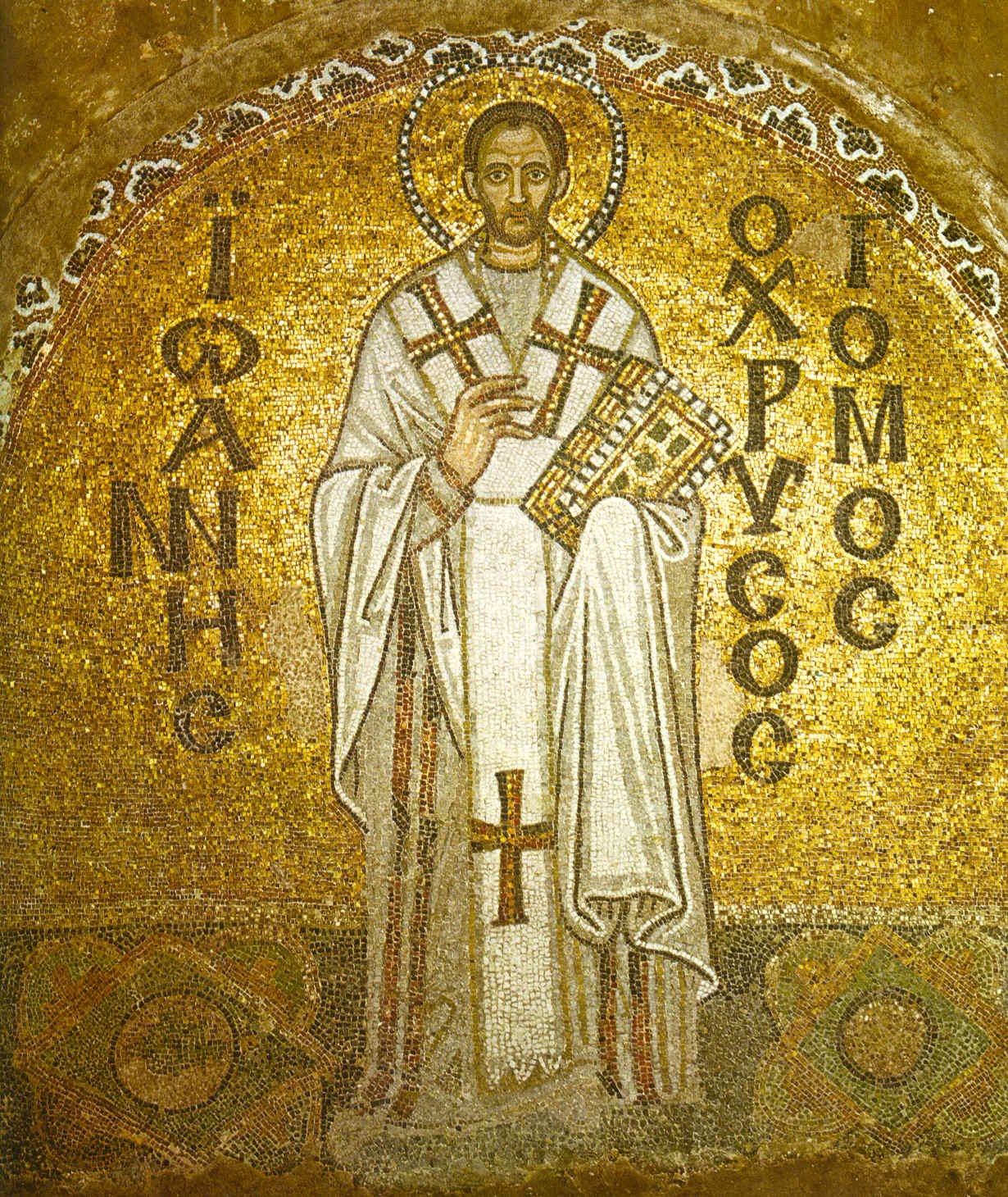
History confirms this. As documented in Chapter 24, the “Johannites” of Constantinople were ordinary laypeople who refused communion with the bishops who replaced St. John Chrysostom after his unjust deposition. They worshipped outdoors, in bathhouses, and in prisons rather than commune with a usurper who is himself venerated as a saint (October 11).
Are we to believe that they all considered themselves saints? Or is it more likely that they simply understood that their actions given the circumstances were pious and correct?
If the faithful were right to separate from a canonized saint on the patriarchal throne because of the injustice surrounding his installation, how much more must the faithful separate from those who actively teach heresy?
The Johannites endured imperial edicts stripping their rank, property, and freedom. They were called schismatics by those in power. St. John Chrysostom himself however called those who died in prison and torment “blessed.” St. Symeon Metaphrastes, writing centuries later with the full weight of Church tradition, called the official Church “the church of evildoers” and praised the Johannites for their “zeal for Christ.” Among them were four Christians now glorified as saints: Olympias, Nicarete, Tigrius, and Pentadia. The resistance lasted thirty-four years.
The Church vindicated them all.
These were not holy elders making a theological calculation. They were faithful Christians who refused to accept what they knew was wrong. The Church did not ask whether they were saints before glorifying their witness.
The 1848 Encyclical of the Eastern Patriarchs confirms this from the highest level of Orthodox ecclesiology: “The protector of religion is the very body of the Church, even the people themselves.”[8] The people are the guardians of Orthodoxy, thus cannot simultaneously be told they lack standing to act when the faith is endangered.
The Athonite Fathers, in their patristic commentary on Canon 15, draw the logical conclusion:
The defense of the faith is for all Orthodox obligatory and not optional.
— Athonite Fathers, “Αγιοπατερικη Ερμηνεια του ΙΕ’ Κανόνος της Πρωτοδευτέρας Συνόδου” (“Holy Patristic Interpretation of the Fifteenth Canon of the First-Second Council”), https://www.agioritespateres.com/agiopateriki-ermineia-tou-ie%CD%B4-kanonos-tis-protodevteras-synodou-861-2-m-ch/[9]
Canon 15 defends the faith through cessation of commemoration. Defense of the faith is obligatory for all Orthodox. Therefore Canon 15 cannot be restricted to saints.
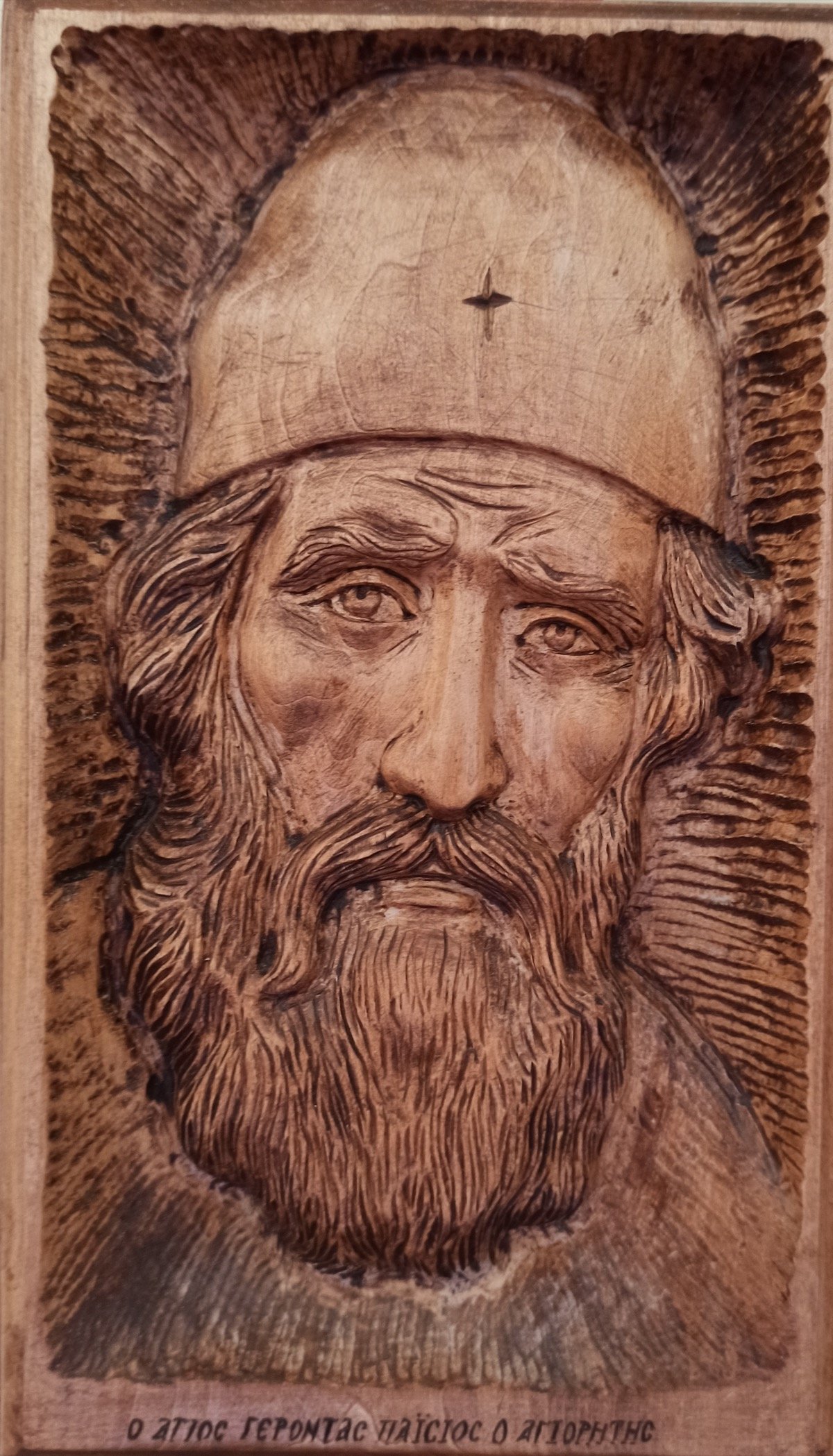
St. Paisios the Athonite puts this obligation in personal terms, drawing a precise distinction between personal quarreling and defending the faith:
It is not right for you to quarrel on your own behalf. It is, of course, another matter if you react to defend serious spiritual matters, matters that relate to our faith, to Orthodoxy. You have a responsibility to do this.
— St. Paisios the Athonite, Spiritual Counsels, Vol. 2: Spiritual Awakening, p. 59[10]
Not the duty of saints. Not the duty of clergy. Your responsibility. How can this be any more clear? And the distinction is precise: not quarreling for yourself, but defending the faith. The word he uses is καθήκον: duty, obligation.
He reserved his harshest words for those who disguise inaction as spiritual maturity. When Christians argued it was “more spiritual” to ignore the blasphemous film The Last Temptation of Christ than to protest it, St. Paisios responded:
At the time of the iconoclasts, ten Christians forcefully defended the icon of Christ at the Bronze Door of the palace in Constantinople and were martyred for it. Now Christ’s person is being blasphemed, and we must not be indifferent. If “knowledgeable” and “discerning” people like us had lived at that time, they would have said to the ten martyrs, “That is not how to be spiritual. So the emperor’s soldiers are coming to destroy the icon; never mind. When things change, we will put another icon there, and it will even be more Byzantine.” We try to make our downfall, our cowardice, our self-serving attitude appear to be something exalted. It makes me shudder.
— St. Paisios the Athonite, in Hieromonk Isaac, Saint Paisios of Mount Athos (Holy Monastery of Saint Arsenios the Cappadocian, 2012), pp. 277-278
He escalates the charge from individual Christians to the entire institutional hierarchy:
If Christians do not confess their faith, if they do not react, such people will do even worse things. But if they react, then they’ll think twice about it. But I suppose many Christians nowadays are not made for battles. The early Christians were tough nuts; they transformed the world. And during the Byzantine period, if even one Icon was removed from the Churches, the people rose up in protest. Here Christ was crucified so that we may be resurrected, and we remain indifferent! If the Church does not speak up so as to avoid a conflict with the State, if the metropolitans do not speak up in order to be on good terms with everybody, and especially with those who help them with the church foundations, if the monks of the Holy Mountain do not speak up for fear of losing their subsidies, who is going to speak up?
— St. Paisios the Athonite, Spiritual Counsels, Vol. 2: Spiritual Awakening, p. 42
This is the same saint whose letter to a novice is routinely quoted to silence anyone who raises their voice. They cite the pastoral counsel (“do not read books or pamphlets which incite insurrection”), strip it of its context, and wield it as proof that Christians should not concern themselves with heresy in the Church. Meanwhile the saint himself spent his life doing exactly what they claim no one should do: speaking up, calling it a duty, naming the cowardice for what it is, and calling others to speak in defense of our Orthodox faith, asking who will speak if everyone stays silent.
Notice the irony of this. Those who invoke this argument often name St. Paisios as a holy exception who is allowed to then cease commemoration. But these people, in their supposed humility, ignore St. Paisios himself, who taught that studying the saints should “motivate to imitate them” and “kindle divine zeal within us to imitate them.” St. Paisios the Athonite calls defense of the faith the “duty” of every believer. Thus, the people who claim that “only the saints can do this” regrettably do not understand that they contradict the very saints they invoke.
These saints, in no manner or teaching, saw themselves as exceptions, and called others to the same virtue without any exception based on their titles, their holiness, their gender, or any other descriptor.
Fr. Seraphim Rose, writing to Fr. David Black in 1970 about departure from heretical bishops, affirms the same principle:
If every Orthodox Christian is commanded by the canons to depart from a heretical bishop even before he is officially condemned, or be guilty also of his heresy, how much more must we depart from those who are worse and more unfortunate than heretics, because they openly serve the cause of Antichrist?
— Fr. Seraphim Rose, letter to Fr. David Black, April 23/May 6, 1970, Letters from Father Seraphim. http://www.orthodoxriver.org/post/letters-of-fr.-seraphim-rose/
Fr. Seraphim Rose, a beloved Orthodox writer and ascetic teacher, says that departing from a heretical bishop (and this would include a Patriarch) is commanded before a council.
Whom does Fr. Seraphim say is commanded to do this? Only holy elders maybe? Or perhaps theologians who went to seminary? Or only glorified saints perhaps? No. Fr. Seraphim Rose says, without any exception, that this is required of every Orthodox Christian. And yet, people will still try to find excuses for why this doesn’t apply to them, all of which have been thoroughly refuted thus far.
Elder Gabriel of the Koutloumousiou Cell on Mount Athos, a disciple of St. Paisios, addresses the objection with canonical precision. When a pilgrim asked him what to say to those who claim that ceasing commemoration makes one a schismatic and “outside the Church,” he answered:
Whoever says that “whoever ceases the commemoration is a schismatic and outside the Church” is himself a heretic. Why is he a heretic? Because the cessation of commemoration was established by the 15th Canon of the First-Second Council. Therefore he accuses the Church of being in error for having established this Canon. That is why he is a heretic.
— Elder Gabriel of the Koutloumousiou Cell, Mount Athos (June 2021), https://katanixi.gr/gerontas-gavriil-keli-koytloymoysianon-airetikos-aytos-poy-ischyrizetai-oti-opoios-kovei-to-mnimosyno-einai-schismatikos-kai-ektos-tis-ekklisias/[11]
Thus, people believe they understand these matters better than St. Paisios the Athonite and his very own disciple.
Canon 15 established cessation of commemoration as Church law. To condemn those who apply Canon 15 is to condemn the Church for making it, which would of course be a heresy.
In the same conversation, when the pilgrim asked whether laypeople have the right to correct their superiors in ecclesiastical matters, Elder Gabriel answered:
Those who say that correction is not permitted in the Church are heretics, because the Church established correction.
— Elder Gabriel of the Koutloumousiou Cell, Mount Athos (June 2021), https://katanixi.gr/gerontas-gavriil-keli-koytloymoysianon-airetikos-aytos-poy-ischyrizetai-oti-opoios-kovei-to-mnimosyno-einai-schismatikos-kai-ektos-tis-ekklisias/[12]
His word for “correction” is elenchos (ἔλεγχος), meaning reproof or correction. He immediately supported it with three passages formed from the same Greek root, elenchō (ἐλέγχω). The King James Version renders 1 Timothy 5:20, “Them that sin rebuke before all, that others also may fear.” This is a legitimate translation, but it obscures the repeated word. The Praxapostolos preserves it more visibly: “Those who sin be reproving before all, that the rest may also have fear.” It likewise renders the other two commands: “reprove, rebuke, exhort with all long-suffering and teaching” (2 Tim. 4:2), and “And cease having fellowship with the unfruitful works of darkness, but rather even reprove them” (Eph. 5:11).[13]
The repetition is Elder Gabriel’s point. He was not stringing together three loosely related verses. The same word he uses for “correction” is repeatedly given as an apostolic command. He noted that St. John Chrysostom, one of the greatest fathers, exercised more correction than all other fathers.
The right to reprove belongs to every baptized Christian.
Thus, to accuse someone of “thinking they are a saint” for applying a canon introduces a foreign standard into the argument: a claim that only saints may invoke the canons.
The fathers, councils, and canons cited in this chapter do not teach such a rule. They teach the opposite: the faithful are responsible to recognize and avoid false teaching. The “only saints may act” standard has no standing in the sources examined here.
St. Seraphim of Sarov destroys this objection entirely. When asked, “In what does a perishing sinner differ from a righteous man who is saving his soul, a saint?” he answered: “Only in his resolve. Our salvation is in our will, in our firmness, in the steadfastness of our resolve to be godly to the end.”[14]
The only difference between sinner and saint is resolve to be godly. This is all. Someone studies the fathers, understands the canons, and attempts their best to be faithful to the saints and what they taught. Thus, this person has resolve. And according to St. Seraphim, resolve is the only difference between sinner and saint.
St. Philaret of Moscow addresses those who think sainthood is for others:
Every Christian should find for himself the imperative and incentive to become holy. If you live without struggle and without hope of becoming a saint, then you are Christians only in name and not in essence. But without holiness, no one shall see the Lord, that is to say they will not attain eternal blessedness. It is a trustworthy saying that Jesus Christ came into the world to save sinners (1 Tim. 1:15). But we deceive ourselves if we think that we are saved while remaining sinners. Christ saves those sinners by giving them the means to become saints.
— St. Philaret of Moscow, Sermon, September 23, 1847; cited in 300 Quotes from the Fathers, saying 46
Hieromartyr Daniel Sysoev named this forgetfulness for what it is:
People forget that their goal is to reach sanctity. Some of them believe it is a sin even to think of such a possibility, that they could reach sanctity, even though it is the fulfilment of a direct commandment of the Lord. We should spare no effort to overcome this problem. To overcome this, we must issue a new call for people to return to holiness.
— Hieromartyr Daniel Sysoev, “The Blood of the Martyrs Is the Seed of the Church,” The Orthodox Word, No. 268, September-October 2009, pp. 213-215
He traces this directly to a failure of catechesis, and calls all the baptized back to study:
For this, it is necessary that we revive catechesis throughout the entire Church. Even those who are already baptized should study the Faith. People must know in Whom they believe, and what they should do in order to approach Him. People coming to church see it as an assembly line of spiritual services. They are not offered any spiritual growth.
— Hieromartyr Daniel Sysoev, “The Blood of the Martyrs Is the Seed of the Church,” The Orthodox Word, No. 268, September-October 2009, pp. 213-215
This is the root of the “you’re not a saint” objection: not theology, but ignorance and lack of catechesis. Orthodox Christians who have never been catechized, who have never studied what the saints teach, who experience the Church as an assembly line of spiritual services rather than a path to holiness, naturally cannot imagine that the canons apply to them or that sainthood is their calling. The objection does not come from humility; it comes from a total and complete absence of formation.
The saints are unanimous: sainthood is the universal obligation of every baptized Christian, not a credential reserved for the few.
The acquisition of holiness is not the exclusive business of monks, as certain people think. People with families are also called to holiness, as are those in all kinds of professions, who live in the world, since the commandment about perfection and holiness is given not only to monks, but to all people.
— Hieromartyr Onuphry Gagaluk, cited in 300 Sayings of the Ascetics of the Orthodox Church, saying 47
The saints were people like all of us. Many of them came out of great sins, but by repentance they attained the Kingdom of Heaven. And everyone who comes there comes through repentance.
— St. Silouan the Athonite, Writings, XII.10, in St. Sophrony, Saint Silouan the Athonite
The Saints are the most perfect Christians, for they have been sanctified to the highest degree with the podvigs [spiritual struggles] of holy faith in the risen and eternally-living Lord Christ.
— St. Justin Popovich, Orthodox Faith and Life in Christ, pp. 35–36
Not a separate category of being. The difference is one of degree, not of kind.
Let none of us lose our boldness, nor neglect our duties, nor be afraid of the difficulties of spiritual struggle. For we have God as a helper, who strengthens us in the difficult path of virtue.
— St. Nektarios of Aegina, The Path to Happiness, §2
This logic, applied to the saints its proponents invoke, would have prevented the saints from becoming saints. St. Maximus was not born a confessor. He became St. Maximus the Confessor by opposing Monothelitism (the heresy that Christ had only one will). If he had reasoned, “I am not holy enough to oppose the patriarch,” he would have stayed silent. He never would have become St. Maximus the Confessor. Their logic would have prevented the very saints they invoke from becoming saints.
St. Maximus himself faced this exact argument at his trial. His accusers demanded: “Are you alone saved, and all others perish?” His response: he pointed to the Three Youths who refused to worship Nebuchadnezzar’s idol. They did not concern themselves with what everyone else was doing. They concerned themselves with not falling away from true worship.[15] Five patriarchates had accepted the Monothelite heresy. One monk stood against them all. The Church glorified the monk.
Thus, the “you’re not a saint” objection is the opposite of what the saints taught. They taught: “Follow our example, by God’s grace, in your weakness, because the truth requires faithfulness regardless of your worthiness or unworthiness”.
You do not need to be holy to follow the teaching. You follow the teaching to become holy. That is the entire point of the Christian life. No one starts out worthy. We become worthy by God’s grace through faithfulness to what the fathers taught.
St. Paisios the Athonite valued sincerity of heart over all religious pretension:
For me, a vagabond with a good disposition is better than a hypocritical Christian.
— St. Paisios the Athonite, in Hieromonk Isaac, Saint Paisios of Mount Athos, p. 320
If a vagabond with good disposition surpasses a hypocritical Christian in the eyes of a saint, then the “you’re not a saint” objection would make one a hypocrite in the eyes of Saint Paisios. God looks at the disposition of the heart, not the credentials of the objector.
The Akathist of Hieromartyr Daniel Sysoev captures the distinction precisely: “Rejoice, thou who didst forsake false humility; Rejoice, thou who didst bridle the tempter by true humility.”[16] True humility submits to God’s revelation preserved in Church tradition. False humility submits to human authority when it contradicts that tradition. The “you’re not a saint” argument is false humility dressed as piety.
St. John of Kronstadt names this false humility for what it is:
Despondency is itself a sin and the work of the Devil.
— St. John of Kronstadt, My Life in Christ, trans. E.E. Goulaeff (Holy Trinity Monastery, Jordanville, NY, 1994), p. 467. The linked publisher page describes the later revised edition.
The “I am not worthy” sentiment, when it leads to inaction in the face of heresy, is despondency, which the saints call a sin.
St. Symeon the New Theologian delivers the final verdict. He calls it the worst of all heresies to claim that people today cannot follow the holy fathers’ examples:
Those of whom I speak and whom I call heretics are those who say that there is no one in our times and in our midst who is able to keep the Gospel commandments and become like the holy Fathers… Now those who say that this is impossible have not fallen into one particular heresy, but rather into all of them, if I may say so, since this one surpasses and covers them all in impiety and abundance of blasphemy. One who makes this claim subverts all the divine Scriptures.
— St. Symeon the New Theologian, The Discourses, Catechetical Discourse XXIX (trans. C.J. DeCatanzaro, Paulist Press, 1980), pp. 308-312
It is not one particular heresy, but all of them. To say that ordinary Christians cannot follow the fathers “surpasses and covers them all in impiety.” St. Symeon presses the point: “Has God changed in any way? Tell me, why is it impossible? By what other means have the saints shone on the earth and become lights in the world? If it were impossible, not even they would have been able to succeed in this.”
But what about those who do not know?
The reader who has followed this argument may now accept the premise: ordinary Christians can and must act when heresy is publicly preached. But this acceptance immediately produces a new question, and it is one the fathers anticipated: “Many faithful do not know about ecumenism, about the Havana Declaration, about the war theology. Are they condemned?”
The Synodikon of Orthodoxy, proclaimed every year on the first Sunday of Great Lent, provides the conciliar answer. Among its anathemas is the following, derived from Bishop Basil of Ancyra’s confession at the 7th Ecumenical Council (787):
To those who knowingly have communion with those who insult and dishonor the venerable icons, Anathema.
— Synodikon of Orthodoxy; cf. NPNF, Acts of the Second Council of Nicaea, Session I (Basil of Ancyra’s anathemas), https://orthodoxchurchfathers.com/fathers/npnf214/npnf2256.html[17]
The qualifier ἐν γνώσει (“knowingly,” “with knowledge,” “in full awareness”) is deliberate. Those who knowingly commune with those who insult the holy icons: Anathema. Those who communed in ignorance: not anathematized.
The irony is that Bishop Basil himself had previously communed with the iconoclasts. He was received back at the Council precisely because he attributed his participation to ignorance: “I beg pardon from your divinely gathered holiness for my tardiness in this matter… it arose from my entire lack of knowledge” (Acts of the Seventh Ecumenical Council, Session I). The very Council that pronounced the anathema against those who knowingly commune with iconoclasts simultaneously demonstrated, through its reception of Basil, that those who did so through ignorance were treated with pastoral mercy.
This is the same principle behind the ROCOR 1983 Anathema’s language about those who “knowingly have communion” with heretics. This is a conciliar principle, not a ROCOR innovation.
Anathema and spiritual reality
A critical distinction must be drawn. The Synodikon’s “knowingly” qualifier applies to the canonical penalty (the formal anathema), not to the spiritual effect of communion with heresy.
The Orthodox pre-communion prayers teach this distinction. Every Orthodox Christian prays before receiving the Eucharist: “Burn me not as I partake, for Thou art a Fire which burns the unworthy.” And: “Be awed, O man, when you see the deifying Blood, for it is a burning coal consuming the unworthy.” And again: “not unto judgment nor unto condemnation, but unto the healing of soul and body.” The prayers presuppose that the same Body and Blood which heals the worthy brings judgment to the unworthy. The fire does not ask whether the communicant knows it is fire.
The fathers cited in the previous chapter do not add a “knowingly” qualifier when describing the spiritual danger of communion with heresy. St. Theodore the Studite does not say that communion with iconoclasts defiles only those who know better. St. Athanasius does not say that Arian communion harms only the informed. St. Meletios the Galisiotes does not say the mysteries are polluted only for those aware of the heresy. The spiritual reality is what it is, regardless of awareness.
As established in the previous chapter’s Donatism section, the “defilement” the fathers describe is not ontological corruption of the Body and Blood of Christ. The mysteries remain the real Body and Blood. That is precisely why unworthy partaking brings judgment rather than nothing at all. The Apostle Paul teaches: “Whoever eats this bread or drinks this cup of the Lord in an unworthy manner will be guilty of the body and blood of the Lord… he who eats and drinks in an unworthy manner eats and drinks judgment to himself, not discerning the Lord’s body” (1 Cor. 11:27-29). Paul presupposes the Body and Blood are real; that is why unworthy partaking brings condemnation, not mere irrelevance.
Therefore: those who do not know are not under the Synodikon’s formal anathema. But “not anathematized” does not mean “inconsequential.” Bishop Basil himself, though spared the anathema, still had to publicly confess and ask pardon. St. Nikephoros, Patriarch of Constantinople, teaches that those who “become defiled through communion with heretics” may be received back, but only “if they confess their fall and repent.” He uses the word “fall.” He requires confession. He requires repentance. The removal of the canonical penalty does not remove the spiritual reality. Those who do not know are not condemned, but they are not thereby unharmed. They benefit from ceasing communion even if they are not under anathema for continuing.
Ignorance lessens, but does not remove
St. Gabriel (Urgebadze) of Georgia warns against stretching this distinction into indifferentism: “There is a widespread folk saying: ‘Ignorance is not a sin.’ This is incorrect; the sin is merely lessened. We will answer fully for all our actions.”[18]
If ignorance fully excused communion with heresy, it would also excuse the heterodox who do not know Orthodoxy is the true Church, and thus all of them would be saved. But yet… no father teaches this. Ignorance mitigates; it does not erase.
This premise is fully and perfectly understood when it comes to the heterodox. However, it becomes uncomfortable when applied to Orthodox Christians.
The two-track response
Blessed Theophylact gives the pastoral framework:
If they were acting out of ignorance or deception, we would need to correct them, but since they are instead sinning willfully, flee away!
— Blessed Theophylact, Collected Commentaries of the Epistles, Commentary on Romans 16:17–18, p. 330
For the ignorant, correct them. For the willful, flee. The Synodikon’s anathema applies to the second category. The duty to inform and correct applies to the first.
This is precisely why informing people matters: not to condemn the ignorant, but to move them from the first category (unknowing, requiring correction) to a place of informed decision. The loving response to ignorance is information, not indifference.
Metropolitan Cyril of Kazan, as we saw earlier, provided pastoral guidance for laypeople who had no alternative to Sergianist churches (those aligned with Metropolitan Sergius’s capitulation to the Soviet state): they may receive the Mysteries where no Orthodox alternative exists. Bishop Artemije of Raška-Prizren, who ceased commemorating the Serbian Patriarch over ecumenism, likewise permitted faithful to receive communion in the canonical Serbian Church. He did not declare it graceless. He did not send his flock into schism. He ceased commemoration as a diagnostic act within the Church while recognizing that the sacraments remained. Both Metropolitan Cyril and Bishop Artemije demonstrate pastoral mercy for the faithful, without pretending that communion with heresy is inconsequential. However, these were acts of economia for specific people.
Fr. Seraphim Rose applied the same pattern in the 1970s with respect to the OCA (Orthodox Church in America, formerly the Metropolia), which had received its “autocephaly” from the Soviet-dominated Moscow Patriarchate. Writing to an OCA priest in 1979 (Letter #262, to Fr. Basil Rhodes), Fr. Seraphim stated plainly: “We do not deny the grace of your Sacraments any more than you deny ours, and we regard the giving of Holy Communion to lay members of the OCA as a pastoral rather than a ‘canonical’ question.” He did not refuse communion to OCA laity who came to ROCOR churches: “We ourselves do not refuse communion to OCA members if we see that they simply can’t understand the issues” (Letter #261, to Timothy Shell).[19]
Yet in the same letter to Fr. Basil he added: “Our own spiritual children, I will tell you frankly, we do discourage from receiving communion in OCA churches, trying to arouse in them a more conscious attitude to the Orthodox Church situation today.” In a separate letter from 1978 (Letter #250), he noted that “an occasional death-bed communion of someone who is unaware of the jurisdictional differences” posed no threat to the Church’s policy of non-communion with Moscow, “and no issue need be made over it.”
One pastor. Two responses. For the ignorant who “simply can’t understand the issues,” economia (pastoral accommodation): receive them, do not make an issue of it. For his own spiritual children whom he was actively forming, akriveia (the strict standard): discourage communion in compromised settings, arouse a “more conscious attitude.” This is Theophylact’s framework lived out: correct the ignorant, flee the willful. Fr. Seraphim was not condemning the OCA faithful; he was guiding his own toward the fullness.
A tension must be acknowledged here. St. Theodore the Studite, as cited in the previous chapter, teaches that “the Mystery is defiled merely by the commemoration of the heretical bishop, even if everything else about the priest is orthodox and proper in the celebration of the Liturgy.” He gives no exception for laypeople and no qualifier for those who lack alternatives. Metropolitan Cyril and Bishop Artemije, on the other hand, permit laypeople to commune in churches that commemorate the very hierarchs they themselves have ceased to commemorate.
These are not contradictions. They are the standard and the economia. St. Theodore gives the full patristic standard: flee communion with heresy entirely.[20] Metropolitan Cyril and Bishop Artemije apply pastoral economy to a specific situation and specific laypeople who genuinely have no Orthodox alternative. This follows the same pattern as St. Basil’s canons on killing in war, where the standard is three years’ exclusion from communion, but economia can adjust the application without abolishing the norm.
The critical point, as Theodore Balsamon warned (and as this book has already established), is that “what was introduced by economia for some useful end must not be turned into an example and be henceforth held as a canon.” The economia of Metropolitan Cyril and Bishop Artemije exists for those who truly have no alternative and were in particular circumstances, and were exercised on an individual basis, not as general policy (as established in Chapter 17: Does Dying in War Wash Away All Our Sins? and Chapter 24: The Saints Who Ceased Commemoration). It does not become a permanent justification for those who do have alternatives but find separation inconvenient. The standard remains what St. Theodore teaches. The economia serves those who cannot yet meet it.
Metropolitan Cyril himself draws this boundary with precision. In the same epistles where he permits ignorant laypeople to commune, he also teaches: the Mysteries performed by Sergianists “are undoubtedly saving Mysteries for those who receive them with faith, in simplicity,” but “they serve for judgment and condemnation for the very performers of them and for those who approach them well understanding the untruth that exists in Sergianism.” He then concludes: “This is why it is essential for an Orthodox Bishop or priest to refrain from communion with Sergianists in prayer. The same thing is essential for laymen who have a conscious attitude to all the details of church life.”[21]
One hierarch. One teaching. Both the economia and its boundary. The Mysteries save the simple. The same Mysteries condemn those who approach them “well understanding the untruth.” And the obligation to refrain is not reserved for clergy: it is “essential” for laymen who know. Pastoral mercy for the ignorant does not mean leaving them ignorant.
Why, then, inform anyone at all? If ignorance lessens the sin, would it not be kinder to leave people in ignorance? No. Because economia is an accommodation for weakness, never the fullness.
The Fathers teach that the Holy Eucharist is not mechanical. The same Body and Blood of Christ, received in its entirety by every communicant, produces different effects according to the communicant’s spiritual state. Metropolitan Hierotheos Vlachos, summarizing the patristic tradition, writes: “Holy Communion, according to the liturgical prayers, is for those who are prepared a light which enlightens, and for those not prepared it is a consuming fire.”[22] St. John of the Ladder teaches the same principle: the same grace “burns them because they still lack purification, whereas it enlightens the latter according to the degree of their perfection.”[23] Some come away from communion as if from a fiery furnace, feeling relief from defilement; others come away resplendent with light and clothed in humility and joy. Fr. John Romanides makes the point explicit: St. Symeon the New Theologian experienced theosis (union with God) after Holy Communion because he was prepared for it. “But do we attain such a state of union with God every time we receive Holy Communion?” The Eucharist is not, as Romanides warns, an “injection of divinity” that works identically regardless of the communicant’s condition.[24]
The same principle governs every encounter between God and the human person in the Orthodox tradition. St. Isaac the Syrian teaches that in the age to come, the same divine love will be experienced differently by the righteous and the sinners: “I also maintain that those who are punished in Gehenna are scourged by the scourge of love… But love acts in two different ways: it torments sinners… [and] it becomes a source of joy for those who have lived in accord with it.”[25] The fire is the same fire. The love is the same love. What differs is the state of the one who encounters it. The prepared soul receives love as paradise; the unprepared soul receives the same love as torment. If this is true of the encounter with God at the final judgment, it is true of the sacramental encounter as well. The same Mysteries, received by a communicant in the fullness of Orthodox life, produce one effect; received in diminished conditions, they produce another.
The communicant’s state determines what they receive. This includes the liturgical context in which they commune. Those who receive the Mysteries in a church where heresy is commemorated are not receiving nothing; they receive the real Body and Blood of Christ. But their conditions are diminished. They are not receiving the fullness of what the Mysteries offer. Those who have the strength to live according to the strict patristic standard, communing in a fully Orthodox setting free from the commemoration of heresy, stand under the normative conditions the fathers call the faithful to seek.
To inform, therefore, is to offer the fullness. Those who can bear it will benefit fully. Those who cannot will be shown mercy, as Metropolitan Cyril and Bishop Artemije showed mercy. But no one is served by being left in a lesser state when a greater one is available to them.
This book exists precisely for this purpose: to inform, so that the ignorant can protect themselves, and so that ignorance ceases to be a defense for those who have now been informed.
Where we stand
This Part began with the decree of Metropolitan Sergius and the Sergian Synod, which claimed that cessation of commemoration is only justified when a bishop “has already been condemned by a Council” or “begins to preach a known heresy which has also been condemned by a Council.” This claim, parroted by many in our time with almost no deference to the fathers and saints, is false.
The saints did not wait for councils; St. Hypatius separated from Nestorius three years before Ephesus. The canons do not require them; the 15th Canon explicitly permits separation “before there has been any conciliar or synodal trial.” The fathers teach that heresy is heresy the moment it departs from the truth, not when a council votes on it. And communion with heresy, even without personal agreement, defiles the mysteries and destroys the soul.
You do not need to be a saint to know this. You do not need a council to confirm it. You do not need a bishop’s permission to act on it. The canons, the fathers, and the saints are unanimous: the defense of the faith is the obligation of every baptized Christian, and the faithful who separate from a heretical hierarch are not schismatics but confessors.
Those who do not yet know are shown mercy. Those who now know must decide.
This book does not condemn anyone. When St. Maximus the Confessor was accused of condemning the whole world by standing alone against Monothelitism, he answered:
When all the people in Babylon were worshipping the golden idol, the Three Holy Youths did not condemn anyone to perdition. They did not concern themselves with what others were doing, but took care only for themselves, so as not to fall away from true piety. In precisely the same way, Daniel also, when cast into the den, did not condemn any of those who, in fulfilling the law of Darius, did not want to pray to God; but he bore in mind his duty, and desired rather to die than to sin and be tormented by his conscience for transgressing God’s Law. God forbid that I, too, should condemn anyone.
— St. Maximus the Confessor, from the record of his trial (AD 655)
The Three Youths did not condemn anyone. They took care not to fall away from true piety. That is the posture of this book. The patristic witness is presented. The evidence is documented. Each reader must decide for themselves, before God, what to do with it.
St. Mark of Ephesus refused false union. Bishop Longin of Banchensk, a hierarch of the Ukrainian Orthodox Church, ceased commemorating Patriarch Kirill in 2016, years before the war, recognizing that the problem was not political but theological.
Let us listen to Archbishop Averky, fourth abbot of Holy Trinity Monastery in Jordanville, on standing against heresy in these last times:
We have neither the strength nor the authority to stop Apostasy, as Bishop Ignatius stresses: “Do not attempt to stop it with your weak hand…” But what then should we do? “Avoid it, protect yourself from it, and that is enough for you.”
— Archbishop Averky (Taushev), “On Apostasy,” Orthodox Life, Holy Trinity Monastery, Jordanville
Certain Christian clergymen, even including top hierarchs of the Church, are collaborating with the godless ones and the open and covert enemies of our Lord and Saviour, being involved in all sorts of negotiations with them, entering into various compromises and concluding all types of agreements which often border on betrayal of our holy faith and Church.
— Archbishop Averky (Taushev), “On Apostasy,” Orthodox Life, Holy Trinity Monastery, Jordanville
The saints did not remain silent when shepherds taught error. They did not make excuses. They did not wait for perfect conditions. They witnessed to the truth.
The only question that remains for each Orthodox Christian is this: Do I love the truth enough to act on it? Do I trust the witness of the saints who have gone before me? Am I willing, like St. Hypatius, to say “Do as you wish, for I have made up my mind to suffer all things”?
Hieromonk Isaac, Saint Paisios of Mount Athos, pp. 658-659, records that St. Paisios ceased commemoration of Patriarch Athenagoras for a time together with almost the entire Holy Mountain because of the patriarch’s ecumenist overtures toward Rome.
Orthodox Life1992, no. 4, p. 12, similarly reports that by 1971 the majority of Athonite monks refused to commemorate Athenagoras. ↩St. Paisios the Athonite, letter on ecumenism, cited in Hieromonk Isaac, Saint Paisios of Mount Athos, p. 428. ↩
Original Russian: “По православному пониманию Церковь составляют не только иерархи и священнослужители, но и весь верующий православный народ. Эта их совокупность и единство, приобщающееся в Святых Таинствах Христу, и есть Церковь, Тело Христово. Иерархи и священнослужители – руководители жизни Церкви, но деятельное участие в ней и ответственность за жизнь Церкви лежит и на мирянах. История Церкви говорит нам, как много послужили Церкви миряне и в эпоху Арианского искажения Православия, и во времена иконоборчества, а на юго-западе России православные братства отстояли Православие от иноверческого засилия и влияния.” ↩
Prologue to Saint Paisios the Athonite (biography by the Hesychasterion of St. John the Theologian, Souroti), p. 17: “We pray that the reading of the Life of Saint Paisios will ignite the zeal in all of us to undertake spiritual struggles with a sense of philotimo, so that we may not resemble, as the Saint used to say, those who merely watch the struggling athletes. Instead, we should make a start in repentance, and undertake ‘a good struggle.’” ↩
Original Greek: “Ὅταν πρόκειται περὶ πίστεως, δὲν μπορεῖ νὰ πεῖ κανείς· «Ἐγὼ τίς εἰμαι; Ἱερεύς; Οὐδαμῶς. Ἄρχων; Οὐδ’ αὐτός. Στρατιώτης; Ποῦ γάρ; Γεωργός; Οὐδ’ αὐτὸ τοῦτο. Πένης εἰμί.» … Ἀκούσατε τοῦ Κυρίου λέγοντος· «Λίθοι κεκράξονται.» Ὅταν τοίνυν ἱερεὺς σιγᾷ, λίθος κεκράξεται.” ↩
Original Greek: “Ἅπαντες οἱ τῆς Ἐκκλησίας διδάσκαλοι, πᾶσαι αἱ Σύνοδοι, πᾶσαι αἱ θεῖαι γραφαί, φεύγειν τοὺς ἑτερόφρονας παραινοῦσι καὶ τῆς αὐτῶν κοινωνίας διΐστασθαι.” ↩
Encyclical of the Eastern Patriarchs, 1848, signed by Anthimos of Constantinople, Hierotheus of Alexandria, Methodios of Antioch, and Cyril of Jerusalem. Full text: http://orthodoxinfo.com/ecumenism/encyc_1848.aspx ↩
Original Greek: “ἡ ὑπεράσπιση τῆς πίστεως εἶναι σὲ ὅλους τοὺς Ὀρθοδόξους ὑποχρεωτικὴ καὶ ὄχι δυνητική.” ↩
Original Greek: “Δεν ταιριάζει να μαλώνης για τον εαυτό σου. Άλλο το να αντιδράσης, για να υπερασπιστής σοβαρά πνευματικά θέματα, που αφορούν την πίστη μας, την Ορθοδοξία. Αυτό είναι καθήκον σου.” ↩
Original Greek: “Όποιος λέει ότι «όποιος κόβει το Μνημόσυνο είναι σχισματικός και εκτός της Εκκλησίας», αυτός είναι αιρετικός. Γιατί είναι αιρετικός; Γιατί τη διακοπή του Μνημοσύνου τη θέσπισε ο 15ος Κανόνας της Πρωτοδευτέρας Συνόδου. Επομένως κατηγορεί την Εκκλησία ότι είναι πλανεμένη που θέσπισε αυτό τον Κανόνα. Γι’ αυτό είναι αιρετικός.” ↩
Original Greek: “Όσοι λένε ότι δεν επιτρέπεται ο έλεγχος στην Εκκλησία είναι αιρετικοί, γιατί η Εκκλησία θέσπισε τον έλεγχο.” ↩
Original Greek: “Τούς ἁμαρτάνοντας ἐνώπιον πάντων ἔλεγχε, ἵνα καί οἱ λοιποί φόβον ἔχωσι”; “Ἔλεγξον, ἐπιτίμησον, παρακάλεσον”; “Καί μή συγκοινωνεῖτε τοῖς ἔργοις τοῖς ἀκάρποις τοῦ σκότους, μᾶλλον δέ καί ἐλέγχετε.” The Orthodox New Testament, Volume 2: Praxapostolos, Acts, Epistles, and Revelation, 10th ed. (Holy Apostles Convent, 2021): 1 Tim. 5:20, p. 353; 2 Tim. 4:2, p. 370; Eph. 5:11, p. 270. The edition’s preface explains that its New Testament was produced by comparing the KJV’s traditional Greek base with the 1904 Antoniades text approved by the Patriarchate of Constantinople, p. xvii. ↩
St. Seraphim of Sarov, cited in Metropolitan Anthony of Sourozh, “Our Salvation is in our Will.” St. Seraphim of Sarov. See OrthoChristian: https://orthochristian.com/72686.html ↩
St. Maximus the Confessor, trial records (Disputation at Bizya, 656 AD). The Three Youths response appears in the account of his interrogation by Troilus and Sergius. See The Great Synaxaristes of the Orthodox Church, trans. Holy Apostles Convent, Vol. 1 (January), pp. 857-858. ↩
Akathist to Hieromartyr Daniel Sysoev, Ikos 6-7. Full text: https://oldbelieving.wordpress.com/2022/01/26/akathist-to-hieromartyr-daniel-sysoev/ ↩
Original Greek: “Τοῖς κοινωνοῦσιν ἐν γνώσει τοῖς ὑβρίζουσι καὶ ἀτιμάζουσι τὰς σεπτὰς εἰκόνας, ἀνάθεμα.” ↩
St. Gabriel (Urgebadze) of Georgia, Great Art Thou, O Lord!, p. 180 ↩
Fr. Seraphim Rose, Letters #250, #261, and #262, in Letters from Father Seraphim. ↩
Theodore himself recognized that economia applies in times of heresy. In Epistle II.215 (PG 99:1645D), he writes: “In times of heresy, owing to pressing needs, things do not always proceed flawlessly, in accordance with what has been prescribed in times of peace; this seems to have been the case with the most blessed Athanasios and the most holy Eusebios, who both performed Ordinations outside their respective dioceses.” The strict standard and the pastoral accommodation both come from the same father. ↩
Metropolitan Cyril of Kazan, Epistles Nos. 1 and 2. ↩
Metropolitan Hierotheos Vlachos, Orthodox Psychotherapy: The Science of the Fathers, p. 21: “Holy Communion, according to the liturgical prayers, is for those who are prepared a light which enlightens, and for those not prepared it is a consuming fire.” ↩
St. John Climacus, The Ladder of Divine Ascent, Step 28, “On holy and blessed prayer, mother of virtues, and on the attitude of mind and body in prayer,” §51, p. 123; cf. Metropolitan Hierotheos Vlachos, Orthodox Psychotherapy: The Science of the Fathers, pp. 188-189. ↩
Fr. John Romanides, Patristic Theology, pp. 88-89. Romanides warns against the notion that theosis is “an injection of divinity that man receives through the Church’s mysteries,” citing St. Symeon the New Theologian’s prayer before Holy Communion. ↩
St. Isaac the Syrian, Ascetical Homilies, Homily 28, pp. 141–142. ↩