
Why Communion with Heresy Requires Separation
This is the third chapter of Part VI: The Case for Cessation. Chapter 24 established that cessation of commemoration is canonically permitted before any synodal condemnation. Chapter 25 defined what heresy is, demonstrated that councils confirm rather than create condemnations, and addressed the contemporary question of ROCOR’s communion with Patriarch Kirill. This chapter addresses why communion with heresy requires separation, and answers two key objections: Donatism and “Who decides?”
Why communion with heresy requires separation
The previous chapters established what heresy is, who a heretic is, and that the canons permit cessation of commemoration on account of heresy. The remaining question is why cessation is necessary.
Some may acknowledge the canonical permission but wonder whether it is truly urgent to act upon it. The fathers and Scripture answer this question with great clarity: communion with heresy is spiritually destructive, and the faithful are commanded to separate from it.
Before proceeding, a tension deserves direct engagement. The Church recognizes two patristic responses to a preaching heretic before synodal condemnation: immediate cessation of commemoration (St. Hypatius), and strategic maintained communion while actively building the synodal case (St. Cyril of Alexandria). Both are patristic. Neither path, in itself, is condemned.
But the Cyril path is not a license for indefinite passive attendance. St. Cyril collected evidence of Nestorius’s blasphemies, wrote correction letters, consulted with Rome, and prepared formal anathemas, all as a Patriarch with authority to pursue synodal resolution. When his efforts “profited nothing,” because Nestorius “clings even until now to his original errors,” the window closed and the Council acted.
And even during this period of strategic patience, Cyril did not tell the faithful to keep communing with Nestorius. He wrote directly to the clergy and people of Constantinople, before the Third Ecumenical Council had convened:
“Keep yourselves untainted and blameless, neither communing with the aforementioned [Nestorios], nor paying any heed to him as a teacher, should he persist in being a wolf instead of a shepherd.”
— St. Cyril of Alexandria, Epistle 18 (To the Clergy and People of Constantinople), PG 77:125B; cf. St. Cyril of Alexandria: Letters 1–50, trans. John I. McEnerney, Fathers of the Church 76 (Catholic University of America Press, 1987), pp. 94–95
The “Cyril path” of patience was never a path of continued communion. It was a Patriarch building a synodal case while simultaneously instructing the faithful to separate. Those who invoke St. Cyril to justify remaining in communion with Patriarch Kirill have misunderstood the very example they cite.
Patriarch Kirill’s errors are not new: they have been publicly taught for decades, correction has been refused, and no synodal process is underway in the Russian Church. The conditions that made St. Cyril’s patience appropriate have long since expired.
What the Fathers below address is passive communion: attending, receiving, commemorating without correction, without protest, without any effort toward resolution. That is the path that destroys.
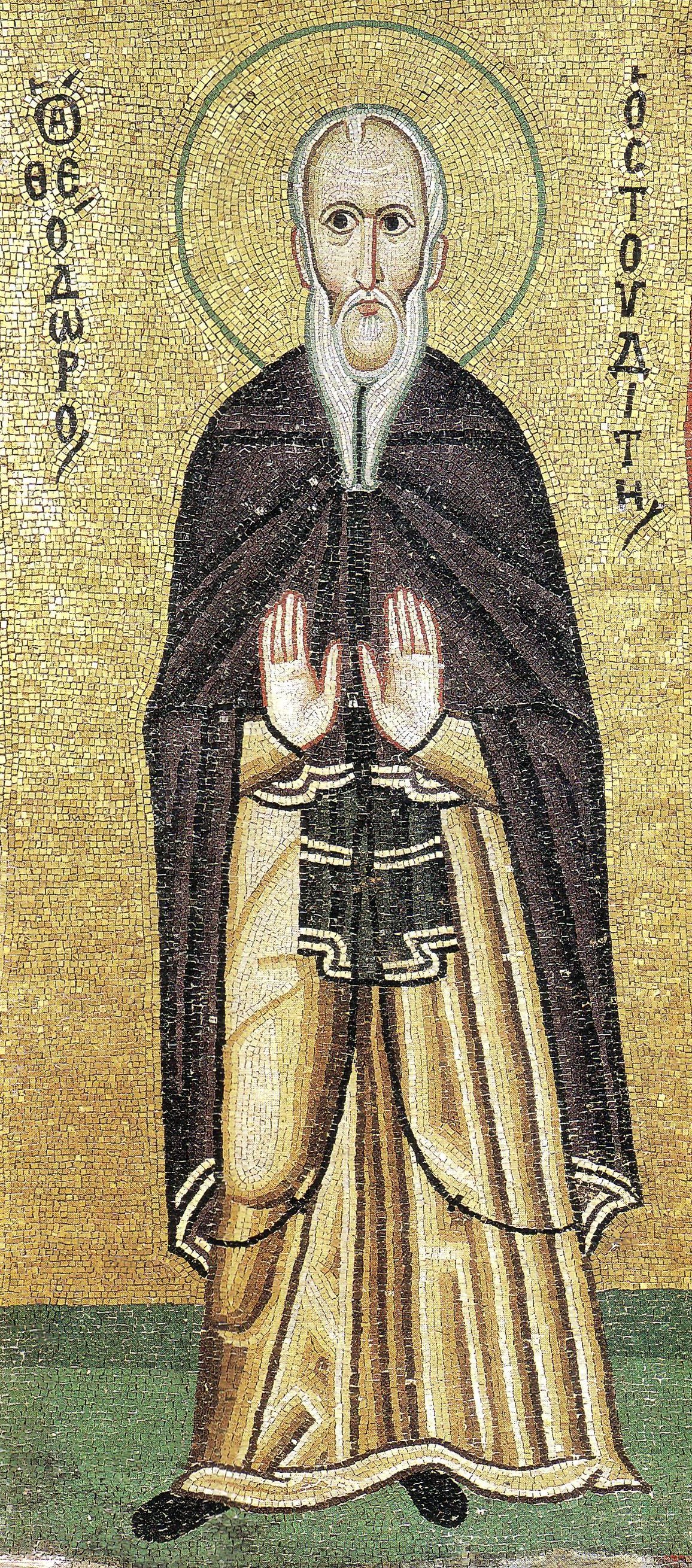
The path of faithfulness is not tidy, and the fathers knew it. St. Theodore the Studite, writing during the Moechian controversy when he and his monks faced exile for breaking from the established hierarchy, acknowledged the reality:
“In times of heresy, owing to pressing needs, things do not always proceed flawlessly, in accordance with what has been prescribed in times of peace; this seems to have been the case with the most blessed Athanasios [of Alexandria] and the most holy Eusebios [of Samosata], who both performed Ordinations outside their respective dioceses; and now, the same thing is evidently being done while the present heresy persists.”
— St. Theodore the Studite, Epistle II.215 (to Methodios the Monk), PG 99:1645D
St. Theodore cites St. Athanasius and St. Eusebios as precedents: saints who acted outside normal canonical procedure because heresy demanded it. Separation from heretical communion creates real difficulties. The fathers insisted on it anyway, because the alternative is spiritual destruction.
St. John the Merciful, Patriarch of Alexandria, explains what communion signifies:
For communion, he said, has been so called because he who has communion has things in common and agrees with those with whom he has communion.
This is why the question of commemoration cannot be treated as a mere formality. To have communion with someone is to have things in common with them, to agree with them. What, then, does it mean to commemorate a hierarch who publicly teaches error?
St. Theodore the Studite, that great confessor who suffered exile for his refusal to commune with the iconoclast heretics, teaches:
Some have completely suffered shipwreck concerning the faith, while others, even if they have not been overwhelmed in their reasoning, are nevertheless destroyed by communion with heresy.
— St. Theodore the Studite, Epistle 452, PG 99:1496
Personal orthodoxy does not protect against the spiritual destruction of communing with heresy.
St. Athanasius the Great states simply:
Those whose mindset we reject, we must also flee from their communion.
— St. Athanasius the Great, Second Letter to the Monks (Letter 53, To the Solitaries); cf. the NPNF translation
St. Maximus the Confessor explains the spiritual reality at work:
Just as one who receives the true Apostles, Prophets, and Teachers receives God, so also one who receives the false apostles, false prophets, and false teachers receives the devil.
— St. Maximus the Confessor, Quaestiones et Dubia, PG 90:808
Communion with false teachers is communion with the spirit behind the false teaching.
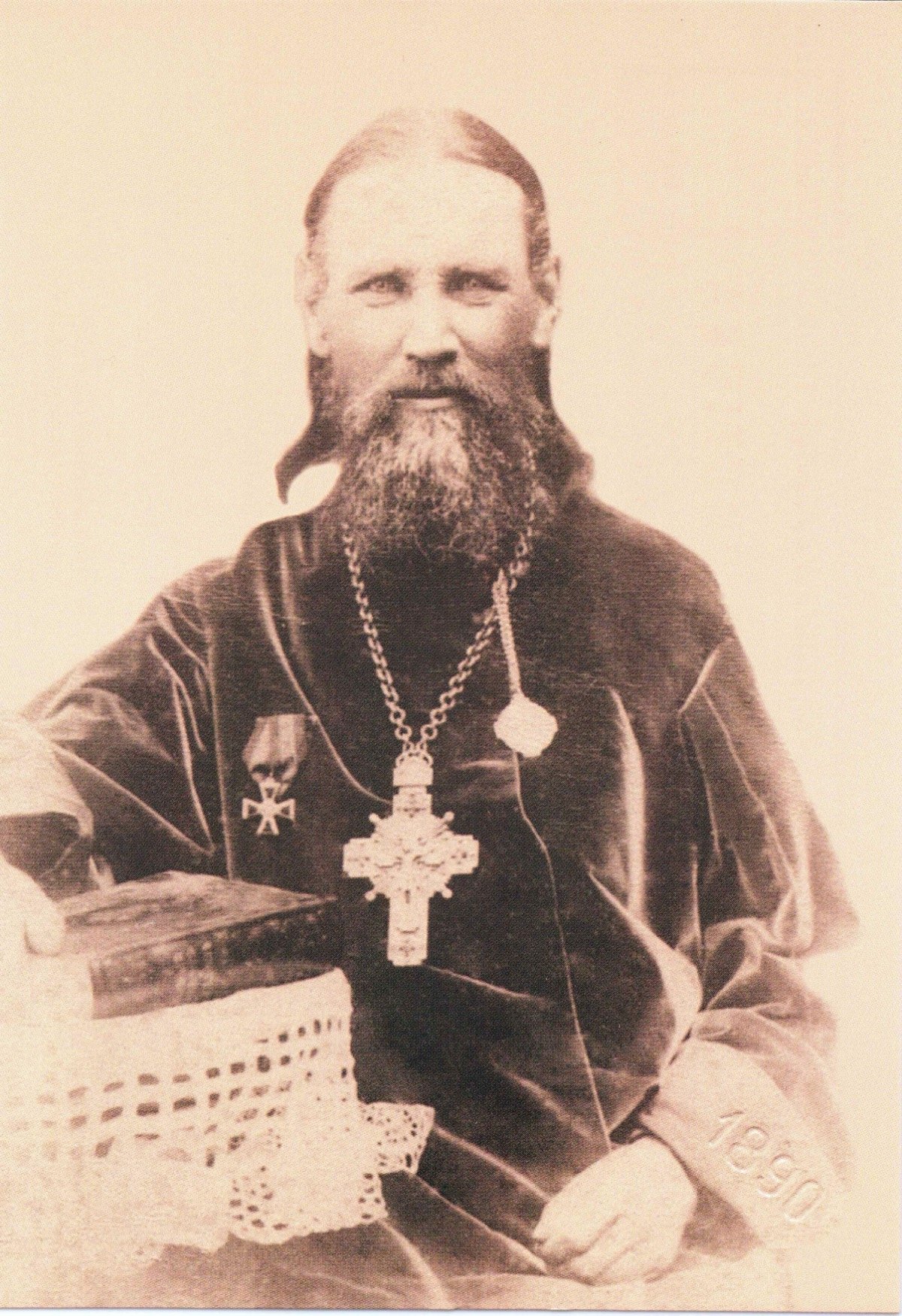
St. John of Kronstadt articulated why this is so: bodies separated from Christ are not churches at all, regardless of their outward form:
Without Christ the Head, the Church is not the Church, but a lawless assemblage. Such are the Lutherans, Russian schismatics, Pashkovites, and the Tolstoyans.
— St. John of Kronstadt, quoted in I. K. Sursky, Saint John of Kronstadt, trans. Holy Transfiguration Monastery (2018), p. 251
To commune with a “lawless assemblage” is not to commune with a church that merely disagrees on secondary matters. It is to commune with a body that has severed itself from the Head. St. Theodore the Studite states the same principle from the 9th century:
Those maintaining communion with heretics “are not the Church of God.”
— St. Theodore the Studite, Epistle I.43 (to Archbishop Joseph), PG 99:1065CD
St. Gennadios Scholarios, the first Patriarch of Constantinople after the fall, explains why commemoration specifically matters:
Spiritual communion with those of the same faith and complete obedience to true shepherds is expressed through commemoration. The councils and the other Fathers prescribe that we must avoid not only communion with those whose mindset we reject, but also everything related to them.
— St. Gennadios Scholarios, On Commemoration, PG 160:425
Commemoration is a public confession of unity in faith. St. Theodore the Studite makes this explicit:
Priests should not only not commemorate the names of the heretics at the Divine Liturgy, but not even of those who are in communion with them.
— St. Theodore the Studite, Epistle 49, PG 99:1084
In a letter to Mahara, St. Theodore addresses the common objection “But my priest is Orthodox!”:
The Mystery is defiled merely by the commemoration of the heretical bishop, even if everything else about the priest is orthodox and proper in the celebration of the Liturgy. For to commune with a heretic or one openly reproached in life alienates one from God and reconciles one with the devil.
— St. Theodore the Studite, Epistle 553 to Mahara, PG 99:1668
The commemoration alone defiles the Mystery, regardless of the celebrating priest’s personal orthodoxy. Elsewhere, St. Theodore addresses charitable works done by those in communion with heresy:
Even if one should give away all his possessions in the world, and yet be in communion with heresy, he cannot be a friend of God, but is rather an enemy.
— St. Theodore the Studite, Epistle 40, PG 99:1052
Good works do not compensate for communion with heresy. One may feed the poor, build churches, and give alms, yet if one remains in communion with those who preach falsely, one remains an enemy of God.
St. Theodore goes further still. In Epistle 308, he addresses the case of a person who is unbaptized at the end of their life. If an Orthodox priest cannot be found, one should seek a monk; if no monk, a lay Orthodox Christian may baptize. But if there is not even an Orthodox layperson available who is free from heresy, St. Theodore teaches that it is preferable to die unbaptized than to receive baptism from heretics. And he adds: such a person, by virtue of their intention and their refusal to accept heretical baptism, is truly considered baptized.
It is better for the unbaptized, if no Orthodox priest can be found to baptize him, to be baptized by a monk; or, if no monk is available, by a layman saying, “The servant of God N. is baptized in the name of the Father, and of the Son, and of the Holy Spirit”; otherwise, to depart unillumined. And he has truly been baptized, for necessity also brings a transposition of the law, as has happened and been accepted in former times.
— St. Theodore the Studite, Epistle 308, PG 99:1192A[1]
God judges by intention (προαίρεσις), not by external result. This principle is not novel: the Church has always recognized the baptism of blood, whereby catechumens who were martyred for Christ before receiving baptism were counted among the baptized and glorified as saints. St. Theodore applies this established principle to a specific case: the person who chose to die without the foundational sacrament of the Church rather than receive it from heretical hands will be found near God after death, not only as baptized but as a confessor of the truth. If even baptism itself, the very entry into the life of Christ, must be refused when offered by heretics, then the argument for separation from heretical communion is absolute. There is nothing left to concede.
Note carefully what St. Theodore honors here: the intention to refuse heresy. This is an act of confession. It is not the same as receiving sacraments from heretics in ignorance and calling that “good intention.” The one who refuses heretical baptism knowing it to be heretical is a confessor. The one who receives heretical communion without bothering to learn what his hierarch teaches is not acting in good faith; he is acting in negligence. St. Theodore is speaking of heresy publicly preached from a position of authority, not of a priest who privately holds a confused opinion. Nor is he declaring that heretical sacraments are invalid; he is teaching that it is better to refuse them. The sacrament may be valid; the knowing participation is what defiles.
St. Theodore also addressed the practical question of churches where heretical bishops are commemorated. When the monk Naukratios asked whether an Orthodox priest could bring his own consecrated antimension (the cloth on which the Liturgy is served) into a church where a heretic was commemorated and serve Liturgy there when the heretical priest was absent, St. Theodore answered that this is not right. If there is need for the Divine Liturgy, it should be served in a private house, which he considered a cleaner place than a church defiled by heretical commemoration.
It is not right; but rather, if by necessity, in a common house, in some chosen cleaner place.
— St. Theodore the Studite, Epistle 40 to Naukratios, PG 99:1056A[2]
A private house is cleaner than a church where a heretical bishop is commemorated. This is the standard of the saints. This is the consistent witness of the fathers.
St. Paisius Velichkovsky goes further still. St. Theodore says good works cannot compensate, and that even baptism must be refused from heretics. St. Paisius says even martyrdom cannot expiate communion with those who oppose the Church:
One who is in such a schism, even if he performed all the good deeds, and even if he had poured out his blood as a martyr for Christ, which unquestionably surpasses all good deeds, he can in no case expiate this mortal sin, i.e. the schism.
— St. Paisius Velichkovsky, letter (1794), in Fr. Sergii Chetverikov, Starets Paisii Velichkovskii: His Life, Teachings, and Influence on Orthodox Monasticism (Nordland Publishing, 1980), p. 257
Not good works. Not almsgiving. Not even the pouring out of one’s own blood for Christ. Nothing expiates the sin of communion with those who oppose the Church. And on the question of commemoration itself, St. Paisii is equally direct:
It would not only be improper for the Church to commemorate them, but it would also be against God and the Holy Church, and a priest who would dare to commemorate such people commits a mortal sin… Those dying without repentance and in opposition to the Holy Church should never be commemorated by the Church. Whoever dares to commemorate such people shall give an awesome answer for it before Christ God on the day of His Awesome Judgment.
— St. Paisius Velichkovsky, same letter, in Chetverikov, pp. 260-261
A priest who commemorates those in opposition to the Church commits a mortal sin. He shall give an awesome answer before Christ on the day of Judgment. This is the teaching of a canonized saint, bearing the full weight of patristic authority.
Metropolitan Augoustinos Kantiotes, a modern hierarch revered by St. Paisios the Athonite, summarizes the patristic consensus in practical terms:
Whenever a hierarch deviates off the track of Orthodoxy and shamelessly, publicly preaches something that is not in agreement with the Orthodox faith, the populace not only must protest against the deviation, but they must stop every spiritual relationship with the deviating hierarch.
— Metropolitan Augoustinos Kantiotes, Christians of the Last Times, p. 79
Hieromartyr Daniel Sysoev warns that those who fail to act become complicit:
All schismatics and heretics must be driven out of the Church. They must not be tolerated; they are destroyers of men. And so those who tolerate heretics within the enclosure of the Church, who say that their point of view must be respected, are actually destroyers of men and accomplices of the heretics, since they give them the opportunity to destroy people.
— Hieromartyr Daniel Sysoev, Explanation of Selected Psalms. In Four Parts. Part 1: Blessed is the Man, p. 79
St. Basil the Great, a Pillar of the Church, establishes this principle with even greater precision. In his Morals, he asks whether it is right to refuse God’s commands, to impede those obeying them, or to tolerate those who do the impeding. His answer is a threefold prohibition:
By these examples we are taught neither to contradict, nor to impede, nor to tolerate those who impede others. And if the word of the Scripture teaches beyond a doubt that we dare not perform these particular actions or others like them, how much greater is our obligation to imitate the Saints with regard to the rest when they say, “We ought to obey God rather than men” (Acts 5:29) and, “Whether it be right in the sight of God to hearken unto you more than unto God, judge ye. For we cannot but speak the things which we have seen and heard” (Acts 4:19–20).
— St. Basil the Great, Concerning Baptism (De Baptismo), Book II, Question 11
Not only must we not contradict God’s commands, and not only must we not impede those who obey them: we must not tolerate those who impede others from obeying. Passive tolerance of those who obstruct faithfulness to God is itself condemned by a Pillar of the Church.
Some may object: “But Holy Communion is important.” This is true, but as our pre-communion prayers repeatedly say to us, it is partaking worthily of Holy Communion that is most important. The assumption that communion is beneficial regardless of conditions is itself an impiety. Archimandrite Nicanor Papanikolaou addresses this directly:
What many people think is a great mistake, that whomsoever may commune, since the Divine Communion “is for the good.” They invoke this mainly about the children, when school church attendance occurs; it is, however, a great impiety towards the Mystery.
— Archimandrite Nicanor Papanikolaou, How Shall I Enter In, the Unworthy One? Journey to Divine Communion, trans. Fr. Nicholas Palis, Sacred Monastery of the Holy Trinity, Sparmos, Olympos
God grants what Fr. Nicanor calls a “relative worthiness” to commune, but this worthiness has presuppositions. Without them, the Apostle Paul warns, communion brings not life but condemnation:
So out of vast love for His creature, God grants the relative worthiness, so that we commune of His Body and Blood so that we have eternal life. This relative worthiness, however, has some presuppositions for us to receive it. Without these presuppositions, we remain unworthy to commune. The Apostle Paul tells it to us very characteristically in his First Epistle to the Corinthians: “While let a person test himself, and thus eat of the bread and drink of the cup. Whoever is eating and drinking unworthily, eats and drinks judgment unto himself, not discerning the body of the Lord. For this reason, there are many sick and ill people among you, and quite a few are reposing” (1 Cor. 11:28-30). He urges our attention and tells us that a person must examine himself well, if he has the appropriate presuppositions to commune. Because whoever communes unworthily, without recognizing that he is receiving the Body and the Blood of the Lord, then what he is eating and drinking, will bring condemnation upon him.
— Archimandrite Nicanor Papanikolaou, How Shall I Enter In, the Unworthy One? Journey to Divine Communion, trans. Fr. Nicholas Palis, Sacred Monastery of the Holy Trinity, Sparmos, Olympos
If communion without proper presuppositions brings condemnation, then communion under a heretical bishop whose commemoration defiles the Mystery cannot be excused by appeal to the sacrament’s importance. The importance of the Mystery is precisely what demands reverence toward the conditions under which it is received.
This is something ROCOR already acknowledges.
When the Russian Church severed Eucharistic communion with the Ecumenical Patriarchate in 2018, the faithful were not to commune in EP parishes. Nowhere did anyone appeal to Holy Communion to justify ignoring the boundary. Fidelity came before convenience.[3][4]
St. John the Merciful taught his flock this same principle with startling clarity:
Another thing the blessed man taught and insisted upon with all was never on any occasion whatsoever to associate with heretics and, above all, never to take the Holy Communion with them, “even if”, the blessed man said, “you remain without communicating all your life, if through stress of circumstances you cannot find a community of the Catholic Church.”
Better to go one’s entire life without receiving communion than to commune with heretics. This is the measure of seriousness with which the saints approached this question.
The fathers speak with one voice on this matter. St. John Chrysostom instructs:
Do not have any communion with them: don’t eat with them, don’t drink, don’t bind friendships with them, neither relationships, neither love, neither peace. For what reason? Because if someone links up with heretics in these things, he becomes alien to the Catholic Church.
— St. John Chrysostom, A Word about False Prophets, False Teachers, about Heretics and about the Signs of the End of This Age, ch. 7[5]
In his commentary on Galatians, the same St. John Chrysostom explains why even small tolerances are fatal:
A want of zeal in small matters is the cause of all our calamities; and because slight errors escape fitting correction, greater ones creep in. As in the body, a neglect of wounds generates fever, mortification, and death; so in the soul, slight evils overlooked open the door to graver ones.
— St. John Chrysostom, Homily 1 on Galatians, NPNF1, Vol. XIII
A neglected wound does not heal itself; it festers until it kills. Those who say “it is not that serious” or “why make a fuss over one prayer with the Pope” have not understood this principle. Every tolerated deviation is a wound left untreated.
St. Theodore the Studite reinforces this prohibition, instructing Abbot Theophilos during the Moechian controversy:
“Neither to commune with these individuals nor to commemorate them in the most holy monastery at the Divine Liturgy, because very grave are the threats voiced by the Saints against those who compromise with it, even with regard to eating together.”
— St. Theodore the Studite, Epistle I.39 (to Abbot Theophilos), PG 99:1048CD–1049A
If St. John Chrysostom forbids eating with heretics, and St. Theodore warns that even eating together carries “very grave threats,” the prohibition extends from the altar to the dinner table.
St. Basil the Great writes:
That’s why I beg you to put this for an ecclesiastical examination and to withdraw from the communion with heretics, knowing that disregard for this question destroys our zeal for Christ.
— St. Basil the Great, Epistle 254 (262), To Monk Urvikius; cf. the NPNF translation of Letter 262
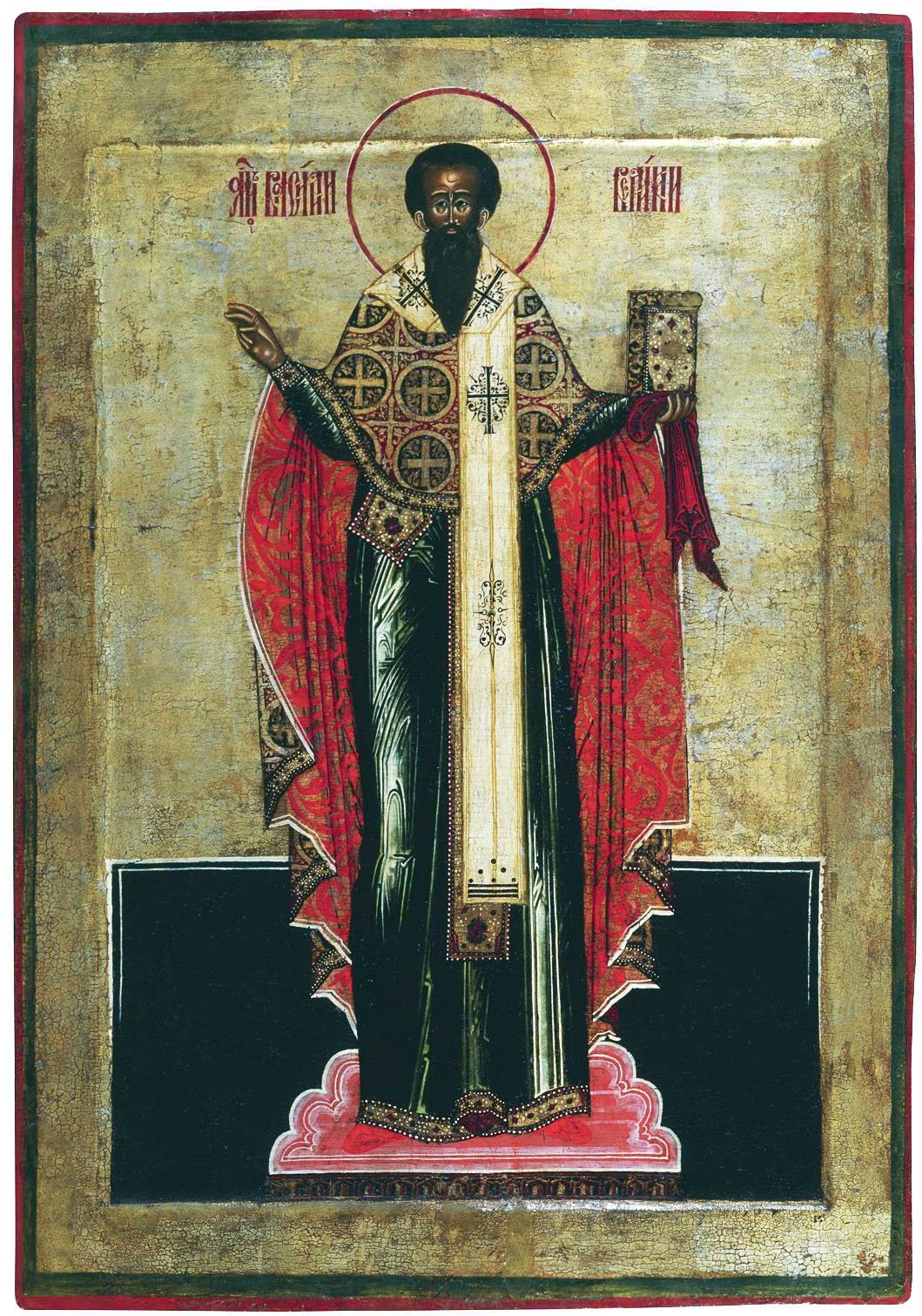
In another epistle, defending his communion with Sts. Meletios of Antioch and Eusebios of Samosata against critics, St. Basil sets the standard with a striking qualifier:
“I should certainly not have admitted them to communion even for a moment, if I had found them a stumbling-block to the Faith.”
— St. Basil the Great, Epistle 266 (To Peter, Bishop of Alexandria), PG 32:992–994; cf. the NPNF translation
Not even for a moment. This is St. Basil, the great theologian of economia, saying that communion with someone who is a stumbling-block to the Faith cannot be tolerated for even an instant.
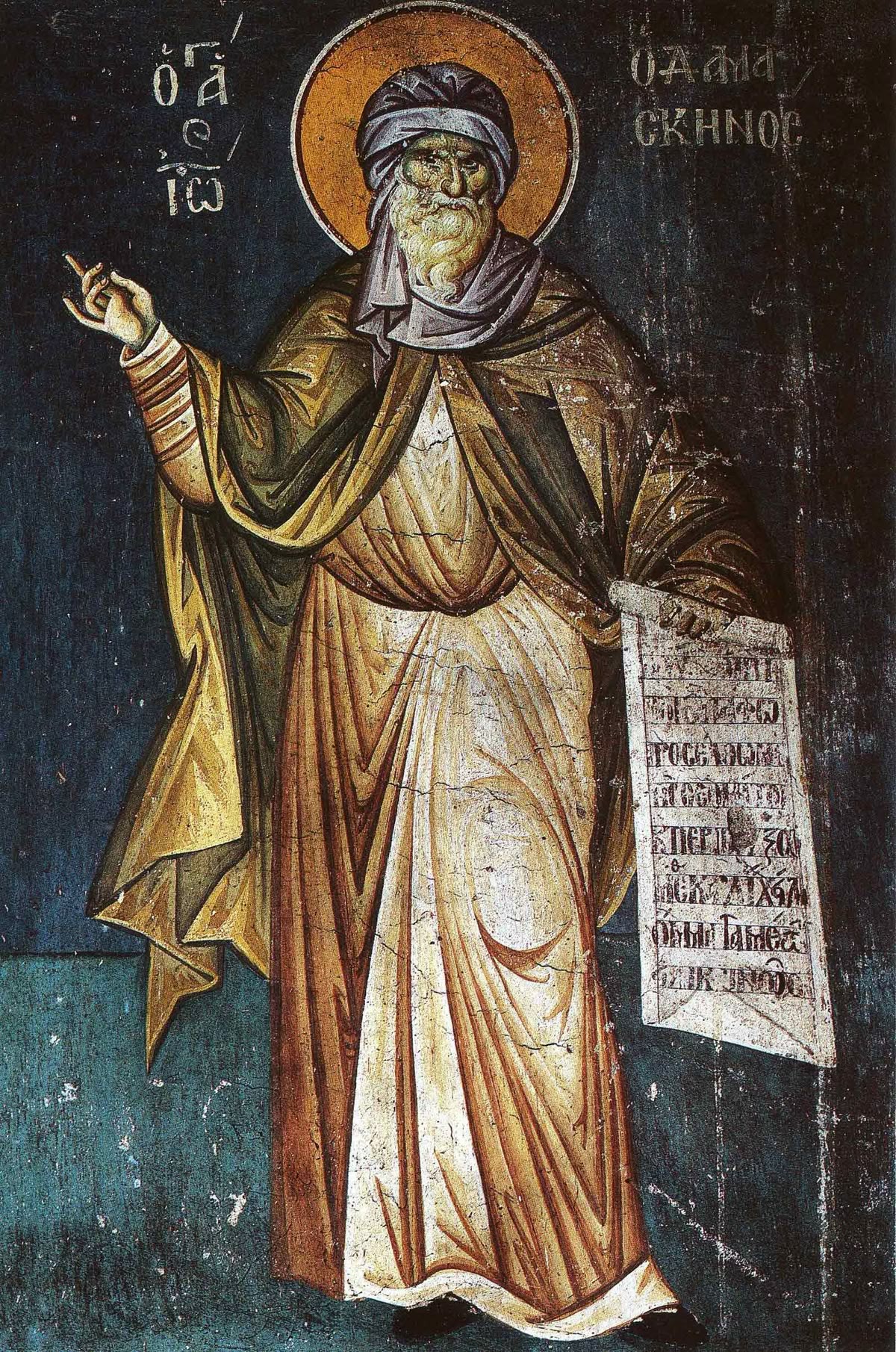
St. John Damascene first defines what communion is, then draws the consequence for communion with heretics:
It is called communion, and truly is so, because of our having communion through it with Christ and partaking both of His flesh and His divinity, and because through it we have communion with and are united to one another. For, since we partake of one bread, we all become one body of Christ and one blood and members of one another and are accounted of the same body with Christ.
Let us then make every effort to guard against receiving communion from heretics or giving it to them. “Give not that which is holy to dogs,” says the Lord, “neither cast ye your pearls before swine,” lest we become sharers in their false teachings and their condemnation. If there really is such a union with Christ and with each other, then we really become united deliberately with all those with whom we communicate together, for this union comes from deliberate choice and not without the intervention of our judgment. “For we are all one body, because we partake of one bread,” as the divine Apostle says.
— St. John of Damascus, The Orthodox Faith, Book IV, Chapter 13, trans. Frederic H. Chase Jr., Fathers of the Church 37 (Catholic University of America Press, 1958), p. 361; cf. the NPNF translation
St. Cyril of Alexandria, the Father of the Third Ecumenical Council, states the same principle:
We will not become sharers in the holy and life-giving Sacrifice with those who are wont to believe in doctrines other than those that are right and true, but with our brethren and those of one mind, with whom there is unity of spirit and identity of faith.
— St. Cyril of Alexandria, On Worship in Spirit and Truth 11, 17; PG 68:761D, 1077C
The Eucharistic sacrifice presupposes “unity of spirit and identity of faith.” Where that unity is absent, communion is not possible.
St. Nikephoros, Patriarch of Constantinople, addresses those who have fallen through communion with heretics:
And since, according to the circumstance, some who flee dangers become defiled through communion with heretics, if they confess their fall and repent, let them be received into common banquet.
— St. Nikephoros, Patriarch of Constantinople, Ralli, G. – Potli, M., Syntagma of the Divine and Sacred Canons, vol. IV, cols. 431d–431z
St. Nikephoros speaks of those who commune with heretics as having experienced a “fall” requiring confession and repentance: the language of grave sin, applied to the act of communion itself.
St. Athanasius the Great specifies what this repentance requires. In his letter to Rufianus, preserved in the Pedalion, he instructs that those returning from communion with heretics must publicly anathematize the heresy (ἀναθεματίσουν φανερά), confess the Creed of the Nicene Fathers, and prefer no other council above the First Ecumenical Council. St. Nikodemos records that St. Athanasius instructed Rufianus to read this letter to all the priests, “so they would know what those returning from communion with heretics must do” (τί χρεωστοῦσι νὰ κάμνουσιν οἱ ἐπιστρέφοντες ἐκ τῆς κοινωνίας τῶν αἱρετικῶν).
Communion with heretics is not a private lapse resolved by private regret. It requires formal, public acts of repentance: anathematization of the heresy, confession of the faith, and submission to the councils.
This is exactly why, when clergy of the Moscow Patriarchate came to ROCOR, they were required to formally renounce Sergianism and ecumenism through the eight questions of the 1991 Repentance Service documented in Chapter 24. The patristic standard demands it: communion with heretics is a fall, and returning from that fall requires public repentance.
St. Meletios the Galisiotes, citing St. Theodore the Studite, states:
Even brief communion with heretics brings no ordinary defilement upon the Orthodox.
— St. Meletios the Galisiotes, in Laurent, V., and Darrouzès, J., Dossier grec de l’union de Lyon, p. 561
St. Justin Popovich, that fearless confessor of the twentieth century, likewise quotes St. Theodore:
The fearless Confessor of theanthropic Orthodox truths, Saint Theodore the Studite, proclaims to all men in all worlds: “Communion received from heretics alienates a man from God and associates him with the devil.”
— St. Justin Popovich, The Orthodox Church and Ecumenism, p. 159, citing St. Theodore the Studite, Epistle 220 (PG 99:1668C)
St. Theodore further declares that heretical bread lacks the grace of the Body of Christ entirely: “the heretics’ bread is not the Body of Christ” (Epistle 91, PG 99, 1597A). And he draws a devastating parallel between Orthodox and heretical communion:
“Just as the divine bread, when the Orthodox partake of it, makes all who partake one body; so also the heretical [bread], making those who partake of it communicants with one another, makes them one body opposed to Christ.”
— St. Theodore the Studite, PG 99, 1480CD
Hieromonk and canonologist Matthaios Vlastaris records the patristic consensus:
Indeed, the divine fathers command us to resist even unto blood in order not to be defiled by communion with the blasphemers.
— Hieromonk Matthaios Vlastaris, in Patriarch Dositheos of Jerusalem, Tome of Reconciliation, p. 451
St. Mark of Ephesus, the pillar of Orthodoxy who refused the false union at Florence, exhorts:
But those who love God must stand bravely in their works and be ready to endure every danger for the sake of piety, and to avoid being partakers in the communion of the impious.
— St. Mark of Ephesus, A. Dimitrakopoulou, Ορθόδοξος Ελλάς (Orthodox Greece), pp. 106–107
In the same vein, St. Mark cites a patristic teaching attributed to St. Basil the Great on the consequences of communing with the heterodox:
As for all those who pretend to confess the sound Orthodox faith, but are in communion with people who hold a different opinion, if they are forewarned and still remain stubborn, you must not only not be in communion with them, but you must not even call them brothers.
— Attributed to St. Basil the Great; cited by St. Mark of Ephesus, Encyclical Letter (PG 160:101D); cf. N. Vasileiadis, Markos ho Eugenikos kai he Henosis ton Ekklesion (Athens: Soter, 1972), p. 95, https://paterikiparadosi.blogspot.com/2014/05/blog-post_4.html[6]
St. Nectarios of Aegina, that beloved wonderworker of our times, explains the spiritual logic:
Therefore, outward non-communion safeguards inward estrangement [from heresy].[7]
— St. Nectarios, Metropolitan of Pentapolis, Περὶ τῶν σχέσεων μὲ αἱρετικούς (About the Relationship with Heretics), Publ. Papangopoulos
St. Joseph of Volokolamsk (Volotsky), who confronted the heresy of the Judaizers in Russia, declared:
If he will turn out to be a heretic, we will try not to receive either his teaching or his Communion, and not only will we receive no Communion from him, but we’ll condemn him and expose him with all our power, so that we do not become partakers of his perdition.
— St. Joseph of Volokolamsk, The Enlightener, Word VII; English translation quoted in Breaking Communion with Heretics and the 15th Canon of the I-II Council of Constantinople (Kishinau, 2017), p. 9
St. Cyprian of Carthage warns the laity that they cannot claim innocence by remaining passive under a heretical bishop:
The crowd should not comfort itself that it can remain untouched by the contagion of sin if it is in communion with a sinful bishop and gives him the permission for the unjust and unlawful service as its hierarch, since the harshness of God threatens and says through the prophet Hosea (9:4): “Their sacrifices shall be unto them as the bread of mourners; all that eat thereof shall be polluted,” teaching and showing that all those who get polluted by the sacrifices of a profane and unlawful bishop are totally partakers of the sin.
— St. Cyprian of Carthage, Epistle 67 (To the Spanish Clergy and Laity, on Basilides and Martial); English translation quoted in Breaking Communion with Heretics and the 15th Canon of the I-II Council of Constantinople (Kishinau, 2017), p. 10; cf. the ANF translation
The Athonite Confessors who separated from Patriarch John Vekkos over the false union of Lyon posed the question with equal directness:
He who receives the heretic is subject to the same condemnation as him […] How can we rightfully recognize them as heads and judges of the Orthodox Church and how can we proclaim their commemoration as an orthodox one in the church and especially at the Lord’s Supper, so that it should continue to sanctify us without defilement?
— Athonite Fathers, Confessional Letter to Emperor Michael VIII Palaiologos (c. 1274)[8]
Even the Life of St. Martin of Tours records how this great wonderworker of the West understood the matter:
He was filled with mourning and lamentation that he had even for an hour been mixed up with the evil communion… Therefore, from that time forward, he carefully guarded against being mixed up in communion with the party of Ithacius.
— Sulpitius Severus, Dialogue III, Ch. 13, NPNF2, XI:52
Thus, the witness is unanimous across East and West, across centuries, across every circumstance: communion with heretics defiles, alienates from God, and must be avoided even unto blood, even unto a lifetime without the sacraments if no Orthodox alternative exists.
To those who hear this witness and feel judged, we offer the same response St. Maximus the Confessor gave when accused of condemning the entire world by standing alone against the Monothelite heresy:
When Nebuchadnezzar made a golden image in the province of Babylon, he summoned all those in authority to come to the dedication of the image. The holy Three Children condemned no one. They did not concern themselves with the practises of others, but looked only to their own business, lest they should fall away from true piety. When Daniel was cast into the lions’ den, he did not condemn those who prayed not to God that they might obey the decree of Darius. Instead, he concentrated on his own duty. He preferred to die than to sin against his conscience and transgress God’s law. God forbid that I should judge or condemn anyone or that I should claim that I alone shall be saved! I should much prefer to die than betray the Faith in any way or go against my conscience.
— St. Maximus the Confessor, in The Great Synaxaristes of the Orthodox Church, trans. Holy Apostles Convent, Vol. 1 (January), pp. 857-858
The Three Youths did not judge those who bowed to the idol. They simply refused to bow themselves. That is what cessation of commemoration is: not a judgment on others, but a refusal to participate in what the fathers unanimously condemn.
And to those who would call this refusal “unloving,” St. Maximus gave the definitive answer:
What is more pleasing to the faithful than to see the scattered children of God gathered again as one? Neither do I exhort you to place harshness above the love of men. May I not be so mad! I beseech you to do and to carry out good to all men with care and assiduity, becoming all things to all men, as the need of each is shown to you. I want and pray you to be wholly harsh and implacable with the heretics only in regard to cooperating with them or in any way whatever supporting their deranged belief. For I reckon it hatred toward man and a departure from divine love to lend support to error, so that those previously seized by it might be even more greatly corrupted.
— St. Maximus the Confessor, PG 91:465C, in The Great Synaxaristes of the Orthodox Church, trans. Holy Apostles Convent, Vol. 1 (January), p. 846
To support heresy is not love; it is “hatred toward man.” To refuse cooperation with error is not harshness; it is the only form of love that does not corrupt the one already deceived.
When told that all five patriarchates, and even the papal legates, were about to commune with the Monothelite patriarch, St. Maximus stated the absolute limit:
Were the universe to enter into communion with the patriarch, I should never commune with him. Take heed of the words of the Holy Spirit through the apostle: “Even if we, or an angel from out of heaven, should preach a gospel to you besides what Gospel we preached to you, let such a one be anathema” [Gal. 1:8].
— St. Maximus the Confessor, in The Great Synaxaristes of the Orthodox Church, trans. Holy Apostles Convent, Vol. 1 (January), p. 858
The universe. Not “most of the Church.” Not “everyone except the monks.” The universe. If every bishop, every patriarch, every government on earth enters into communion with heresy, the obligation to refuse remains. Numbers do not sanctify error.
The Scriptural witness
Having established the patristic consensus, we can now see how the fathers understood the Scriptures on this matter. The command to separate from the ungodly and from those who defile holy things runs throughout Scripture, and the fathers applied these passages directly to the question of heresy.
In the Old Testament, the Lord says through the prophet Ezekiel:
Her priests reject My law and desecrate My holy things. They no longer distinguish between the holy and the profane, nor between the unclean and the clean.
— Ezekiel 22:26[9]
St. Sophrony of Jerusalem interprets this passage as applying to heretics, and draws out the practical implications:
If it is not possible to conduct services in a church, hold gatherings in a house, O bishop, so that a pious person does not enter into the church of the ungodly. For it is not the place that sanctifies the person, but the person who sanctifies the place. Let it be something you must flee from, because it has been profaned by them. For just as holy priests sanctify, so too the impure pollute. But if it is not possible to gather either in a house or in a church, let each one chant alone, read, and pray, or two or three together: “For wherever two or three are gathered in My name,” says the Lord, “there am I in the midst of them.”
— St. Sophrony of Jerusalem, PG 87.5:3369
St. Basil the Great witnessed exactly this pattern during the Arian crisis. The faithful did not wait for permission to leave:
“The people have left the houses of prayer and are holding congregations in the wildernesses. It is a sad sight. Women, boys, old men, and those who are in other ways infirm, remain in the open air, in heavy rain, in the snow, the gales and the frost of winter as well as in summer under the blazing heat of the sun. All this they are suffering because they refuse to have anything to do with the wicked leaven of Arius.”
— St. Basil the Great, Epistle 242 (To the Westerners), https://www.newadvent.org/fathers/3202242.htm
Women, children, the elderly, the infirm: they chose the elements over Arian churches. And St. Basil, one of the Three Holy Hierarchs, called these churches what they had become:
“Exalted office is now publicly known as the prize of impiety. The result is, that the worse a man blasphemes, the fitter the people think him to be a bishop. […] The better laity shun the churches as schools of impiety; and lift their hands in the deserts with sighs and tears to their Lord in heaven.”
— St. Basil the Great, Epistle 92 (To the Italians and Gauls), https://www.newadvent.org/fathers/3202092.htm[10]
Schools of impiety. This is St. Basil’s characterization of churches under heretical bishops: not merely compromised, not merely imperfect, but actively teaching the opposite of what they should. The Arian crisis is the closest historical parallel to the present situation, and the pattern of lay response was identical.
The Psalmist declares:
I hate the assembly of evil doers, and I will not sit with the ungodly. I will wash my hands in innocence; so I will go about Your altar, O Lord.
— Psalm 25:5-6 (LXX)[11]
The Apostle Paul, citing Isaiah, commands:
Come out from among them and be separate, says the Lord. Do not touch what is unclean, and I will receive you. I will be a Father to you, and you shall be My sons and daughters, says the LORD Almighty.
— 2 Corinthians 6:17-18[12]
The noted twentieth century Greek theologian Panagiotis Trembelas comments on this passage:
As you would cease relationships with a leper or someone sick from cholera or smallpox or plague for fear that the infection of these diseases may be transmitted to you as well.
— Panagiotis Trembelas, Hypomnēma eis tas Epistolas tēs Kainēs Diathēkēs, Vol. I (Athens: Adelphotēs Theologōn “Ho Sōtēr”), p. 490
Just as one avoids the physically contagious for the health of the body, so Christians must avoid the spiritually contagious for the health of the soul.
In Numbers, we find a stark warning. When Korah and his followers rebelled against Moses, the Lord commanded:
Separate yourselves from among this congregation, that I may consume them in a moment… Depart now from the tents of these wicked men!
— Numbers 16:21-26[13]
The people were ordered to separate from the rebellious, lest they be destroyed alongside them. Their personal virtue would not save them if they remained united with the enemies of God. Physical proximity to the condemned brought condemnation.
Thus, the Scriptural pattern is clear, and the fathers understood it: those who love God keep themselves separate from the ungodly, from those who defile holy things, from those who rebel against the Lord’s appointed order. This is why the matter requires such careful attention and such urgent warnings.
St. Maximus the Confessor confronted this very reasoning when officials urged him to accept the Typos (the emperor’s document suppressing the Orthodox confession) “for the sake of peace.” His response dismantles the logic of compromise:
If now, for the sake of regulating peace, the saving Faith is ill-conceived, this is complete separation from God and not union. For tomorrow, the ill-famed Jews shall say, “Let us arrange a peace amongst us and let us unite. We shall remove circumcision and you shall take away Baptism; only let us no longer have any strife in our midst.”
— St. Maximus the Confessor, in The Great Synaxaristes of the Orthodox Church, trans. Holy Apostles Convent, Vol. 1 (January), p. 855
Unity purchased at the cost of the Faith is not union with God; it is separation from Him.
For those who have separated or who contemplate separation, St. Basil the Great offers the theological promise that undergirds everything above. Writing to the Nicopolitans, who had been driven from their churches by an Arian bishop, he assures them:
“You are haply distressed that you are driven without the walls, but you shall dwell under the protection of the God of Heaven, and the angel who watches over the Church has gone out with you.”
— St. Basil the Great, Epistle 238 (To the Nicopolitans), https://www.newadvent.org/fathers/3202238.htm
The angel of the Church does not remain with the building. The angel goes with the faithful.
Is this Donatism?
At this point, some will object: “This talk of ‘defilement’ and ‘contamination’ sounds like Donatism, which the Church rejected as heresy centuries ago.”
Here this objection will be answered thoroughly by first examining who the Donatists were.
The Donatists were a sect of puritans in the 3rd and 4th centuries who claimed that the personal moral sins of a minister render the sacraments invalid. If a priest committed a grave sin, they argued, his baptisms and liturgies were then null and void.
The Orthodox Church expressly rejected this teaching. The sacraments are effected by Christ through the Church; their validity does not depend on the celebrant’s moral worthiness.
St. John Chrysostom teaches precisely this:
For if He caused a voice to be uttered by an ass, and bestowed spiritual blessings by a diviner, working by the foolish mouth and impure tongue of Balaam, in behalf of the offending Jews, much more for the sake of you the right-minded will He, though the priests be exceedingly vile, work all the things that are His, and will send the Holy Ghost. […] Neither Angel nor Archangel can do anything with regard to what is given from God; but the Father, the Son, and the Holy Ghost, dispenses all, while the priest lends his tongue and affords his hand. For neither would it be just that through the wickedness of another, those who come in faith to the symbols of their salvation should be harmed.
— St. John Chrysostom, Homily 86 on the Gospel of John, https://www.newadvent.org/fathers/240186.htm
And again:
For it may be that rulers are wicked and polluted, and their subjects good and virtuous; that laymen may live in piety, and priests in wickedness; and there could not have been either baptism, or the body of Christ, or oblation, through such, if in every instance grace required merit. But as it is, God uses to work even by unworthy persons, and in no respect is the grace of baptism damaged by the conduct of the priest: else would the receiver suffer loss. […] For man introduces nothing into the things which are set before us, but the whole is a work of the power of God, and He it is who initiates you into the mysteries.
— St. John Chrysostom, Homily 8 on First Corinthians, https://www.newadvent.org/fathers/220108.htm
This makes clear that rejecting Donatism means affirming that the sacraments do not rise or fall with a priest’s moral condition. A sinful priest still confects valid mysteries.
What, then, is the “contamination” we speak of?
The “contamination” spoken of by the fathers is not the Donatist claim about invalidity caused by moral sin. It concerns the context of faith and communion in which the mysteries are celebrated.
The fathers teach that heresy and communion with heresy corrupt the purity and saving efficacy of the mysteries, even where the sacramental forms are present.
The precise distinction is this:
Donatism says: immoral priest → no sacrament. (Orthodoxy rejects this.)
Orthodoxy says: heretical confession or communion with heresy → defiled participation and forbidden worship, because the unity of faith is broken, even if the external rite occurs.
Consider: if the Donatists were correct and there were no sacrament at all in the hands of unworthy ministers, then there would be nothing to contaminate. The very notion of “defilement” presupposes that the mysteries are real, thus the teaching of defilement definitionally cannot be Donatism.
This is precisely why participation in a heretical context is spiritually dangerous: one receives real mysteries in a context that defiles them.
The witness of the 5th Ecumenical Council
This principle, that heretical commemoration defiles the mysteries, is not merely a patristic opinion; it was acted upon by an Ecumenical Council. The Acts of the 5th Ecumenical Council record the imperial directive regarding Pope Vigilius, who had defended the heretical Three Chapters:
Constantine, the most glorious Quaestor, said: While I am still present at your holy council by reason of the reading of the documents which have been presented to you, I would say that the most pious Emperor has sent a minute to your Holy Synod, concerning the name of Vigilius, that it be no more inserted in the holy diptychs of the Church, on account of the impiety which he defended. Neither let it be recited by you, nor retained, either in the church of the royal city, or in other churches which are intrusted to you and to the other bishops in the State committed by God to his rule. And when you hear this minute, again you will perceive by it how much the most serene Emperor cares for the unity of the holy churches and for the purity of the holy mysteries.
— Acts of the 5th Ecumenical Council, Session VII; The Seven Ecumenical Councils, NPNF2-14, p. 558
Note the language: “the purity of the holy mysteries.” The removal of Vigilius from the diptychs (the lists of names commemorated during the Liturgy) was done precisely to preserve this purity. Metropolitan Meletios Kalamaras draws the doctrinal implication:
Heresy and communion with heretics defile the purity of the mysteries. Therefore, the deposition of the pope was a duty in defense of the purity and salvific efficacy of the holy Mysteries, since they are defiled when heretical bishops are commemorated during them.
— Metropolitan Meletios Kalamaras, The Fifth Ecumenical Council, p. 559, footnote 76
And the Council’s Divine Decree of Faith gives the positive norm:
There is one salvation for Christians: to approach the communion of the holy mysteries with a pure heart, a good conscience, and unfeigned faith; for only then does each one hope to receive forgiveness of sins, if they are deemed worthy of the communion of the holy mysteries from priests who worship God in an Orthodox manner.
— Divine Decree of Faith, 5th Ecumenical Council (Kalamaras, p. 560)
The key phrase: “from priests who worship God in an Orthodox manner.” The saving efficacy of the mysteries is inseparable from right faith and Orthodox communion. It is not enough that a celebrant be canonically ordained; he must also worship God in an Orthodox manner.
St. Maximus the Confessor asked the question that the Fifth Ecumenical Council’s decree implies. When explaining why he could not commune with the Monothelite patriarchate of Constantinople, he stated that its leaders had “excommunicated themselves many times over” and had “been deposed and deprived of the priesthood at the Lateran Council held in Rome,” and then asked:
What Mysteries can such persons perform? What spirit comes upon what they celebrate or those ordained by them?
— St. Maximus the Confessor, in The Great Synaxaristes of the Orthodox Church, trans. Holy Apostles Convent, Vol. 1 (January), p. 857
Note carefully what St. Maximus is doing. He is not treating private suspicion as enough to settle the question of grace, nor is he inventing a Donatist rule that every heretical priest automatically has no sacrament. He points to a public conciliar condemnation of the Monothelite leaders and then asks the sacramental question from within that public ecclesial context: “What Mysteries can such persons perform? What spirit comes upon what they celebrate or those ordained by them?” The Canon 15 position this book advocates does not pronounce on the question of grace; it separates from heresy and leaves the juridical question to future councils, as Metropolitan Cyril of Kazan explicitly taught (Chapter 24: The Saints Who Ceased Commemoration).
Therefore, avoiding services where heresy is confessed or commemorated is fidelity to the conciliar and patristic requirement that the mysteries be approached in Orthodoxy.
We reject Donatism: the sacraments are not invalidated by a minister’s moral sins. But we uphold the patristic and conciliar teaching: heresy and communion with heresy defile the purity and saving character of the mysteries and therefore demand separation from such communion.
The Orthodox distinction is clear: moral unworthiness does not equal invalidity (Donatism rejected); but heresy and communion with heresy leads to defilement and prohibition, so that the faithful may receive the mysteries from priests who worship God in an Orthodox manner.
St. Gregory the Theologian, one of the Three Holy Hierarchs, names the nature of this defilement with precision. Writing against the Arians in his Thirty-Third Oration, he states that the Orthodox have not “defiled ourselves by communion with them, which we avoid like the poison of a snake, not because it injures the body, but because it blackens the depths of the soul.”[14] Not bodily harm. Spiritual blackening. The danger of communion with heresy is not external; it is interior, touching the soul itself.
St. Paisios the Athonite illustrates this distinction with characteristic directness. A nun asked him whether she should have requested the blessing of an Orthodox priest who arrived at her monastery without his cassock:
— Geronda, someone brought an Orthodox priest wearing only trousers [without his cassock] to the monastery. Should we have asked for his blessing?
— What blessing? You should have told the person who brought him, no matter how important he was, “Forgive us, but it is a rule in our monastery to give cassocks to priests who are not wearing one. To have a priest come to an Orthodox Women’s Monastery wearing only his trousers! That is inappropriate.”
When the person who brought him has no shame, and when the priest himself is not ashamed for having come without his cassock, why should you be embarrassed to ask him to put one on? I once met a young archimandrite wearing laymen’s clothing at an airport. He was going abroad and introduced himself, “I am, Father, so and so,” he said. “Where’s your cassock?” was my answer. Of course, I did not prostrate in front of him.
— St. Paisios the Athonite, The Clergy and the Church, p. 350
Who would dare accuse St. Paisios of Donatism for this?
Was St. Paisios questioning the priest’s ordination or the validity of his mysteries by refusing to receive a blessing? Of course not. He was correcting an impropriety far less grave than heresy, and withholding the customary reverence until correction was made.
If correction and withheld reverence are appropriate for a missing cassock, and in no way constitute Donatism, how much more for the public teaching of heresy?
And no, the fact that St. Paisios is a saint and we are not makes no difference here. Notice that he is instructing someone else on whether to receive a blessing from a priest not wearing a cassock. He is not exercising a privilege unique to his holiness; he is teaching a principle that applies to everyone. The saints do not operate under their own rules; they operate within the same canons and traditions that bind us all. The fact that he is advising someone else further proves this: it is a directive, not a personal eccentricity. Yet this is a persistent tendency within the Church today, where people dismiss the principles and actions of the saints as irrelevant to us because “they are saints, and we are not” (see Chapter 27: "You're Not a Saint" for the full response to this objection).
Metropolitan Philaret: The Moscow Patriarchate’s Double Anathema
The distinction between Donatism and legitimate separation is not merely theoretical. ROCOR applied it in practice for eighty years. Metropolitan Philaret of New York, whose incorrupt relics testify to his holiness, provided the most direct application of this distinction to the Moscow Patriarchate. In a 1980 letter concerning Fr. Dimitry Dudko, he explained why ROCOR maintained separation from the MP:
This pseudo-church has been twice anathematized. His Holiness Patriarch Tikhon and the All-Russian Church Sobor anathematized the Communists and all their collaborators. This dread anathema has not been lifted till this day and remains in force, since it can be lifted only by a similar All-Russian Church Sobor, as the canonical supreme ecclesiastical authority. And a terrifying thing happened in 1927, when the head of the Church, Metropolitan Sergius, by his infamous and apostate Declaration, subjected the Russian Church to the Bolsheviks and proclaimed collaboration with them. And thus in a most exact sense was fulfilled the expression in the prayer at the beginning of Confession: having fallen under their own anathema! For in 1918 the Church anathematized all the confederates of Communism, while in 1927 she herself joined the camp of these collaborators and began to laud the red, God-hating regime: to laud the red beast spoken of in the Apocalypse.
Note carefully: Metropolitan Philaret is not declaring the MP graceless. He is observing that the MP fell under an existing anathema by their own actions. The 1918 anathema against Communist collaborators was already in force; Sergius brought the Church under it by his 1927 Declaration.
Metropolitan Philaret continues:
When Metropolitan Sergius promulgated his criminal Declaration, then the faithful children of the Church immediately separated themselves from the Soviet church, and thus the Catacomb Church was formed. And she, in her turn, has anathematized the official church for its betrayal of Christ.
Thus the MP stands under two anathemas: Patriarch Tikhon’s 1918 anathema (under which they brought themselves), and the Catacomb Church’s subsequent anathema.
Metropolitan Philaret then explained why Fr. Dudko’s apparent spiritual success ultimately failed:
Why did this calamity befall Father Dimitry Dudko?… Because his activity took place outside of the true Church… What then is the Soviet church? Archimandrite Constantine has often and insistently stated that the most horrible thing that the God-hating regime has done in Russia is the creation of the Soviet Church, which the Bolsheviks presented to the people as the true Church, having driven the genuine Orthodox Church into the catacombs or into the concentration camps.
He also cited St. Theophan the Recluse’s prophecy:
The hierarch Theophan the Recluse in his own day warned that a terrible time was approaching when people would behold before their eyes all the appearance of church grandeur: solemn services, church order, and such, while on the inside there would be total betrayal of the Spirit of Christ. Is this not what we see in the Soviet church? Patriarchs, Metropolitans, all the priestly and monastic orders, and at the very same time, an alliance with the God-haters, that is, a manifest betrayal of Christ.
The Witness of the Catacomb Nuns
Metropolitan Philaret then relates a remarkable account that demonstrates what faithfulness looks like in practice:
They banished a group of nuns belonging to the Catacomb Church to Solovki. The Chekists told them: “Get settled now, and tomorrow you will go to some sort of work.” But they received an unexpected answer: “We will not go and work.”
“What, have you gone out of your minds? Do you know what we will do with you?” screamed the Chekists. There followed the calm reply of people who in their faithfulness feared nothing: “What shall be, shall be, but what is pleasing unto God shall be, and not what suits you executioners and criminals. You may do with us what you please: starve us, torture us, hang, shoot, or burn us with fire. But we give you notice once and for all: we do not recognize you, you servants of Antichrist, as the lawful authority, and we will not fulfill your orders in any way!”
In the morning the infuriated Chekists drove the nuns up onto the hill of death. Thus was called a high hill where in winter an icy wind always blew. In that wind a man would freeze to death within a quarter of an hour. The nuns, clad in their shabby rassas, are led up the hill by Red Army men in their sheepskin coats. The nuns go happily, joyously along, chanting psalms and prayers. The soldiers left them at the top of the hill and then descended. They hear how they continue their chanting. Half hour, an hour, two, yet more: all the while the sound of chanting carries from above. Night fell. The guards approach the nuns: they are alive, unharmed, and continue chanting their prayers. The amazed soldiers led them home to the camp.
Is this not a victory? Behold what it means to be faithful unto death as the marvellous words of Apocalypse say: “Be thou faithful unto death, and I will give thee a crown of life.” In this instance it’s an obvious miracle, as it was with the three youths in the Babylonian furnace, only there the death-bearing element was fire, but here a death-dealing and killing cold. Behold how God rewards faithfulness!
— Metropolitan Philaret of New York, Letter to Fr. Victor Potapov concerning Fr. Dimitry Dudko and the Moscow Patriarchate (June 26/July 9, 1980), published in Vertograd-Inform (English ed. No. 4, Feb 1999, pp. 11–15)
Metropolitan Philaret draws the conclusion:
And hear my heartfelt conviction: if the entire mass of the many millions of Russians would evidence a like faithfulness as did those nuns, and would refuse to obey the bandits who have been oppressing the Russian nation, then Communism would collapse in a second. For the succor of God, which had saved in a miraculous manner the nuns while on their way to certain death, would come likewise to the Russian people. But as long as the nation recognizes the regime and obeys it, even if all the while cursing it in their hearts, that regime will remain in place.
— Metropolitan Philaret of New York, Letter to Fr. Victor Potapov concerning Fr. Dimitry Dudko and the Moscow Patriarchate (June 26/July 9, 1980), published in Vertograd-Inform (English ed. No. 4, Feb 1999, pp. 11–15)
Note what this account emphasizes: faithfulness, not juridical declarations of gracelessness. The nuns did not stand on the hill arguing about whether Soviet priests had “valid sacraments”. They refused to recognize “servants of Antichrist” as lawful authority, and God honored their faithfulness with a miracle.
This is the ROCOR position that some Old Calendarists misunderstand. ROCOR maintained that the MP had brought itself under existing anathemas and that the faithful must separate. But the emphasis was always on faithfulness to Christ and resistance to evil, not on pronouncing the ultimate question of grace in every Soviet parish. Metropolitan Cyril of Kazan, as we saw earlier, explicitly refused to declare Sergianist sacraments graceless while still breaking communion.
The distinction matters: one can recognize that an institution has apostatized and refuse communion with it, without presuming to pronounce on the presence or absence of grace in every parish and sacrament. Cessation of commemoration is not a declaration of gracelessness. It is an act of faithfulness: separating from a hierarch who publicly teaches heresy, as Canon 15 requires.
Fr. John Romanides clarifies the deeper principle: “The criterion for the validity of the Mysteries for us Orthodox is Orthodox dogma, whereas for non-Orthodox it is the apostolic succession. In the Orthodox tradition it is not enough to trace back ordination to the Apostles; we must have Orthodox dogma. Piety and dogma are one and the same thing and cannot be separated.”[15] Where Orthodox dogma is intact, the therapeutic path is intact. Where it is corrupted, the cure is compromised. The faithful do not need a “council” to tell them this, any more than a patient needs a medical board to tell him his doctor is a charlatan. Councils confirm what the Church already knows; they do not originate new judgments (as Chapter 25 documents in detail).
But if Orthodox dogma is the criterion, why not simply declare heretical sacraments graceless and be done with it? Because the Church has never done so, and deliberately so. Archbishop Hilarion (Troitsky), the Holy New Martyr, explains this through St. Basil the Great’s first canon: St. Basil did not link any dogmatic theory about the validity of sacraments outside the Church to Church practice. If he had, “the Church would necessarily have to define with absolute precision what error constitutes a heretic, separates one from the Church, and invalidates the Sacraments. Such a definition does not exist, and no general guiding thought can be derived from Church practice.”[16] The Church applies economia on a case-by-case basis precisely because she refuses to make a blanket juridical pronouncement on where grace is and is not present outside her canonical boundaries. This is the tradition, not a gap in it.
This is neither Donatism (which declared sacraments invalid based on the minister’s moral state) nor indifferentism (which treats communion with heresy as acceptable). It is the patristic middle way: Orthodox dogma is the criterion for the Mysteries, and the faithful separate from those who corrupt it, but the precise boundaries of grace remain in the hands of God. The Church acts; she does not presume to map the totality of divine action.
St. Andrew of Crete: A Saint Who Fell and Repented
The patristic middle way is not theoretical. Church history provides a concrete example in one of the most beloved saints of the Orthodox Church.
St. Andrew of Crete (c. 660-740), the author of the Great Canon of Repentance, was personally present at the 6th Ecumenical Council (680-681) as the official representative of the Patriarch of Jerusalem, where he contended against the Monothelite heresy. Thirty years later, in 712, the Monothelite Emperor Philippicus Bardanes convened a conciliabulum (a false council) that formally repudiated the 6th Ecumenical Council and restored the names of condemned Monothelite heretics to the diptychs. Andrew signed the heretical decrees.
After the emperor’s overthrow in 713, Andrew wrote a penitential letter to Agathon, a deacon at Hagia Sophia, expressing “deep remorse for not having stood firm for the truth.” He was received back into the fullness of Orthodoxy. Orthodox sources call his participation “apostasy” and a “spiritual downfall.” The St. Elisabeth Convent in Minsk writes: “Saint Andrew’s apostasy made sin a practical reality for the saint. He felt the darkness of spiritual downfall, and shed genuine tears of repentance.” The Great Canon of Repentance, chanted every Great Lent throughout the Orthodox world, is explicitly linked to this personal experience of fall and restoration.
That we chant this every year as Orthodox Christians, not knowing that this repentance stems from alignment with heresy, is unfortunate.
The theological point of the example of St. Andrew is this: you cannot be “received back” into something you never left. The language of reception presupposes departure. Andrew’s glorification as a saint came through the fall-and-repentance cycle, not because the fall was inconsequential. The Church glorifies him as one who fell grievously and repented authentically, the same way the church glorifies and lauds St. Mary of Egypt.
Germanus, then Metropolitan of Cyzicus, also signed the 712 decrees, also repented, and was elevated to Patriarch of Constantinople on August 11, 715. He immediately convened a synod that reaffirmed the doctrine of the 6th Ecumenical Council, proclaimed anew the two wills and two operations in Christ, and anathematized the Monothelite leaders.[17] He too is glorified as a saint. The pattern is the same: the fall was real, the repentance was real, and glorification came through repentance, not despite the fall being irrelevant.
If participation under imperial duress is a genuine fall requiring correction, voluntary ongoing communion with a hierarch who publicly teaches heresy carries at least the same weight. St. Andrew signed under threat from an emperor. Those who today continue to commemorate Patriarch Kirill do so under no such threat.
”Who decides?”
At this point, some may ask: “If a council is not required to identify heresy, then who decides? Does anyone get to declare something heresy?”
Building on the evidence already presented, from the historical witnesses who acted before councils to the doctrinal framework that councils defend rather than discover truth, this question reveals the very problem we are addressing. It presupposes a juridical model where heresy is something declared into existence by an authority. But this is precisely the modern error.
The patristic model is different. Heresy is an objective departure from the deposit of faith. It exists as heresy the moment someone teaches contrary to the fathers. The question is not “who has the authority to declare this heresy?” but rather “does this teaching accord with the fathers or not?”
St. Vincent of Lérins provided the classic formula in the 5th century: in his Commonitorium, he writes that we hold that faith which “has been believed everywhere, always, by all” (quod ubique, quod semper, quod ab omnibus creditum est). Heresy is identified by its novelty and particularity against this universal consensus. A teaching is Orthodox, not because a council declares it so; a council declares it so because it has always been Orthodox. And a teaching is heretical not because a council condemns it; a council condemns it because it has always been contrary to the faith.
Geronda Ephraim did not need anyone’s permission to recognize that Marxism contradicts the Gospel. The Russian New Martyrs did not need a council to tell them that Sergius had betrayed the faith. They knew the faith, and they could see the contradiction.
The proper question is not “who decides?” but “does this teaching accord with the fathers or not?”
Consider what this very book is doing. It decides nothing. It declares nothing by fiat. It presents the collective witness of our Church Fathers, saints, and elders. The reader can verify every quote. The reader can go and read these sources for themselves. This is the method: measure the teaching against the patristic consensus.
Those who keep asking “who decides?” have rejected this framework. They have made themselves dependent on Orthodox gurus, whether priests, theologians, or academics, to discern heresy for them. But this is not how our saints operated.
As Fr. Seraphim Rose stated, those who feel Orthodoxy through living its life of grace, through exposure to the lives of the saints and patristic writings, are able to recognize the manifestation of heresy. Those who are not raised on these things, who do not read the fathers, who do not engage with prayer of the heart, who do not partake of the sacraments with understanding, “do not really know what you are talking about” (as quoted in Councils do not discover heresy in Chapter 25). They cannot understand how one can become so excited over something which no council has identified as heresy.
And yet many who do not read the saints, or who read only a paragraph here and there, wish to argue with those who do. This is the heart of the problem. They argue not with us, but with the fathers themselves.
The Russian New Martyr saints found our canons, saints, and elders sufficient to “decide.” Let those who still wish to argue be content with the exact same witness.
And yet, despite everything the saints, canons, and fathers have established, the most common response to all of this remains: “You’re not a saint. Who are you to cease commemoration?” The next chapter answers this objection.
Original Greek: “Συμφέρει τὸν ἀβάπτιστον, εἰ μὴ εὑρίσκοιτο ὀρθόδοξος ὁ βαπτίσων, ὑπὸ μοναχοῦ, ἢ καὶ τούτου μὴ ὄντος, ὑπὸ λαϊκοῦ βαπτισθῆναι, λέγοντος «βαπτίζεται ὁ δεῖνα εἰς τὸ ὄνομα τοῦ πατρὸς καὶ τοῦ υἱοῦ καὶ τοῦ Ἁγίου Πνεύματος» ἢ ἀφώτιστον ἐκδημῆσαι. Καὶ ἀληθῶς ἐβαπτίσθη· ἐξ ἀνάγκης γὰρ καὶ νόμου μετάθεσις, ὡς γέγονε πάλαι καὶ ἀποδέδεκται.” ↩
Original Greek: “Οὐ προσήκει, ἀλλ᾽ ἢ μᾶλλον κατὰ ἀνάγκην ἐν κοινῷ οἴκῳ, ἐκλελεγμένῳ τινὶ καθαρωτέρῳ τόπῳ.” ↩
“Заявление Священного Синода Русской Православной Церкви в связи с посягательством Константинопольского Патриархата на каноническую территорию Русской Церкви” (Минск, 15.10.2018). Patriarchia.ru (RU): https://www.patriarchia.ru/article/99760. DECR (EN): https://mospat.ru/en/news/47059/. Synod resolves to cease Eucharistic communion with the EP; faithful not to commune in EP parishes. ↩
Orthodoxia.info (mirror of ROCOR Synod communiqué), Oct 2018: https://orthodoxia.info/news/rocor-no-longer-in-communion-with-ep/ ↩
Original Greek: “«Διὰ τοῦτο πολλάκις ὑμᾶς ὑπέμνησα περὶ τῶν ἀθέων αἱρετικῶν, καὶ τανῦν παρακαλῶ, τοῦ μὴ συγκαταβῆναι αὐτοῖς ἔν τινι πράγματι, μὴ ἐν βρώμασιν, ἢ ἐν πόμασιν, ἢ φιλίᾳ ἢ σχέσει, ἢ ἀγάπῃ ἢ εἰρήνῃ. Ὁ γὰρ ἐν τούτοις ἀπατώμενος, καὶ συγκαταβαίνων αὐτοῖς, ἀλλότριον ἑαυτὸν καθίστησι τῆς καθολικῆς Ἐκκλησίας.»” ↩
Original Greek: “«Οἵτινες τὴν ὑγιᾶ ὀρθόδοξον πίστιν προσποιούμενοι ὁμολογεῖν, κοινωνοῦσι δὲ τοῖς ἑτερόφροσι, τοὺς τοιούτους, εἰ μετὰ παραγγελίαν μὴ ἀποστῶσιν, μὴ μόνον ἀκοινωνήτους ἔχειν, ἀλλὰ μηδὲ ἀδελφοὺς ὀνομάζειν.»” ↩
Original Greek: “ΛΟΙΠΟΝ Η ΕΞΩΤΕΡΙΚΗ ΑΚΟΙΝΩΝΗΣΙΑ ΔΙΑΣΩΖΕΙ ΤΗΝ ΕΣΩΤΕΡΙΚΗΝ ΑΛΛΟΤΡΙΟΤΗΤΑ.” The bracketed object is supplied from the context of St. Nectarios’ discussion of relations with heretics. ↩
Athonite Fathers, Confessional Letter to Emperor Michael VIII Palaiologos (c. 1274). English translation from Breaking Communion with Heretics and the 15th Canon of the I-II Council of Constantinople (Kishinau, 2017), pp. 9–10, citing the “Epistle of the Hagiorite Fathers to the Emperor Michael Paleologos with the Confession of Faith Against the Unia of Lyon (1272–74).” The same letter is cited in V. Laurent and J. Darrouzès, eds., Dossier grec de l’Union de Lyon (1273–1277) (Paris, 1976). ↩
Original Greek: “καὶ οἱ ἱερεῖς αὐτῆς ἠθέτησαν νόμον μου καὶ ἐβεβήλουν τὰ ἅγιά μου· ἀνὰ μέσον ἁγίου καὶ βεβήλου οὐ διέστελλον καὶ ἀνὰ μέσον ἀκαθάρτου καὶ τοῦ καθαροῦ οὐ διέστελλον.” ↩
Original Greek: “«ἐκ τοῦ προφανοῦς λοιπόν ἆθλον δυσσεβείας ἡ προεδρία πρόκειται, ὥστε ὁ τά χαλεπώτερα βλασφημήσας εἰς ἐπισκοπήν λαοῦ προτιμότερος……φεύγουσι τοὺς εὐκτηρίους οἴκους οἱ ὑγιαίνοντες τῶν λαῶν ὡς ἀσεβείας διδασκαλεῖα, κατὰ δὲ τὰς ἐρημίας πρὸς τὸν ἐν τοῖς οὐρανοῖς Δεσπότην μετὰ στεναγμῶν καὶ δακρύων τὰς χεῖρας αἴρουσιν.»” ↩
Original Greek: “ἐμίσησα ἐκκλησίαν πονηρευομένων καὶ μετὰ ἀσεβῶν οὐ μὴ καθίσω. νίψομαι ἐν ἀθῴοις τὰς χεῖράς μου καὶ κυκλώσω τὸ θυσιαστήριόν σου, κύριε.” ↩
Original Greek: “διὸ ἐξέλθατε ἐκ μέσου αὐτῶν καὶ ἀφορίσθητε, λέγει Κύριος, καὶ ἀκαθάρτου μὴ ἅπτεσθε, κἀγὼ εἰσδέξομαι ὑμᾶς, καὶ ἔσομαι ὑμῖν εἰς πατέρα, καὶ ὑμεῖς ἔσεσθέ μοι εἰς υἱοὺς καὶ θυγατέρας, λέγει Κύριος παντοκράτωρ.” ↩
Original Greek: “Ἀποσχίσθητε ἐκ μέσου τῆς συναγωγῆς ταύτης, καὶ ἐξαναλώσω αὐτοὺς εἰς ἅπαξ… Ἀποσχίσθητε ἀπὸ τῶν σκηνῶν τῶν ἀνθρώπων τῶν σκληρῶν τούτων καὶ μὴ ἅπτεσθε ἀπὸ πάντων ὧν ἐστιν αὐτοῖς.” ↩
St. Gregory the Theologian, Oration 33 (Against the Arians), Section IV. Full text at New Advent: https://www.newadvent.org/fathers/310233.htm ↩
Fr. John Romanides, in Metropolitan Hierotheos (Vlachos), Empirical Dogmatics of the Orthodox Catholic Church According to the Spoken Teaching of Father John Romanides, Vol. 2 (Levadia: Birth of the Theotokos Monastery, 2013), pp. 247–248. ↩
Archbishop Hilarion (Troitsky), Holy New Martyr, commentary on the 1st Canon of St. Basil the Great; cited in V. Moss, The Ecclesiology of the Russian New Martyrs and Confessors, Part 1. ↩
Theophanes the Confessor, Chronographia; see also the Catholic Encyclopedia, s.v. “St. Germanus I”: “Immediately (715 or 716) he convened at Constantinople a synod of Greek bishops, who acknowledged and proclaimed anew the doctrine of the two wills and the two operations in Christ, and placed under anathema Sergius, Cyrus, and the other leaders of Monothelism.” Available at https://www.newadvent.org/cathen/06484a.htm. ↩