
Uranopolitism vs Nationalism
On November 23, 2009, Patriarch Kirill stood at the grave of a murdered priest and called him “a faithful servant” who preached “the word of God.” That priest was Hieromartyr Daniel Sysoev.
Fifteen years later, Hieromartyr Daniel’s disciple repeated his teacher’s doctrine to Patriarch Kirill. Patriarch Kirill’s response? He mocked him.
Some will dismiss this as mere patriotism, a love of country that any Christian might share. But what Sysoev condemned was not love of country. It was the elevation of nation above Church, the claim of Russian superiority over other peoples.
A. The Witness: What Hieromartyr Daniel Sysoev Taught
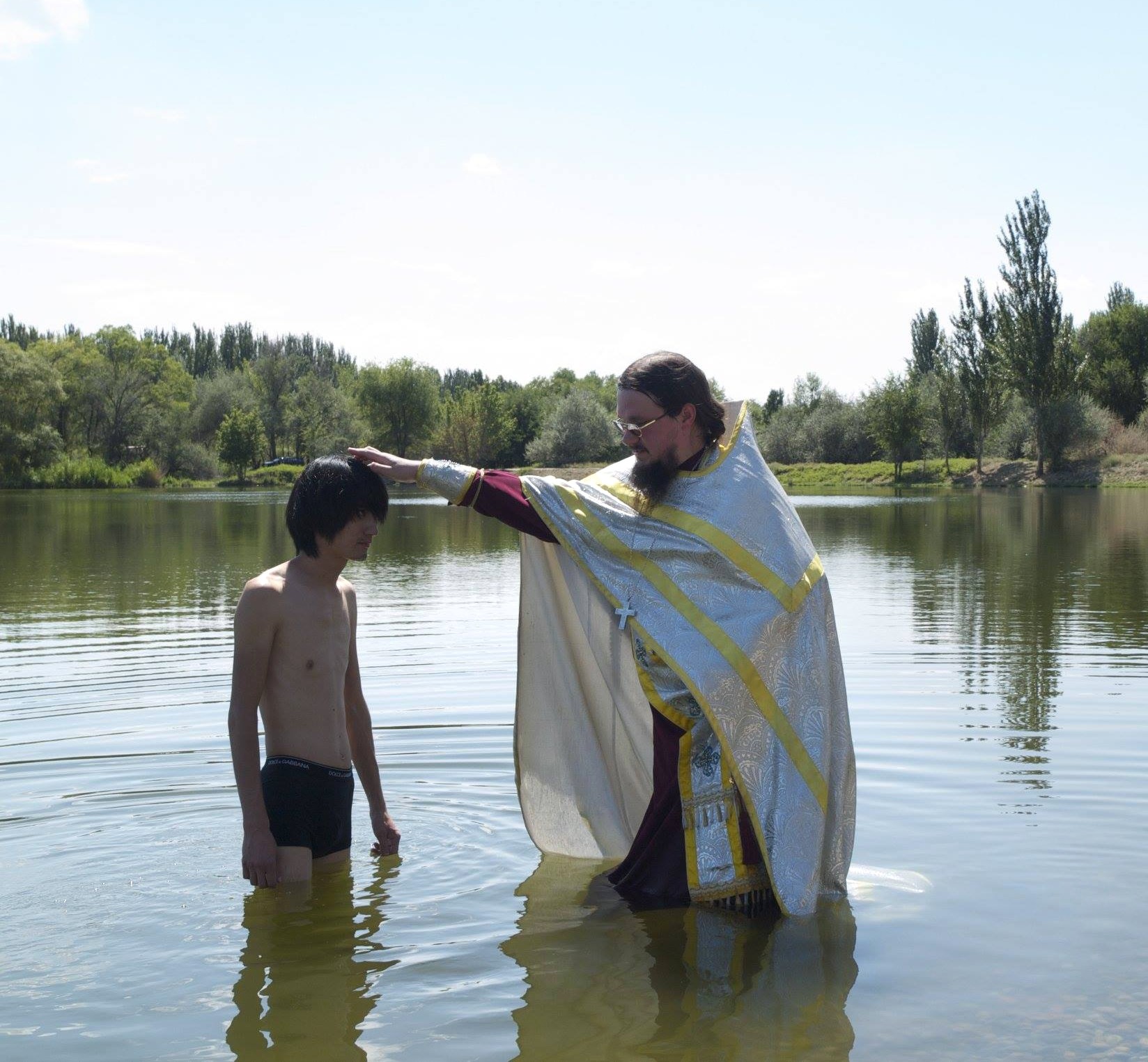
Hieromartyr Daniel Sysoev is most known and cherished for his missionary work and for the conversion of Muslims to Orthodoxy through his evangelism.
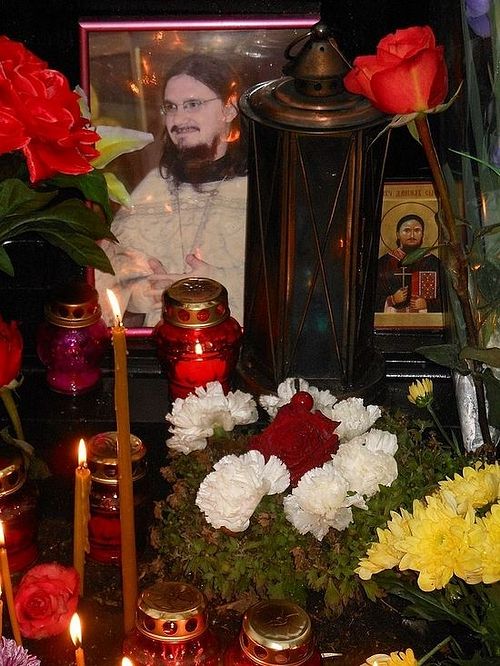
Yet while the world knows his fruit, it often overlooks his root. Muslim evangelism was not the central point of his teaching, as many assume.
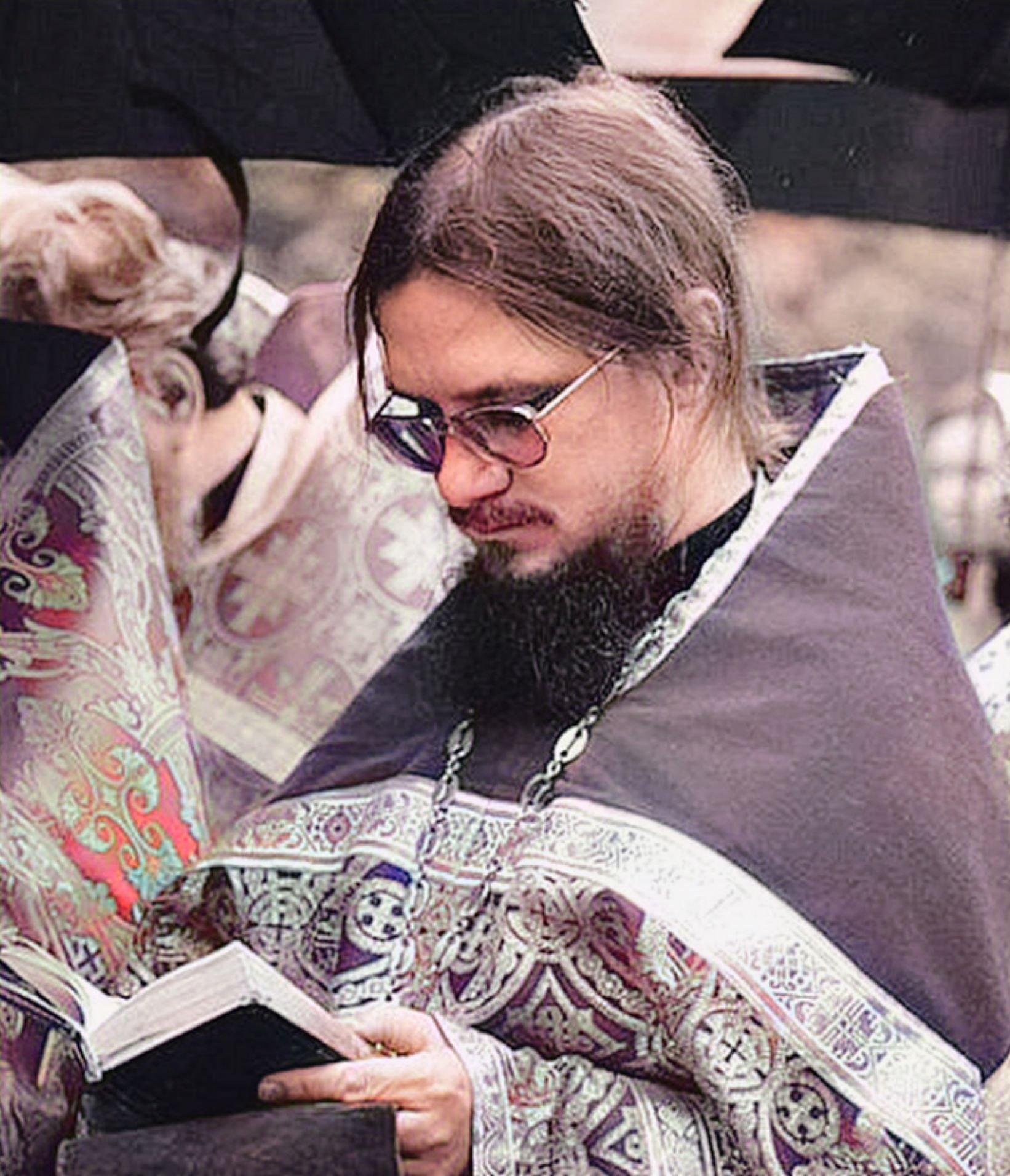
If we had to identify the central teaching of Hieromartyr Daniel Sysoev, it would be what he called “Uranopolitism” (from Greek ouranos = heaven, polis = city, meaning “heavenly citizenship”), a new term for an ancient Gospel truth.
Uranopolitism says: “Our true homeland is heaven; the Church is our highest allegiance.” By contrast, Russian World nationalism says: “Our true mission is as Holy Russia; the nation and its geopolitical role define the Church.”
His LiveJournal page which he often wrote on confirms this. Hieromartyr Daniel’s first and last posts were both about uranopolitism, as those who revered and followed him attest:
Uranopolitism is a very important, key point in Fr. Daniel’s preaching. It’s even more important than exposing Islam and other delusions and heresies. Therefore, the first post Fr. Daniel made on his Live Journal page was about uranopolitism. And the last post Fr. Daniel made, just a few hours before his death, was about uranopolitism. Therefore, I would argue that uranopolitism is the golden thread running throughout Fr. Daniel Sysoev’s life.
— Ludmila Esipenko, Hieromartyr Daniel Sysoev, Whose Home Was Always in Heaven, https://orthochristian.com/127978.html.
What is Uranopolitism then, exactly?
Father Daniel […] was a partisan of uranopolitism (having derived the term from Greek Uranos - sky and polis - city) - a doctrine of Divine laws preceding the earthly. The followers of uranopolitism maintain that communion in Christ prevails over kinship or ethnic relations, and Christians on Earth are only pilgrims and strangers from heaven.
— Synaxarion (liturgical biography) of Hieromartyr Daniel Sysoev, Азбука веры (Azbuka Veri), https://azbyka.ru/otechnik/Daniil_Sysoev/; also published in Hieromartyr Daniel Sysoev, An Orthodox View of Islam
Some may object: this word Uranopolitism does not appear in the writings of the Fathers, so why should Orthodox Christians permit the introduction of new terms?
Hieromartyr Daniel Sysoev answered this directly:
This question is asked by many of my friends, who quite rightly note that what I write is simply ordinary Christianity as set forth in the Bible and in the Fathers of the Church. I will try to explain my position. In my view, so much pseudo-Christian mythology has crept into the worldview of many modern Orthodox that if we say ‘simply Christianity,’ we will be accused of Protestantism, and the word ‘Orthodoxy’ in the consciousness of a huge number of people means something completely undefined, abstract.
Sysoev then names specific examples, including Igor Karpets, a Russian monarchist-nationalist ideologue who claimed to be Orthodox Christian, while promoting Gnostic and pagan ideas:
Now Karpets calls himself Orthodox (by normal classification an ordinary Gnostic), a tsar-worshipper (by traditional classification a pagan), an atheist like Lukashenko, etc. And we are terribly hindered by the ‘theory of theologoumena,’ when anyone who wishes considers himself entitled to ascribe any meanings to the word ‘Orthodoxy.’
We are faced, in understanding the Church acting in this world, with the same problem that the Fathers of the First Ecumenical Council faced when speaking with the Arians. The same words in the consciousness of different people often carry mutually exclusive meanings. And at the same time, people are not bothered by expressions like those I recently saw on a banner in the Moscow region: ‘The Church has always served Russia.’ Although the ordinary First Commandment of the Decalogue forbids serving anyone except God.
And I believe that it is necessary to introduce a new term with which supporters of ‘hybrid Orthodoxies’ could not agree. The word ‘uranopolitism’ is new, and therefore it is not yet possible to interpret it wrongly. It quite clearly draws a line between Orthodox Christianity and patriotic ‘Christianity,’ separates Orthodox faith from both nationalism and cosmopolitanism and liberalism. This term is even more rooted in Scripture than the Nicene ‘homoousios.’ The heavenly city is mentioned in Scripture repeatedly (Rev. 21-22, Heb. 11:10-16; 12:22; 13:14), and therefore the expression ‘uranopolitism’ or ‘heavenly citizenship’ is simply biblical.
— Hieromartyr Daniel Sysoev, «Уранополитизм: зачем нужен новый термин?» (Uranopolitism: Why Is a New Term Needed?), LiveJournal, http://pr-daniil.livejournal.com/36530.html
Sysoev’s opposition to nationalism was consistent throughout his ministry. His repudiation of the banner “The Church has always served Russia” reveals what he witnessed daily in Russian church life. Hieromartyr Daniel Sysoev clashed frequently with those who promoted this view in Russia, himself of course being a native of Moscow, who was born, raised, and reposed there.
A striking example comes from a conversation recorded in the memorial book Неизвестный Даниил (Unknown Daniel). When others began discussing politics and praising “Moscow as the Third Rome,” Sysoev rejected the mythology entirely. He identified the United States, not Russia, as the contemporary katechon (Restrainer), and declared that Orthodox and heterodox Christians form “one Christian civilization” against Islam. This is pure uranopolitism applied to geopolitics: faith trumps nation, and the boundaries that matter are between Christ and antichrist, not between Russia and America.
Sysoev’s point was geopolitical, not ecclesiological: he was demolishing the “Third Rome” mythology, not endorsing theological unity with heterodox confessions. His extensive anti-ecumenist writings confirm this. The full quote and its devastating contrast with Patriarch Kirill’s own katechon claims are examined in Chapter 17.
Why He Compared It to the Nicene Fathers:
Hieromartyr Daniel Sysoev explicitly compared his creation of the term “Uranopolitism” to the Fathers of the First Ecumenical Council who introduced “homoousios” (consubstantial) to combat Arianism. Just as “homoousios” was a new term needed because existing language had been corrupted by heretics who used the same words to mean opposite things, so too “Uranopolitism” was needed: the word “Orthodoxy” had been claimed by nationalists, ecumenists, and moralists to the point that it carried meanings the Fathers would not recognize.
When critics in the Russian blogosphere began calling uranopolitism “a dangerous anti-Christian heresy,” Fr. Daniel responded by publishing a list of “Great Uranopolitans” from Church history:
Here I decided to publish a list of prominent uranopolitan saints. Because I have seen in the blogosphere that uranopolitism is called a dangerous anti-Christian heresy :(. So then. Uranopolitans include: St. Abraham, St. Isaac, St. Jacob. St. Levi, the Holy Prophet Moses. The Holy King and Prophet David. The Holy Apostle James the Brother of God. St. Clement, Pope of Rome. St. Ignatius the God-Bearer. St. Cyprian of Carthage. St. Cyril of Alexandria. St. Gregory the Theologian. St. Augustine of Hippo. St. Symeon the New Theologian. St. Ignatius Brianchaninov. These are saints whose uranopolitan statements immediately come to mind. So any fighter against uranopolitism can easily see how deeply this teaching has penetrated the Church:).
— Hieromartyr Daniel Sysoev, «Великие уранополиты-1» (Great Uranopolitans, Part 1), LiveJournal, http://pr-daniil.livejournal.com/51722.html
When a commenter wrote “Too hasty a conclusion,” Fr. Daniel replied:
You’re right. There are far more uranopolitan saints. I’ll correct this and add another fifty.
— Hieromartyr Daniel Sysoev, comment reply on «Великие уранополиты-1», LiveJournal
Notice that this is correct Orthodox epistemology: the question is never “what do I think?” but “what do the Fathers teach?” And this is an important lesson we Orthodox Christians in this time need to learn, and not to rest on our own intellect.
Sysoev’s list names prophets, apostles, and hierarchs. The paradigmatic uranopolitan ruler, the canonized Orthodox sovereign who embodied this teaching at the hour of his death, is Tsar Lazar of Serbia, whose dying prayer corrected a possessive: “not my people but Thy people, O Lord.” His story is treated at length in Chapter 20.
Thus, this teaching is not from Hieromartyr Daniel Sysoev, but is simply a new word representing a biblical teaching held by numerous fathers and saints.
Sysoev’s Definition: What Is Nationalism?
Sysoev was not speaking abstractly. He identified specific, concrete characteristics of nationalism and warned against its combination with Christianity. When asked “How does nationalism combine with Christianity?”, he responded with characteristic clarity:
How does nationalism combine with Christianity?
The combination of nationalism with Christianity is an erroneous teaching. We may pray for Russia, but we may not pray to Russia itself. When an argument about nationalism starts, problems arise because of the terms. People understand the word “nationalism” to mean everything under the sun. When I say that nationalism cannot be combined with Christianity I understand the word “nationalism” the way an ordinary encyclopedia understands it. According to any encyclopedia this term has two definitions. The first is the idea of an exclusive role, of my nation’s superiority over all other nations. A Christian would never say that we are better than others because we are Russian. The second type of nationalism mentioned in the encyclopedia is the assertion that a nation is the highest form of social organization. A Christian would not agree with this either. The highest thing in the world is the Church.
— Hieromartyr Daniel Sysoev, Questions to a Priest, Question 98
Sysoev then distinguished nationalism from legitimate patriotism:
Patriotism is love of one’s fatherland, and these feelings are natural. Love of one’s nation is also a natural feeling and does not need a name. For instance, a person might like his native language, and that is normal. A person might like the culture in which he grew up, and that is normal as well. This is a simple, ordinary human state. When a person loves his mother there is no need to invent a term for it. There is a special love of children; I have a daughter, for instance, and I love her. This is not a bad quality: this is a natural human state.
— Hieromartyr Daniel Sysoev, Questions to a Priest, Question 98
This distinction establishes that Sysoev’s critique was not of love for one’s nation, but of two specific theological errors:
- The claim of national superiority: Belief that one’s nation is better than others
- Elevation of the nation above the Church: Making national identity the highest organizing principle
Sysoev described what this looks like in practice:
For instance, one hears that Russians, because they are Russian, are already Orthodox. In one article that I read, I saw the assertion that even atheists are truly Orthodox, if they are a part of the Russian culture. This is the replacement of faith with culture. Orthodoxy is God’s revelation, preserved in a pure form since the times of the Apostles. One now sees efforts by some to replace the New Testament with national myths, including old ones that the Church has always fought against.
— Hieromartyr Daniel Sysoev, “The Blood of the Martyrs Is the Seed of the Church: The Life and Martyric Death of a Righteous Missionary, Father Daniel Sysoev,” The Orthodox Word, No. 268, September-October 2009, pp. 213-215
The idea that atheists themselves are Orthodox if they are a part of Russian culture is something Patriarch Kirill has stated explicitly, calling Soviet atheists “rudimentarily Orthodox Christians” because “they remained within the same system of values” (see Chapter 13).
Additional Patristic Witness
Sysoev’s teaching was not novel. St. Cosmas of Aetolia, the 18th-century Greek Equal-to-the-Apostles, taught the same principle:
We, my fellow Christians, have no homeland here. For this reason, God created us with our heads upright and placed our mind in the highest part, so that we may always contemplate the heavenly kingdom: our true homeland.
— St. Cosmas of Aetolia, Equal-to-the-Apostles, Διδαχές (Teachings), http://users.uoa.gr/~nektar/orthodoxy/tributes/patrokosmas/didaxai.htm[1]
Eternal salvation, not earthly borders, determines true citizenship.
St. John of Kronstadt, the most beloved Russian saint of his era, loved Russia. But he loved it with a prophet’s love: willing to declare God’s judgment upon the nation he served:
Russia is rebelling, suffering, and is tormented by the bloody internal strifes, from the earth’s failure to give crops and from famine, from the terribly high prices of all goods, from godlessness, from anarchy and the extreme decline of morals. A sad fate inspiring gloomy reflections. But Most Kind Providence will not abandon Russia in this sorrowful and pernicious condition. It will justly chastise her and lead her to rebirth. God’s just judgments are being wrought upon Russia…
[…]
The Russian people and the other tribes inhabiting Russia are deeply perverted; the furnace of temptation and misfortunes is essential for all, and the Lord, wishing that no one perish, thoroughly burns all of them in this furnace.
— St. John of Kronstadt, quoted in I. K. Sursky, Saint John of Kronstadt, trans. Holy Transfiguration Monastery (2018), pp. 317–318
A saint who saw his own nation as “deeply perverted” and under God’s “just chastisement” cannot be claimed as a witness for the theology that elevates Russia to cosmic spiritual significance, nor can they be labeled as Russophobic.
Patriarch Kirill’s Acknowledgment
One may think to dismiss Hieromartyr Daniel Sysoev’s teaching…but he lived in the bosom of Russia. And further, he was fully acknowledged by the very subject of this book.
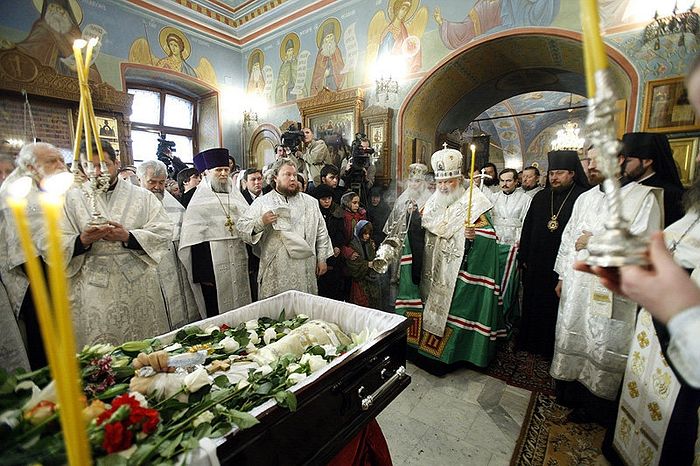
Patriarch Kirill, standing in front of Hieromartyr Daniel Sysoev, confirmed him as preacher of God, a faithful servant, and a martyr:
Отец Даниил был широко известен православным христианам не только столицы, но и многих других епархий. Его ревностные труды на ниве проповеди слова Божия, заботы по приобщению людей к вере Христовой, попечение о духовных нуждах молодежи снискали ему уважение собратьев пастырей и представителей общественности.
Вместе с тем его твердая миссионерская позиция и вдохновенный образ отпечатывались в сознании людей, ищущих дорогу к храму, яркостью, эмоциональностью, глубиной явленной веры и упования на Господа.
Господь призвал к Себе Своего верного служителя, даровав ему возможность явиться исповедником веры и мучеником за дело Евангельского благовестия.
Father Daniel [Sysoev] was well known to Orthodox Christians not only in the capital city but also in many other dioceses. By his hard work to preach the word of God, his efforts to bring people to the faith of Christ, his care of the spiritual needs of young people he gained respect of his fellow-pastors and public leaders.
At the same time, his firm missionary stand and inspiring, vivid and emotional image left an imprint in the consciousness of those who sought a way to the church and were impressed by the profundity of his faith and trust in the Lord.
The Lord called His faithful servant to Himself, granting him an opportunity to become a confessor of faith and martyr for the cause of preaching the gospel.
— Patriarch Kirill, Condolences on the death of Fr. Daniel Sysoev, November 20, 2009, https://mospat.ru/news/58169/
Patriarch Kirill stood at the grave of a martyr who taught that “nationalism cannot be combined with Christianity” and called him “a faithful servant” who preached “the word of God.”
Understanding all of this, what further evidence will show the tendency towards nationalism?
B. The Evidence: What Patriarch Kirill Teaches
Criterion 1: Claiming Exclusive Role and National Superiority
In a January 2026 Christmas interview, Kirill explained why he believes the West opposes Russia:
Всё неслучайно, потому что мы представляем очень привлекательную альтернативу цивилизационного развития. Мы предлагаем ценности, от которых Запад отказался и отказывается… Удивительно, но наша страна является сегодня защитником традиционных ценностей, касающихся человеческой личности. Мы не принимаем то, что сегодня принято на Западе под лозунгом «права человека», но что на самом деле направлено на разрушение человеческой нравственности.
It’s not by chance, because we represent a very attractive alternative of civilizational development. We offer values that the West has rejected and is rejecting… Surprisingly, our country today is a defender of traditional values concerning the human person. We do not accept what is accepted in the West today under the slogan of “human rights,” but which in reality is aimed at destroying human morality.
— Patriarch Kirill, Christmas Interview, Rossiya 1, January 7, 2026, https://www.patriarchia.ru/article/119155
This is precisely Sysoev’s first definition of nationalism: belief in one’s nation’s superiority over others.
Kirill teaches that Russia has an apocalyptic, cosmic significance through the doctrine of the Katechon (Greek: τὸ κατέχον, “that which restrains”). The Katechon is a mysterious force mentioned in 2 Thessalonians 2:6-7 that holds back the revelation of the Antichrist. Kirill’s teaching claims that Russia specifically fulfills this biblical role of restraining cosmic evil. In other words, Russia, by its very existence as a nation, performs a salvific function for all humanity. (The full quote with Russian original and patristic analysis appears in Chapter 17.)
The claim goes far beyond patriotism: Russia has an “exclusive role” beyond any other nation. Sysoev’s rebuke is direct: “A Christian would never say that we are better than others because we are Russian.” Yet Kirill teaches precisely this: that Russia is better positioned spiritually to lead humanity, that Russia is the “Restrainer” while “the West has fallen into Satanism.”
Criterion 2: Making the Nation the Highest Form of Social Organization
Patriarch Kirill subordinates the Church to Russian national interests:
Sysoev taught: “The highest thing in the world is the Church.” Kirill’s actions demonstrate the opposite principle: that the highest thing is Russia itself.
Consider the following evidence:
Breaking communion over jurisdiction, not over heresy: When Ecumenical Patriarch Bartholomew granted autocephaly to the Ukrainian Orthodox Church in 2018, Kirill responded by breaking full communion with Constantinople. Note the priorities this reveals: Kirill has never broken communion over the theological errors documented throughout this book, not over joint prayer with heretics, not over the ecumenist movement, not over any doctrinal matter. But when Ukrainian ecclesiastical independence threatened Russian jurisdictional claims, he acted immediately. The one issue that provoked him to sever communion was not a matter of faith, but a matter of national territory.
Theological subordination of salvation to national service: In his September 2022 sermon, Kirill declared: “If someone, driven by a sense of duty and the need to honor his oath, stays loyal to his vocation and dies while carrying out his military duty, then he is, without any doubt, doing a deed that is equal to sacrifice… sacrifice in the course of carrying out your military duty washes away all sins” (see Chapter 16: Patriarch Kirill’s War Theology: The Claims).
This teaching makes Russian military service, dying for the Russian state, a path to salvation independent of Christ and His sacraments. The nation has become the vehicle of redemption. Sysoev warned: “We may not pray to Russia itself,” yet Kirill teaches that dying for Russia washes away sins, making Russia itself redemptive.
Organizing the Church by nationality rather than faith: Kirill insists that Russians, Ukrainians, and Belarusians “are really a one people” and therefore cannot have separate churches. He makes ecclesiastical jurisdiction dependent on ethnic and national belonging rather than on apostolic faith and canonical propriety. As he stated: “We are a one people originating from the Kiev baptismal font,” therefore Ukrainians cannot have an independent Church.
This inverts Sysoev’s principle that “the main and only kinship among people is not blood or country of origin, but kinship in Christ.” Kirill makes national belonging determinative of Church structure, exactly the nationalism Sysoev condemned.
Thus, by Hieromartyr Daniel Sysoev’s own criteria, Patriarch Kirill meets both definitions of nationalism: claiming Russia’s exclusive spiritual superiority (Chapters 16-17) and subordinating the Church to national interests.[2]
And so this is where it becomes interesting. What happens…when someone actually applies Sysoev’s teaching in Kirill’s presence?
We shall see right now, as it was caught on video.
The Living Proof: Fr. Alexei Shlyapin Confronts Patriarch Kirill
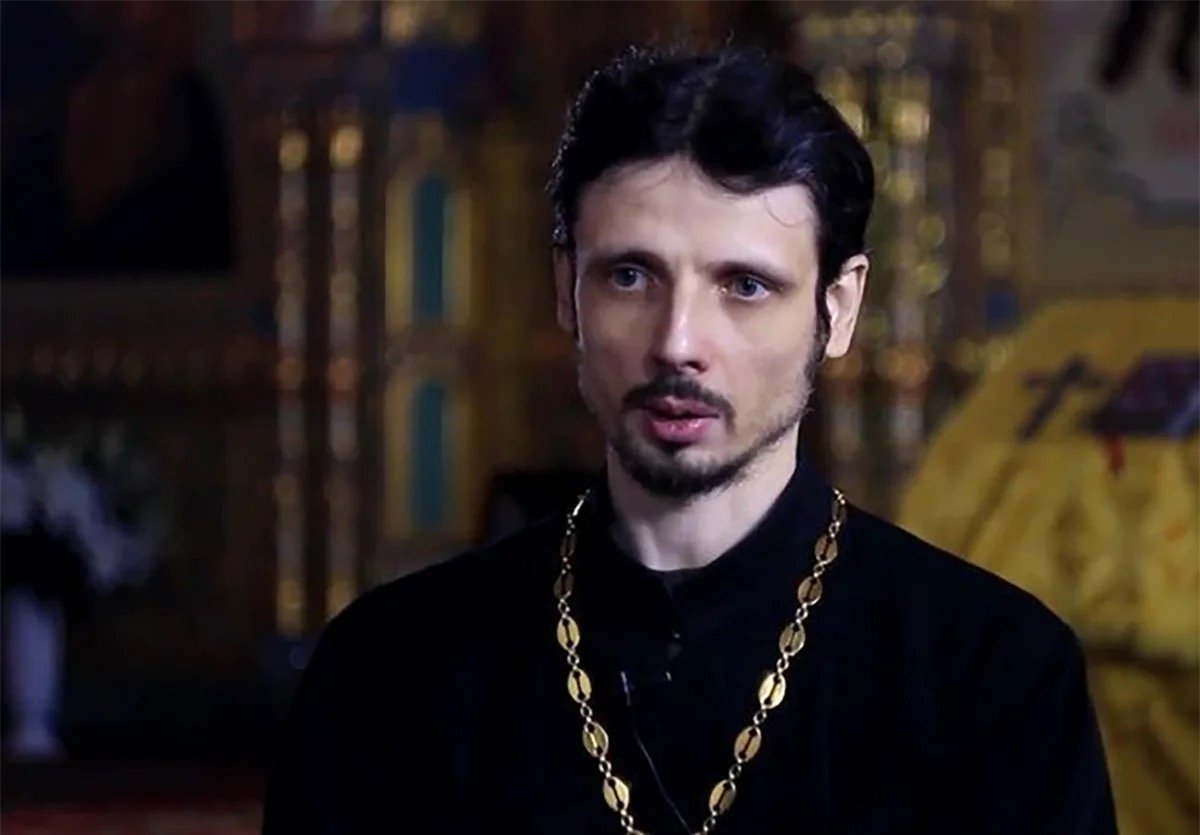
On February 11, 2025, at a clergy meeting of the Moscow Metropolis, a 49-year-old priest named Father Alexei Shlyapin stood up to speak. His credentials were impeccable: ordained in 1998, a seminary disciple of Hieromartyr Daniel Sysoev, and recently awarded the palitsa (a liturgical honor awarded for distinguished service) in 2022. He was a faithful priest of 27 years who had studied under the very martyr Patriarch Kirill eulogized as “a faithful servant.”[3]
At this clergy meeting, the assembly was deliberating a resolution for adoption by the clergy of the Moscow Metropolis. Point 11 of this resolution called on priests to “strengthen love for the Motherland” in their parishioners. When Fr. Alexei approached the microphone, someone in the audience whispered audibly: “Shoot, shoot, it’s about to happen.”[3]
They were right. It was about to happen.
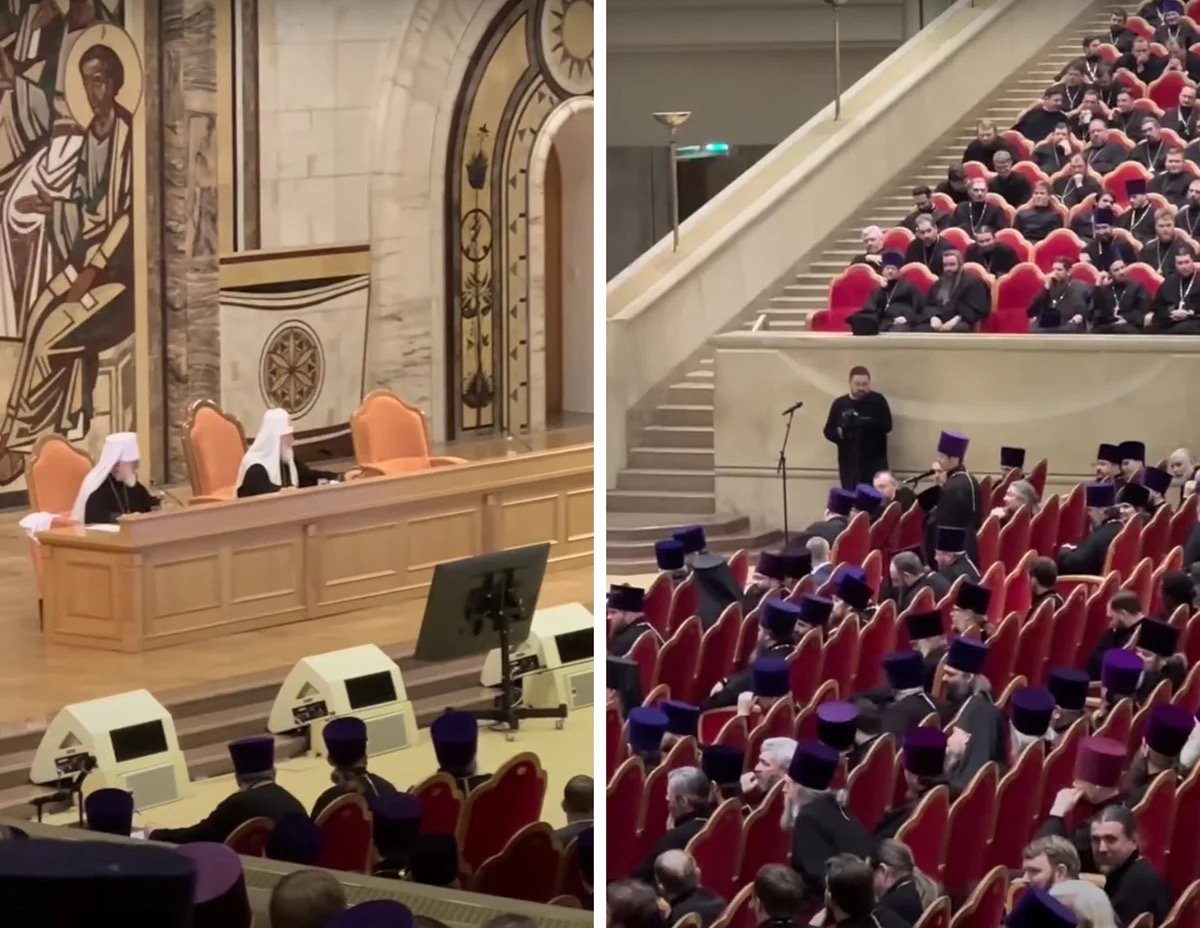
Full video: Fr. Alexei Shlyapin’s statement and Patriarch Kirill’s response at the Moscow Metropolis clergy assembly, February 11, 2025.
The video is in Russian, but it is highly recommended to watch it first, then read the transcript, as the manner and demeanor of the exchange cannot be fully captured simply with text.[4]
Somehow it’s not right that in church documents the words “fatherland” and “homeland” are capitalized, with some kind of reverence for these earthly concepts. For a Christian, “fatherland” and “homeland” is the Kingdom of Heaven, Paradise. But these are purely earthly concepts. For example, even when the word “faith” is used, speaking to Orthodox believers, it’s written with a lowercase letter. And these concepts should also be written in documents. Look at them; these are common nouns, not proper nouns. So I just wanted to express such disagreement with such, well, patriotic tendencies, in general in church documents, and in general, in the life of our local churches. The duty of a priest is to lead people to the Kingdom of Heaven, not to engage in patriotism (патриотизмом), as it were.
— Fr. Alexei Shlyapin, Moscow Metropolis clergy meeting, February 11, 2025, https://www.youtube.com/watch?v=JixfKE9U3kU[5]
Note that Fr. Alexei’s Russian word is specifically патриотизмом (patriotism), not национализмом (nationalism). This is significant: he is not merely condemning nationalism, which even Kirill might disavow in the abstract. He is stating that even patriotism, the milder form of national devotion, is not the priest’s business. This makes his critique harder to dismiss.
What Fr. Alexei has outlined here is simply uranopolitism, exactly as Hieromartyr Daniel Sysoev expressed. On his now taken down website, Fr. Alexei had written extensively on this theme:
The state, society, and the world want people to remain citizens of the earth. Decent, law-abiding, loyal subjects, but citizens of the earth. But they refuse to allow people to become citizens of Heaven, subjects of the Heavenly King, or freed from the power of this world. In other words, the world seeks to use Christianity to support its own ideologies, to satisfy its own earthly and pagan aspirations. But at the same time, it hates Christ, hates the Cross, and cannot tolerate the pure Word of God. But we must not support state and social ideologies, the aspirations of this world… We must teach not patriotism, not regional studies, not culture, etc., but only and exclusively Christianity.
— Fr. Alexei Shlyapin, from his blocked website shlyapin.ru, quoted in Novaya Gazeta, https://novayagazeta.eu/articles/2025/02/15/tsarstvo-zemnoe-prezhde-nebesnogo[6]
In 2012, at a pastoral seminar in the Mozhaisk Deanery, Fr. Alexei had already stated:
In the ecclesiastical consciousness of the Russian Orthodox Church, there is a false stereotype, imposed by the state and the nation, that patriotism is a component of Christianity. In fact, patriotism is a pagan worldview. This is one of the diseases of the ecclesiastical consciousness.
— Fr. Alexei Shlyapin, pastoral seminar, Mozhaisk Deanery, 2012; quoted in Lera Furman, “The Kingdom of Earth comes before the Kingdom of Heaven,” Novaya Gazeta Evropa, February 15, 2025, https://novayagazeta.eu/articles/2025/02/15/tsarstvo-zemnoe-prezhde-nebesnogo
Please note. This is a faithful Russian priest, a disciple of a contemporary saint in Hieromartyr Daniel Sysoev, speaking against an error of consciousness in the Russian Orthodox Church. This is very important for onlookers to let this sink in, as they will be gaslighted into thinking that these sentiments in this chapter and book have to do with other people being mean to Russia. This is ridiculous and unfounded. This correct chastisement of the ecclesiastical consciousness in Russia is coming also from Russians. This is not some matter of discrimination or propaganda. Those who believe this, choose to believe it without any proof or evidence of this.
Returning to the topic; Fr. Alexei in expressing his views, was simply expressing what his teacher Sysoev had taught, what St. Cosmas had taught, what the Fathers had always taught: that a priest’s duty is to lead people to the Kingdom of Heaven, not to serve national interests. He had been saying this for over a decade. It only became a problem when he said it to Patriarch Kirill’s face.
Having established all of this, let us now examine how Patriarch Kirill responded. For those who have patiently been reading the full chapter up to now, it will be very difficult to dismiss the response given.
How did Patriarch Kirill respond?
First, Patriarch Kirill whispered something before the microphone picked up his full response. According to Novaya Gazeta, Kirill referenced a prophecy from an elder named Father Jonah. This prophecy states that Orthodox Christians should separate from patriarchs who “agree with the government” when “the government is not leading people in the right direction.”[3]
Consider the irony: Patriarch Kirill invoked a prophecy that condemns him. The prophecy speaks of hierarchs who subordinate the Church to state interests. Kirill whispered about it as if to dismiss Fr. Alexei’s concerns, but the prophecy describes exactly what Kirill himself has done: subordinated the Church to Putin’s government and blessed its war.
Then came the public response:
Хорошо, да? Вы, батюшка, случайно не из западной Украины? [Смех и аплодисменты аудитории] Идите, садитесь и серьезно подумайте над всем, что вы здесь ляпнули.
That’s great, isn’t it? You, Father, aren’t from western Ukraine by any chance? [Audience applause & cackling] Go, sit down and seriously think about everything you just blurted out here.
— Patriarch Kirill, Moscow Metropolis clergy meeting, February 11, 2025, https://meduza.io/en/feature/2025/02/12/are-you-from-western-ukraine
Patriarch Kirill’s response was to mock the priest with ethnic labeling, asking if he was “from western Ukraine,” and ordering him to “sit down and seriously think about everything you just blurted out.”
And the audience of priests and hierarchs? They did not sit in stunned silence. They applauded. They cackled.
Note also the self-contradiction. Patriarch Kirill continually insists that Russians, Ukrainians, and Belarusians “are really a one people” originating from “the Kiev baptismal font.” The “Russian World” has no state borders. Yet… when a priest quotes the saints, Kirill’s instinct is to ask if he is “from western Ukraine,” as though geographic origin within his own claimed civilizational unity disqualifies a man from speaking.
A question to those who defend Patriarch Kirill: if the Russian World is truly one people, why does “western Ukraine” function as a slur to shame someone?
The quip from Patriarch Kirill reveals what the doctrine conceals: the “Russian World” is not a spiritual unity but a hierarchy, with Moscow at the top and Ukraine beneath it. Kirill does not believe his own theology. He believes in Russian supremacy.
In the aftermath, Kirill defended his position with explicit Sergianism:
Церковь не вспомнила о своем тяжелом положении, она сделала все, чтобы вдохновить свой народ на борьбу. И к чему это привело? К радикальному изменению положения Церкви в нашей стране. Церковь не может не быть со своим народом, Церковь не может не быть ответственной за судьбу страны.
The Church did not dwell on its difficult position; it did everything to inspire its people to fight. And what did this lead to? To a radical change in the Church’s position in our country. The Church cannot not be with its people. The Church cannot not be responsible for the fate of the country.
— Patriarch Kirill, Moscow Metropolis clergy meeting, February 11, 2025, https://www.youtube.com/watch?v=JixfKE9U3kU
The argument is transparent: the Church was brutally persecuted under atheist authorities, but instead of opposing the regime, it supported the Soviet war effort, and this servility “led to a radical change in the Church’s position.” Submission to the state was rewarded with institutional survival. Those who fully understand Sergianism will be able to understand that this is textbook Sergianism (see Chapter 9). The New Martyrs who died refusing to subordinate the Church to atheist authorities would disagree with Patriarch Kirill. The Russian Orthodox Church Outside of Russia (ROCOR) existed for decades as a witness against this exact position.
The pattern is consistent. At the November 2024 World Russian People’s Council, Patriarch Kirill urged Russians not to fear the “so-called ‘end of the world’” (так называемого «конца света»), a phrase he characterized as secular fear-mongering, while affirming Russia’s role as the Katechon, the Restrainer against Antichrist.[7] In context, he uses “end of the world” to dismiss Western apocalyptic rhetoric while positioning Russian military victory as eschatologically necessary.
Christ says: “Seek ye first the kingdom of God and His righteousness” (Matthew 6:33). Patriarch Kirill inverts this: the Church must be “responsible for the fate of the country” first. The Kingdom of Earth comes before the Kingdom of Heaven. This is the inversion Fr. Alexei Shlyapin named, and for naming it, he was silenced.
The consequences of speaking up
Following this public confrontation, multiple Russian Orthodox news sources reported that Fr. Shlyapin was summoned by his diocesan authorities for a reprimand. The label attached to him was damning: he was called “an enemy of the Church and of the people.”[3]
Consider that phrase: “enemy of the Church and of the people.” The conjunction reveals the conflation. In true Orthodox ecclesiology, one can be an enemy of the people without being an enemy of the Church, or vice versa. The Church is not the people; the Church is the Body of Christ. But in nationalist ecclesiology, they are one and the same. To question Russian nationalism is to attack the Russian Church. Fr. Alexei’s crime, if it can be called that, was treating them as distinct.
According to Novaya Gazeta, parishioners speaking anonymously told journalists that after this encounter, security forces visited the priest’s home and conducted a search.[3] Further, it is important to note that Fr. Alexei Shlyapin’s website shlyapin.ru stopped functioning on February 12, 2025, a mere day after this encounter with Patriarch Kirill, and it is still offline at the time of this publication.
Everything Fr. Alexei said was in direct line with the teachings of Hieromartyr Daniel Sysoev. A disciple of the martyr, trained by him in seminary, spoke pure uranopolitism to the Patriarch’s face. For this, he was mocked with ethnic labeling (“western Ukraine?”), ordered to “sit down,” labeled “an enemy of the Church and the people,” reprimanded by diocesan authorities, had his website shut down, and his home searched.
Is this the “Holy Rus” that Patriarch Kirill speaks of?
A place where simple disagreement with authorities on the basis of patristic teaching gets you mocked, reprimanded, persecuted, and your home searched? What is the crime exactly? Quoting the saints? Does citing St. Cosmas of Aetolia now make you “an enemy of the people”?
This is how nationalism treats heavenly citizenship, and this is how the heresy silences the truth. This is also modern Orthodoxy in microcosm: the Church venerates saints, but persecutes those who follow them.
Patriarch Kirill stood at Hieromartyr Daniel’s grave and called him a “faithful servant” preaching “the word of God.” Fifteen years later, a priest trained by that very martyr repeats his “faithful servant’s” teaching to him face to face, and he is mocked, labeled an enemy, reprimanded, and silenced for it.
In our contemporary times, we see many piously venerate the icons of the martyrs, while crushing anyone who sincerely tries to live by their teaching. The saints are safe once they are dead, but their living disciples are treated as dangerous and are to be stopped by any means necessary.
C. The Verdict
Hieromartyr Daniel Sysoev and St. Cosmas of Aetolia agree: nationalism cannot be combined with Christianity. The combination is “an erroneous teaching.” A Christian cannot claim national superiority or elevate the nation above the Church. Patriarch Kirill himself stood at Sysoev’s grave and called him “a faithful servant” preaching “the word of God.” He praised the teacher. He now contradicts the teaching of that teacher.
Patriarch Kirill meets both of Sysoev’s criteria for the heretical combination of nationalism with Christianity. If the evidence examined above is true, then Kirill teaches exactly what Sysoev condemned. And when a disciple of Sysoev repeated his teacher’s doctrine, Kirill mocked him with ethnic labeling, ordered him to “sit down,” and this priest was subsequently labeled “an enemy of the Church and of the people,” reprimanded, had his website shut down, and his home searched. And it’s all on video as well, lest someone claim that it was somehow made up.
But What About Greeks Praising Greece?
Someone may object: “But Orthodox Greeks praise Greece. Isn’t that nationalism too?”
By the criterion Metropolitan Augoustinos Kantiotes established in Chapter 14: Russian World Ethnophyletism, the measure of a nation is its service to humanity, not its coercion through power. Patriarch Kirill teaches the opposite. He does not praise Russia for her gifts and service. He claims Russia has an “exclusive role” as the Katechon. He asserts Russian moral superiority. He denies Ukraine’s existence as a separate people. He subordinates the Church to state interests. Where Augoustinos praises “liberators, never conquerors,” Kirill blesses a war of conquest. Where Augoustinos insists “every nation has a place under the sun,” Kirill denies Ukraine that place. By Augoustinos’ criteria, Kirill’s teaching is condemned.
If Patriarch Kirill acknowledged Hieromartyr Daniel Sysoev as a “faithful servant” preaching “the word of God,” and Sysoev taught that “nationalism cannot be combined with Christianity,” on what possible basis can Patriarch Kirill’s nationalism be excused?
There is no basis. The martyr’s teaching stands as judgment. The Patriarch’s teaching stands as evidence. The disciple’s persecution proves which side has won in Moscow.
Hieromartyr Daniel Sysoev, Great missionary and Uranopolitist, pray to God for us.
Original Greek: “«Ἡμεῖς, χριστιανοί μου, δὲν ἔχομεν ἐδῶ πατρίδα. Διὰ τοῦτο καὶ ὁ Θεὸς μᾶς ἔκαμε μὲ τὸ κεφάλι ὀρθούς, καὶ μᾶς ἔβαλε τὸν νοῦν εἰς τὸ ἐπάνω μέρος, διὰ νὰ στοχαζώμεθα πάντοτε τὴν οὐράνιον βασιλείαν, τὴν ἀληθινὴν πατρίδα μας.»” ↩
Declaration on the “Russian World” (Russkii Mir) Teaching, signed by over 1,500 Orthodox theologians worldwide, Volos Academy of Theological Research and Fordham University Orthodox Christian Studies Center, March 13, 2022. https://publicorthodoxy.org/2022/03/13/a-declaration-on-the-russian-world-russkii-mir-teaching/ ↩
Lera Furman, “The Kingdom of Earth comes before the Kingdom of Heaven: How the Patriarch rebuked a priest for his remarks about the superiority of faith over patriotism,” Novaya Gazeta Evropa, February 15, 2025. https://novayagazeta.eu/articles/2025/02/15/tsarstvo-zemnoe-prezhde-nebesnogo. The article provides extensive background on Fr. Shlyapin: 49 years old, ordained in 1998, a disciple of Hieromartyr Daniel Sysoev since seminary, and awarded the palitsa in 2022 for distinguished service. The article reports the whispered “Shoot, shoot, it’s about to happen” before Shlyapin spoke; Resolution Point 11 calling clergy to “strengthen love for the Motherland”; Kirill’s whispered reference to the prophecy of Father Jonah (which states that Orthodox should separate from patriarchs who “agree with the government” when “the government is not leading people in the right direction”); Kirill’s explicit Sergianist defense (“The Church did not dwell on its difficult position; it did everything to inspire its people to fight… The Church cannot not be with its people, the Church cannot not be responsible for the fate of the country”); Fr. Shlyapin being labeled “an enemy of the Church and of the people”; his website writings on uranopolitism citing St. Cosmas of Aetolia; his website (shlyapin.ru) being blocked on February 12, 2025; and parishioners speaking anonymously reporting that security forces visited the priest’s home and conducted a search. The website shutdown is verifiable through web archive services. ↩
Russian transcript of Fr. Alexei Shlyapin’s statement: “Как-то не очень правильно, что в церковных документах слова ‘отечество’ и ‘родина’ пишутся с заглавной буквы, с каким-то благоговением к этим земным понятиям. Для христианина ‘отечество’ и ‘родина’ - это Царство Небесное, рай. А это чисто земные понятия. Например, даже когда слово ‘вера’ используется, обращаясь к православным верующим, оно пишется со строчной буквы. И эти понятия тоже должны писаться в документах. Посмотрите на них. Это имена нарицательные, а не собственные. Поэтому я просто хотел выразить такое несогласие с такими, ну, патриотическими тенденциями, вообще в церковных документах, и вообще, в жизни наших поместных церквей. Долг священника - вести людей в Царство Небесное, а не заниматься, так сказать, патриотизмом.” Patriarch Kirill’s response: “Хорошо, да? Вы, батюшка, случайно не из западной Украины? [Смех и аплодисменты аудитории] Идите, садитесь и серьезно подумайте над всем, что вы здесь ляпнули.” ↩
Original Russian: “Как-то не очень правильно, что в церковных документах слова «отечество» и «родина» пишутся с заглавной буквы, с каким-то благоговением к этим земным понятиям. Для христианина «отечество» и «родина» — это Царство Небесное, рай. А это чисто земные понятия. Например, даже когда слово «вера» используется, обращаясь к православным верующим, оно пишется со строчной буквы. И эти понятия тоже должны писаться в документах. Посмотрите на них. Это имена нарицательные, а не собственные. Поэтому я просто хотел выразить такое несогласие с такими, ну, патриотическими тенденциями, вообще в церковных документах, и вообще, в жизни наших поместных церквей. Долг священника — вести людей в Царство Небесное, а не заниматься, так сказать, патриотизмом.” ↩
Original Russian: “Государство, общество, мир хотят, чтобы люди оставались гражданами земли. Порядочными, законопослушными, верноподданными, но гражданами земли. Но не хочет допустить, чтобы люди становились гражданами Неба, подданными Небесного Царя, освободились от власти мира сего. Т. е. мир стремится использовать Христианство для поддержки своих идеологий, для удовлетворения своих земных и языческих стремлений. Но при этом ненавидит Христа, ненавидит Крест, не терпит чистое Слово Божие. Но мы не должны поддерживать государственные и общественные идеологии, стремления мира сего… Мы должны учить не патриотизму, не краеведению, не культуре и т. д., а только и исключительно Христианству.” ↩
Patriarch Kirill, Address at the World Russian People’s Council, November 28, 2024. Russian text: “Мы действительно не должны в каком-то паническом, безумном страхе ожидать так называемого «конца света». Мы ждем Господа Иисуса, Который придет в великой славе. […] Россия — это действительно удерживающий, и всё, что Россия сейчас делает для защиты своего суверенитета, имеет очень глубокий непреходящий духовный смысл.” https://www.patriarchia.ru/article/112644 ↩