
Does Dying in War Wash Away All Our Sins?
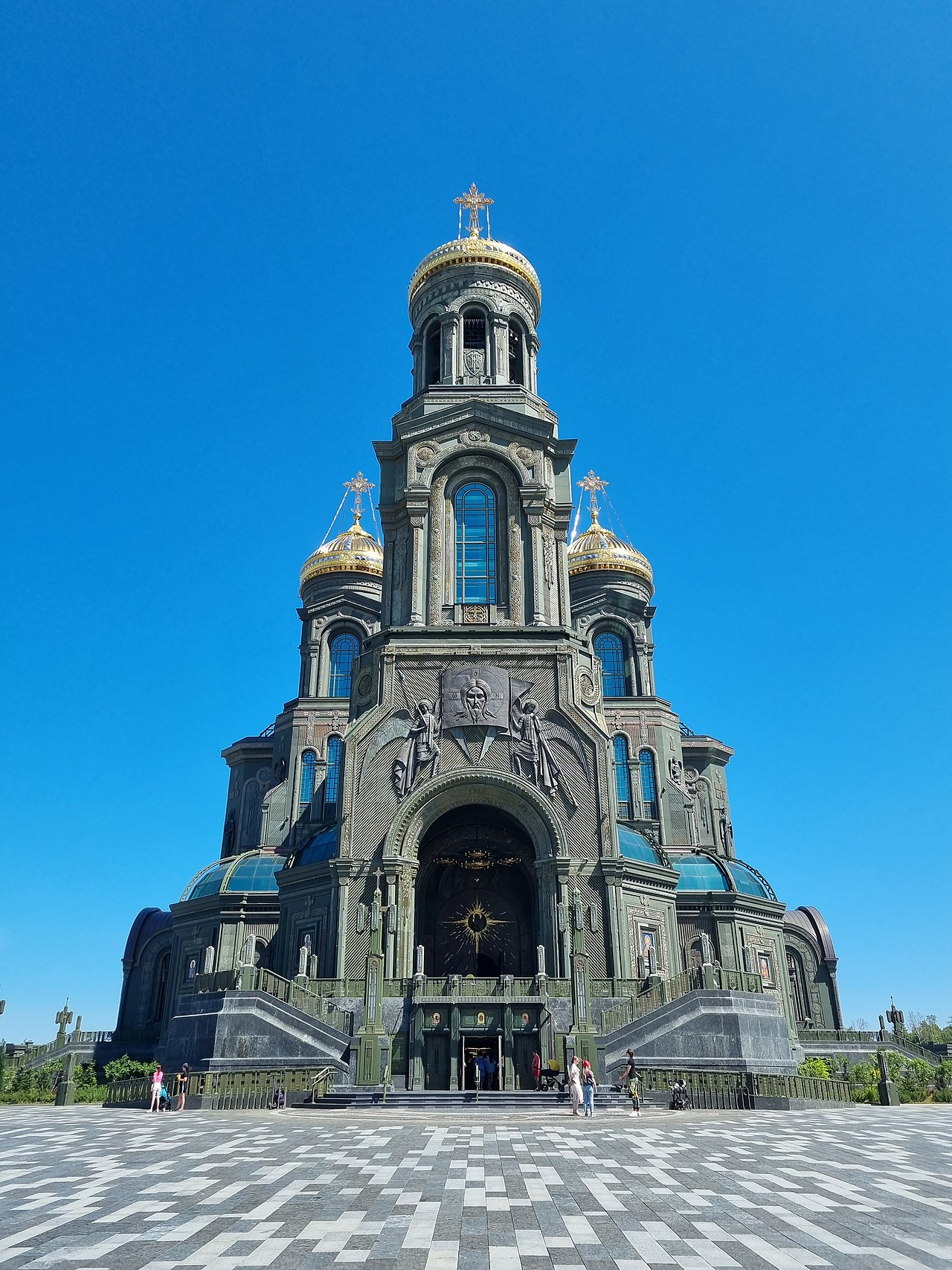
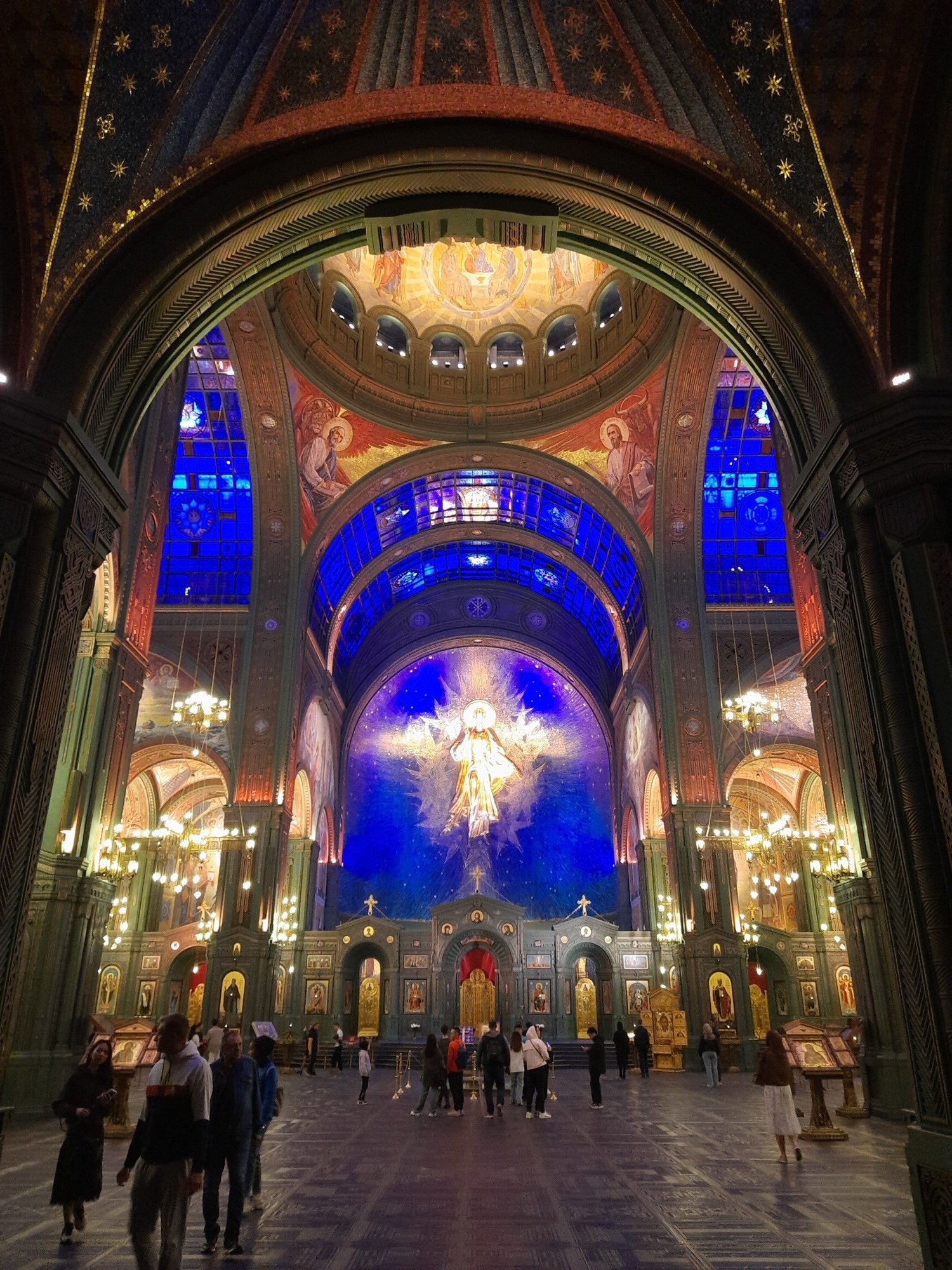
On September 25, 2022, Patriarch Kirill proclaimed that those who die while fulfilling military duty in the present fratricidal war have their sins washed away. Not through repentance. Not through confession. Through battlefield death described as sacrificial offering.
This resembles a warrior-martyr theology foreign to the Orthodox patristic witness examined below. In Orthodox terms, it is not a pastoral flourish; it is a doctrinal corruption.
St. Nikolai Velimirovich, a canonized Serbian saint, draws the distinction sharply:
The difference in purpose consists in the fact that the pagan faith populates heaven only with warriors, while the Christian faith promises heaven to saints.
— St. Nikolai Velimirovich, Prologue of Ohrid, cited in Archpriest Viktor Vasilevich, “The Theme of War in the Works of St. Nikolai of Serbia (Velimirovich),” azbyka.ru[1]
Patriarch Kirill’s war theology populates heaven with warriors: die in this war, your sins are washed away, the gates of the Heavenly Kingdom open. St. Nikolai says that is the pagan approach. The Christian faith promises heaven to saints, not soldiers.
There is no malicious paraphrasing here, nor hostile media distortion. His exact words are documented on the Moscow Patriarchate’s own website, and the same basic interpretation appeared in Russian state media, Ukrainian outlets, and international press across languages. No mistranslation.
The preceding chapters examined Patriarch Kirill’s ecumenism, his religious universalism, his Sergianism, and his nationalism. Each represents a departure from Orthodox teaching. But his war theology is where these errors turn to bloodshed. Here, the distortions documented above are used to bless the killing of Orthodox Christians by Orthodox Christians.
“Sacrifice That Washes Away All Sins”
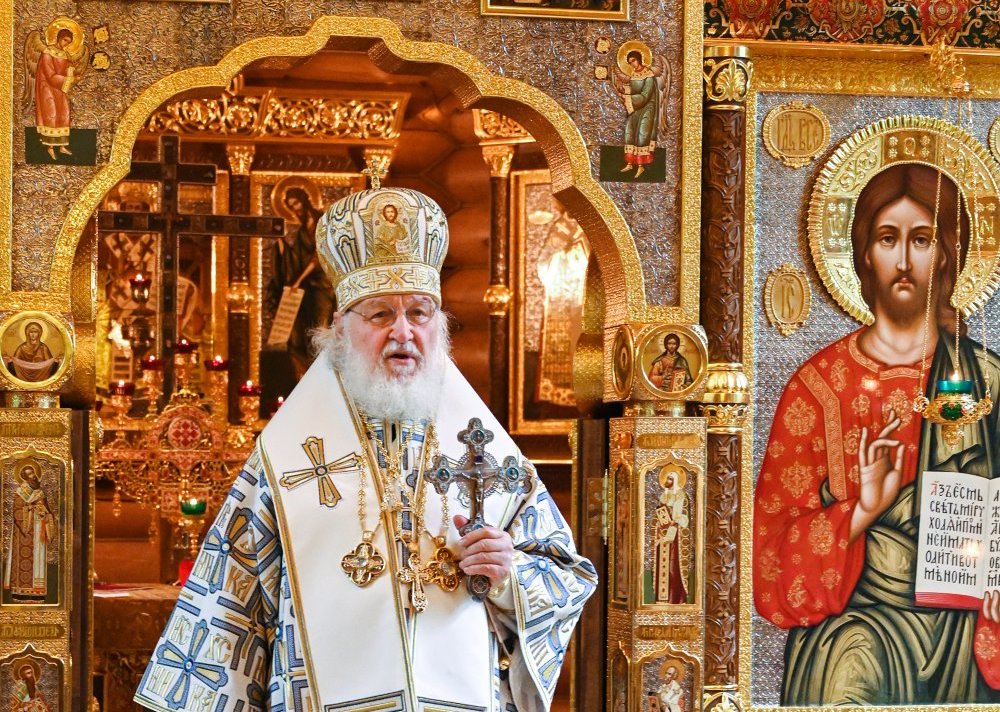
On September 25, 2022, Patriarch Kirill delivered the following sermon:
Мы знаем, что сегодня многие погибают на полях междоусобной брани. Церковь молится о том, чтобы брань сия закончилась как можно быстрее, чтобы как можно меньше братьев убили друг друга в этой братоубийственной войне. И одновременно Церковь осознает, что если кто-то, движимый чувством долга, необходимостью исполнить присягу, остается верным своему призванию и погибает при исполнении воинского долга, то он, несомненно, совершает деяние, равносильное жертве. Он себя приносит в жертву за других. И потому верим, что эта жертва смывает все грехи, которые человек совершил.
We know that today many are perishing on the fields of internecine warfare. The Church prays that this warfare will end as quickly as possible, that as few brothers as possible will kill each other in this fratricidal war. And at the same time, the Church realizes that if someone, moved by a sense of duty, the necessity to fulfill an oath, remains faithful to their calling and perishes in the performance of military duty, they undoubtedly perform an act equivalent to sacrifice. They offer themselves as a sacrifice for others. And therefore we believe that this sacrifice washes away all the sins that a person has committed.
— Patriarch Kirill, Sermon on the 15th Sunday after Pentecost, September 25, 2022, https://www.patriarchia.ru/article/103723
“He Was Misunderstood”
Some have attempted to downplay this sermon, claiming that Patriarch Kirill was “misunderstood” or that his words were distorted by hostile Western media.
The evidence refutes this.
This sermon was reported by Ukrainska Pravda, Euromaidan Press, Slovo i Dilo, Korrespondent.net, Kommersant, The Moscow Times, Rossiyskaya Gazeta, Meduza, Euronews, Reuters, Associated Press, Al Jazeera, RFE/RL, Newsweek, Religion News Service, Orthodox Times, the Atlantic Council, and dozens of other outlets worldwide.
The interpretation was materially the same across languages, continents, and confessions.
In Russian: Kommersant, Russia’s leading business daily, headlined “Патриарх Кирилл пообещал прощение грехов погибшим в «междоусобной брани» на Украине” (Patriarch Kirill promised forgiveness of sins to those who died in “internecine strife” in Ukraine). Rossiyskaya Gazeta, the Russian government’s official newspaper, headlined that those who sacrifice themselves while fulfilling the oath “смоют все грехи” (will wash away all sins). The Moscow Times Russian edition ran “Это смывает все грехи” (This washes away all sins). Korrespondent.net reported “смерть на войне в Украине смывает грехи” (death in war in Ukraine washes away sins).
In English: RFE/RL headlined “Dying In Ukraine ‘Washes Away All Sins’.” Orthodox Times reported “Any Russian soldier who dies in the war in Ukraine is forgiven for his sins.” Aleteia (Catholic) wrote “Russian soldiers who die in Ukraine have sins washed away.”
If Patriarch Kirill was “misunderstood,” then so was Rossiyskaya Gazeta, the Kremlin’s own newspaper.
No. There was no mistranslation, no distortion, no hostile spin. Major outlets, including Russian outlets, heard the same thing because the phrase itself says that this sacrifice “washes away all sins.”[2]
Across Russia, faithful Orthodox Christians heard this from their patriarch. Mothers, wives, families of soldiers, and people of simple faith trust that the Patriarch of their Church speaks the truth. The obvious pastoral danger is that they will believe, listening to Patriarch Kirill, that if their loved one dies in Ukraine, his sins are forgiven by battlefield death itself. They may not know that the saints teach the opposite.
Even within the Moscow Patriarchate’s orbit, this claim could not be universally affirmed. Metropolitan Eugene of the Estonian Orthodox Church, under pressure from the Estonian government to clarify his position, publicly stated that he does “not share the words of His Holiness Patriarch Kirill” about “the absolution of all sins of military personnel who died in the performance of military duty.”[3]
What the Fathers Actually Teach
Patriarch Kirill promised that battlefield death “washes away all sins.” Those who defend this claim invariably reach for St. Basil the Great’s Canon, which appears to offer an allowance for killing in war:
Homicide in war is not reckoned by our Fathers as homicide; I presume from their wish to make concession to men fighting on behalf of chastity and true religion.
— St. Basil the Great, First Canonical Epistle to Amphilochius (Letter 188, Canon 13), https://www.newadvent.org/fathers/3202188.htm[4]
If St. Basil the Great allows killing in war, the argument goes, then Kirill’s promise of absolution for those who die in war must be legitimate. But what does St. Basil actually require of those who kill, even in wars that meet his criteria? The very next sentence of this canon answers the question, and it says the opposite of what Kirill teaches.
How the Fathers Treat Killing: Penance and Unclean Hands
Perhaps, however, it is well to counsel that those whose hands are not clean only abstain from communion for three years.
— St. Basil the Great, First Canonical Epistle to Amphilochius (Letter 188, Canon 13), https://www.newadvent.org/fathers/3202188.htm[5]
Even when St. Basil is speaking of those “fighting on behalf of chastity and true religion,” he still considers their hands unclean and prescribes a three-year abstention from Holy Communion.
In the midst of widespread advocacy for war, St. Basil’s narrow allowance is quoted again and again. The direct following sentence about a three-year abstention is omitted almost everywhere. Sentences used to bless war are treated as timeless and relevant, while the sentences that provide the context of penance, tears, and abstention from Holy Communion are treated as outdated, inconvenient, or “too strict.”
Is this not because we have already decided which parts of the Fathers are sweet to us and adhere to just these parts, while the saying of the Fathers we deem as bitter are considered as irrelevant and outdated to us? Thus, we treat the saints as a glorified buffet: taking what we fancy, and leaving behind whatever does not suit us.
If we are going to invoke St. Basil’s words on war, we must accept all of what he says, including his insistence that even those who kill for “chastity and true religion” must be treated as spiritually wounded and excluded from the Mysteries for three years.
That forces us to take penances seriously. However, penances are often not taken seriously in these times. Thus, we cannot talk about killing in war and the allowances our saints give without talking about penance, unclean hands, and what the Fathers considered necessary for the healing of the soul.
St. Basil prescribes years of exclusion from the Chalice for killing even in self-defense, whereas Kirill promises automatic absolution. The full weight of this contradiction will only become clear after we have examined the teaching in full.
Penance Is Not Punishment: It Is Medicine
To understand why Kirill’s promise is so dangerous, we must first understand what the Fathers mean by “penance.” If penance is merely a punishment, then Kirill’s offer of automatic absolution sounds like mercy: he is removing the punishment. But penance is not a punishment. It is the healing of a wounded soul, and removing it does not show mercy; it leaves the wound untreated.
One must understand that penance is meant to help someone.
— St. Paisios the Athonite, Spiritual Counsels, Vol. 3: Spiritual Struggle, p. 307[6]
Penances, also called a “rule” or “canon,” are given to the penitent for one purpose: salvation. They are not arbitrary punishments. They are not spiritual bureaucracy. They are medicine.
Protopresbyter George Metallinos, summarizing St. Nikodemos, writes:
The penances, the satisfaction, and the rule imposed by a Spiritual Father are not, in the end, a punishment or a chastisement, but, as he [St. Nikodemos] points out, entail one’s salvation.
— Protopresbyter George D. Metallinos (summarizing St. Nikodemos the Hagiorite), The Exomologetarion; earlier version online as “The Exomologetarion of St. Nicodemos the Hagiorite”
When we commit grave sins, the soul becomes unclean and wounded, and thus unworthy to approach the Holy Mysteries. The pre-communion prayers of the Church are full of this awareness. The Fathers prescribe periods of abstention, prayer, tears, and ascesis so that the soul may be healed and the person may return to Communion for their benefit and not for their condemnation.
Killing another human being, even righteously, even in legitimate defense, wounds the soul so deeply that years of purification are required before one can worthily approach the Holy Mysteries again. Therefore, penances are not legalistic walls blocking us from Christ and salvation, as some errantly believe. They are the narrow path back to Him without self-deception.
In the teaching of the Fathers, penance has two main purposes.
How Penance Heals: Prevention of Future Sin
St. Nikodemos advises the spiritual father how to speak to the penitent, so that they will accept the penance given to them:
Child, know that with this abstinence from [Holy] Communion your repentance will be more firm. You will be greater assured of the grace of God and you will better understand the harm which sin caused you, especially when you see others communing while you abstain, saying to yourself what that Prodigal Son said: “How many hired servants of my father’s have bread enough and to spare, and I perish with hunger!” (Lk. 15:17). And by this you will hate sin forever and in the future you will protect well the grace which you lost, so that “your mishaps may become lessons.” “For everything that someone builds with great labor, he is diligent to protect,” says Basil the Great. And Gregory the Theologian says: “For people cling tightly to that which they acquire with labor; but that which they acquire easily they quickly throw away, because it can be easily recovered.”
— St. Nikodemos the Hagiorite, Exomologetarion: A Manual of Confession
St. John Chrysostom explains the same principle fourteen centuries earlier:
These laws, then, of humanity let us learn also. For if you see a horse hurrying down a precipice, you apply a bit and hold him in with violence and lash him frequently; although this is punishment, yet the punishment itself is the mother of safety. Thus act also in the case of those that sin. Bind him that has transgressed until he have appeased God; let him not go loose, that he be not bound the faster by the anger of God. If I bind, God does not chain; if I bind not, the indissoluble chains await him. “For if we judged ourselves, we should not be judged” (1 Cor. 11:31). Think not, then, that thus to act comes of cruelty and inhumanity; nay, but of the highest gentleness and the most skillful leechcraft and of much tender care.
— St. John Chrysostom, Homily 14 on 2 Corinthians, https://www.newadvent.org/fathers/220214.htm
The penance is not cruelty. It is, as St. John Chrysostom says, the mother of safety. The temporary binding on earth is so that the penitent will not face the unbreakable chains in the judgment. Penance makes repentance concrete. It gives the soul time to feel the loss, to grasp the harm of the sin, to learn to hate it.
How Penance Protects: Prevention of Communing Unworthily
St. Nikodemos then tells the spiritual father to make clear to the penitent that accepting the penance is also about the danger of approaching the Mysteries in an unworthy state:
Child, know that if you wish to commune unworthily, you will become guilty of the body and blood of the Lord, as St. Paul says (1 Cor. 11:27), and you will commune unto your condemnation and perdition, becoming a second Judas and like the Jews. For just as the Jews pierced the body of the Lord then, not in order to drink His blood, but in order to spill it, as Chrysostom explains, you should also consider that you are spilling the pure blood of the Lord and not that you are drinking it, on account of your unworthiness.
— St. Nikodemos the Hagiorite, Exomologetarion: A Manual of Confession
For St. Nikodemos, to commune unworthily in this state is sacrilege of the gravest kind: to become a second Judas, to spill the Blood of Christ rather than drink it. The penance stands between the penitent and that kind of sacrilege.
Penances are not artifacts of a past time. They are prescribed by the Church for the salvation of our souls. Yet in contemporary practice, one may deduce that, because their priest or spiritual father does not give them penances, that this is fine, and not to worry further. St. Nikodemos the Hagiorite addresses this directly:
I am resigned to say that if your Spiritual Father assigns you a small rule, you should, of your own accord, ask him to give you a greater one, as many others do who repent fervently, in order to greater propitiate divine righteousness by this temporary rule and to be more assured that God loosed you from eternal punishment, which you were liable to on account of sin.
— St. Nikodemos the Hagiorite, Exomologetarion: A Manual of Confession
That St. Nikodemos expresses resignation in prompting penitents to seek adequate penances reveals how far we have fallen from the mindset of the Fathers in our time. One who desires penance is, in his words, one who repents fervently, and is also more assured of their salvation. This is a different message from the one we hear today.
The common response to this is that “well penances are left up to the discernment of the Spiritual Father,” so that no one can question this discernment.
However, the Spiritual Father must still apply them, especially to those who sin callously.
Penances are left up to the discernment of the Spiritual Father. The Spiritual Father must be uncompromisingly strict with him who sins callously.
— St. Paisios the Athonite, Spiritual Counsels, Vol. 3: Spiritual Struggle, p. 308[7]
It is true that the Canons of the Church must be applied with discernment:
If the Spiritual Father uses the Canons of the Church as if they were… loose military cannons, and not with discernment, in accordance with each person’s needs and the repentance demonstrated, then instead of healing souls, he’ll be committing a crime.
— St. Paisios the Athonite, Spiritual Counsels, Vol. 3: Spiritual Struggle, p. 309[8]
However, discernment in applying penances is not a license to abolish them.
Consider: it is the janitor’s responsibility to clean and to determine what cleaning is necessary. But if someone observed that no cleaning was taking place at all, they could certainly question the janitor. It would be absurd for the janitor to respond, “What do you know? You are not the janitor. It is the janitor’s responsibility to figure these things out, not yours.” The fact that cleaning is the janitor’s responsibility does not give the janitor license to neglect cleaning entirely and then hide behind his job title when questioned.
The same fallacious reasoning is at work here. Just because it is within the spiritual father’s discernment to apply penances does not mean he has any authority to discard penances outright. None of the saints say this. That is not what St. Paisios is saying. That is not what St. Nikodemos is saying. Yet people extract quotes from these very saints and wield them as shields: “It is the spiritual father’s job to apply penance,” or “The canons should not be applied like loose cannons.” Yes, but that does not mean you get to abolish the penance. The saints are telling you how to apply it, not giving you permission to ignore it.
This matters because this widespread misunderstanding of penances dulls the patristic consciousness of the faithful. When St. Basil prescribes a three-year penance for killing in war, many people do not understand what the saints actually mean by that. The error is so fundamental that we then cherry-pick the quotes that suit our circumstances and ignore everything else. This is not a digression from the question of war; it is the root of the problem. Many spiritual fathers appear to share this same misunderstanding, and it filters down to the faithful who trust them.
To see how far we have drifted, consider what St. Paisios describes as the normal range of calibration:
In other words, if two people commit the same sin, the Spiritual Father may impose on one man the penance not to receive Holy Communion for two years, while on the other he may impose only two months. There can be that much of a difference.
— St. Paisios the Athonite, Spiritual Counsels, Vol. 3: Spiritual Struggle, p. 307[9]
Notice that for St. Paisios, a light application of a penance is framed as being for two months, but that someone might be penanced up to two years. Even two months would be almost unheard of by many Orthodox Christians today.
And so this lack of understanding of penances persists: the belief that they represent healing for us, that the spiritual father is in charge of applying them, but that they are not simply to be discarded under the premise that they can be, because the spiritual father may ignore the tradition of our Church and do whatever he wishes.
One must understand that penance is meant to help someone.
— St. Paisios the Athonite, Spiritual Counsels, Vol. 3: Spiritual Struggle, p. 307[6]
The language of our saints is being weaponized as justification for ignoring these very same saints: selective obedience, picking which sayings of the saints we like and tossing the rest. So when St. Paisios says that the spiritual father is responsible for applying penances and that they must not be applied like loose canons, this is what is presented as justification. However, St. Paisios’ words that the penance helps to heal someone, that penances must be applied to those who sin callously, are ignored.
Soldiers told that their sins are automatically washed away by battlefield death approach killing without any of the gravity the Fathers require. By St. Paisios’s standard, that is callousness, and it demands strictness, not absolution.
When St. Basil the Great says that one who kills in war, even in self-defense, is to be penanced three years, this must be understood as St. Basil communicating that killing, even in self-defense, is still a sin and a missing of the mark. In the modern justifications for war addressed in this book, there is almost no mention of penance, let alone the three-year penance. This convenient omission should serve as a signpost that we have departed from the witness of the saints.
The Even Stricter Prohibition on Clergy
The three-year penance applies to laymen. For clergy, the prohibition is absolute: priests and monks cannot serve in armed forces at all.
Canon 7 of the Fourth Ecumenical Council and Canon 83 of the Apostles forbid clergy from military service. The reason is stated in Canon 5 of St. Gregory of Nyssa, which became a canon of the Church:
Should a priest “fall into the defilement of murder even involuntarily (i.e. in self-defense), he will be deprived of the grace of the priesthood, which he will have profaned by this sacrilegious crime.” They whose hands have shed blood can no longer be icons of Christ and are not suited to serve at the altar.
— St. Gregory of Nyssa, Canonical Epistle to Letoius, Canon 5. Cited in Fr. Emmanuel Hatzidakis, The Heavenly Banquet, p. 86; excerpt online in “What does the Church say about war?”
Even in self-defense. Even involuntarily. A priest who sheds blood loses his priesthood permanently. His hands can no longer be “icons of Christ.” He is no longer suited to serve at the altar. This canon is the reason some Orthodox priests to this day will not drive, lest someone be killed in an accident and the blood fall on their hands, and they be prevented from ever serving again.
Yet Patriarch Kirill, a bishop (the highest order of clergy), blesses an invasion that has killed tens of thousands of Orthodox Christians on both sides, and he teaches that death in this war “washes away all sins.” He even declares this fratricidal conflict a “Holy War.”
If a priest cannot shed blood even to save his own life without losing the priesthood, on what basis can a Patriarch bless the shedding of Orthodox blood and call it holy?
Someone might object: these canons concern clergy, not laypeople; what a priest cannot do has no bearing on what a layman may do in war.
St. Nikodemos the Hagiorite addresses exactly this reasoning in his Christian Morality. Commenting on the Canons of the Synod of Laodicaea, he demonstrates that when the Church singles out clergy for a stricter prohibition, this is not a license for the laity. It is the Church revealing its true position. The more lenient rule for laypeople exists only as a concession. Invoking Christ’s words to the Pharisees, St. Nikodemos writes:
It was because of the hardness of heart and obduracy shown by Christians that the Holy Synod condescended to say this, and not as a matter of principle; out of economy and condescension, according to its consequent will, and not out of exactitude or with its antecedent will and intent.
— St. Nicodemos the Hagiorite, Christian Morality (Belmont, MA: Institute for Byzantine and Modern Greek Studies, 2012), pp. 74-75
The same principle applies here. Canon 5 of St. Gregory of Nyssa, which permanently bars any priest who sheds blood from serving at the altar, is the Church’s antecedent will: its true and highest standard. St. Basil’s three-year penance for laymen who kill in war is the consequent will: the pastoral concession to soldiers who, through hardness of heart or the brutality of circumstance, have stained their hands with blood. Using St. Nikodemos’ reasoning for other canons which penalize only the clergy: if the act were spiritually clean, the Church would have not permanently barred priests who committed it from the altar. The penance is not evidence that war-killing is somehow acceptable to non-clergy, but that the Church condescended to the reality of the battlefield. Its actual intent remains unchanged from the beginning: the shedding of human blood is a grave spiritual wound, even within the narrow allowance the Fathers grant for defensive war.
Application to War: St. Basil’s Three-Year Canon
Thus, we have seen that penances serve two purposes: they prevent future sin, and they prevent the penitent from partaking of Holy Communion unworthily. Without these, there is no true repentance, and no salvific confession, according to St. Nikodemos the Hagiorite.
St. Basil’s three-year penance then, reflects a soul wounded and corrupted by killing another person made in the image of God, a wound that St. Basil says requires three years of healing before approaching the Holy Mysteries.
Now, compare and contrast this with the words of Patriarch Kirill, whose sermon says that dying in the performance of military duty, potentially while maiming and killing others, is a sacrifice that washes away all sins.
The Biblical Foundation: Numbers 31 and the Pollution of Bloodshed
The Rudder (Πηδάλιον, the standard canonical commentary of the Orthodox Church compiled by St. Nikodemos the Hagiorite) explains why St. Basil prescribed this specific penance:
But why did the old Fathers not canonize men who kill others in war, while St. Basil deprived them of communion for three years? God Himself solves this bewildering question in the second Book of Numbers (Chapter 31, Verse 19 and 24), wherein He commands that Jews returning from the war with the Midianites shall stand outside of the camp for seven days, wash their garments, be purified, and then be permitted to enter the camp. “And abide outside of the camp for seven days. Whoever has killed anyone, and whosoever has touched anyone slain, purify both yourselves and your captives; and wash your garments on the seventh day, and you shall be clean and afterwards you may come into the camp” (Numbers 31:19 and 24).
— The Rudder (Pedalion), commentary on St. Basil’s Canon 13
The commentary continues:
And the reason is, according to the interpretation offered by Philo the Jew, that although the killing of enemies in war was lawful, yet anyone that killed a human being whether justly and rightfully, or for revenge, or that slays any person as a matter of violence and coercion, appears in spite of this to be responsible for the commission of a sin and crime, because he has killed a human being who is of the same race and of the same nature as his own. For this reason and on this account those who had slain Midianites in war, though they did so rightfully and justly, though they slew them as enemies, too, and though it was for the sake of revenge, too, as required by the passage saying: “for, said God to Moses, Take revenge for the children of Israel on the Midianites” (Numbers 31:2), yet as having slain kindred human beings of the same nature, and having consequently fallen under the stigma of sin and foul murder, they had to be purified of it by the seven days’ purification outside of the camp.
— The Rudder (Pedalion), continued commentary on Canon 13
Take notice: in this commentary, anyone who kills someone even “justly” still falls under the stigma of sin.
Following this example, The Rudder says, St. Basil advises abstention from Holy Communion for three years for those who have killed in war, because they have polluted themselves with human blood and have become “adepts at injuring and destroying God’s creation.”[10]
The same pattern appears in the so-called Canons of Hippolytus, an early Egyptian church order. Whatever its exact authorship (as its validity is contested), it reflects the mind of the early Church on war and bloodshed:[11]
A Christian is not to become a soldier. A Christian must not become a soldier, unless he is compelled by a chief bearing the sword. He is not to burden himself with the sin of blood. But if he has shed blood, he is not to partake of the mysteries, unless he is purified by a punishment, tears, and wailing. He is not to come forward deceitfully but in the fear of God.
The framework is the same. A Christian generally avoids soldiering. If he is forced into it and sheds blood, he is stained and must not approach the Mysteries until he has been purified by a long period of penance, tears, and lamentation. His hands are unclean. His soul is wounded.
The three years are not a sort of legal tariff that can simply be dismissed by kind and supposed loving spiritual fathers. They are a sign of how seriously the Fathers take the killing of another human being, even in war, even under orders, even in the most defensible circumstances. And even three years would be a lot, but even this is not enough: these three years are supposed to be marked by tears and wailing.
Notice that nowhere in the modern-day advocacy for war is this mentioned.
St. Basil’s Canon Was Not Optional Advice
Reading the soft language of St. Basil the Great in this aforementioned canon, some may think that what he was putting forth was just an idea or a suggestion. However, this is refuted in the Rudder:
But the Saint [St. Basil the Great] offered the Canon as one embodying advice and indecision, and out of respect and regard for the more ancient Fathers who left such persons uncanonized (i.e., unpunished), and on account perhaps of his philosophical modesty of mind and reverence.
But that this Canon of the Saint was accepted by the Church as a declarative Canon, and a definition, and a law, and not as a simple piece of indecisive advice, is a fact which is attested by the events which ensued in the reign of Nicephoros Phocas and which are recorded by both the expositors Zonaras and Balsamon, and by Dositheos (page 533 of his Dodecabiblus).
For that Emperor had sought in his time to have Christian soldiers numbered with the martyrs, and to be honored and glorified as martyrs, when they were killed in war with barbarians. But the Patriarch and Synod of Bishops in that period were opposed to this idea, and failing to convince the Emperor, they finally proposed this Canon of the Saint as a Canon of the Church, asking, “Are we going to number with the Martyrs men who have killed others in war and whom Basil the Great excluded from the Mysteries for three years as not having clean hands?”
Moreover, even Basil himself, in his Canon LV, cited this Canon there as being advisory, recommendatory, definitive, and decisive, according to Balsamon, after forbidding robbers to partake of communion if they had killed laymen who were actually attacking them.
If it be objected that Zonaras asserts that this recommendation of the Saint’s, or rather the Canon, appears to be too heavy and onerous, owing to the fact that Christian soldiers engaged in continual and consecutive wars have never thus far been able to desist for three years straight and thus get a chance to commune, we too agree with this, that as long as soldiers are at war they cannot commune, but may do so only after three years’ cessation from war.
— The Rudder (Pedalion), Commentary on Canon 13 of St. Basil the Great
Canon 2 of the Quinisext Council (692 AD), whose canons carry Ecumenical Council authority, had already ratified all of St. Basil’s canons by name.[12] St. Nikodemos, writing over a millennium later, records that the Church continued to treat this canon as binding law, not simply optional counsel.
Further, the Greek text of this commentary carries weight that the English translation does not fully convey.
ὅρος: The English reads “a declarative Canon, and a definition, and a law.” The Greek reads κανὼν ἀποφαντικός, καὶ ὅρος, καὶ νόμος. The middle term, ὅρος (horos), carries far more weight than “definition.” ὅρος is the precise technical term for the dogmatic decrees of the Ecumenical Councils: the Ὅρος of Chalcedon, the Ὅρος of Nicaea, the Ὅρος of the Seventh Council. St. Nikodemos uses a term associated with definitive conciliar decrees, thereby emphasizing that St. Basil’s canon was received as binding ecclesial judgment rather than private advice.
Three escalating legal terms: a definitive verdict (ἀποφαντικός), a conciliar decree (ὅρος), a law (νόμος).
ἐναντιούμενοι: The English reads that the Patriarch and Synod “were opposed to this idea.” The Greek participle ἐναντιούμενοι means “actively resisting, standing against.” This is active resistance against the Emperor. When they could not persuade him (μὴ πείθοντες τὸν Βασιλέα), they resorted to presenting the canon ὡς Κανόνα, “as a Canon,” as binding Church law that no Emperor can override. This is the model the Fathers set for hierarchs confronted by civil rulers who wish to redefine the Church’s teaching on war.
μετριοφροσύνην καὶ εὐλάβειαν: St. Nikodemos explains why St. Basil used soft language. It was not because the teaching was uncertain. It was because of St. Basil’s φιλόσοφον μετριοφροσύνην (“philosophical modesty”) and εὐλάβειαν (“reverence, piety”) toward the more ancient Fathers who had left such soldiers unpenanced. The softness of Basil’s words simply reflects saintly humility, not doctrinal hesitation.
Those who cite the gentle phrasing as evidence that the canon is merely a suggestion mistake a saint’s modesty for uncertainty. St. Basil wrote with reverence for his predecessors, but he wrote a canon, and the Church received it as one: binding, definitive, and enforceable, as the Patriarch and Synod demonstrated when they wielded it against an Emperor.
St. Nikodemos also preserves a passage from Philo the Jew that reveals the ontological basis for the stain of killing in war. According to Philo, he who kills a man, κἂν δικαίως, κἂν διὰ ἐκδίκησιν, κἂν διὰ βίαν καὶ ἀνάγκην (“whether justly, or for vengeance, or by force and necessity”), ὑπὸ ἁμαρτίαν καὶ ἔγκλημα φαίνεται νὰ πίπτῃ (“appears to fall under sin and crime”). The word ἔγκλημα (enklēma) is legal terminology: accusation, indictment, criminal charge. Even justified killing still appears, in Philo’s language as preserved by St. Nikodemos, to fall under sin (ἁμαρτία) and accusation/crime (ἔγκλημα).
The reason is not circumstantial but ontological: the one killed is ἐκ τοῦ αὐτοῦ γένους καὶ τῆς αὐτῆς φύσεως (“of the same kind and same nature”) as the killer. The stain exists because killer and killed share a common humanity. No amount of political justification can overcome this ontological reality. St. Nikodemos endorses this reasoning by including it in his commentary, grounding the three-year penance not in arbitrary punishment but in the fundamental dignity of human nature.
In summary: an Emperor attempted to do exactly what Patriarch Kirill now teaches: to declare soldiers who die in battle as martyrs whose sins are washed away. But note: Nikephoros’s request was far more defensible than Kirill’s. He was asking to honor defenders, not aggressors; those who died fighting non-Orthodox invaders, not Orthodox brothers; Byzantine soldiers protecting Christian lands from Muslim conquest. Even so, the Patriarch and Synod refused, citing St. Basil’s canon requiring three years of exclusion from Communion for those who kill in war. The Emperor’s proposal was rejected. The Patriarch and bishops “bravely opposed” the Emperor. They did not bless war as a path to martyrdom. Rather, they upheld St. Basil’s teaching that those who kill in war have “unclean hands.”
If the tenth-century Church refused to grant martyrdom to defenders against Muslim armies, on what basis can the twenty-first-century Church grant automatic absolution to those who die in a war of aggression against Orthodox Christians?
What the Canon Requires
Those who kill in war cannot be numbered among the martyrs (as we will examine later in this text), not even when fighting barbarians in defense of Christian lands, and not even when blessed by the Church.
The Synod’s question to Emperor Nicephoros previously examined remains unanswerable by those who push their premise of war: how can we honor as martyrs those whom St. Basil excluded (penanced) from the Mysteries for three years as having unclean hands?
Second, soldiers actively engaged in warfare cannot commune. The three-year abstention from Holy Communion begins only after warfare ceases. In an age of “continual and consecutive wars,” this effectively excludes career soldiers from sacramental life for the entire duration of their service. Where, in the modern justifications of war addressed here, do we hear this patristic requirement? Patriarch Kirill will offer his own thoughts and reasonings regarding the war, but not this part of what our saints tell us.
Third, even when war meets the narrow criteria the cited Fathers and Orthodox witnesses allow for legitimate defense (defending Orthodox from non-Orthodox persecution, responding to foreign aggression, protecting the weak), those who kill still bear this burden. The penance is not negotiable. The spiritual wound is real, and one cannot simply exercise economia to go kill whoever it is that they wish.
Even at The Battle of Kosovo in 1389, presented in the Serbian tradition as a righteous defense of Christian lands, the hagiographic sources glorify the dying, not the killing (Chapter 21).
One cannot simply hide behind such trivial justifications for war for death. St. Paisios the Athonite warns:
There is one who had killed so many back then during the war, and yet he is still living. God will tell him in the other life, “I allowed you to live much longer than the devout people.” He will be allowed no mitigating circumstances.
— St. Paisios the Athonite, Spiritual Counsels, Vol. 2: Spiritual Awakening, p. 57
No mitigating circumstances. Not “but it was war.” Not “but I was following orders.” Not “but the Church blessed it.” Such excuses certainly existed in the times of St. Paisios the Athonite. No; the one who kills will stand before God and give account for the lives he took.
At this point, we should well understand that even when the Church permits killing, it wounds the soul. Even accidental death can prohibit clergy from serving at the altar. Penances are a response to sin; St. Basil’s prescription of penance for killing in self-defense shows that even in self-defense, killing wounds the soul and is a missing of the mark, and this prescription is often ignored because penances are widely misunderstood or rejected in our contemporary times.
Multi-year penances for serious sins, though prescribed by the saints, are often treated in practice as impossible, excessive, or obsolete, while selective quotations from these same saints are used to chastise those who question modern laxity.
Those who justify the war using the saints omit the very penances these saints prescribed. No mention of a three-year penance. No mention of ceasing communion for the entire period of war and three years after. No mention of tears and wailing.
We often talk about “justified killing,” “clean hands,” and “holy war”… but how often do we talk about unclean hands, pollution, and years of exclusion from the Chalice? If we are not willing to speak about unclean hands, tears, and penance, we are not speaking the same language as St. Basil the Great, St. Nikodemos, or the Rudder.
Fr. Spyridon Bailey, a well respected ROCOR priest, comments on St. Basil’s Canon 13:
Those who have been in battle who potentially have killed or actually have killed someone must withdraw from Holy Communion, according to the thirteenth canon of St. Basil, for a minimum of three years, in order for the soul to heal, to recover. Even if they’ve been blessed to go to fight, the soul needs this time to recover.
— Fr. Spyridon Bailey, “Should Christians Go To War?”, https://www.youtube.com/watch?v=OE48zfqFm1k, January 14, 2026
The Saints on Killing in War
When our saints went to war and participated in war, they themselves understood this spiritual wound if they were to take another life.
This is why, without reservation, they prayed that they would not have to take any lives.
My Saint Barbara, let me be endangered in any military fighting; help me only to avoid killing anyone.
— St. Paisios the Athonite, Spiritual Counsels, Vol. 5: Passions and Virtues, p. 288[13]
St. Paisios’s biography records the same plea to the Mother of God:
Mother of God: “Let me suffer, let me be in danger, only do not let me kill anyone; and make me worthy to become a monk.”
— St. Paisios the Athonite, Saint Paisios of Mount Athos (Holy Hesychasterion “Evangelist John the Theologian”), p. 34
In the life of Saint Paisios, we see his prayer was answered, and then he was assigned as a radio operator rather than to combat units:
His job as a radio operator spared him from armed participation in the war, such that, by Divine Grace, he did not have to kill anyone.
— Saint Paisios of Mount Athos (Holy Hesychasterion “Evangelist John the Theologian”), p. 38
If killing were so justified, why would it be that “Divine Grace” prevented him from killing anyone? And why didn’t our saints kill people out of a sense of “obedience” and “self-defense” and spend time justifying themselves?
When the possibility of being assigned to an execution squad arose, St. Paisios was clear about what he would have done:
They did not send me to serve in the execution squad. Of course, I would not have been able to kill…
— St. Paisios the Athonite, Saint Paisios of Mount Athos (Holy Hesychasterion “Evangelist John the Theologian”), p. 41
Notice that St. Paisios the Athonite, endowed with grace and replete with wisdom from patristic literature, and himself having many examples from holy people, does not appeal to obedience, or anything like this as to excuse killing. He simply says he would not have been able to kill.
And during actual combat, St. Paisios chose to risk his own life rather than let another soldier die:
Once, during a battle… I got out… “It is better,” I thought, “for me to die once, than for someone else to die and for my conscience to kill me for the rest of my life.”
— St. Paisios the Athonite, Saint Paisios of Mount Athos (Holy Hesychasterion “Evangelist John the Theologian”), p. 42
This is the mentality of a saint in wartime. Not glory in battle. Not eagerness to kill the enemy. But prayer to be spared from killing, gratitude when that prayer was answered, and willingness to die rather than have another’s death on his conscience.
If we read the lives of the saints carefully, we see a consistent pattern. Even those who served in armies and were present in battle begged God to spare them from killing. They did not consider war holy. They did not excuse killing. They did not speak of killing in self-defense as something clean or spiritually harmless.
This matters. The Church gives us the lives of the saints so that we can follow their example, discern the will of God, and live lives that are pleasing to Him. Yet our own times are full of people who speak loudly about war and killing, who claim to know what is and is not “Orthodox,” while they show little evidence of having read the lives and teachings of the saints on this exact topic. This is shallow and disobedient to the Fathers and saints.
St. Iakovos of Evia gives a vivid witness from his own experience in the army:
While I was serving with the military, I always kept with me the miraculous icon of St. Haralambos. I frequently implored the saint to keep me from having to serve in the armed regiment, because I was not a man for blood. When the commander of the regiment was picking which soldiers would serve in the armed fighting unit, I held on tightly to the icon of the saint and begged him to not allow the commander to see me and choose me to be among the fighters. Naturally the saint always “blinded” the commander and he never selected me for this.
— St. Iakovos of Evia, Life and Witness of St. Iakovos of Evia, Chapter 2: The Elder’s Life in the Military[14]
Here again, the request is not “help me win,” but “keep me from having to kill.” He also says he is not a man for blood. This is characteristic of the saints cited here, and we are called to their example.
St. Paisios is even more explicit about what a “good man” looks like in war. He writes:
Heroic deeds are done by the brave; the bighearted, not the big-framed, who are determined to sacrifice themselves. And in war-time, those who are real heroes also have a goodness about them and do not kill unnecessarily. Bravery has no room for barbarity. They may shoot all around the enemy in such a way as to force him to surrender. The good man prefers to be killed than to kill. And when someone has such intentions, he receives divine strength. Evil men are cowards, unmanly, bullies; they fear both themselves and others; this is why they will be constantly shooting more out of fear than purpose. During the guerilla warfare when I served with the Army, we had gone to a village. They told us, ‘There are none of the guerrillas here; they’ve all gone away. Only one crazy woman is left.’ One of our men saw her in the distance and immediately fired one or two rounds with his weapon! The poor woman shouted, ‘What have I done to you?’ and then fell down. Did he do this out of fear? Yes, out of fear. Such a person looks for the easy solution for himself. In order to be certain he says, ‘It’s better to get rid of the enemy.’ The less cowardly person is also the less evil. He will try to disable the enemy, he will try, let’s say, to break his arm or his leg, not kill him.
— St. Paisios the Athonite, Spiritual Counsels, Vol. 2: Spiritual Awakening, pp. 241-242[15]
For St. Paisios, genuine bravery is inseparable from goodness. The true hero prefers to die rather than kill, and when he must fight he aims to stop, not to destroy. Killing out of fear and self-protection is the mark of cowardice, not courage. He illustrates the same spirit in the example of his own father:
Manliness, bravery is one thing, but malice, criminality, is another. It is not manly to take the enemy, the prisoners, and slaughter them. Manliness is taking the enemy prisoner, breaking his weapons and then letting him go. That is what my father did. Whenever he caught any Tsetes who raided the town of Pharasa, he took their weapons and broke them, telling the raiders, ‘You’re women; not men.’ Then he would let them go. Once he dressed up as a Turkish woman and went into their camp and asked for their captain. Previously he had made plans with his own men to attack when the signal was given. When the Tsetes took my father to their captain, he said, ‘Send your men away so we can be alone.’ When they were alone, he grabbed the captain’s weapon, broke it and told him, ‘Now you’re the woman and I am Eznepides.’ Then he gave the signal, and his brave men came upon the Tsetes and chased them from the town.
— St. Paisios the Athonite, Spiritual Counsels, Vol. 2: Spiritual Awakening, pp. 241-242[16]
The aim is to stop the enemy, to disarm him, to drive him away, not to slaughter and annihilate him. This is the mentality of someone steeped in the spirit of the Church.
The founding Metropolitan of ROCOR
Metropolitan Anthony (Khrapovitsky), the founding Metropolitan of ROCOR, gives an example of what Christian mentality in war looks like:
At the beginning of this year when I went to the Kharkov sapper barracks for spiritual conversations, the duty officer pointed out to me a soldier with the Cross of St. George and said, “We have just arrived here from the front for recuperation in the last few days; at the end of one attack he slashed the shoulder of an Austrian and immediately ran for water and, bringing it in his own cap, washed his enemy’s wound, bound it up with his own shirt, and carried him on his own shoulders to the nearest medical point.”
— Metropolitan Anthony (Khrapovitsky), “The Christian Faith and War,” https://www.rocorstudies.org/2016/11/16/the-christian-faith-and-war/
Here is a decorated soldier, a veteran of the front. The one concrete story told about him is not that he killed many enemies, but that after wounding an enemy soldier he immediately tended his wounds and carried him to safety. This is the Orthodox Christian mindset and instinct in war.
Metropolitan Anthony then describes the general disposition of the Russian soldiers he sent to the front:
Our soldiers going into the field of battle (we dispatched over 150,000 of them from Kharkov in these two years) did not think about how they would kill, but about how they would die. In their eyes a soldier is not a self-satisfied conqueror, but a self-denying ascetic, laying down his life for the Faith, Tsar, and Fatherland.
— Metropolitan Anthony (Khrapovitsky), “The Christian Faith and War,” https://www.rocorstudies.org/2016/11/16/the-christian-faith-and-war/
Even in a war he believed was genuinely defensive (very different from the war in Ukraine), Metropolitan Anthony insists that faithful soldiers did not glory in killing. They prepared to die. They saw themselves as offering their lives, not taking others’. And when they had to wound an enemy, they responded with mercy.
At this point, it would be helpful to go back to the words of Patriarch Kirill, and examine the word “martyr”.
How Do the Fathers Define Martyrdom?
Patriarch Kirill claims that battlefield death “washes away all sins.” In Orthodox language, the closest doctrinal category this evokes is the Church’s teaching about martyrs and martyrdom.
What does the Church teach on whether soldiers dying in battle should be honored as martyrs? Before examining this, we must understand what the Fathers mean by “martyr.”
The definition: witness
The Greek μάρτυς (martys) means “witness.” A martyr is one who bears witness to Christ. As Hieromartyr Daniel Sysoev explains:
The Slavic language is always letting us down. Ever since the Slavs mistranslated the word “martyr,” we have always misunderstood it. We should not read the word “martyr” as commonly understood [one who has been tortured.] A martyr is a witness… Thus, a martyr is one who by his death has borne witness that Christ conquered death, that He rose from the dead. That is the meaning of “martyr,” a witness, not someone who was tortured.
— Hieromartyr Daniel Sysoev, Instructions for Immortals, p. 28
To witness to Christ: through one’s life, through one’s suffering, through one’s death, is the fundamental meaning of the word.
What we normatively mean by “martyr”
While the definition is “witness,” when we as Orthodox Christians speak of martyrs, we normatively and colloquially refer to someone who was murdered for confessing Christ. The paradigmatic martyr is one who:
- Faces opposition to the faith (a demand to deny Christ or cease confession)
- Responds with active witness (refusing to deny, continuing to preach)
- Is killed specifically because of that witness
- Dies within the Church’s communion (not as a heretic or schismatic)
This is what we usually mean when we say “martyr”: one who was killed for confessing Christ under persecution.
The distinction between witness and the title
Not everyone who bears witness to Christ is called a martyr. St. Paisios the Athonite bore witness through his asceticism and counsel, but we do not give him the title of martyr per se.
Yet the Church does venerate some saints as martyrs who were not executed. St. Thecla, called “Protomartyr among women,” was condemned to burning and wild beasts but miraculously saved; she died naturally. St. Golindukha was tortured under Zoroastrian persecution; when an angel prevented her death, she despaired of martyrdom, but the angel told her: “After going through so much, you are a martyr.”
These saints bore witness through their suffering and are called martyrs, even though they were not executed for confession.
Martyrdom requires communion with the Church
The patristic witnesses cited here insist that martyrdom requires remaining within the Church’s communion. One cannot be a martyr while in heresy or schism. Hieromartyr Daniel Sysoev himself states this directly, on the very page before his definition of martyrdom:
A martyr’s death washes away all sins except for heresy and schism. All other sins, fornication, murder, adultery, are washed away. Heresy is distortion of the teachings of the Church, a distortion made not out of ignorance, but a conscious distortion, going against the will of God. Is that not so? Schism is an organized rebellion against the Church. All other sins are washed away.
— Hieromartyr Daniel Sysoev, Instructions for Immortals, p. 27
Thus we see that even if the martyr category were hypothetically granted to soldiers dying in war, Sysoev’s own teaching excludes those in heresy or schism from its benefit. The patristic witnesses confirm this principle:
He should pass over to heretics and schismatics; where, although he should afterwards be put to death on account of the name, still, being placed outside the Church, and divided from unity and from charity, he could not in his death be crowned.
— St. Cyprian of Carthage, Epistle 51 (To Antonianus), ch. 17, https://www.newadvent.org/fathers/050651.htm
No one, howsoever much he may have given alms, even if he sheds his blood for the name of Christ, can be saved, unless he remains in the bosom and unity of the Catholic Church.
— St. Fulgentius of Ruspe, On the Faith, to Peter (De Fide ad Petrum), 38.81
The Church does in every place, because of that love which she cherishes towards God, send forward, throughout all time, a multitude of martyrs to the Father; while all others not only have nothing of this kind to point to among themselves, but even maintain that such witness-bearing is not at all necessary.
— St. Irenaeus of Lyons, Against Heresies, IV.33.9, https://www.newadvent.org/fathers/0103433.htm
This is important: not everyone fighting in this war is Orthodox Christian. Patriarch Kirill’s promise cannot apply to Muslims or others outside the Church. Yet he spoke without qualification. Ordinary hearers are not responsible for supplying missing theological distinctions that the patriarch himself did not state. They will hear exactly what he said: death in battle washes away all sins. A patriarch’s role is to teach the faithful, not to mislead them. Even those who argue he meant some particular group cannot escape the irresponsibility of speaking this way.
Thus, the cause, not the suffering, makes the martyr. This is why the examples above matter. St. Thecla and St. Golindukha are martyrs not because of how much they suffered, but because they suffered for the right cause: witnessing to Christ. As St. Augustine teaches:
It is not the punishment that makes the martyr but the cause.
— St. Augustine, Sermon 327, 1
St. Cyprian reinforces this:
Although they burn, given up to flames and fires, or lay down their lives, thrown to the wild beasts, that will not be the crown of faith, but the punishment of perfidy; nor will it be the glorious ending of religious valour, but the destruction of despair. Such a one may be slain; crowned he cannot be.
— St. Cyprian of Carthage, On the Unity of the Church, ch. 14, https://www.newadvent.org/fathers/050701.htm
The cause matters. Suffering alone does not constitute martyrdom. The witness must be to Christ, within the Church’s communion, for the faith.
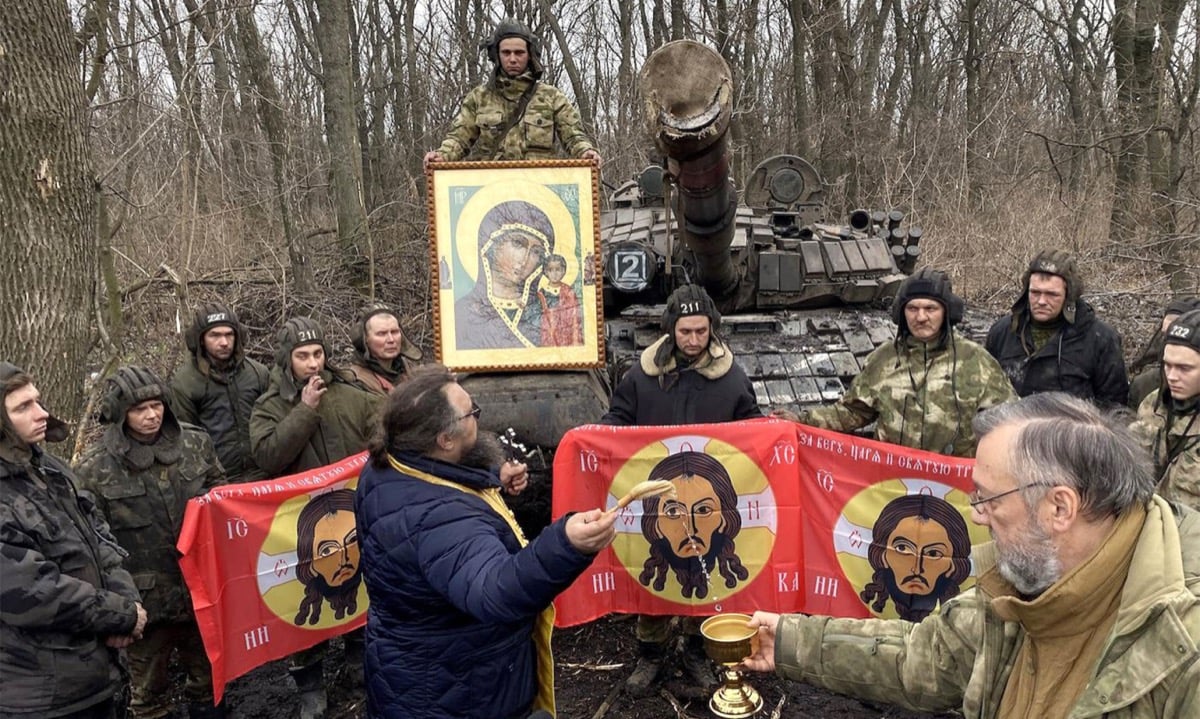
Common Defenses of the Sin-Washing Claim
The patristic teaching on penance, killing, and martyrdom is now established. Before applying it directly to Patriarch Kirill’s sermon, two objections must be addressed. Both attempt to defend the sin-washing claim specifically: that the existence of soldier-saints proves military death is salvific, and that liturgical prayers for soldiers amount to a blessing of their killing. The broader question of whether this war itself can be justified on Orthodox grounds is examined separately in Chapter 20.
”But What About Our Soldier-Saints?”
What about the soldier-saints? Surely they justify Christian warfare, many argue, often without carefully reading the lives of the saints themselves.
As we have already established, μάρτυς means “witness”: martyrdom is about bearing witness to Christ, and dying because of that witness. It does not mean “heroic warrior” or someone who simply dies in war, in the modern nationalist sense in which it is often treated.
Modern apologists for war often appeal to the so-called soldier-martyrs: St. Demetrios, St. George, St. Theodore Stratelates, and others. The argument is simple: since we have soldier-saints and martyrs, and because we depict them with spears and swords as great warriors, therefore fighting and killing in war must be fully justifiable.
This is not how the lives of these saints present the matter, and it is not how they function in the life of the Church. Readers are encouraged to return to reading of the Synaxarion (the collection of saints’ lives read in the services of the Church) for these martyrs and examine them closely, to see if their notion of these saints matches up with their recorded lives.
Some examples of martyrs
Here some examples of martyrs will be examined, along with the details that make them martyrs.
The Forty-Two Martyrs of Amorion were Byzantine soldiers captured after the sack of Amorion and held in Muslim captivity for seven years. They were repeatedly commanded to embrace Islam and were executed only after refusing. Their military careers did not make them martyrs; their steadfast confession and refusing to accept Islam under threat did.
Hieromartyr Daniel Sysoev (†2009) received repeated death threats for evangelizing Muslims in Russia and was shot while preaching in his church. He died because he persisted in bearing witness. Had he been killed in an unrelated incident, the Church would remember him simply as a priest; martyrdom flows from the cause of his death, which was his evangelism after being threatened, which was his witness (μάρτυς).
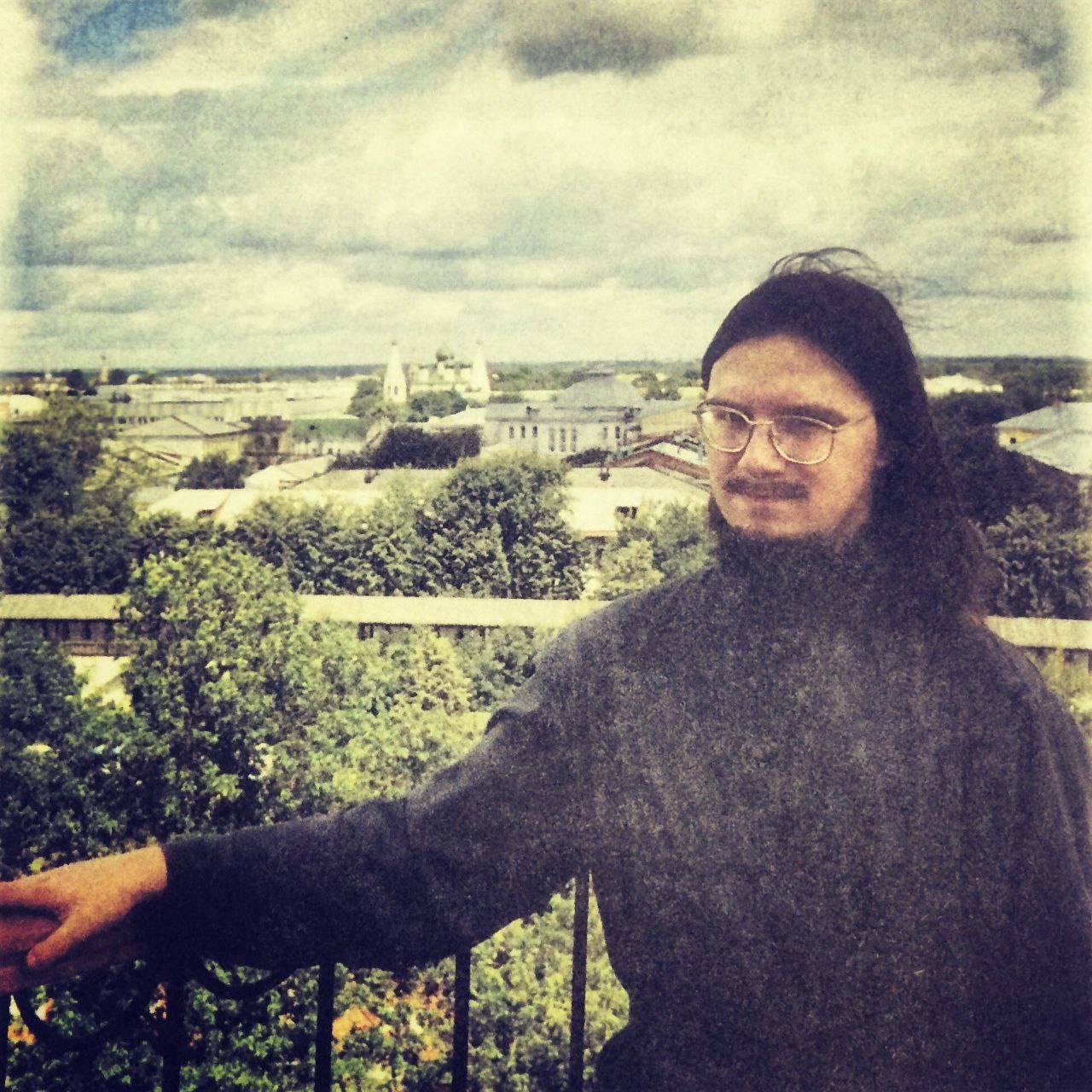
Now, we will look at St. Demetrios the Myrrh-Gusher as an example, using direct excerpts from The Great Synaxaristes of the Orthodox Church.
The actual life of St. Demetrios
Yes, St. Demetrios had military training and skill. The Synaxarion says plainly:
He also exercised himself in the arts of war, since at that time young men greatly esteemed military careers. He was in the bloom of manhood and was already renowned for his strength and skill in battle.
— The Great Synaxaristes of the Orthodox Church, Life of St. Demetrios
So we acknowledge this. He was trained. He was skilled. He was renowned for his ability in war. But notice what comes immediately after:
But more did others praise his spiritual virtues, since he was sensible and disciplined. He loved righteousness and abhorred injustice.
— The Great Synaxaristes of the Orthodox Church, Life of St. Demetrios
More. Not “equally.” Not “also praised.” More did others praise his spiritual virtues than his military skill. This is why we venerate St. Demetrios: his holy virtue. Not because he was a skilled killer.
The emperor recognized these virtues and raised him to high office:
Galerius selected Demetrios, out of all the leaders of Thessalonike, and elevated him to the rank of doux, that is, military commander of all Thessaly.
— The Great Synaxaristes of the Orthodox Church, Life of St. Demetrios
Now pay attention to what the Synaxarion says next:
Although he was not displeased with the imperial appointment as military commander and protector of the people, nothing made him happier than when he was pursuing the increase of virtue.
— The Great Synaxaristes of the Orthodox Church, Life of St. Demetrios
He accepted the military command. He was not displeased to be the protector of the people. But what made him happy, what occupied his heart, was the increase of Christian virtue.
He accepted a defensive role, oriented toward protecting the people, which fits within the narrow patristic framework. Yet even within this legitimate calling, what consumed him was not military success but virtue. His labor was not warfare but preaching.
The Synaxarion describes what this looked like in practice:
Day and night, he never left off teaching the word of God and faith in the Christ. He was instructing the people openly, without any attempt at concealment or fear that the emperor should learn of his activities. He made it his chief labor to sow the seed of piety in a suitable manner that was adapted to those souls who listened.
— The Great Synaxaristes of the Orthodox Church, Life of St. Demetrios
Thus, the chief labor of St. Demetrios the Myrrh Gusher was catechism. Not training troops. Not planning campaigns. Not defending walls. Not slicing through enemies. The chief labor of St. Demetrios was teaching the word of God, day and night.
Metropolitan Augoustinos Kantiotes, commenting on this, calls him not a skilled war machine; he calls him a catechist (teacher of religion):
Those who do not love religious instruction, let them hear. Catechization is not something new, but an ancient institution in our Holy Church. Catechists were not only clergymen but laymen too, and among the most distinguished was Saint Demetrios.
— Metropolitan Augoustinos Kantiotes, Saints from All Walks of Life, p. 31
Let us not be confused then; this Christian virtue and the preaching of the Gospel along with catechism is the very reason St. Demetrios is lauded, on account of his zeal for God and preaching of the Gospel.
The Synaxarion continues:
These were the themes of Saint Demetrios’ discourses. He was teaching continually, and many put his words into action in their own lives.
— The Great Synaxaristes of the Orthodox Church, Life of St. Demetrios
Then comes the line that destroys any attempt to use St. Demetrios as a poster child for “holy war”:
Thus, considering nothing else as gain, except converting the entire city of Thessalonike to belief in the Christ, he never ceased preaching.
— The Great Synaxaristes of the Orthodox Church, Life of St. Demetrios
Nothing else as gain. Not military victories. Not successful defense. Not glory in battle. Only the conversion of souls to Christ. This is what consumed him. This is what he valued.
This preaching, and only this, is why the devil sought to kill him:
The devil, the enemy of truth, who always bears malice toward the souls of men, observed that the Christians were multiplying and the idolaters were diminishing in numbers. Steeped in envy, he employed various machinations to hinder the saint’s preaching. After he failed to thwart the holy man, the devil sought the only way to achieve Demetrios’ permanent silence, and that was to have him put to death.
— The Great Synaxaristes of the Orthodox Church, Life of St. Demetrios
Nowhere here in the life of St. Demetrios do we read that the devil went after St. Demetrios for his “holy killings,” or for the way St. Demetrios wielded his “holy sword,” and so forth, as some imagine. Satan despised him for his preaching and the conversion of idolaters. That is why he was martyred, not because he was a skilled soldier.
The emperor likewise wanted to stop the spread of Christianity; that is why Demetrios died.
If we look at the other famous soldier-martyrs, we see the same pattern. St. George the Trophy-Bearer served as an officer under Diocletian. When the emperor ordered the persecution of Christians and commanded George to take part, he refused, publicly confessed Christ, and condemned the decree as unjust. For this he was tortured and beheaded. The Church praises his confession and endurance, not military exploits.
St. Theodore the Tyro served as a soldier but was martyred for setting fire to a pagan temple and refusing to sacrifice to idols. He was burned alive because he would not deny Christ. Again, what we celebrate is his bold confession, not his service in the army as such.
Is the pattern not obvious?
These are martyrs who happened to be soldiers, not warriors glorified for slaying, maiming, and killing. We venerate their witness to Christ, their refusal to obey orders that violated the faith, their willingness to die rather than betray the Lord. We do not sing about the battles they won. We do not keep feast days for enemies they slew. We do not glorify their military record.
To use soldier-saints as a justification for “holy war” is to read their lives completely backwards. It is to project onto them what we want them to represent, instead of receiving what the Church actually gives us in their lives and hymns. St. Demetrios was described as “considering nothing else as gain, except converting the entire city of Thessalonike to belief in the Christ.”
Can the same be said of those who bless modern wars? Or do they consider something else as gain (territory, influence, national glory) while using the names of the saints to justify power, vengeance, and bloodshed?
Those who point to these martyrs to defend war often show too little concern for the holy lives themselves, and too much effort in making them justify modern inclinations. We have turned the saints into icons of what they never were. The Synaxarion, if we allow it to speak, brings us back to what these saints truly valued: not military glory, but the salvation of souls.
”But the Church Prays for Soldiers!”
Still others point to the Liturgy itself, citing petitions for “the armed forces” and then say “We pray for our soldiers in church. Does this not bless their killing?”
Firstly, the presumption that the primary role of a soldier is to take lives is false. Do we think that everyone who joins the army believes it is all but assumed that they will have to take another’s life? This is of course not true, nor is this how the Church has ever understood the role of a soldier. Even in modern armies, only a small percentage of soldiers ever kill anyone in combat.
The work of those in the military includes many varied roles such as logistics, administration, medicine, communications, engineering, and other kinds of support roles. In the ancient world this was even more the case.
The Fathers and saints did not reduce a soldier’s identity to the act of killing, as if that were his essence. So, when the Church prays for “our armed forces” or “those who serve their country,” this must not be interpreted as an endorsement for spilling blood.
Much of what the Church prays for is peace, and so if the Church does pray for the army, this needs to be considered a prayer for peace. Few vocations need such prayer as desperately as those in the military, who may be placed in situations where they can kill or be killed. The Church then prays not as an affirmation of bloodshed, but entreating God to prevent war and senseless death, if possible.
We pray for soldiers so that they will be protected, so that war will cease, so that they will not be forced into situations where they must kill, and above all that they will not be required to raise their hands against other Orthodox Christians, as will be explained in Chapter 20.
The holiness of saints does not come from military service but very often in spite of it. When the Church prays for soldiers, she prays for their protection, for their repentance, for their safe return, and for peace. She does not pray that they might kill more effectively.
The Claim Measured Against the Teaching
The teaching is established. Killing wounds the soul. Even justified war requires years of penance. Martyrdom requires witness to Christ, not battlefield death. The Church has already ruled on this exact question and answered: no.
We now measure Patriarch Kirill’s claim against this witness.
As examined previously, Patriarch Kirill declared that a soldier who “perishes in the performance of military duty” performs “an act equivalent to sacrifice,” and that “this sacrifice washes away all the sins that a person has committed.”
St. Basil’s Canon XIII prescribes three years of exclusion from the Chalice for soldiers who kill even in legitimate defense.[17] The Rudder goes further: anyone who kills in war “appears in spite of this to be responsible for the commission of a sin and crime.”[18]
Where St. Basil prescribes penance, Kirill promises that death itself grants automatic absolution. Where the Rudder says killing in war still leaves a person “responsible for the commission of a sin and crime,” Kirill says the sacrifice “washes away all the sins that a person has committed.”
These are not two ways of saying the same thing. They are opposites. The patristic framework treats killing as a wound that requires years of healing. Kirill treats death in this war as a sacrament that instantly purifies.
Even Metropolitan Eugene, head of the Russian Orthodox Church in Estonia, publicly distanced himself from this claim. Under pressure from the Estonian Ministry of the Interior to clarify his position following Kirill’s September 25, 2022, statement, Eugene confirmed on October 12, 2022, that he does “not share the views of Patriarch Kirill of Moscow according to which the Russian soldiers who have died in Ukraine will be absolved of their sins.”[19]
Fr. Toomas Hirvoja of the Estonian church responded directly:
That is completely contrary to Orthodox teachings. Even the metropolitan [Eugene] said so. It is the blood of Christ that absolves a person of sin if we repent, admit and confess. Killing a person in war means being cut off from communion for three years, it is a period of penitence.
— Fr. Toomas Hirvoja, ERR News, October 17, 2022, https://news.err.ee/1608753883/professor-metropolitan-eugene-answered-as-he-was-asked
When even a senior hierarch and clergy of the Moscow Patriarchate itself cannot affirm the Patriarch’s teaching, this demonstrates innovation that contradicts the consensus of the Fathers.
The deeper question is whether a patriarch who speaks contrary to the Church’s teaching speaks for the Church at all. A 1990 article in Orthodox Life articulated the principle:
If the state does not acknowledge and submit to a higher divine moral code, then it will not enjoy the support of the Church [as a governing power] (although, in all likelihood, the state will force individual and even the majority of Church hierarchs to support it, in which case, they will be acting not as representatives of the Church, but as private and sinful individuals).
— “The Struggle of Church and State in Russia,” Orthodox Life, Vol. 40, No. 1 (January-February 1990), p. 14
When the state demands that its patriarch bless an aggressive war and promise automatic absolution to soldiers, and the patriarch complies, he acts not as a representative of the Church but as a private individual who has placed obedience to the state above obedience to the canons.
The Four Contradictions
Patriarch Kirill’s teaching contradicts the patristic consensus in four specific ways:
- Witness removed: His sermon offers absolution solely for “fulfilling military duty,” without requiring any confession of Christ or confrontation with persecutors.
- Discipline inverted: Where St. Basil calls combatants to repentance and years of abstention from Communion, Kirill insists their deaths automatically cleanse them, even when the war itself is fratricidal.
- Boundaries erased: Extending this promise to all who fight for “Holy Rus’” implicitly grants salvific status even to non-Orthodox or non-Christian fighters, contradicting the Fathers’ insistence on martyrdom within the unity of the Church.
- Cause replaced by circumstance: By equating battlefield death with martyrdom, he confuses the manner of dying (violent death) with the reason for dying (bearing witness to Christ), hollowing out the patristic definition.
If every casualty of a national war receives the martyr’s crown, then actual martyrs, those who face torture precisely because they proclaim Christ, are no longer unique signs of fidelity. The Church has always honored soldiers through memorial services, almsgiving, and intercession, but she has never granted automatic absolution through military sacrifice. To do so amounts to an attempted re-engineering of soteriology (the theological doctrine of salvation).
Four further defenses of Patriarch Kirill’s sin-washing claim remain. Each attempts to salvage the sermon itself, not to justify the war on independent grounds.
The Economia Objection
Some may argue that Patriarch Kirill’s teaching represents a legitimate application of economia, the pastoral discretion the Church exercises in exceptional circumstances. This is their strongest objection, so it deserves some examination.
Firstly, this objection is self-defeating. Oikonomia presupposes that the norm being relaxed is obligatory, not advisory.
This is a bit confusing, so let us attend: if St. Basil’s Canon XIII were merely optional (as Kirill’s defenders must implicitly claim to make room for his teaching), there would be no need for economia in the first place. In other words an already optional rule wouldn’t ever need pastoral dispensation in the form of economia. This is a duality we commonly see: an attempt to appeal to the fact that the canons are mere suggestions, while attempting to invoke the very exception which assumes that they are not.
The moment someone argues for economia or attempts to invoke it, they themselves are making an argument that a particular canon is binding, and not optional.
Setting aside this logical trap, the economia defense fails every condition the Fathers established for its legitimate use.[20] St. Anastasios the Sinaite defines it precisely: “Economy is a voluntary condescension accomplished for the salvation of some.”[21] The word “some” is critical: oikonomia is directed at identifiable, particular persons in genuine weakness, not at entire amorphous groups (e.g. the army).
- Economia must be acknowledged as a deviation. Those applying it must act “with complete consciousness that this constituted a deviation from exactitude.”[22] Patriarch Kirill has done none of this. He has not acknowledged that his teaching deviates from St. Basil’s Canon XIII. He has presented it as Orthodox doctrine.
- Economia presupposes a norm it is temporarily relaxing. Kirill did not relax St. Basil’s canon for specific individuals in exceptional circumstances. He abolished it in principle for an entire category of people, without acknowledging that it exists.[23] This is not oikonomia; it is the replacement of a canon with a counter-doctrine.
- Dogmatic integrity must remain unharmed. Economia cannot be invoked to contradict patristic teaching on salvation, the nature of martyrdom, or the meaning of the Cross. There is no room for condescension in matters of the Orthodox faith.
- The conscience of the Church must accept it. When Metropolitan Eugene of Tallinn, senior hierarchs, and clergy throughout the Russian Church cannot affirm this teaching, then the conscience of the Church has not accepted it. The Four Eastern Orthodox Patriarchs stated plainly: “No one has permission to do what seems right to him in the Church, but judgment and decision on ecclesiastical matters is made with synodal deliberation, and likewise condescension or oikonomia, if some necessary need for it arises.”[24]
Blessed Theophylact of Bulgaria illustrates the principle with St. Paul circumcising Timothy:
“Well,” the false apostles argue, “did you not circumcise Timothy?” “Yes, I did,” Paul replies, “but only by economy. It is one thing to circumcise once, on a particular occasion and for a certain reason, and quite another to preach circumcision for everyone.”
— St. Theophylact of Bulgaria, The Explanation of The Epistle of Saint Paul to the Galatians, pp. 69-70
St. Paul applied economia to one person, Timothy. He did not announce that circumcision now applies to everyone, nor did he attempt to utilize economia to turn the exception into the rule.
St. Cyril of Alexandria described the logic with a vivid image: sailors in a storm throw some cargo overboard to save the rest of the ship. “When it is not possible to preserve the strictly exact, we overlook certain things, so that we do not suffer loss in everything.”[25] This does not mean that the cargo is not jettisoned as a standing policy; it is sacrificed in extremis to preserve what is most precious.
What Patriarch Kirill has done is the opposite of both examples. He has issued a standing policy, a blanket doctrinal claim that applies automatically to millions of soldiers he has never met, whose spiritual states he does not know, whose confessions he has never heard. This in no possible way represents the patristic tradition and teaching regarding economia, thus economia cannot be invoked here.
Theodore Balsamon warned: “What was introduced by economia for some useful end must not be turned into an example and be henceforth held as a canon.”[26] St. Nikodemos the Hagiorite confirms: “For there is a limit to economy, and it is not perpetual and indefinite.”[27]
Patriarch Kirill has done precisely what Balsamon forbids: taken the exceptional and made it normative. This is the very error identified by the Kollyvades Fathers (led by St. Nicodemos), as being spiritually destructive: the transformation of economia into standard practice.[28]
St. Theodore the Studite’s verdict on such attempts: “Do not any longer acknowledge this as a mode of economia but rather as a judgement-debt for lawlessness and for violation of the divine canons.”[29]
Thus, the economia defense fails on every count.
The “Sense of Duty” Defense
Some defenders lastly argue that Patriarch Kirill’s sermon applies to soldiers “moved by a sense of duty” out of love for their brothers and sisters.
This qualification of course is nonsense.
If sincere conviction and a sense of duty are sufficient to wash away sins, the principle has no limiting factor except the soldier’s subjective state of mind.
Every soldier in every war believes their cause was just.
The Germans at Stalingrad had a sense of duty. The Crusaders at Constantinople in 1204 had a sense of duty. Both sides of every civil war had a sense of duty. If subjective motivation is the test, then all soldiers in all wars who die believing in their cause have their sins washed away, irrespective of anything else.
There is almost no war this logic cannot baptize.
The Fathers knew this. St. Basil did not ask soldiers about their intentions. Did he say, “If you killed with a pure heart, no penance is required”?
No, he prescribed three years of exclusion from the Chalice regardless of intention, because the act of killing wounds the soul independently of the killer’s state of mind. The patristic framework measures the act and its context against objective criteria (as we will more fully understand in Chapter 20: When Can War Be Considered Self-Defense? and Chapter 22: What Happens to Priests Who Pray for Peace?): was the war truly defensive? Were Orthodox Christians genuinely under attack by non-Orthodox aggressors? Was every other option exhausted? These are questions about reality, not about how the soldier felt while fighting.
Thus, making subjective motivation the test abolishes the very framework the Fathers established and replaces it with something the Orthodox tradition has never taught: that sincerity is sufficient for the remission of sins.
”Greater Love Hath No Man”
A common scriptural defense of Patriarch Kirill’s statement cites John 15:13: “Greater love hath no man than this, that a man lay down his life for his friends.”
The verse requires friends. It requires that the death be for them, not to them.
The canonical Ukrainian Orthodox Church (see Chapter 28: Understanding the Ukrainian Churches), the very people Russia claims to protect, condemned the invasion on day one as “fratricidal war” (братоубийственную войну) that “has no justification either from God or from people” (не имеет оправдания ни у Бога, ни у людей).[30] Metropolitan Onuphry of the canonical Ukrainian Orthodox Church severed communion with Patriarch Kirill (see Chapter 29: The UOC Ceases Commemoration). The faithful in Kyiv and Mariupol prayed for deliverance from their supposed Russian protectors.
When those you claim to protect call your war unjustifiable before God, are you laying down your life for friends? Or are you taking their lives from them?
Thus, this is not John 15:13, but its complete inversion.
”He Actually Meant X”
Some will object: “He obviously meant Orthodox soldiers, not everyone.” Or: “He obviously meant Russians.” Or some other variation. These are all red herrings.
Whatever his intention, the outcome is what matters. People heard his words and came to the conclusion that the words themselves naturally suggest. Not one person, not a fringe group: Russian, Ukrainian, Orthodox, non-Orthodox, and international outlets reported the same basic meaning. Rossiyskaya Gazeta, the Kremlin’s own newspaper, reported it this way. Kommersant, Russia’s leading business daily, reported it this way.[2] This cannot be dismissed as Western Russophobia or hostile media spin: Russian outlets also interpreted their own Patriarch this way. If you look at his actual words, that conclusion is the obvious one. They did not misinterpret him. They interpreted him based on what he said.
In the public source trail checked here, Patriarch Kirill has not corrected this statement, clarified it, or added the missing patristic context. The institutional apparatus around him has not publicly demanded that he do so. And his defenders, rather than asking their own metropolitans and bishops to correct him, rather than demanding a retraction or clarification, simply assert: “This is what he meant.”
But that is not the problem to be addressed. The problem is the many hearers who interpreted his words at face value and adopted that interpretation as the Orthodox position. Damage has been done. Families may believe their sons are absolved. Soldiers may approach death without the gravity the Fathers require.
When someone speaks up to point this out, defenders say: “You are misinterpreting him.” But this is the red herring. The critic is not misinterpreting anything. The critic is pointing to what millions of people concluded based on the Patriarch’s own words. If defenders want to address the problem, they should say: “He spoke imprecisely. He spoke wrongly. People should not listen to him here. He should retract his statement.”
They will not say this. They will only say that anyone with the courage to raise the issue is misinterpreting. And they will ignore the millions who interpreted him correctly, based on exactly what he said.
The Verdict
The claim that battlefield death “washes away all sins” contradicts the patristic witness examined here on every count. Where St. Basil prescribes penance, Kirill promises absolution. Where the Synod refused an emperor, Kirill proclaims what the emperor was denied. Where the saints prayed not to kill, Kirill declares their deaths a sacrament. No defense survives examination: not economia, not subjective motivation, not John 15:13, not “he actually meant X.”
This is the central claim. The following chapter examines the war theology built upon it: the “Holy War” declaration, the katechon doctrine, the nuclear sacralization, and whether this invasion meets a single criterion the Fathers established for blessing war.
Original Russian: “Отличие же по цели состоит в том, что языческая вера населяет небо только воинами, вера христиан небо обещает святым.” ↩
Primary source: Patriarch Kirill, “Патриаршая проповедь в Неделю 15-ю по Пятидесятнице,” Patriarchia.ru, September 25, 2022. https://www.patriarchia.ru/article/103723. Ukrainian: Ukrainska Pravda https://www.pravda.com.ua/eng/news/2022/09/25/7369023/; Slovo i Dilo https://ru.slovoidilo.ua/2022/09/26/novost/mir/patriarx-rpcz-kirill-zayavil-chto-smert-vojne-ukrainy-smyvaet-grexi; Korrespondent.net, “Патриарх Кирилл заявил, что смерть на войне в Украине смывает грехи” https://korrespondent.net/world/worldabus/4519521-patryarkh-kyryll-zaiavyl-chto-smert-na-voine-v-ukrayne-smyvaet-hrekhy; Euromaidan Press https://euromaidanpress.com/2022/09/26/getting-killed-in-ukraine-washes-away-sins-russian-patriarch-tells-soldiers/ (archived). Russian: Kommersant https://www.kommersant.ru/doc/5581307; The Moscow Times Russian edition https://ru.themoscowtimes.com/2022/09/25/eto-smivaet-vse-grehi-patriarh-prizval-rossiyan-neboyatsya-zhertvovat-soboi-navoine-sukrainoi-a24659; Rossiyskaya Gazeta https://rg.ru/2022/09/25/patriarh-kirill-pozhertvovavshie-soboj-ispolniaia-prisiagu-smoiut-vse-grehi.html. International: RFE/RL https://www.rferl.org/a/russia-patriarch-kirill-dying-ukraine-sins/32052380.html; GlobalSecurity.org https://www.globalsecurity.org/wmd/library/news/ukraine/2022/09/ukraine-220926-rferl02.htm (RFE/RL mirror); Religion News Service https://religionnews.com/2022/09/27/moscow-patriarch-russian-war-dead-have-their-sins-forgiven/; Euronews https://www.euronews.com/2022/09/27/ukraine-crisis-russia-patriarch; Orthodox Times https://orthodoxtimes.com/patriarch-of-moscow-any-russian-soldier-who-dies-in-the-war-in-ukraine-is-forgiven-for-his-sins/; Deacon’s Bench https://thedeaconsbench.com/patriarch-kirill-russian-war-dead-have-their-sins-forgiven/; Yahoo/Business Insider https://news.yahoo.com/russian-orthodox-leader-said-russian-000433571.html; Aleteia https://aleteia.org/2022/09/27/patriarch-kirill-says-russian-soldiers-who-die-in-ukraine-have-sins-washed-away/. ↩
Metropolitan Eugene of Tallinn and All Estonia, Response to the Estonian Ministry of Internal Affairs, October 7, 2022. Russian original: «Я не разделяю слова Святейшего Патриарха Кирилла, произнесённые им в проповеди 25.09.2022, об отпущении всех грехов военнослужащим, погибшим при исполнении воинского долга.» English: “I do not share the words of His Holiness Patriarch Kirill, spoken in his sermon on September 25, 2022, about the absolution of all sins of military personnel who died in the performance of military duty.” https://orthodox.ee/articles/otvet-mitropolita-tallinskogo-i-vseja-estonii-jevgenija-na-pismo-iz-mvd-ot-07-10-2022/. Eugene’s statement was made under pressure from the Estonian government, which had threatened to revoke his residence permit if he did not clarify his position on Kirill’s September 25 remarks. ↩
Original Greek: “«Τοὺς ἐν πολέμοις φόνους οἱ Πατέρες ἡμῶν ἐν τοῖς φόνοις οὐκ ἐλογίσαντο, ἐμοὶ δοκεῖ συγγνώμην διδόντες τοῖς ὑπὲρ σωφροσύνης καὶ εὐσεβείας ἀμυνομένοις.»” ↩
Original Greek: “«Τάχα δὲ καλῶς ἔχει συμβουλεύειν, ὡς τὰς χεῖρας μὴ καθαρούς, τριῶν ἐτῶν τῆς κοινωνίας μόνης ἀπέχεσθαι.»” ↩
Original Greek: “«Πρέπει νὰ καταλάβη ὅτι τὸ ἐπιτίμιο θὰ τὸν βοηθήση.»” ↩
Original Greek: “«Τὰ ἐπιτίμια εἶναι στὴν διάκριση τοῦ πνευματικοῦ. Στοὺς ἐν ψυχρῷ ἁμαρτάνοντας ὁ πνευματικὸς πρέπει νὰ εἶναι ἀνυποχώρητα αὐστηρός.»” ↩
Original Greek: “«Ἂν ὁ πνευματικὸς χρησιμοποιῆ τοὺς κανόνες σάν… κανόνια, καὶ ὄχι μὲ διάκριση, ἀνάλογα μὲ τὸν ἄνθρωπο, μὲ τὴν μετάνοια ποὺ ἔχει κ.λπ., ἀντὶ νὰ θεραπεύη ψυχές, θὰ ἐγκληματῆ.»” ↩
Original Greek: “«Δηλαδή, ἂν δύο ἄνθρωποι κάνουν τὴν ἴδια ἁμαρτία, ὁ πνευματικός, ἀνάλογα μὲ τὴν μετάνοια τοῦ καθενός, μπορεῖ στὸν ἕναν νὰ βάλη κανόνα νὰ μὴν κοινωνήση δύο χρόνια καὶ στὸν ἄλλον δύο μῆνες. Τόση διαφορὰ δηλαδή!»” ↩
The Rudder (Pedalion), ed. D. Cummings, commentary on St. Basil’s Canon 13, p. 803. ↩
The Canons of Hippolytus, Canon 14, edited by Paul Bradshaw, translated by Carol Bebawi (Gorgias Press, 2010), p. 18. ↩
Canon 2 of the Quinisext Council (692 AD) ratifies St. Basil’s canons by name: “But we set our seal likewise upon all the other holy canons set forth by our holy and blessed Fathers… of Basil, Archbishop of Cæsarea in Cappadocia… And that no one be allowed to transgress or disregard the aforesaid canons.” https://www.newadvent.org/fathers/3814.htm ↩
Original Greek: «ἔκανα προσευχὴ στὴν Ἁγία Βαρβάρα… Ἂς κινδυνεύσω στὸν πόλεμο, εἶπα, ἀλλὰ μόνον ἄνθρωπο νὰ μὴ σκοτώσω.» ↩
Original Greek: “«Ως στρατιώτης είχα μαζί μου πάντοτε το θαυματουργό εικονισματάκι του Αγίου Χαραλάμπους. Τακτικά παρακαλούσα τον Άγιο να με απαλλάξει από την υπηρεσία των περιπόλων του στρατού, γιατί εγώ δεν ήμουν άνθρωπος αιμάτων. Όταν ο αξιωματικός διάλεγε από τη γραμμή των στρατιωτών τους άνδρες της περιπόλου, έβαζα το χέρι μου μέσα στο χιτώνιό μου, έπιανα την εικόνα του Αγίου και τον παρακαλούσα να μη με δει ο αξιωματικός, και με διαλέξει γιά περίπολο. Και φυσικά ο Άγιος πάντοτε τον «τύφλωνε» και δε με έβγαζε ποτέ από τη γραμμή.»” ↩
Original Greek: «Τὰ ἀνδραγαθήματα τὰ κάνουν αὐτοὶ ποὺ ἔχουν παλληκαριά, μεγάλη καρδιὰ – ὄχι μεγάλο μπόι – καὶ εἶναι ἀποφασισμένοι νὰ θυσιασθοῦν. Καὶ στὸν πόλεμο, ὅσοι ἔχουν παλληκαριά, ἐπειδὴ ἔχουν καλωσύνη, δὲν σκοτώνουν, γιατὶ ἡ παλληκαριὰ δὲν ἔχει βαρβαρότητα. Ρίχνουν γύρω‐γύρω ἀπὸ τὸν ἐχθρὸ καὶ τὸν ἀναγκάζουν νὰ παραδοθῆ. Ὁ καλὸς προτιμάει νὰ σκοτωθῆ ἐκεῖνος παρὰ νὰ σκοτώση. Καὶ ὅταν κανεὶς ἔχη τέτοια διάθεση, δέχεται θεϊκὲς δυνάμεις. Οἱ κακοὶ εἶναι φοβητσιάρηδες, ἄνανδροι, θρασύδειλοι· φοβοῦνται καὶ τὸν ἑαυτό τους καὶ τοὺς ἄλλους, γιʹ αὐτὸ ρίχνουν συνέχεια ἀπὸ φόβο. Τότε μὲ τὸν ἀνταρτοπόλεμο, ὅταν ὑπηρετοῦσα στὸν στρατό, εἴχαμε πάει μιὰ φορὰ σὲ ἕνα χωριό. «Δὲν εἶναι ἐδῶ κανεὶς ἀπὸ τοὺς συμμορίτες, μᾶς εἶπαν· ἔχουν φύγει ὅλοι. Μόνο μιὰ τρελλὴ γυναίκα ἔμεινε». Ἕνας λοιπὸν τὴν εἶδε ἀπὸ μακριὰ καὶ ἔρριξε μιὰ–δυὸ ριπὲς μὲ τὸ ὁπλοπολυβόλο! Ἡ καημένη φώναξε «τί σᾶς ἔκανα;», καὶ ὕστερα ἔπεσε κάτω. – Ἀπὸ τὸν φόβο του τὸ ἔκανε; – Ναί, ἀπὸ τὸν φόβο του. Ἕνας τέτοιος ἄνθρωπος θέλει τὴν εὔκολη λύση γιὰ τὸν ἑαυτό του. Γιὰ νὰ εἶναι σίγουρος, λέει: «Καλύτερα νὰ τὸν ξεκάνω τὸν ἐχθρό». Ὁ λιγώτερο φοβητσιάρης εἶναι καὶ λιγώτερο κακός. Θὰ κοιτάξη νὰ τὸν ἀχρηστέψη τὸν ἐχθρό, νὰ τοῦ σπάση λ.χ. τὸ πόδι, τὸ χέρι· δὲν θὰ τὸν ξεκάνη.» ↩
Original Greek: «Ἄλλο ἀνδρισμός, λεβεντιά, καὶ ἄλλο κακότητα, ἐγκληματικότητα. Δὲν εἶναι ἀνδρισμὸς νὰ πιάνης τοὺς ἐχθρούς, τοὺς αἰχμαλώτους, καὶ νὰ τοὺς σφάζης. Ἀνδρισμὸς θὰ πῆ νὰ πιάσω τὸν ἐχθρό, νὰ τοῦ σπάσω τὸ ντουφέκι καὶ μετὰ νὰ τὸν ἀφήσω ἐλεύθερο. Ὁ πατέρας μου ἔτσι ἔκανε. Ὅταν ἔπιανε τοὺς Τσέτες ποὺ ἔκαναν ἐπιδρομὲς στὰ Φάρασα, ἔπαιρνε τὰ ντουφέκια τους, τὰ ἔσπαζε καὶ τοὺς ἔλεγε: «Εἶστε γυναῖκες· δὲν εἶστε ἄνδρες». Ὕστερα τοὺς ἄφηνε ἐλεύθερους. Μιὰ φορὰ ντύθηκε χανούμισσα, πῆγε στὸ λημέρι τους καὶ ζήτησε τὸν καπετάνιο. Προηγουμένως εἶχε συνεννοηθῆ μὲ τὰ παλληκάρια του, νὰ ἐπιτεθοῦν ἀμέσως μετὰ τὸ σύνθημα ποὺ θὰ τοὺς ἔδινε. Ὅταν οἱ Τσέτες τὸν πῆγαν στὸν καπετάνιο, τοῦ εἶπε: «Διῶξε τοὺς ἄνδρες σου, γιὰ νὰ μείνουμε μόνοι μας». Μόλις ἔμειναν οἱ δυό τους, τοῦ ἅρπαξε τὸ ντουφέκι, τὸ ἔσπασε καὶ τοῦ εἶπε: «Τώρα ἐσὺ εἶσαι γυναίκα· ἐγὼ εἶμαι ὁ Ἐζνεπίδης». Ἔδωσε τότε τὸ σύνθημα, ὅρμησαν τὰ παλληκάρια του καὶ ἔδιωξαν τοὺς Τσέτες ἀπὸ τὸ χωριό.» ↩
St. Basil the Great, First Canonical Epistle to Amphilochius (Letter 188, Canon 13). https://www.newadvent.org/fathers/3202188.htm ↩
The Rudder (Pedalion), ed. D. Cummings (Chicago: Orthodox Christian Educational Society, 1957), commentary on St. Basil’s Canon 13, p. 803. ↩
Metropolitan Eugene, head of the Russian Orthodox Church in Estonia, response to the Estonian Ministry of the Interior, October 12, 2022. “Head of Russian Orthodox Church in Estonia not sharing Patriarch Kirill’s views,” The Baltic Times, https://www.baltictimes.com/head_of_russian_orthodox_church_in_estonia_not_sharing_patriarch_kirill_s_views/. Eugene’s statement was made under pressure from the Estonian government, which had threatened to revoke his residence permit if he did not clarify his position on Kirill’s September 25 remarks. ↩
Ieronymos Kotsonis, Προβλήματα τῆς Ἐκκλησιαστικῆς Οἰκονομίας (Athens, 1957), pp. 104-105, 209. Cited in Protopresbyter Anastasios Gotsopoulos, On Common Prayer with the Heterodox According to the Canons of the Church (Uncut Mountain Press, 2019), pp. 60-61. ↩
St. Anastasios the Sinaite, cited in Kotsonis, Προβλήματα, p. 50; also in Gotsopoulos, On Common Prayer, p. 60. Greek: «Οἰκονομία ἐστὶν ἑκούσιος συγκατάβασις πρὸς σωτηρίαν τινῶν ἐπιτελουμένη.» ↩
St. Photios the Great, Amphilochia, PG 101, 65; also in S. Oikonomos, Τὰ Ἀμφιλόχια (Athens, 1858), p. 7. The Greek canonist tradition regards this as the most complete patristic definition of economia. ↩
Kotsonis, Προβλήματα, pp. 51, 95. Greek: «τὸ χαρακτηριστικὸν τῆς οἰκονομίας εἶναι ἡ προΰπαρξις θεσμοῦ τινος ἀπαγορεύοντος τὸ κατ᾿ οἰκονομίαν ἐπιτρεπόμενον.» English: “The characteristic of economy is the pre-existence of an institution that prohibits what is permitted by economy.” ↩
Letter of the Four Eastern Orthodox Patriarchs to the Anglican Non-Jurors (1716–1725), in Dositheos Notaras, Σύνταγμα Μεθόδου (ΔΣΜ2), 808. Greek: «Οὐ γὰρ ἔχει τις ἄδειαν ἐν τῇ Ἐκκλησίᾳ ποιεῖν, ὅπερ ἂν αὐτῷ δόξοι, ἀλλὰ μετὰ συνοδικῆς συνδιασκέψεως ἡ περὶ τῶν ἐκκλησιαστικῶν ὑποθέσεων κρίσις τε καὶ ἀπόφασις γίνεται, ὡσαύτως καὶ συγκατάβασις ἢ οἰκονομία, εἰ τούτων γένηται χρεία τις ἀναγκαία.» ↩
St. Cyril of Alexandria, PG 77, 320. Greek original: «ὅταν μὴ ἐξῇ τὸ λίαν ἀκριβὲς ἀποσώζειν, παρορῶμέν τινα, ἵνα μὴ τοῦ παντὸς πάθωμεν ζημίαν.» The ship metaphor is developed in the same passage: as sailors jettison cargo in a storm to save the vessel, so the Church overlooks secondary matters in extremis to preserve the faith entire. ↩
Theodore Balsamon, Commentary on Canon 16 of the Council of Chalcedon. Cited in Gotsopoulos, On Common Prayer, p. 124. ↩
St. Nikodemos the Hagiorite, The Rudder (Ἱερὸν Πηδάλιον), commentary on Apostolic Canon 46. Greek original: «ἡ οἰκονομία γὰρ ἔχει μέτρα καὶ ὅρια, καὶ δεν εἶναι παντοτεινὴ καὶ ἀόριστος.» ↩
Archbishop Chrysostomos, “Introduction,” in St. Nicodemos the Hagiorite, Christian Morality (Belmont, MA: Institute for Byzantine and Modern Greek Studies, 2012), pp. xxxi-xxxii. Chrysostomos summarizes: “Nicodemos himself had pointed out that ‘the two practices within the Church’ were a matter of ‘akribeia or strictness and oikonomia or economy,’ and that in circumstances of true or urgent need, the application of correct practice could be rightly relaxed. The Kollyvades Fathers simply opposed making the exception a standard practice.” ↩
St. Theodore the Studite, Epistle I.24. PG 99, 985. Cited in Gotsopoulos, On Common Prayer, p. 67. ↩
Metropolitan Onuphry of Kyiv and All Ukraine, “Обращение Блаженнейшего Митрополита Киевского и всея Украины Онуфрия к верным гражданам Украины,” February 24, 2022, https://news.church.ua/2022/02/24/obrashhenie-blazhennejshego-mitropolita-kievskogo-vseya-ukrainy-onufriya-k-vernym-grazhdanam-ukrainy/?lang=ru. ↩