
The UOC Ceases Commemoration
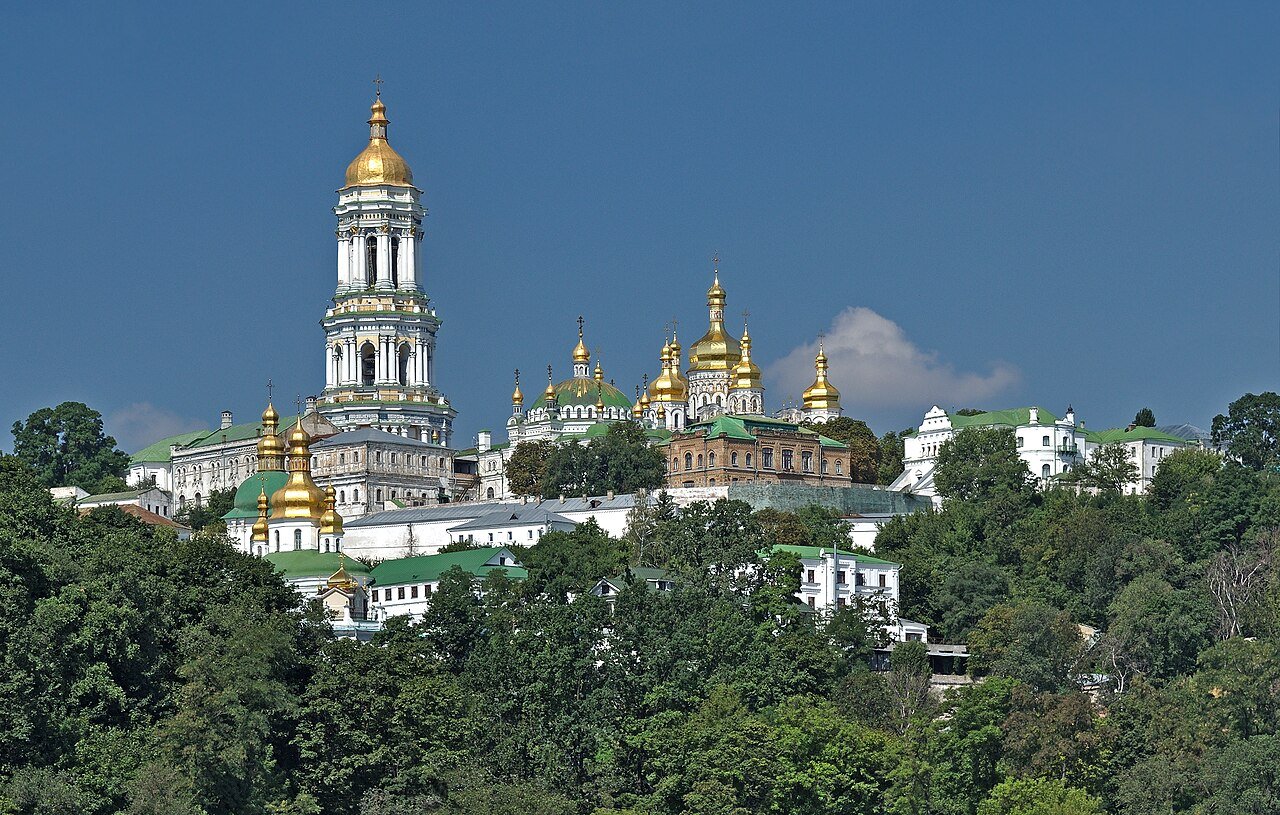
In May 2022, the canonical Ukrainian Orthodox Church ceased commemoration of Patriarch Kirill.
Throughout Chapter 23, Chapter 24, and Chapter 25, we have established the patristic model for this action. St. Hypatius acted against Nestorius for his heretical teaching. St. Paisios ceased commemorating Athenagoras for meeting the Pope. The Russian New Martyrs acted against Sergius for his capitulation to the Soviets. In each case, the faithful did not wait for a council; they separated from a hierarch whose public teaching contradicted the Orthodox faith.
The canonical Ukrainian Orthodox Church applied exactly this tradition.
What made commemoration spiritually impossible for the UOC?
Kirill’s Own Words
On Forgiveness Sunday, March 6, 2022, the day when Orthodox Christians traditionally ask forgiveness of one another before Great Lent, Patriarch Kirill preached on the war. Orthodox clergy and ecumenical bodies had appealed to him to condemn the invasion. An open letter by Russian Orthodox priests had gathered nearly 300 signatures by the eve of the sermon.[1] His pastoral word was awaited.
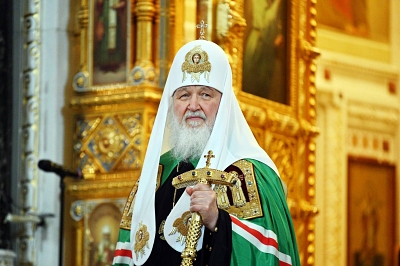
Did Patriarch Kirill condemn the invasion? Did he call for peace? Did he weep for the dead? He did none of these things. Instead, a third of his sermon was about gay parades. He elevated the war to a metaphysical struggle:
«Все сказанное свидетельствует о том, что мы вступили в борьбу, которая имеет не физическое, а метафизическое значение.»
All that has been said testifies to the fact that we have entered into a struggle that has not a physical, but a metaphysical significance.
— Patriarch Kirill, Forgiveness Sunday homily (Mar 6, 2022); Patriarchia.ru, https://www.patriarchia.ru/article/102978
And on the very day Orthodox Christians ask forgiveness of one another, he preached that forgiveness without “justice” was “capitulation and weakness.” (The full sermon and its theological implications are examined in Chapter 16.)
The pattern continued: in September 2022, Kirill taught that battlefield death “washes away all the sins,” and in March 2024, under his chairmanship, the World Russian People’s Council declared the conflict a “Holy War” and invoked Russia as the “Restrainer” (a reference to 2 Thessalonians 2:6-7, the claim that Russia holds back the Antichrist). Chapter 22 documents the full scope of what Kirill blessed: the atrocities, the mandatory prayers for victory, and the defrocking of priests who refused.
Throughout, Kirill denied Ukrainian identity, collapsing ecclesial life into a single Russian category (the ethnophyletist “Russian World” ideology examined in Chapter 14):
«Мы практически один народ, связанный исторической судьбой, мы все вместе вышли из Киевской купели, мы объединены верой, нашими святыми…»
We are practically one people, bound by historical destiny; we all came together from the Kiev baptismal font; we are united by faith, by our saints…
— Patriarch Kirill, Sermon (Mar 9, 2022), Cathedral of the Holy Savior, Moscow; Patriarchia.ru, http://www.patriarchia.ru/article/103021
As recently as February 2025, when a priest questioned the Church’s embrace of patriotic war language, Kirill’s response was to ask: “Father, you’re not from Western Ukraine by any chance?”[2] When Ukrainians attempt to distance themselves from Kirill’s impiety, he insists that Russians and Ukrainians are one people and cannot be separated. Yet in unguarded moments, he uses “Ukrainian” as a pejorative to question the loyalty of his own clergy.
The Council of May 27, 2022
The UOC did not wait in silence. Within twenty-four hours of the invasion, Metropolitan Filaret Kucherov of Lviv issued the first written decree instructing all priests in his diocese to cease commemorating Patriarch Kirill. By February 28, Metropolitan Yevlohiy of Sumy, whose diocese was under active Russian bombardment, had issued his own cessation order. By March 3, fifteen dioceses had formally followed.[3] This reaction erupted from the diocesan periphery, driven by pastoral conscience. It was not a coordinated institutional action.
Three months after the invasion, with no sufficient response from Patriarch Kirill, the UOC convened a council in Kyiv on May 27, 2022. Metropolitan Onuphry personally controlled preparations, deliberately excluding his own Chancellor, Metropolitan Anthony (Pakanich), from the planning to prevent Moscow from learning the agenda in advance.[4] Only thirteen days elapsed between the announcement and the council itself. The council condemned the war as a violation of God’s commandment “Thou shalt not kill.”[5]
The Council condemns the war as a violation of God’s commandment ‘Thou shalt not kill’ … and expresses disagreement with the position of Patriarch Kirill regarding the war in Ukraine.
— Council of the UOC, Resolution (May 27, 2022), Primary: DESS PDF, https://dess.gov.ua/wp-content/uploads/2023/01/8_Sobor-UPTS-27-V-2022-Postanova.pdf[6]
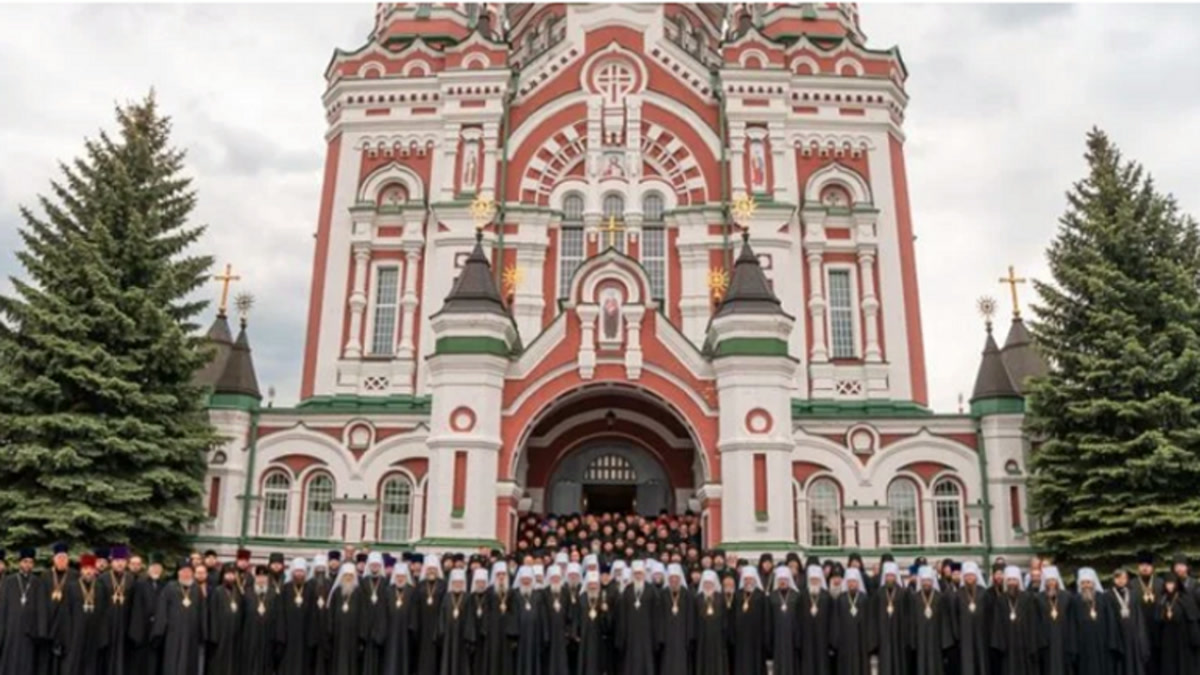
The vote was not unanimous: roughly seventy to eighty percent supported the resolutions, with opposition from a handful of bishops sympathetic to Moscow.[4] The council ceased commemoration of Patriarch Kirill and declared the UOC autonomous.
The resolutions did not explicitly invoke Canon 15, but the theological reasoning behind the cessation maps directly onto the Canon 15 heresy exception that the patristic tradition has always recognized:
The Ukrainian Orthodox Church is self‑governing and independent in its administration and order…
— Statute of the UOC (as amended on May 27, 2022), RISU, https://risu.ua/statut-pro-upravlinnya-ukrayinskoyi-pravoslavnoyi-cerkvi-z-dopovnennyami-i-zminami-vid-27052022_n130894[7]
Decisions of the governing organs of the Moscow Patriarchate are not binding on the UOC.
— Statute of the UOC (as amended on May 27, 2022), RISU, https://risu.ua/statut-pro-upravlinnya-ukrayinskoyi-pravoslavnoyi-cerkvi-z-dopovnennyami-i-zminami-vid-27052022_n130894[8]
The council formalized what the grassroots had already accomplished. The written diocesan orders speak for themselves:
Cease prayerful commemoration of the Moscow Patriarch at divine services in the churches and monasteries of Lviv Diocese.
— Lviv Diocese order, ZAXID.NET. https://zaxid.net/upts_mp_pripinila_pominannya_patriarha_kirila_na_vsih_bogosluzhinnyah_n1537293[9]
Metropolitan Yevlohiy of Sumy, whose diocese was under bombardment from the first day of the invasion, explained why he could not wait for any formal process:
I see pictures of innocent civilians with limbs torn off by explosions, with entrails torn apart from wounds every day. This is about my flock.
— Metropolitan Yevlohiy of Sumy and Akhtyrka, letter reaffirming cessation of commemoration (Feb–Mar 2022)[10]
Some of these same images are shown in Chapter 22.
The 437 Priests
The witness was not only institutional. Within days of the invasion, an appeal organized by Archpriest Andriy Pinchuk gathered 437 UOC clerical signatures, addressed to the “Ancient Eastern Patriarchates,” asking them to examine Patriarch Kirill’s wartime teaching and the “Russian World” ideology.[11]
Archpriest Andriy stated that he expected perhaps 100 signatures, but within five days, had received 437 from clergy across nearly all dioceses in Ukraine.[12]
There were many additional priests who privately supported the petition but did not sign out of fear of reprisals from their bishops. As we have previously seen in other chapters, all those who go against Patriarch Kirill are guaranteed to be severely chastised, punished, and even jailed.
No bishops signed, despite some privately agreeing; Archpriest Andriy attributed this to “corporate solidarity” among bishops inherited from Soviet times, a pattern documented in Chapter 9. The appeal bore 437 priests’ signatures but not a single bishop’s name.
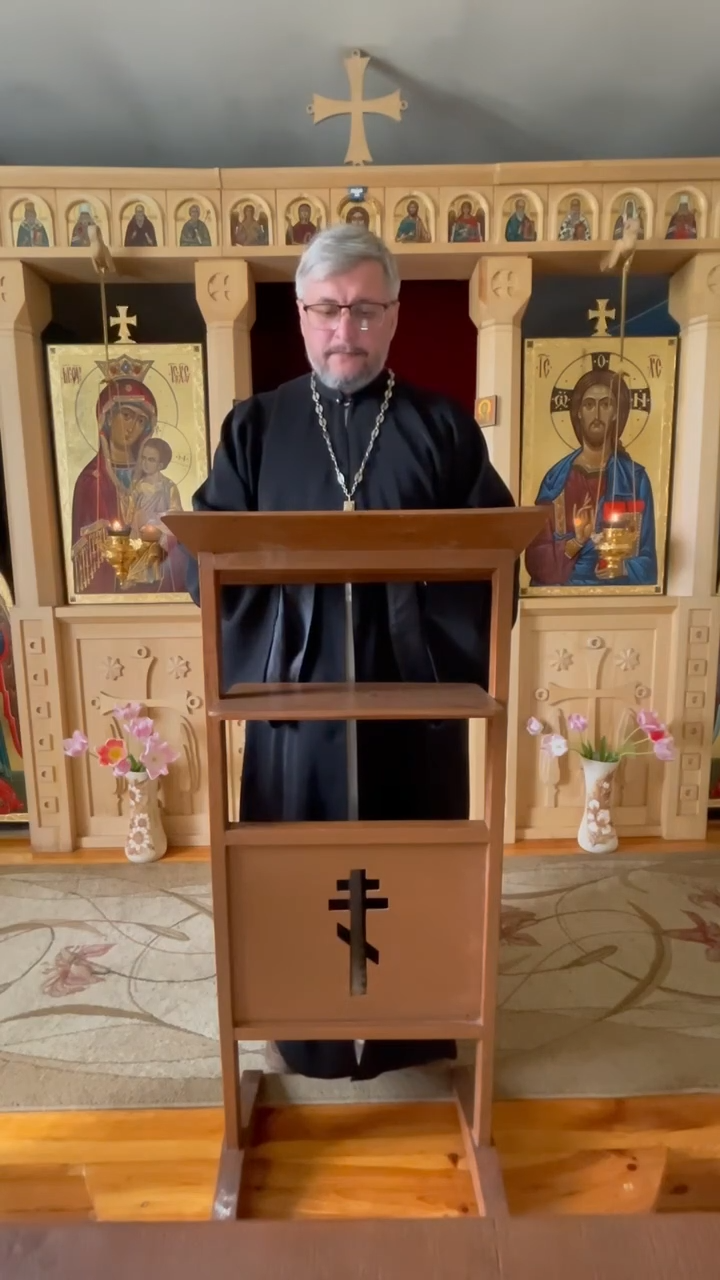
The appeal, read aloud by Archpriest Andriy on video, stated:
We firmly declare that it is impossible for us to remain in any form of canonical submission to the Patriarch of Moscow. This is the command of our Christian conscience.
— Appeal of 437 UOC clergy to the Ancient Eastern Patriarchates (March 2022), https://publicorthodoxy.org/2022/04/26/open-appeal-of-uoc-priests/
Each priest who signed this appeal knew he risked defrocking, loss of livelihood, and institutional retaliation. As this book has documented, those who speak against Patriarch Kirill are defrocked (Chapter 16). They signed anyway.
Was there any response from the ancient patriarchates to this appeal? From Constantinople, Alexandria, Antioch, or Jerusalem? There was not.
The appeal was met with near-complete silence.
St. Gregory the Theologian, praising St. Athanasius for his stand against Arianism, described the truly pious as those who “cannot bear to carry their reasonableness so far as to be traitors to the cause of God for quietness’ sake.” The condensed form of this teaching has become a rallying cry in the Orthodox tradition: “By silence, God is betrayed” (Молчанием предается Бог).[13]
The institutional response to Archpriest Andriy, however, was not complete silence.
In May 2023, he was banned from ministry by Metropolitan Iriney of Dnipropetrovsk for “systematic violation of the priest’s oath” and “non-fulfillment of orders from the diocesan bishop.”[14] In December 2024, he was defrocked entirely.[15]
Archpriest Andriy continued to advocate for stronger action. By December 2022, he argued that cessation of commemoration was only the beginning: the appeal “clearly stated that refusing to commemorate Kirill during the liturgy was not sufficient.”[16] The petition had asked for a formal trial and, if warranted, removal from the patriarchal throne.
By early 2025, Archpriest Andriy had fled to Norway, having received warnings that Ukrainian security services were preparing to arrest him. In April 2026, he was received into the Ecumenical Patriarchate’s Scandinavian Metropolis.
The pattern is not unique to him. Some Ukrainian clergy who left Kirill’s communion have since joined the Ecumenical Patriarchate, the very institution whose unilateral actions in Ukraine this book documents in Chapter 27: Understanding the Ukrainian Churches and Appendix B: The Canonical Case Against the OCU. The canonical path remains the one the UOC itself chose: cease commemoration of the heretical patriarch without transferring allegiance to another patriarch whose own actions violate the canons.
”We Are No Longer Part of the Patriarchate of Moscow”
In May 2025, Metropolitan Onuphry, the canonical primate of Ukraine, stated plainly:
After May 27, 2022, we are no longer part of the Patriarchate of Moscow. … The name of the Patriarch of Moscow is not commemorated at the churches and monasteries of the UOC anymore.
— Metropolitan Onuphry, third‑anniversary statement; Orthodox Times (May 22, 2025), https://orthodoxtimes.com/metropolitan-onufriy-after-may-27-2022-we-are-no-longer-part-of-the-patriarchate-of-moscow/
Thus, the canonical Ukrainian Church, the very body Moscow claims as its canonical territory, established independently that it can no longer name Patriarch Kirill at the altar. Even Kirill himself tacitly acknowledged this reality: in July 2023, he stated that sacraments remain valid even where his name is not commemorated.[17]
This action bears no resemblance to the schism of the OCU (see Chapter 27). The UOC did not become schismatic by ceasing commemoration. They separated from a patriarch and organization that is bombing them and warring against them, while remaining in canonical order.
The Verdict
The canonical Ukrainian Orthodox Church did exactly what the saints did.
The UOC waited for their patriarch, Patriarch Kirill, to condemn the invasion. He refused. They heard him call forgiveness “weakness” and war a “metaphysical struggle.” They heard him teach that battlefield death “washes away all sins.” They watched him preside over a “Holy War” declaration. They saw him deny their identity while using “Ukrainian” as an insult. They watched him mandate prayers for the victory of those bombing their homes, and defrock priests who dared substitute “peace” for “victory.” They waited for him to condemn Bucha, Mariupol, the destruction of their churches, the killing of their faithful.
He said absolutely nothing.
Our fathers and saints, not waiting for any council, ceased commemoration for much, much less than this. And so the canonical Ukrainian Orthodox Church, in full consensus with the patristic witness, ceased commemoration of Patriarch Kirill.
The witness of St. Maximus the Confessor speaks directly to this action. When pressed about why he separated from Constantinople, he stated: “As long as the scandal of heresy persists in the Church of Constantinople and her bishops are miscreants, I will not enter into communion with her. It would be a transgression” (Synaxaristes, January, p. 841). The UOC reached the same conclusion about Moscow, and for the same reason: continued communion would be a transgression.
You cannot support both Kirill and the UOC
Many claim to love and revere Patriarch Kirill, but also claim to support and love Ukrainians and the UOC. How can that be?
The UOC’s May 2022 council condemned Kirill’s position on the war. Over twenty dioceses issued written orders. The primate declared: “We are no longer part of the Patriarchate of Moscow.” 437 priests asked the ancient patriarchates to judge Kirill’s teaching, only to be met with silence for four long years, while war still ravages their country.
This witness is uncomfortable for those who want to defend Kirill by pointing to procedural irregularities elsewhere. The canonical body, the UOC, the one recognized as legitimate, the one that refused to join the OCU, said: “We can no longer say his name at the altar.”
This is the patristic pattern lived out in our time.
Sebastian Rimestad, “The End of the Russian Orthodox Church as We Know It?” Multiple Secularities (Bulletin), 2022: https://www.multiple-secularities.de/bulletin/the-end-of-the-russian-orthodox-church-as-we-know-it/ ↩
Patriarch Kirill, exchange with Fr. Alexei Shlyapin at a Moscow Metropolis clergy meeting, February 11, 2025. Coverage: Meduza, https://meduza.io/en/feature/2025/02/12/are-you-from-western-ukraine ↩
SPZh (Union of Orthodox Journalists), “A number of UOC dioceses cease commemoration of Patriarch Kirill,” Mar 2022: https://spzh.eu/en/news/86823-ryad-jeparkhij-upc-prekrashhajut-pominovenije-patriarkha-kirilla ↩
Sergei Chapnin, analysis of the May 27, 2022 Council preparations and proceedings. Chapnin, a former editor of the Moscow Patriarchate’s official journal, documented that Onuphry deliberately excluded Chancellor Metropolitan Anthony (Pakanich) from planning because “if Anthony and oligarch-deacon Vadim Novinsky had had access to the draft documents, Moscow would have known the scenario of the upcoming meeting in advance.” ↩
UOC Council (Kyiv, May 27, 2022): statute amendments and council resolution. Primary: https://dess.gov.ua/wp-content/uploads/2023/01/8_Sobor-UPTS-27-V-2022-Postanova.pdf; statute text: https://risu.ua/statut-pro-upravlinnya-ukrayinskoyi-pravoslavnoyi-cerkvi-z-dopovnennyami-i-zminami-vid-27052022_n130894 ↩
Original Ukrainian: “«Собор засуджує війну як порушення Божої заповіді “Не убий!” … і висловлює незгоду з позицією Патріарха Кирила щодо війни в Україні.»” ↩
Original Ukrainian: “«Українська Православна Церква є самостійною і незалежною у своєму управлінні та устрої…»” ↩
Original Ukrainian: “«Рішення органів управління Московського Патріархату не є обов’язковими для УПЦ.»” ↩
Original Ukrainian: “«Припинити молитовне поминання Патріарха Московського за богослужіннями у храмах і монастирях Львівської єпархії.»” ↩
Metropolitan Yevlohiy of Sumy and Akhtyrka, letter reaffirming the cessation of commemoration, February–March 2022. Yevlohiy confirmed he had received Metropolitan Onuphry’s personal blessing for the step. ↩
Archpriest Andriy Pinchuk reading the full text of the appeal (video, 19:11), https://www.facebook.com/watch/?v=405489101581985. Coverage: UOJ (Union of Orthodox Journalists), “About the tribunal over Patriarch Kirill,” Apr 15, 2022 (English edition), author: Kirill Aleksandrov. ↩
Public Orthodoxy, “Open Appeal of UOC Priests,” April 26, 2022. https://publicorthodoxy.org/2022/04/26/open-appeal-of-uoc-priests/ ↩
St. Gregory the Theologian, Oration 21 (In Praise of Athanasius the Great), §25. NPNF2, Vol. 7. ↩
SPZh (Union of Orthodox Journalists), “Priest Andriy Pinchuk banned from ministry,” May 2023. https://spzh.eu/en/news/73870-priest-andriy-pinchuk-banned-from-ministry ↩
Archpriest Andriy Pinchuk was defrocked by the UOC in December 2024. Coverage: Walk Talk Listen Podcast, “The Fire Within with Andriy Pinchuk,” Episode 177, January 2025. https://walktalklisten.podbean.com/e/the-fire-within-with-andriy-pinchuk-walk-talk-listen-episode-177/ ↩
Archpriest Andriy Pinchuk, interview with LB.ua, December 2022. ↩
Patriarch Kirill, address at the Bishops’ Conference of the Russian Orthodox Church, July 19, 2023. https://www.patriarchia.ru/article/104700 ↩