
The Selective Standard: Havana vs Crete
If the Havana Declaration betrays Orthodoxy, why did it receive less scrutiny than the Council of Crete?
Here the double standard will be outlined.
In the last chapter, Chapter 2: The Havana Declaration, the Declaration was introduced and examined in detail.
This chapter returns to its text for a different purpose: a direct comparison with the Council of Crete, demonstrating that on every contested point, Havana goes further.
But one may wonder: What is the Council of Crete, and why does this comparison matter?
The Holy and Great Synod of Crete (June 2016) was a pan-Orthodox council on relations with non-Orthodox that convened within months of the Havana Declaration.
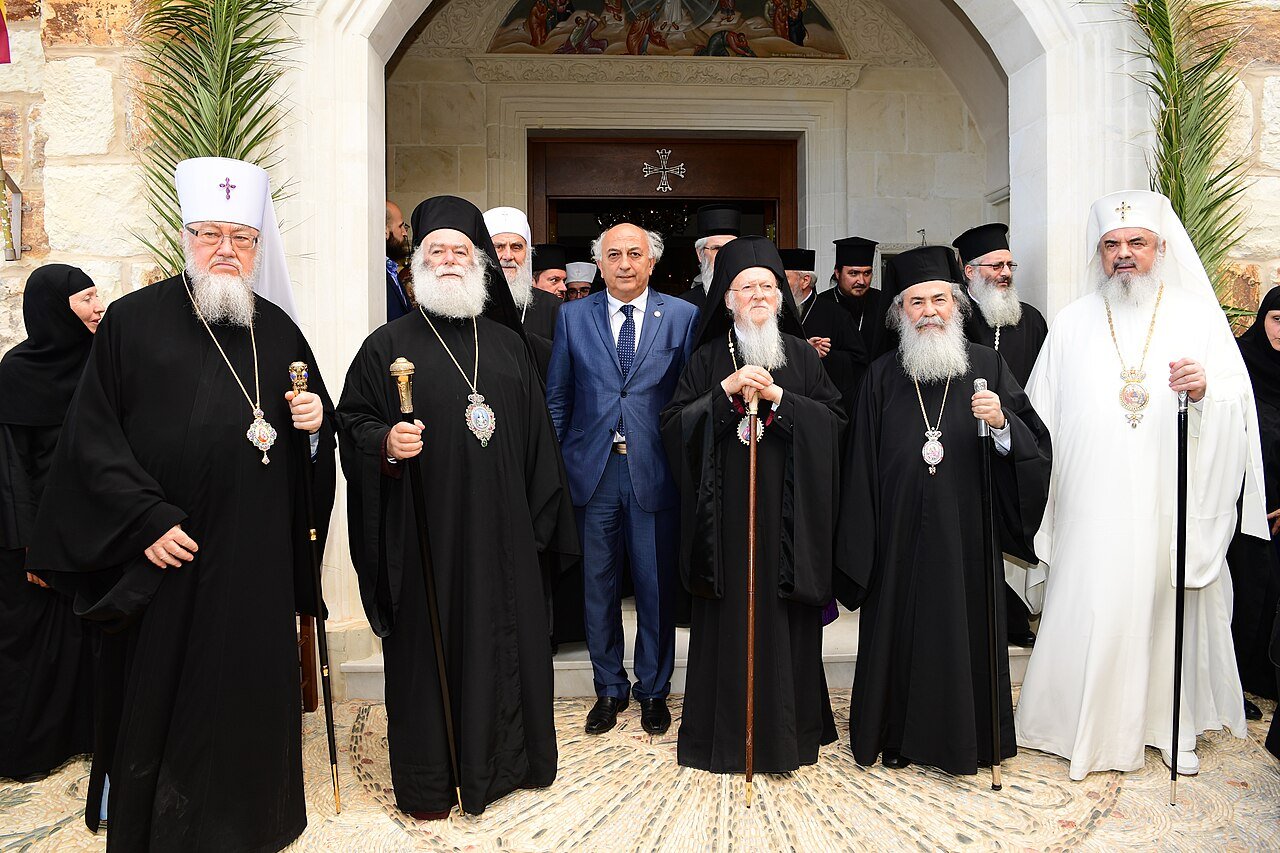
Orthodox traditionalists erupted against Crete. Antioch refused to attend. The Russian Church declared it “cannot be considered to be pan-Orthodox.” Bulgaria called it “neither Great, nor Holy, nor Pan-Orthodox.” Mount Athos issued critiques. Over sixty Athonite fathers signed a letter calling it a “false council.”
The same traditionalists, however, were largely silent about Havana.
Why is this important? Because Havana is theologically worse than Crete. On every contested point, Havana goes further. If one is worse but barely reacted to, what can this mean?
In previous chapters the standards according to our saints were established. If these standards condemn Crete, they condemn Havana even more so, yet the response was inverted: everyone condemned Crete but was silent about Havana.
The following sections explain the relevant issues with the Council of Crete for the uninitiated.
For those who wish to study the Council of Crete and its problems in full, Fr. Peter Heers has given an hour lecture that addresses the matter.
The following sections examine why the Havana Declaration is worse than the Council of Crete, which will help us to see that the Havana Declaration (and thus the actions of Patriarch Kirill) deserves a similar reaction from the faithful.
The source documents referenced in this chapter:
- Relations of the Orthodox Church with the Rest of the Christian World (Council of Crete)
- The Mission of the Orthodox Church in Today’s World (Council of Crete)
- Joint Declaration of Pope Francis and Patriarch Kirill (Havana, February 12, 2016)
1. “Churches” Terminology
Crete (Relations ¶6)
Crete uses cautious language, accepting only the “historical name” of other bodies calling themselves churches.
…accepts the historical name of other non-Orthodox Christian Churches and Confessions.
Crete acknowledges that others call themselves churches, without affirming that they are churches.
Moscow (2000)
Sixteen years before both Havana and Crete, the Moscow Patriarchate had already answered this question. The “Basic Principles of the Attitude of the Russian Orthodox Church to Heterodoxy,” adopted by the Jubilee Bishops’ Council in 2000 under Metropolitan Kirill’s leadership as DECR Chairman, called Rome a Church:[1]
Dialogue with the Roman Catholic Church was built and must be built in the future taking into account the fundamental fact that it is a Church in which the apostolic succession of ordinations is preserved.
— “Basic Principles of the Attitude of the Russian Orthodox Church to Heterodoxy,” Appendix, Jubilee Bishops’ Council, August 2000, https://mospat.ru/ru/news/85385/[2]
Not “a community” or “a confession.” A Church, with preserved apostolic succession. This was the official position of the Moscow Patriarchate before Crete’s cautious “historical name” language existed. When Havana called the Pope a “fraternal bishop,” it enacted what Moscow had already formalized.
Havana (¶24)
Havana bears no such caution. It uses “Church” as the operative term for both sides:
Consequently, it cannot be accepted that disloyal means be used to incite believers to pass from one Church to another, denying them their religious freedom and their traditions.
— Joint Declaration of Pope Francis and Patriarch Kirill (Havana, Feb 12, 2016), para. 24
“From one Church to another.” Rome is a Church. Orthodoxy is a Church. The Declaration treats this as a given, not a point requiring argument. After the signing, Pope Francis declared: “We speak as brothers, we have the same Baptism, we are bishops.”[3] Patriarch Kirill stood beside him, offering no correction.
2. Joint Mission
Crete (Mission §I.1)
Crete states a doctrinal end: the purpose of the Incarnation.
The purpose of the incarnation of the Word of God is the deification of the human being.
Havana (¶24)
Havana frames a joint program: what Catholics and Orthodox together will do.
Orthodox and Catholics are united not only by the shared Tradition of the Church of the first millennium, but also by the mission to preach the Gospel of Christ in the world today.
Crete is a statement about Orthodoxy. Havana is a statement with Rome. Which is more problematic?
3. Interfaith Prayer
Crete (Relations ¶23)
Crete speaks of “inter-Christian theological dialogue,” “eschewing every act of proselytism, uniatism, or other provocative act of inter-confessional competition.” No invitation to interfaith common prayer.
Havana (¶11)
Havana extends well beyond Christians, calling on all believers of God.
We exhort all Christians and all believers of God to pray fervently to the providential Creator of the world.
The phrase “all believers of God” extends beyond Christians to Muslims, Jews, and anyone who professes belief in a deity.
While Crete calls for dialogue with the Heterodox, Havana opens the door to interfaith prayer with anyone who professes belief in God, including those who do not recognize the Person of Christ.
4. Uniatism
Crete (Relations ¶23)
Crete condemns uniatism without qualification:
…eschewing every act of proselytism, uniatism, or other provocative act of inter-confessional competition.
Havana (¶25)
Havana condemns uniatism as a method while simultaneously affirming the communities it produced:
It is today clear that the past method of “uniatism”, understood as the union of one community to the other, separating it from its Church, is not the way to re–establish unity. Nonetheless, the ecclesial communities which emerged in these historical circumstances have the right to exist and to undertake all that is necessary to meet the spiritual needs of their faithful, while seeking to live in peace with their neighbours.
— Joint Declaration of Pope Francis and Patriarch Kirill (Havana, Feb 12, 2016), para. 25
Crete condemns uniatism without reservation. Havana legitimizes it in the same sentence.
5. Sacramental Parity
Crete
Offers no statement affirming sacramental equality outside Orthodoxy.
Havana
Pope Francis signing remarks, with Kirill present.
We speak as brothers, we have the same Baptism, we are bishops.
Not “you have a form that resembles Baptism” or “you claim apostolic succession.” Same baptism, same bishops.
If Rome has the same Baptism and episcopacy, why are we not in communion? This destroys the distinction between Church and schism.
Crete says nothing about sacramental equality. Havana affirms it outright.
6. Martyrs Beyond Orthodoxy
Crete
No recognition of martyrs outside the Orthodox Church.
Havana (¶12)
We believe that these martyrs of our times, who belong to various Churches but who are united by their shared suffering, are a pledge of the unity of Christians.
“Martyrs… who belong to various Churches.” Are we to believe Rome has martyrs? Protestantism has martyrs? The logical chain this recognition triggers, from martyrs to saints to grace to valid sacraments, is examined in Chapter 2, Section 3, where Canon 34 of the Council of Laodicea pronounces anathema on those who turn to “false martyrs, that is, to those of the heretics.”
Crete stays silent on this question. Havana proclaims that heterodox communities produce genuine martyrs.
The Imbalance in Reception
On “churches,” on sacraments, on martyrs, on Uniatism, on interfaith prayer: Havana goes further than Crete on every contested point.
Yet the response was inverted. Here is a brief account of what happened after the reception of each text:
After Crete:
- Antioch (June 27, 2016): Declared it preliminary and non-binding.[4]
- Russian Church (July 15, 2016): “Cannot be considered to be pan-Orthodox.”[5]
- Bulgaria (Nov 29, 2016): “Neither Great, nor Holy, nor Pan-Orthodox.”[6]
- Serbia: Multiple bishops refused to sign the “Relations” document.[7]
- Mount Athos: Sacred Community issued critique. Over sixty fathers signed letter rejecting it as “false council.”[8][9]
After Havana:
- Antioch: No synodal statement.
- Russian Church: No synodal critique (Kirill signed it).
- Bulgaria: No synodal statement.
- Serbia: No synodal statement.
- Mount Athos: No Sacred Community statement found.
Where is the outrage for the Havana Declaration, which is at least on the same level, if not worse? Havana is more explicit, goes further, and makes claims Crete avoided. Why the silence?
Those who condemned Crete remained silent about Havana largely because Patriarch Kirill signed it. Jurisdictional loyalty trumped Orthodox consistency. Crete was scrutinized as a council; Havana evaded critique by masquerading as diplomacy. Many who parsed Crete’s cautious language ignored Havana’s explicit claims because critiquing Kirill or Moscow is very dangerous in the church right now, even for traditionally minded and outspoken shepherds.
Metropolitan Augoustinos Kantiotes of Florina had warned decades earlier against holding a pan-Orthodox synod “without the necessary presuppositions first being met.”[10] Crete proved him right. But Kantiotes’ warning applied equally to bilateral declarations like Havana, where a single patriarch can bypass conciliar scrutiny entirely, and Havana received almost none.
The Hypocrisy
Patriarch Kirill’s own statements reveal this hypocrisy: he helped usher in the worse declaration while refusing to call Crete a council:
А после совещания десяти Поместных Православных Церквей на Крите в 2016 году эта тема была окончательно похоронена, все достигнутые в прошлом договоренности были обнулены…
And after the meeting of ten Local Orthodox Churches on Crete in 2016, this topic was finally buried, all previously reached agreements were nullified…
— Patriarch Kirill, Address at “World Orthodoxy: Primacy and Conciliarity” conference, September 16, 2021, https://www.patriarchia.ru/article/102433
A “meeting of ten churches.” Not a council. Moscow’s own Holy Synod stated the position explicitly:
The holding of a Council in the absence of consent from a number of autocephalous Orthodox Churches violates this principle; therefore, the Council that took place in Crete cannot be considered to be pan-Orthodox while the documents adopted by it to be considered expressing pan-Orthodox consensus.
— Holy Synod of the Russian Orthodox Church, Statement on the Council held in Crete, July 15, 2016, https://mospat.ru/en/news/49334/
Yet the Havana Declaration, which goes further than Crete on every contested theological point, was prepared by five people in total secrecy, with no synod consulted and no pre-conciliar process observed, and Kirill has defended it ever since (see Chapter 2).
In an interview with La Stampa, he called the Havana meeting “a very important event” despite acknowledging that theological differences remain:
Встреча в Гаване стала очень важным событием в нашем многолетнем взаимодействии, несмотря на сохраняющиеся различия в богословских вопросах.
The meeting in Havana became a very important event in our many years of interaction, despite the remaining differences in theological questions.
— Patriarch Kirill, interview with La Stampa, May 19, 2017, https://pravoslavie.ru/103611.html
Nine years after signing the Declaration, meeting the President of Cuba, Patriarch Kirill still defended the Havana meeting: “Cuba played an important role in the development of relations between the Orthodox world and the Catholic world, between our Church and the Catholic Church.”[11]
For Crete, a council attended by ten of fourteen churches, prepared over decades, is dismissed as a mere “meeting” without authority. For Havana, a declaration prepared by five people in absolute secrecy is praised as “very important,” credited with advancing relations with Rome, and defended for nearly a decade.
Crete required the consensus of all churches to be valid. Havana required only the knowledge of five.
Double Standards
If Crete deserves scrutiny for ambiguity and procedure, Havana demands far more for explicit theological parity with heterodoxy. Havana received silence.
This exposes what many will not admit: they apply different standards to heresy depending on which primate commits it. Bartholomew speaks of “unity” and is condemned; Kirill signs the same and gets excused, and those who point this out are “Anti-Russian” Russophobes. This is tribalism, not consistency, and at best tactical diplomacy, due to the power and influence of Patriarch Kirill.
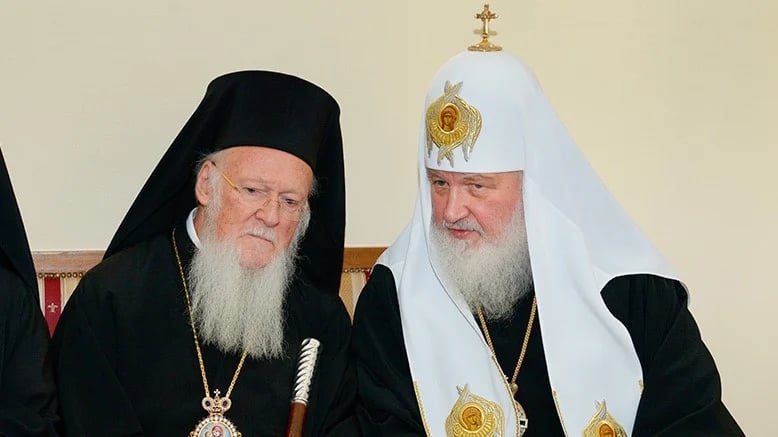
Consider how Patriarch Bartholomew describes the Great Schism:
…Our forefathers, who bequeathed the split to us, were hapless victims of the serpent, the author of evil, and are already in the hands of God, the Just Judge. We beseech God’s mercy on their behalf, but we ought, before God, to redress their errors.
— Patriarch Bartholomew, Episkepsis, No. 563 (30 November 1998), p. 6, https://www.imoph.org/Theology_en/E3a2042FakelosA11.pdf
Kirill, in the Havana Declaration, described the Schism as “wounds caused by old and recent conflicts, by differences inherited from our ancestors.” (see Chapter 2, Section 2).
Both then treat dogmatic heresies as mere misunderstandings to be smoothed over. Bartholomew is widely criticized for this. Why is Kirill excused for saying the same?
The Double Standard Beyond Havana
The pattern extends beyond the Havana-Crete comparison. Many Russian Orthodox were quick to condemn Archbishop Elpidophoros for declaring that “you simply cannot see the myriads of paths that lead to the same destination, because you are surrounded by boulders of prejudice,”[12] as they should have.
But few addressed the same heresies from Kirill years earlier: that Christians and Muslims “appeal to the same God” (see Chapter 5), that Rome is a “sister Church” with valid sacraments, and that conversion of Catholics is forbidden.
Conclusion
The saints did not ask which patriarch signed a heretical document before condemning it. The precedent documented in Chapter 1 applies without distinction: the standard the saints applied to Athenagoras and Bartholomew is the same standard that must be applied to Kirill. Accusations of being “anti-Russian” for applying this standard uniformly are empty posturing and jurisdictional point-scoring.
The canons and the witness of the saints demand consistency, regardless of which patriarch engages in it.
“Основные принципы отношения Русской Православной Церкви к инославию” (Basic Principles of the Attitude of the Russian Orthodox Church to Heterodoxy), Appendix: “Relations with the Roman Catholic Church,” adopted by the Jubilee Bishops’ Council, Moscow, August 13-16, 2000. Full Russian text: https://mospat.ru/ru/news/85385/. The same document also states that “communities that fell away from unity with Orthodoxy were never viewed as completely deprived of God’s grace” (Section 1.15),[13] establishing the theological basis for recognizing sacramental grace outside the Orthodox Church. ↩
Original Russian: “Диалог с Римско-Католической Церковью строился и должен строиться в будущем с учетом того основополагающего факта, что она является Церковью, в которой сохраняется апостольское преемство рукоположений.” ↩
Pope Francis, remarks after signing the Joint Declaration, Havana, February 12, 2016. Vatican text: https://www.vatican.va/content/francesco/en/speeches/2016/february/documents/papa-francesco_20160212_dichiarazione-comune-kirill.html. See also Russia Beyond, “Patriarch Kirill and Pope Francis hail success of historic talks in Havana,” https://www.rbth.com/politics_and_society/2016/02/13/patriarch-kirill-and-pope-francis-hail-success-of-historic-talks-in-havana_567497 ↩
OrthoChristian, “The Council of Crete is a Pre-Synodical Conference (Statement of the Holy Synod of Antioch),” Jun 27, 2016. https://orthochristian.com/94963.html ↩
Moscow Patriarchate, “Holy Synod of the Russian Orthodox Church expresses its position on the Council held in Crete,” Jul 15, 2016. https://mospat.ru/en/news/49334/ ↩
Orthodox Ethos, “The Final Decision of the Holy Synod of the Bulgarian Orthodox Church on the Council in Crete,” Nov 29, 2016. https://www.orthodoxethos.com/post/the-final-decision-of-the-holy-synod-of-the-bulgarian-orthodox-church-on-the-council-in-crete ↩
OrthoChristian, “Majority of Serbian Bishops Refused to Sign the Controversial Document in Crete,” Jul 2016. https://orthochristian.com/95596.html ↩
OrthoChristian, “Commission of Sacred Community of Mt. Athos Says Final Documents of Crete Council in Need of Revision,” Jan 2017. https://orthochristian.com/100123.html ↩
OCL, “Athonite Fathers Call for Rejection of Cretan Council and Cessation of Commemoration of the Patriarch of Constantinople,” Jul 2016. https://ocl.org/athonite-fathers-call-rejection-cretan-council-cessation-commemoration-patriarch-constantinople/ ↩
Fr. Augoustinos N. Kantiotes, Metropolitan of Florina: Preacher of the Word of God (Athens, 2015), p. 127. English translation, ISBN 978-618-81910-0-6. ↩
Patriarch Kirill, meeting with the President of Cuba, May 8, 2025 (Куба сыграла важную роль в развитии отношений между православным миром и католическим миром, между нашей Церковью и Католической Церковью). https://patriarchia.ru/article/115594 ↩
Archbishop Elpidophoros Lambriniadis, “International Religious Freedom Summit Speech,” Washington D.C., July 15, 2021. Full quote: “When you elevate one religion above all others, it is as if you decide there is only one path leading to the top of the mountain. But the truth is you simply cannot see the myriads of paths that lead to the same destination, because you are surrounded by boulders of prejudice that obscure your view.” https://www.goarch.org/-/irf-summit ↩
Original Russian: “Но в то же время общины, отпавшие от единства с Православием, никогда не рассматривались как полностью лишенные благодати Божией.” ↩