
Russian World Ethnophyletism
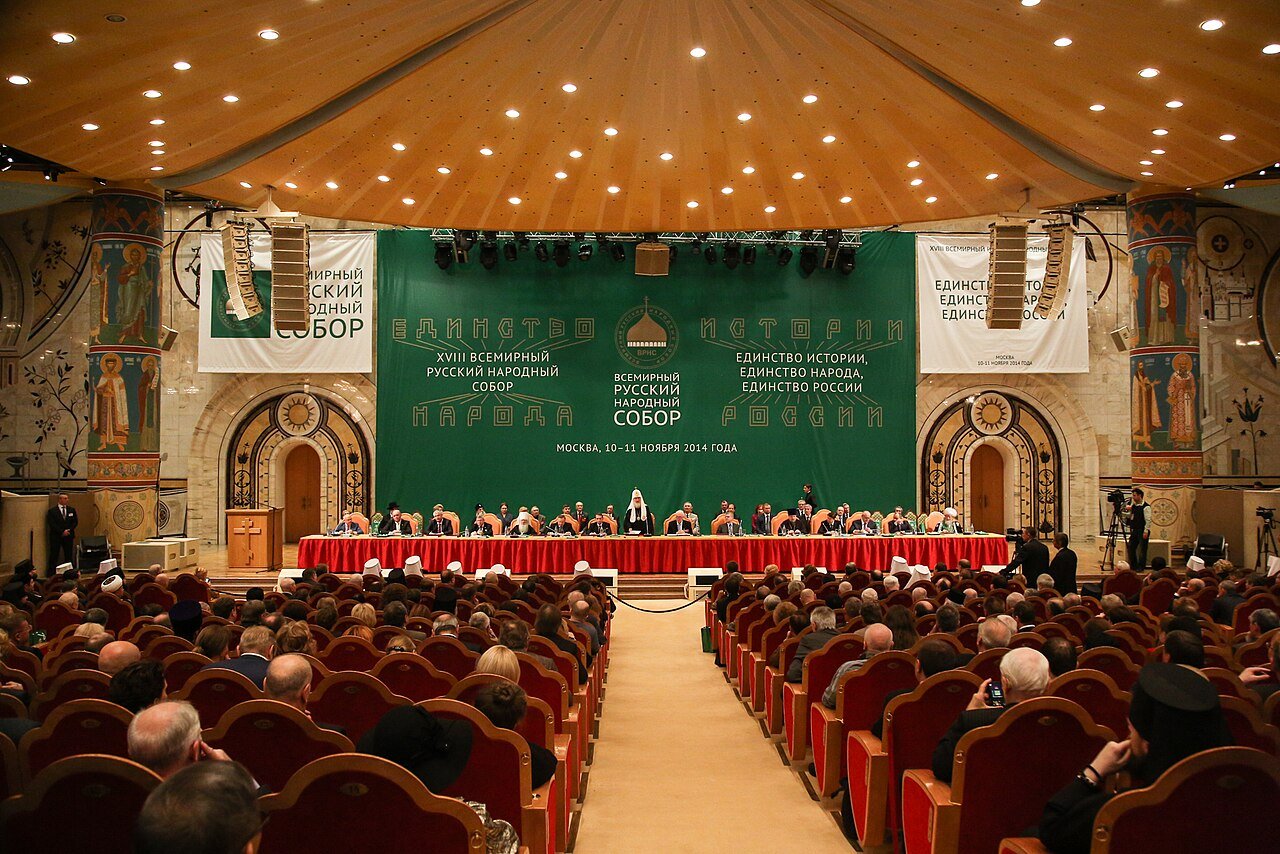
In March 2024, the World Russian People’s Council, chaired by Patriarch Kirill, issued a formal decree declaring Russians, Ukrainians, and Belarusians “one people,” calling the war in Ukraine a “holy war” (svyashchennaya voyna), and asserting that Russia’s civilizational mission carries eschatological significance.
Is this merely cultural pride? All Orthodox nations love their heritage, so what exactly is wrong with this? Before examining what the decree actually stated, a prior question must be answered: What do the Fathers teach about ethnicity and the Church?
A. The Witness: What the Fathers Teach
Ethnophyletism: The Heresy the Church Already Condemned
In 1872, the Bulgarian Exarchate (a semi-autonomous church body under another patriarchate’s canonical authority) claimed jurisdiction over ethnic Bulgarians living in dioceses belonging to the Ecumenical Patriarchate, organizing the Church along national rather than territorial lines. A Pan-Orthodox Council convened in Constantinople, examined the innovation, and condemned it as heresy. The Council declared phyletism, the principle of organizing ecclesiastical bodies on ethnic rather than territorial lines, “contrary to the teaching of the Gospel and the holy canons.”[1] This is one of the few modern heresies, and perhaps the clearest one, condemned by an Orthodox council; it is the conciliar condemnation most directly relevant to nationalist ecclesiology, and it bears directly on what Patriarch Kirill teaches.
Where does this understanding come from?
The Gospel Knows No Race
There is neither Jew nor Greek, there is neither slave nor free, there is neither male nor female; for you are all one in Christ Jesus.
— Galatians 3:28[2]
The Apostle Paul wrote these words to demolish ethnic hierarchies in salvation. The Gospel is universal. Christ died for all nations equally. Baptism, not birthplace, determines Church membership. Orthodoxy, not ethnicity, defines who belongs to the Body of Christ.
Where there is neither Greek nor Jew, circumcised nor uncircumcised, barbarian, Scythian, slave nor free, but Christ is all and in all.
— Colossians 3:11[3]
”But Christ Said He Was Sent Only to Israel”
Defenders of Orthodox nationalism have a ready counter-argument. They cite Christ’s words: “Do not go into the way of the Gentiles” (Matt 10:5) and “I was not sent except to the lost sheep of the house of Israel” (Matt 15:24). From these verses they conclude that Christ Himself endorsed national loyalty above universal mission, that He “cared most of all for members of his own nationality.” One Russian abbot, writing in 1913, declared flatly that “Jesus Christ was Himself the greatest patriot” and that these passages prove patriotism is “the air of the soul.”[4]
However, this exegetical trick has been put to rest within the Russian Church itself.
In 1914, a Russian Orthodox priest named V. Beliaev published an article titled “Nationalism and the Moral Ideals of Christianity” in the Tserkovnyi vestnik (Church Messenger). He was fully aware that clerical nationalists had been citing Matt 15:24 for decades to justify their program. His answer was direct:
Christ the Savior declared unambiguously that he was sent first of all to the lost sheep of the house of Israel. But from a larger perspective, from the entire content of Christian revelation and the history of the Church, it is perfectly clear that his words do not express a moral principle or a commandment.
He then turned to the passage the nationalists avoided:
The significance of St. Paul’s teaching comes immediately to mind. It states that within the Church there is “neither Greek nor Jew.” In regard to national differences, this principle has nothing less than the same significance as the commandment to love one’s neighbor as oneself. Holding this principle, Christianity therefore represents the moral opposite to any teaching that excessively promotes a natural feeling of love toward one’s own nationality.
— V. Beliaev, “Nationalism and the Moral Ideals of Christianity,” Tserkovnyi vestnik 21, May 22, 1914, pp. 618–21, as quoted in John Strickland, The Making of Holy Russia: The Orthodox Church and Russian Nationalism before the Revolution (Jordanville, NY: Holy Trinity Publications, 2013)
Nationalists take Matt 15:24 out of context. Christ’s temporary restriction of His ministry to Israel was not an endorsement of nationalism; it was a dispensational necessity fulfilled at Pentecost, when the Holy Spirit descended on “all nations” (Acts 2:5) and the Apostles were sent to the ends of the earth. To freeze the pre-Resurrection restriction and ignore the Great Commission (Matt 28:19) is to read the Gospels backwards.
A Russian Orthodox priest said this in 1914, published it in the official Church press, and was proven right by the Russian Revolution of 1917, which followed three years later. The nationalist theology he warned against had so entangled the Church with imperial power that when the state fell, the Church had no independent moral authority to resist. The ideology that promised to strengthen Russia through ethnic Christianity could not save either the Church or the empire.
This same argument is used today by defenders of the same ideology, and it fails for the same reasons.
The Saints Speak With One Voice
St. Gregory the Theologian:
Every one that is of high mind has one Country, the Heavenly Jerusalem, in which we store up our Citizenship. … And these earthly countries and families are the playthings of this our temporary life and scene.
— St. Gregory the Theologian, Oration 33, Section XII, https://www.newadvent.org/fathers/310233.htm[5]
The Epistle to Diognetus:
Every foreign land is to them as their native country, and every land of their birth as a land of strangers.
— Epistle to Diognetus, Chapter 5, https://www.newadvent.org/fathers/0101.htm[6]
Orthodox Christians are most properly citizens of heaven, not ethnic empires.
Slavophilism, the 19th-century intellectual movement asserting the spiritual and cultural superiority of Slavic civilization over Western civilization, is the ideological ancestor of the “Russian World.” Its defenders routinely mask nationalism as piety: any correction of a Russian hierarch becomes “Russophobia” or “Slavophobia,” and even Russians who fight for piety within their own country are accused of betraying their people. The pattern is consistent; the accusation of discrimination replaces the obligation to answer the theological argument.
St. Justin (Popovich), the great Serbian theologian glorified in 2010, saw through this in his study of Metropolitan Anthony (Khrapovitsky), ROCOR’s first First Hierarch:
Slavophilism is of no value in itself, except as the bearer and vessel of Orthodoxy… Therefore, real Orthodox can never be chauvinists.
— St. Justin (Popovich), “The Mystery of the Personality of Metropolitan Anthony,” Orthodox Life, Vol. 34, No. 5, 1984
Then St. Justin recorded Metropolitan Anthony’s own devastating comparison:
“On Athos there is a custom that a monk who does not forgive offences is punished by being made to omit the words ‘and forgive us our debts, as we forgive our debtors,’ at the reading of the Lord’s Prayer, until such a time when he has forgiven the offence committed against him. And I myself have suggested,” added the great saint, “that the chauvinist-nationalists not read the ninth article of the Symbol of Faith.”
— Metropolitan Anthony (Khrapovitsky), quoted in St. Justin (Popovich), “The Mystery of the Personality of Metropolitan Anthony,” Orthodox Life, Vol. 34, No. 5, 1984
The ninth article of the Creed: “I believe in one, holy, catholic, and apostolic Church.” The first ROCOR First Hierarch compared chauvinist-nationalists to monks who refuse to forgive, and suggested they be barred from confessing belief in the catholicity of the Church.
A chauvinist who places his nation above the Gospel has, by that act, rejected the Church’s universality.
St. Justin continued:
“Serbianism,” “Russianism,” and “Bulgarianism” are reduced to senseless and pernicious chauvinism… If “Serbianism” flourishes not by the power of evangelical podvigs and not to Orthodox catholicity, then it will choke in its own egoistic chauvinism… Nations pass, the Gospel is eternal.
— St. Justin (Popovich), “The Mystery of the Personality of Metropolitan Anthony,” Orthodox Life, Vol. 34, No. 5, 1984
A canonized saint of the Serbian Church, writing in the most authoritative ROCOR journal, declares that “Russianism” without Orthodoxy is “senseless and pernicious chauvinism.”
As we shall see, Patriarch Kirill’s “Russian World” ideology is exactly what St. Justin condemns.
The Church’s Consistent Teaching
All nations are equal before God. No ethnic group has special spiritual status. Greeks, Russians, Arabs, Romanians, Serbs: all stand equally before the Cross.
Only Christ’s blood saves. No military service, no national belonging, no ethnic identity grants salvation:
Neither is there salvation in any other: for there is none other name under heaven given among men, whereby we must be saved.
— Acts 4:12[7]
The Church is organized by apostolic faith, not ethnicity. Any Orthodox nation can have autocephaly when canonically appropriate. Ukrainians are not forever bound to Moscow because of shared baptismal history any more than Bulgarians are forever bound to Constantinople because they received the Gospel from Greek missionaries.
Ancient Heresies the Church Already Condemned
Let us examine other similar examples in which the Church condemned this mindset.
The Judaizers in the first century taught that Gentiles must become Jews (through circumcision) to be fully Christian. The Church condemned this at the Council of Jerusalem (Acts 15). Any teaching that makes ethnicity co-equal with, or superior to, the Gospel is simply the latest iteration of these ancient errors.
B. What Legitimate Patriotism Looks Like
Before examining Patriarch Kirill’s specific statements, one more standard must be established: what does legitimate Orthodox patriotism look like? If ethnophyletism is the heresy, what is the healthy alternative?
Love One’s Heritage Without Falling Into Ethnophyletism
Romania defends traditional values and resists secularism.[8] Yet the Romanian Orthodox Church does not claim spiritual superiority over other Orthodox nations. It does not organize its ecclesiology around Romanian ethnicity.
Greece likewise defends her traditions. Yet Greece does not claim to be “Holy Greece” with a unique cosmic mission. Saints from different nationalities have praised Greece’s providential role, yet the Greeks themselves do not speak of “Holy Greece” as necessary for Orthodoxy to exist.
St. Nektarios of Aegina wrote:
Yes, the Greek was born, by divine providence, as a teacher of humanity. This work was allotted to him; this was his mission; this his calling among the nations. His national history is a testimony; his philosophy is a testimony; his inclination is a testimony; his noble dispositions are a testimony; universal history is a testimony; his longevity is a testimony, from which we may unhesitatingly infer even his perpetuity, because of the eternal work of Christianity with which Hellenism was joined. For while all the nations that appeared upon the world stage came and passed away, only the Greek remained as an active person upon the world stage throughout all the ages.
— St. Nektarios of Aegina, On Greek Philosophy as the Pedagogue of the Greeks toward Christianity, http://users.uoa.gr/~nektar/orthodoxy/tributes/agios-nektarios/historic-role-of-the-hellenes.htm[9]
Non-Greek saints confirm this. St. Justin Popovich of Serbia often said to his disciples:
When the Orthodox Greek rises and speaks, from his discourse there emerge the Seven Ecumenical Councils. … Our brothers, the Greeks: always love them as your own spiritual parents and godparents, and as your everlasting teachers in faith, in piety, and in ecclesial life.
— St. Justin Popovich, recorded by Bishop Athanasios Jevtić in The Life of the Holy Father Justin Popovich, https://www.pemptousia.gr/2023/09/osios-ioustinos-popovits-otan-o-orthodoxos-ellinas-omili-apo-ton-logo-tou-exerchonte-epta-ikoumenikes-sinodi/[10]
St. Sophrony of Essex, himself Russian-born, declared:
The Greeks were always spiritual aristocrats.
— St. Sophrony of Essex, https://thoughtsintrusive.wordpress.com/2017/10/26/the-july-1981-visit-to-elder-sophrony-of-essex/
Even in antiquity, Philo of Alexandria, a Hellenized Jewish philosopher whose work was preserved by Eusebius of Caesarea, wrote:
For Greece alone is truly the mother of men, as giving birth to a plant of heavenly origin, and a godlike germ which has been brought to perfection, namely reasoning united to science.
— Philo of Alexandria, On Providence (Fragment II), quoted in Eusebius of Caesarea, Preparation for the Gospel, Book VIII, Chapter XIV, https://www.tertullian.org/fathers/eusebius_pe_08_book8.htm
A Greek saint praises Greece’s providential role. A Serbian saint calls Greeks “spiritual parents and godparents.” A Russian-born saint calls Greeks “spiritual aristocrats.” A Jewish philosopher in antiquity overpraised Greece as “a plant of heavenly origin.” Yet despite centuries of such praise, no one claims “Holy Greece” as necessary for Orthodoxy to exist. Greece has never been elevated to the status of spiritual entity that Patriarch Kirill claims for Russia.
Metropolitan Augoustinos Kantiotes (1907-2010), whom St. Paisios called “a very good Metropolitan,”[11] provided the criterion that distinguishes legitimate praise from nationalist heresy:
The most important [measure of a nation] is measured in terms of quantity and quality of service that it contributes to humanity. Not in coercing or exploiting the world through power but serving it materially and spiritually, this is the ideal to which every man and every nation must look to.
We do not despise or devalue any nation. Every nation has a place under the sun, as does every man. And every nation can develop the gifts that are given to it and contribute to the progress of humanity.
The Greeks were always freedom loving and liberators, but never conquerors.
— Metropolitan Augoustinos Kantiotes, The Greek Nation (1998), pp. 13, 17
The measure of a nation is its service, not its coercion. By this criterion, Greece is praised for what she gave: philosophy, the Greek language for spreading the Gospel, and the blood of martyrs. Greece is praised for service, not for subjugating neighbors.
The Inescapable Question
If the Apostle Paul declared there is neither Jew nor Greek in Christ… if the 1872 Council condemned organizing the Church along ethnic lines as heresy… if St. Gregory taught that our true country is the Heavenly Jerusalem… if saints from multiple nations praised Greece’s providential role, yet no one claims “Holy Greece”… on what possible basis can Patriarch Kirill claim “Holy Russia” with a unique cosmic mission that no other Orthodox nation possesses?
St. Theophan the Recluse, writing to an Orthodox Christian who had been drawn to a heretical preacher, articulated the principle plainly. The preacher spoke Russian, preached Christ with enthusiasm. St. Theophan the Recluse showed no favoritism on account of him being Russian.
He may well be Russian, but he does not have the Russian Faith! He used to be Orthodox, but he fell away from Orthodoxy. He is a heretic.
— St. Theophan the Recluse, Preaching Another Christ: An Orthodox View of Evangelicalism (Orthodox Witness, 2011), p. 18
Being Russian does not mean holding the Russian Orthodox faith. A man can speak the Russian language, hold impressive titles, and preach Christ, and still have departed from Orthodoxy entirely.
The standard is established. Now let us examine what Patriarch Kirill teaches.
C. The Evidence: What Patriarch Kirill Teaches
Patriarch Kirill’s “Russian World” (Russkiy Mir) ideology constitutes the heresy of ethnophyletism condemned by the 1872 Council of Constantinople.
1. Making Russian Ethnicity Co-Equal with Orthodox Faith
At the Third Russian World Assembly on November 3, 2009, Patriarch Kirill formally defined an ecclesiological system organized around ethnicity:
В основе Русского мира лежит православная вера, которую мы обрели в общей Киевской купели крещения. … Другой опорой Русского мира является русская культура и язык. Наконец, третьим основанием Русского мира является общая историческая память и общие взгляды на общественное развитие.
At the foundation of the Russian World lies the Orthodox faith, which we acquired in the common Kyiv baptismal font. … Another support of the Russian World is Russian culture and language. Finally, the third foundation of the Russian World is common historical memory and common views on social development.
— Patriarch Kirill, Speech at the III Assembly of the Russian World, November 3, 2009, http://www.patriarchia.ru/article/96616
This is the logic of ethnophyletism. By listing Orthodoxy alongside Russian culture and language as foundational supports of a single ecclesial-civilizational identity, Kirill subordinates universal Christian truth to ethnic particularity. Orthodox faith is the only foundation. St. Paul teaches: “For no other foundation can anyone lay than that which is laid, which is Jesus Christ” (1 Corinthians 3:11).
The 1872 Council condemned “introducing ethnic interests into Church questions.” Kirill’s three foundations explicitly introduce Russian culture and language as co-equal determinants of church identity.
Perhaps one may say that he is merely describing Russian culture, not defining Orthodox ecclesiology. However, his subsequent actions prove otherwise: he uses this shared “baptismal font” to insist Ukrainians must remain under Moscow’s jurisdiction because they are “one people.” The “three foundations” function as ecclesiastical policy, determining which nations belong under Moscow’s jurisdiction. Therefore, this is clearly not simply a statement regarding culture.
Alexander Verkhovsky of the SOVA Center, presenting at the Carnegie Moscow Center in 2011, documented that Kirill openly acknowledged this nationalist ecclesiology:
Kirill, patriarch of the Russian Orthodox Church, does not deny that he sees the Church’s official doctrine as building a national identity… In Kirill’s view, the Russians, Ukrainians, and Belarusians should not be seen as separate peoples, but rather ethnic variations of a common land that shares a common Orthodox belief. Thus, as Verkhovsky put it, belonging to the nation is expressed through belonging to the Russian Orthodox Church.
— Alexander Verkhovsky, “Nationalism Among the Russian Orthodox Church’s Leaders During the First Decade of the Twenty-First Century,” Carnegie Moscow Center, January 27, 2011, https://carnegieendowment.org/events/2011/01/nationalism-among-the-russian-orthodox-churchs-leaders-during-the-first-decade-of-the-twenty-first-century
This was documented a full decade before the 2022 invasion, and so one cannot say that this ideology was simply a response to political circumstances either.
Kirill himself made the geopolitical purpose explicit, treating Orthodox identity as inseparable from Russian military power:
Metropolitan Kirill insisted that ideological subversion should be perceived as a weapon of mass destruction (WMD), as dangerous as nuclear coercion. To illustrate his point, he often referred to the Union’s collapse, which happened without a major war, but through the replacement of traditional Russian spiritual values with foreign materialistic ones and the cult of profit. “We should not be ashamed to go to churches and teach our children Orthodoxy. […] In that case we will have what to protect with our nuclear-armed submarines.”
— Dmitry Adamsky, Russian Nuclear Orthodoxy: Religion, Politics, and Strategy (Stanford University Press, 2019), p. 86
2. Organizing Church Jurisdiction by Ethnicity
In 2024, the World Russian People’s Council, chaired by Patriarch Kirill, officially adopted the doctrine of “tripartite unity”:
The doctrine of the tripartite unity of the Russian people, according to which the Russian people consists of Great Russians, Little Russians, and Belarusians, who are branches (sub-ethnoses) of one people.
— World Russian People’s Council Edict, March 27, 2024, https://www.patriarchia.ru/article/105523[12]
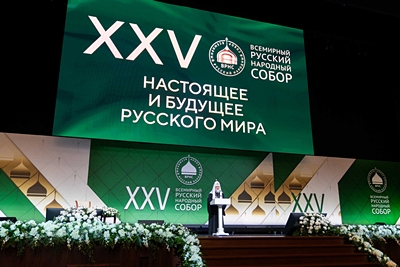
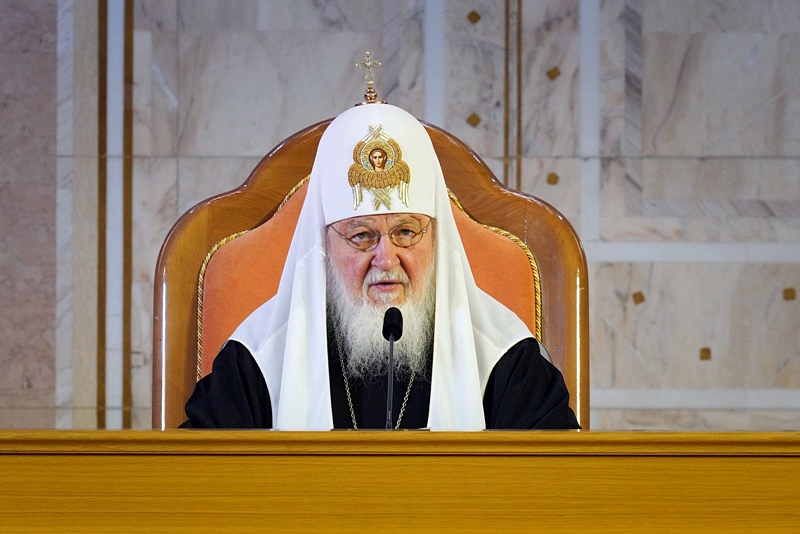
This is the essence of ethnophyletism: claiming that ethnic identity determines ecclesial boundaries. By declaring Ukrainians (“Little Russians”) and Belarusians to be merely “sub-ethnoses” of Russians, this doctrine denies the distinct identity of these peoples and asserts Russian ecclesiastical jurisdiction over them on ethnic grounds.
Kirill’s position must be understood clearly: He does not acknowledge Ukrainians as a separate people in the national sense at issue here. In his view, Ukrainians belong to the triune Russian people: they are “Little Russians,” a branch of the Russian nation. From this premise, his ecclesiastical claims follow logically: if Ukrainians are Russians, they belong under the Moscow Patriarchate because that is where Russians belong. He is not claiming jurisdiction over a foreign people; he is claiming that there is no foreign people to begin with. This is why dialogue on canonical territory is impossible: Kirill does not recognize Ukrainian ecclesial independence as a legitimate question, because he does not recognize Ukrainians as a distinct people with their own ecclesial needs.
Kirill has repeatedly insisted on this “one people” claim:
Мы действительно единый народ, и я никогда не боюсь об этом говорить. У нас разные наречия, разные культурные особенности, но мы единый народ, происходящий от Киевской купели Крещения.
We are really one people, and I am never afraid of speaking about it. We have different dialects, different cultural peculiarities but we are one people originating from the Kiev baptismal font.
— Patriarch Kirill, October 28, 2018, https://mospat.ru/ru/news/47013/
Three weeks after the Russian invasion, he reiterated this claim:
Русская Церковь, несмотря на очень негативный политический контекст, призвана сегодня сохранять духовное единство нашего народа — русского и украинского народов — как единого народа, вышедшего из Киевской купели Крещения.
The Russian Church, despite the very negative political context, is called today to preserve the spiritual unity of our people: the Russian and Ukrainian peoples, as one people who came from the Kiev Baptismal font of Christening.
— Patriarch Kirill, Speech to the Supreme Church Council, March 18, 2022, http://www.patriarchia.ru/article/103031
This directly violates the 1872 condemnation, which condemned “racial discrimination, ethnic feuds, hatreds and dissensions within the Church of Christ.”
By insisting Ukrainians and Russians are “one people” who must remain in one church structure, Kirill organizes the Church by ethnicity rather than by faith and canonical territory.
The patristic standard contradicts this:
The Bulgarians received Orthodox Christianity from Sts. Cyril and Methodius. The Serbs received the faith through Byzantine missions. Yet neither Bulgaria nor Serbia remains under the jurisdiction of Constantinople simply because Greeks brought them the Gospel. Each eventually received autocephaly (ecclesial self-governance) and became established local churches with their own defined canonical territories.
Historical baptism does not create permanent jurisdiction. Shared history does not determine ecclesial boundaries.
A pastoral note: Russians and Ukrainians share deep historical, cultural, and spiritual connections: the Kyivan Rus’ baptism in 988, family ties, linguistic kinship. These should be honored. Love for brother nations is proper. But being “one people” does not require being one jurisdiction. Greeks are also one people, sharing language, culture, and Orthodox faith, yet they have multiple independent Orthodox jurisdictions: the Church of Greece, the Church of Cyprus, the Ecumenical Patriarchate, and Greek-speaking faithful under the Patriarchates of Alexandria, Jerusalem, and Antioch. No one claims this multiplicity violates their unity as a people, and yet this is what Patriarch Kirill seeks to do. Thus, claiming ecclesiastical jurisdiction based on ethnic unity rather than canonical territory is ethnophyletism. Honoring shared baptism is proper. Using shared baptism to claim permanent jurisdiction is ethnophyletism.
3. Subordinating the Kingdom of God to Russian Geopolitical Power
In his speech to the Russian World Assembly on November 3, 2009, Patriarch Kirill explicitly stated the geopolitical purpose of the “Russian World”:
Верю, что только сплоченный Русский мир может стать сильным субъектом глобальной международной политики, сильнее всяких политических альянсов.
I believe that only a united Russian World can become a strong subject of global international politics, stronger than any political alliances.
— Patriarch Kirill, Speech to III Assembly of the Russian World, November 3, 2009, http://www.patriarchia.ru/article/96616
This violates Christ’s own teaching. When Pilate asked Jesus about His kingdom, Christ responded: “My kingdom is not of this world” (John 18:36). The Church exists to bring people to the Kingdom of Heaven, not to make Russia “a strong subject of global international politics.”
This explicitly makes the Church serve geopolitical power rather than spiritual salvation. The March 2022 declaration against “Russian World” ideology condemned precisely this:[13]
We therefore condemn as non-Orthodox and reject any teaching which would subordinate the Kingdom of God… to any kingdom of this world.
Kirill’s statement reveals the ultimate purpose of his ethnophyletist ideology: not spiritual unity, but political power.
4. Elevating Russian Territory to Quasi-Sacred Status
On January 31, 2019, Patriarch Kirill declared:
Украина — это не периферия нашей Церкви. Мы называем Киев «матерью городов русских», для нас Киев — то, чем для многих является Иерусалим. Оттуда началось русское православие, и ни при каких обстоятельствах мы не можем отказаться от этой исторической и духовной связи.
Ukraine is not on the periphery of our church. We call Kiev ‘the mother of all Russian cities.’ For us Kiev is what Jerusalem is for many. Russian Orthodoxy began there, so under no circumstances can we abandon this historical and spiritual relationship.
— Patriarch Kirill, Meeting with delegations of Local Orthodox Churches, January 31, 2019, http://www.patriarchia.ru/article/61941; coverage: https://tass.com/society/1042662
On July 27, 2009, during his first visit to Ukraine as Patriarch, he stated even more emphatically:
Если хотите, Киев — наш общий «Иерусалим».
If you wish, Kiev is our common Jerusalem.
— Patriarch Kirill, Vladimirskaya Gorka, July 27, 2009; originally published in Izvestia by Boris Klin (ITAR-TASS), https://www.pravmir.ru/svyatejshij-patriarx-moskovskij-i-vseya-rusi-kirill-kiev-nash-obshhij-ierusalim/
This creates multiple theological errors:
- Elevates Russian territory into quasi-holy-land symbolism (risking competition with actual Jerusalem)
- Makes geography determinative of Church belonging (Ukrainians must remain under Moscow because of Kyiv’s history)
- Subordinates current Orthodox believers’ ecclesial reality to Russian national claims (Ukrainian Orthodox cannot pursue their own path because it threatens Russian identity)
The theological problem of “Holy Russia” terminology
The Russian use of “Holy Russia” (Святая Русь) terminology itself becomes dangerous when it is used as a theological claim about an earthly nation. Orthodox peoples may poetically praise their homelands and saint-bearing lands, but no local nation can be made holy in the same sense that the Church is holy.
Greeks, Serbs, Bulgarians, Romanians, and other Orthodox peoples have produced countless saints and may speak reverently of their lands. Greece promoted “Hellenism” and the “Megali Idea,” the 19th-century political vision of reclaiming Constantinople, but these were explicitly political and cultural visions, not theological claims that the Greek nation itself is sanctified as an ecclesial body.[14]
Orthodox theology restricts this kind of holiness to God, His saints, and the Church itself, never to earthly nations as such. Holiness (hagios/sviatost’) means participation in divine life through theosis (deification), which applies to persons and to the Church as the mystical body of Christ, but never to geographically or ethnically defined states.
The Nicene-Constantinopolitan Creed confesses: “I believe in one, holy, catholic, and apostolic Church.” Holiness is an attribute of the Church, not of nations.
St. Cyril of Jerusalem (Catechetical Lecture 18) teaches the Church is holy as “the spouse of our Lord Jesus Christ,” sanctified through the Spirit, His Bride and Body, the dwelling place of the Holy Trinity.[15] A nation, being a political and geographical entity, cannot be sanctified in this sacramental sense. To call a nation “holy” attributes to the created order what belongs only to God and His mystical Body.
Even Patriarch Bartholomew of Constantinople (who himself espouses much heresy) can correctly see that this is an obvious error: “They shamelessly declare that they are Russians first and then Orthodox.”[16] All of this represents a historical departure.
The monk Philotheus’s “Third Rome” concept (16th century) emphasized Moscow’s role as protector of the faith, not Russia’s inherent holiness. His contemporary, St. Maxim the Greek, criticized the nascent caesaropapism (state control of the Church) he witnessed in Muscovite Russia, showing Orthodox concerns about conflating political and spiritual authority are centuries old.[17] The transformation from theological concept to imperial justification demonstrates how “Holy Russia” ideology became a tool for political expansion rather than spiritual witness.
5. Creating a Two-Tier Salvation System
The error here goes deeper than politics: it is a fundamental distortion of how salvation works.
Patriarch Kirill’s teaching creates a two-tier salvation system:
First tier (Russians): Special spiritual status as the “Restrainer,” as “Holy Russia,” with a unique apocalyptic mission. Dying for Russian national interests grants salvation (“washes away all sins”). Being Russian is spiritually significant for one’s eternal destiny. (These claims are documented with primary sources in this chapter and in Chapters 16-17.)
Second tier (other Orthodox): No special status, no cosmic mission, no promise of automatic absolution through national service. Their ethnic identity does not carry salvific weight.
This directly violates the Apostle Paul’s teaching. As established in the Witness section above, the Apostle declared: “There is neither Jew nor Greek… for you are all one in Christ Jesus” (Galatians 3:28), and “Christ is all and in all” (Colossians 3:11). The Gospel abolishes ethnic hierarchies in salvation: to teach that Russians have a special spiritual status, that being Russian matters for one’s eternal destiny, that dying for Russia washes away sins, is to rebuild the wall between Jew and Greek that Christ tore down.
The Alignment with State Ideology
The alignment between Patriarch Kirill’s theology and President Putin’s state ideology is precise.
Putin’s July 2021 article “On the Historical Unity of Russians and Ukrainians” repeatedly invokes Orthodoxy and Orthodox faith. It declares that Russians and Ukrainians “were one people,” bound together “after the baptism of Rus” by “the Orthodox faith.” Compare Kirill’s formulation: Russians and Ukrainians are “one people who came from the Kiev Baptismal font,” united by three foundations: Orthodox faith, Russian culture and language, and common historical memory. The language is interchangeable.
When a Patriarch’s theological formulations mirror a President’s political manifesto word for word, the source of the doctrine becomes clear: the Kremlin. The vocabulary is Orthodox only in its borrowed terminology.
Fr. Andrei Kordochkin, who led the March 2022 clergy petition with 300 signatories calling for an end to the war and was subsequently defrocked, described how this ideology functions:
Any war has two ingredients: ideas and weapons… If the weapons are provided by the state, the ideas behind the war are largely provided by the Moscow Patriarchate.
— Fr. Andrei Kordochkin, Atlantic Council Eurasia Center panel, September 17, 2025, https://www.youtube.com/watch?v=JSp-10UsoOE[18]
The ideology presents aggression as defense:
The concept of Russian World… presents the invasion of Russia into Ukraine as a form of defense… It’s not Russia that invaded Ukraine, but it’s this Russian world which defends itself on Ukrainian territory.
And it sacralized the state to the point where political dissent becomes religious crime:
If those who die in the war are not simply heroes but saints, then any kind of dissent becomes a sacrilege.
The logical endpoint is the deification of the national leader:
If the war is designated as holy, the national leader who leads the war is no longer a civil servant. He becomes a messianic figure.
Fr. Kordochkin then identified what the Moscow Patriarchate is actually doing:
In supporting the ideology behind the war, the Moscow Patriarchate is not sacrificing only the war, but it is the regime itself which is shown as the agent of God. As Putin said, it was the will of the Lord to begin the invasion, and I believe that he sincerely believes so.
— Fr. Andrei Kordochkin, Atlantic Council Eurasia Center, September 17, 2025, https://www.youtube.com/watch?v=JSp-10UsoOE&t=2085s
This is the mechanism by which ethnophyletism produces caesaropapism: first the nation is sacred, then its wars are sacred, then its leader is sacred, and finally dissent from any of them is heresy.
D. Three Common Objections
Three objections are frequently raised to defend Patriarch Kirill’s “Russian World” teaching. All fail under examination.
Objection 1: “But Ukraine Persecutes the Canonical UOC”
Ukraine is persecuting the canonical Ukrainian Orthodox Church under Metropolitan Onuphry, thus Russia must defend them. (For the full background on the UOC, the OCU, and how these two churches relate, see Chapter 28.)
This objection fails for four reasons:
First, the large-scale state campaign against the UOC began AFTER the Russian invasion, not before. Before February 2022, the Ukrainian Orthodox Church (UOC) operated with relative freedom in Ukraine. There were of course tensions with the schismatic Orthodox Church of Ukraine (OCU) created by Patriarch Bartholomew in 2018, local parish conflicts, and political complications. But the nationwide state campaign described here had not yet begun.[19]
The large-scale measures (SBU raids on monasteries, sanctions on bishops, termination of the Kyiv Pechersk Lavra lease, church seizures) began in late 2022 and intensified in 2023.[20] The invasion helped create the very persecution it supposedly prevented.
Second, Metropolitan Onuphry himself opposed the invasion from day one. On February 24, 2022, the canonical Ukrainian Orthodox Church issued a statement:
Defending the sovereignty and integrity of Ukraine, we appeal to the President of Russia and ask him to immediately stop the fratricidal war.
— Metropolitan Onuphry, Statement of February 24, 2022, https://news.church.ua/2022/02/24/obrashhenie-blazhennejshego-mitropolita-kievskogo-vseya-ukrainy-onufriya-k-vernym-grazhdanam-ukrainy/?lang=ru[21]
If Russia invaded to supposedly protect the UOC, why did the UOC completely condemn the invasion? Why did they immediately cease commemorating Patriarch Kirill? Why did they declare independence from Moscow on May 27, 2022? (These events are documented in detail in Chapter 29.)
To these questions, supporters of Patriarch Kirill often respond not with a serious account of the UOC’s own public position, but with ad hominem attacks: “anti-Russian,” Russophobic, Western spies, and similar claims that do not grapple with the paradox. The very UOC that many in the Russian Church claim to defend emphatically rejected Patriarch Kirill’s position.
The very church Russia claims to protect, rejected their protection.
This bears repeating: Can protection be called protection, when the ones who are supposedly being protected, are saying that it’s not protection? The only way this can be true is if we claim the UOC are liars.
Third, even if persecution existed, the invasion does not meet the patristic criteria. Chapter 20 examines the narrow conditions under which the Fathers permitted military intervention and demonstrates that Russia’s invasion meets none of them. The reader is invited to examine that evidence before drawing conclusions.
Fourth, the objection proves too much. If persecution of Orthodox Christians automatically justifies military invasion by other Orthodox nations, then:
- Greece could invade Turkey to “liberate” the Ecumenical Patriarchate
- Russia could invade Turkey to “liberate” Orthodox Christians there
- Any Orthodox country could invade any other country where Orthodox Christians face difficulties
This is imperialism dressed in religious language, not Orthodox ecclesiology.
Objection 2: “But the West Promotes LGBT Ideology and Globalism”
Another objection: “The West is spreading LGBT ideology, gender theory, and globalist anti-Christian values. Russia is defending traditional Christian civilization. This is why the Russian World is necessary.”
This objection confuses resisting Western cultural errors with adopting ethnophyletist ecclesiology.
The West has indeed fallen into grave moral and spiritual errors.
Traditional Orthodox Christians do not refute this. The promotion of sexual immorality, the redefinition of marriage, the assault on the family, the embrace of materialism and secularism: these are real evils that Orthodox Christians must resist.
But resisting Western errors does not require organizing the Church along ethnic lines. Romania, Serbia, and Bulgaria also resist LGBT ideology and Western moral decay. However, they don’t then claim to be the “Restrainer” of cosmic evil. They do not organize their ecclesiology around ethnic identity. They do not teach that dying for their nation washes away sins. They didn’t and don’t need to make nationalistic conflations to fight against the secular spirit of the world.
Furthermore, defending Orthodoxy against Western errors is the duty of ALL Orthodox Christians in ALL nations. It does not belong uniquely to Russia. This much we should all be able to agree on. Therefore, it is not justifiable to create a theology where Russian identity has apocalyptic significance. These are not the same thing.
Conflating cultural defense with ethnophyletist ecclesiology is how the phyletist error gains acceptance: by hiding behind legitimate concerns about Western moral decay.
Objection 3: “This is Anti-Russian Propaganda”
A third objection dismisses all criticism of Russian hierarchs as “Russophobia” or “anti-Russian propaganda.” Any critique of Patriarch Kirill, the argument goes, is really an attack on Russia itself, on “Holy Rus,” on the Russian Orthodox tradition. (For documented examples of this deflection tactic in action, including the Russian Embassy’s response to Swiss declassified KGB archives, see Chapter 13.)
This objection fails because Russia’s own saints warned that Russian hierarchs would fall away from Orthodoxy.
St. Seraphim of Sarov, one of the most beloved saints in Russian history, prophesied:
There will come a time when the ungodliness of the bishops of Russia will exceed the ungodliness of the Greek bishops of the time of the Emperor Theodosius the Younger. Then will be fulfilled that which was spoken: These people draw nigh to Me with their mouth, and they honor Me with their lips, but their heart is far from Me; yet in vain do they worship Me, teaching the commandments and doctrines of men (Is. 29:13). In the land of Russia there will be great tribulations. The hierarchs of the Church of God and other clergymen will fall away from the purity of Orthodoxy, and for this the Lord will punish them grievously.
— St. Seraphim of Sarov, as quoted in Orthodox Life, Vol. 42, No. 5 (September-October 1992), p. 45
St. Seraphim was not “anti-Russian.” He loved Russia and the Russian people. He is venerated throughout the Orthodox world as a pillar of Russian spirituality. Yet he prophesied that Russian bishops would fall away from Orthodoxy, that their ungodliness would exceed even the compromised Greek hierarchs of the fifth century.
And so, if criticizing Russian hierarchs is “Russophobia,” then according to their own argument, St. Seraphim of Sarov was a Russophobe.
This is absurd. The saints do not share the modern notion that Russian hierarchs are beyond criticism or that the “Russian World” is uniquely protected from error.
The “Holy Rus” concept, when used to shield hierarchs from accountability, contradicts the witness of Russia’s own saints. St. Seraphim of Sarov knew what the “Russian World” ideologues deny: that Russian clergymen and hierarchs, just like the Greeks, the Serbs, etc., can fall into heresy, and that when they do, the faithful must witness against them.
This documentation then is pro-Orthodox. The same patristic standards that apply to Patriarch Bartholomew, to the Greek hierarchs, to the American hierarchs, apply equally to Patriarch Kirill. Jurisdictional loyalty does not override theological truth. Ethnic identity does not exempt anyone from the canons.
Those who dismiss this critique as “Russophobia” are immediately proving the very point: they have elevated Russian identity above Orthodox truth. They are defending not the faith of the Fathers, but the honor of their jurisdiction. This is ethnophyletism in action.
The Two-Step Exposed
When criticism comes from the West, the regime calls it “Russophobia.” When the same criticism comes from Russians, the regime calls them traitors.
This is ethnophyletism in action. The accusation is not theological; it is national. The priests defrocked for praying for peace were not charged with doctrinal error. They were charged with disloyalty: refusing to read a prayer for Russia’s victory, changing “victory” to “peace,” preaching that “Thou shalt not kill” is unconditional. The criterion for faithfulness has become loyalty to Russia, not fidelity to the Gospel.
In March 2022, President Putin addressed those Russians who opposed the war:
[The Russian people] will always be able to distinguish true patriots from scum and traitors and will simply spit them out like a gnat that accidentally flew into their mouths. I am convinced that such a natural and necessary self-purification of society will only strengthen our country.[22]
The word “self-purification” (очищение) deliberately echoes Stalin’s purge terminology. It is not metaphor. The regime acts on it.
By February 2025, OVD-Info documented 1,185 people facing criminal prosecution for anti-war statements or actions, with 372 of them in places of imprisonment. More than a third of those designated “foreign agents” or “undesirable organisations” are media actors. The Committee to Protect Journalists documented 29 journalists imprisoned in Russia as of December 1, 2025.[23]
Within the Church, the same logic applies. Over 100 religious leaders and activists have been persecuted for opposing the war. Thirty-eight Orthodox clergy faced ecclesiastical trials: 17 defrocked, 14 suspended, 7 forced into retirement. Patriarch Kirill’s courts formally declared pacifism to be heresy, citing Gnostics, Bogomils, and Tolstoyans. Nearly 30 priests and deacons have fled to the Ecumenical Patriarchate after being suspended or defrocked by Moscow.[24]
These are not Western agents. These are Russian journalists, Russian activists, Russian priests. Fr. Andrei Kordochkin, suspended for opposing the war, said: “If I say that murdering people is not an acceptable form of confrontation, that’s not my opinion, that’s my faith.”[25]
The regime cannot call these Russians “Russophobes,” so it calls them traitors instead. The shift in terminology exposes the ethnophyletism: the sin is not heresy but disloyalty. The nation has replaced the Gospel as the measure of Orthodox faithfulness.
Those who dismiss this documentation as “anti-Russian” must explain why Russia imprisons Russians for saying it.
E. The Verdict
The Apostle Paul, the 1872 Council of Constantinople, and St. Gregory the Theologian agree: organizing the Church by ethnicity is heresy. The Gospel knows no race. Baptism, not birthplace, determines Church membership.
Patriarch Kirill’s “Russian World” ideology:
- Makes Russian ethnicity co-equal with Orthodox faith (“three foundations”)
- Organizes church jurisdiction by ethnicity (“one people,” “sub-ethnoses”)
- Subordinates the Kingdom of God to Russian geopolitical power (“strong subject of global international politics”)
- Elevates Russian territory to quasi-sacred status (“Kiev is our common Jerusalem,” “Holy Russia”)
- Creates a two-tier salvation system based on ethnicity (documented in this chapter and in Chapter 16)
Over 1,500 Orthodox scholars, clergy, and faithful from around the world have formally analyzed these statements and concluded they constitute the heresy of ethnophyletism.[13] The declaration, published on Public Orthodoxy (a Fordham-affiliated platform often ecumenistic in orientation), nonetheless attracted signatures from across the Orthodox spectrum, including traditionally-minded clergy and monastics. It is cited as contemporary corroboration, not magisterial authority.
This is the heresy of ethnophyletism condemned by the 1872 Council of Constantinople, rejected by the Apostles, and forbidden by the Fathers.
The saints speak with one voice: there is neither Jew nor Greek in Christ. Patriarch Kirill’s teaching, which makes Russian identity spiritually determinative, cannot be reconciled with theirs.
Synod of Constantinople (1872), quoted in OrthodoxWiki, “Phyletism”: “We renounce, censure and condemn phyletism, that is racial discrimination, ethnic feuds, hatreds and dissensions within the Church of Christ, as contrary to the teaching of the Gospel and the holy canons…” OrthodoxWiki is not treated here as magisterial authority, but as a convenient citation of the synodal formula also reproduced in Orthodox historical and canonical literature. See also John Anthony McGuckin, The Orthodox Church: An Introduction to its History, Doctrine, and Spiritual Culture, p. 40, which notes that phyletism was condemned as a heretical tendency by Constantinople in 1872. ↩
Original Greek: “οὐκ ἔνι ᾿Ιουδαῖος οὐδὲ ῞Ελλην, οὐκ ἔνι δοῦλος οὐδὲ ἐλεύθερος, οὐκ ἔνι ἄρσεν καὶ θῆλυ· πάντες γὰρ ὑμεῖς εἷς ἐστε ἐν Χριστῷ ᾿Ιησοῦ.” ↩
Original Greek: “ὅπου οὐκ ἔνι ῞Ελλην καὶ ᾿Ιουδαῖος, περιτομὴ καὶ ἀκροβυστία, βάρβαρος, Σκύθης, δοῦλος, ἐλεύθερος, ἀλλὰ τὰ πάντα καὶ ἐν πᾶσι Χριστός.” ↩
Abbot Seraphim, writing his chronicle of the 1913 Germogen canonization festival, argued that Christ “cared most of all for members of his own nationality” based on Matt 15:24. He concluded: “How can one not be a patriot? For patriotism is love for the fatherland in which we live, love toward our own people, love toward our national customs and manners. This love is the air of the soul.” As quoted in John Strickland, The Making of Holy Russia: The Orthodox Church and Russian Nationalism before the Revolution (Jordanville, NY: Holy Trinity Publications, 2013). ↩
Original Greek: “«Πᾶσι μία τοῖς ὑψηλοῖς πατρὶς, ὦ οὗτος, ἡ ἄνω Ἱερουσαλὴμ, εἰς ἣν ἀποτιθέμεθα τὸ πολίτευμα… Αἱ δὲ κάτω πατρίδες αὗται, καὶ τὰ γένη ταῦτα, τῆς προσκαίρου ζωῆς καὶ σκηνῆς ἡμῶν γέγονε παίγνια.»” ↩
Original Greek: “«πᾶσα ξένη πατρὶς ἐστιν αὐτῶν, καὶ πᾶσα πατρὶς ξένη.»” ↩
Original Greek: “καὶ οὐκ ἔστιν ἐν ἄλλῳ οὐδενὶ ἡ σωτηρία· οὐδὲ γὰρ ὄνομά ἐστιν ἕτερον ὑπὸ τὸν οὐρανὸν τὸ δεδομένον ἐν ἀνθρώποις ἐν ᾧ δεῖ σωθῆναι ἡμᾶς.” ↩
Romania held a constitutional referendum on October 6-7, 2018, to define marriage as between a man and a woman. Patriarch Daniel of the Romanian Orthodox Church said participation in the referendum is a “patriotic, national and profoundly democratic act” aimed at defending marriage between a man and a woman, and priests urged parishioners to support it. The referendum failed to reach the 30% turnout threshold despite over 90% of voters approving the amendment. Sources: Romania Insider, “Romanian Orthodox Church steps up propaganda before referendum for family,” October 1, 2018, https://www.romania-insider.com/romanian-orthodox-church-propaganda-referendum-family; NPR, “Romanian Referendum To Ban Same-Sex Marriage Fails,” October 8, 2018, https://www.npr.org/2018/10/08/655528971/romanian-referendum-that-would-define-marriage-fails ↩
Original Greek: “«Ναὶ ὁ Ἕλλην ἐγεννήθη κατὰ θείαν πρόνοιαν διδάσκαλος τῆς ἀνθρωπότητος· τοῦτο τὸ ἔργον ἐκληρώθη αὐτῷ· αὕτη ἦν ἡ ἀποστολὴ αὐτοῦ· αὕτη ἡ κλῆσις αὐτοῦ ἐν τοῖς ἔθνεσιν· μαρτύριον ἡ ἐθνικὴ αὐτοῦ ἱστορία· μαρτύριον ἡ φιλοσοφία αὐτοῦ· μαρτύριον ἡ κλίσις αὐτοῦ· μαρτύριον αἱ εὐγενεῖς αὐτοῦ διαθέσεις· μαρτύριον ἡ παγκόσμιος ἱστορία· μαρτύριον ἡ μακροβιότης αὐτοῦ, ἐξ ἣς δυνάμεθα ἀδιστάκτως νὰ συμπεράνωμεν καὶ τὴν αἰωνιότητα αὐτοῦ, διὰ τὸ αἰώνιον ἔργον τοῦ Χριστιανισμοῦ μεθ᾿ οὗ συνεδέθη ὁ Ἑλληνισμός· διότι ἐνῷ ὅλα τὰ ἔθνη τὰ ἐμφανισθέντα ἐπὶ τῆς παγκοσμίου σκηνῆς ἦλθον καὶ παρῆλθον, μόνον τὸ Ἑλληνικὸν ἔμεινε ὡς πρόσωπον δρῶν ἐπὶ τῆς παγκοσμίου σκηνῆς καθ᾿ ὅλους τοὺς αἰῶνας·»” ↩
Original Greek: “«Όταν ο ορθόδοξος Έλληνας εγείρεται και ομιλεί, από τον λόγο του εξέρχονται επτά Οικουμενικές Συνοδοί» και κάπως αργότερα τόνιζε: «Τα αδέλφια μας, τους Έλληνες, πάντοτε να τους αγαπάτε σαν τους δικούς σας πνευματικούς γονείς και αναδόχους και ως παντοτινούς διδασκάλους στην πίστη, στην ευσέβεια και στην εκκλησιαστικότητα».” ↩
St. Paisios the Athonite, Spiritual Counsels, Vol. 2: Spiritual Awakening, p. 46. ↩
Original Russian: “доктрине триединства русского народа, согласно которой русский народ состоит из великороссов, малороссов и белорусов, являющихся ветвями (субэтносами) одного народа.” ↩
Declaration on the “Russian World” (Russkii Mir) Teaching, signed by over 1,500 Orthodox scholars, clergy, and faithful worldwide, Volos Academy for Theological Studies and Fordham University Orthodox Christian Studies Center, March 13, 2022. https://publicorthodoxy.org/2022/03/13/a-declaration-on-the-russian-world-russkii-mir-teaching/ ↩
“Holy Rus’” (Svyatáya Rusʹ) is a religious and philosophical concept appearing from the 9th century and developing from the 16th-21st centuries. For comparison with Greek “Hellenism” and discussion of Orthodox nationalism across Eastern Europe, see “The Russian World and the Hellenic World,” Public Orthodoxy, September 16, 2022: https://publicorthodoxy.org/2022/09/16/the-russian-world-and-the-hellenic-world/ ↩
St. Cyril of Jerusalem, Catechetical Lecture 18, “On the Words, And in One Holy Catholic Church, and in the Resurrection of the Flesh, and the Life Everlasting,” sections 23 and 26. New Advent: https://www.newadvent.org/fathers/310118.htm ↩
Patriarch Bartholomew of Constantinople, letter to Patriarch Theodoros II of Alexandria, late July/early August 2024, condemning Russian Orthodox Church ideology as ethnophyletism. Original Greek published by Orthodox Times: https://orthodoxtimes.com/ecumenical-patriarch-uses-harsh-words-for-russian-church-they-declare-themselves-russian-first-and-orthodox-second/. English translation by Konstantinos Menyktas. Quote: “They shamelessly declare that they are Russians first and then Orthodox.” ↩
St. Maxim the Greek (1480-1556), Athonite monk who criticized caesaropapism in Muscovite Russia. OCA History: https://www.oca.org/orthodoxy/the-orthodox-faith/church-history/sixteenth-century/russia3 ↩
Fr. Andrei Kordochkin, Atlantic Council Eurasia Center panel, “How the Russian Orthodox Church supports the Kremlin’s war against Ukraine,” September 17, 2025, 30:05-33:51. Fr. Kordochkin co-founded the March 2022 clergy petition with approximately 300 signatories calling for an end to the war. He was subsequently suspended by the Moscow Patriarchate and received into the Ecumenical Patriarchate. Video: https://www.youtube.com/watch?v=JSp-10UsoOE ↩
Before the 2022 invasion, the UOC was the largest religious organization in Ukraine with over 12,000 parishes, 250 monasteries, and approximately 12,500 clergy. The U.S. Commission on International Religious Freedom’s 2021 Annual Report documented Russian occupation authorities’ pressure on religious communities in Crimea and Donbas but did not classify Ukraine as a country of particular concern. See: USCIRF, 2021 Annual Report, April 2021, https://www.uscirf.gov/sites/default/files/2021-04/2021%20Annual%20Report.pdf; U.S. Department of State, 2021 Report on International Religious Freedom: Ukraine, https://www.state.gov/reports/2021-report-on-international-religious-freedom/ukraine/. ↩
Key events: In November 2022, the SBU (Security Service of Ukraine) conducted raids on the Kyiv Pechersk Lavra and other UOC monasteries, alleging pro-Russian activities. See: The Guardian, “Ukraine’s security service raids Russian-backed monastery in Kyiv,” November 22, 2022, https://www.theguardian.com/world/2022/nov/22/ukraine-security-service-raids-1000-year-old-monastery-in-kyiv. In December 2022, the government imposed sanctions on UOC bishops. In March 2023, the Ukrainian government terminated the UOC’s lease on the Kyiv Pechersk Lavra, ordering monks to vacate. See: Reuters, “Ukraine orders Russian-aligned Orthodox church to leave Kyiv monastery,” March 10, 2023, https://www.reuters.com/world/europe/ukraine-orders-russian-aligned-orthodox-church-leave-kyiv-monastery-2023-03-10/; BBC, “Ukraine war: Orthodox clerics say they will not leave Kyiv monastery,” March 29, 2023, https://www.bbc.com/news/world-europe-65117269. Hundreds of parishes were transferred from UOC to OCU, often under political pressure. In August 2024, Ukraine’s parliament passed a law banning religious organizations affiliated with Russian religious centers, effectively targeting the UOC. See: RFE/RL, “Zelenskiy Signs Law Banning Russian Orthodox Church In Ukraine,” August 24, 2024, https://www.rferl.org/a/ukraine-russia-orthodox-religion-ban/33091200.html. ↩
Original Russian: “Отстаивая суверенитет и целостность Украины, мы обращаемся к Президенту России и просим немедленно прекратить братоубийственную войну.” ↩
Vladimir Putin, meeting on socioeconomic support for regions, March 16, 2022. Official Kremlin transcript: http://kremlin.ru/events/president/news/67996. See also Al Jazeera, “Putin warns Russians against ‘scum and traitors’ supporting West,” March 17, 2022: https://www.aljazeera.com/news/2022/3/17/scum-and-traitors-vladimir-putin-threatens-anti-war-russians ↩
Statistics compiled from multiple sources: OVD-Info documented 1,185 people facing criminal prosecution for anti-war statements or actions, with 372 in places of imprisonment as of February 17, 2025: https://ovd.info/en/antiwar_3_years. RSF reported that more than a third of actors designated “foreign agents” or “undesirable organisations” were media actors: https://rsf.org/en/russia-independent-media-are-primary-targets-kremlin-laws-against-foreign-agents-and-undesirable. CPJ’s 2025 Annual Prison Census documented 29 journalists imprisoned in Russia as of December 1, 2025: CPJ data. ↩
Fordham University and the UN Special Rapporteur on Freedom of Religion or Belief documented over 100 religious leaders and activists persecuted for opposing the war, including 79 Orthodox. Of 38 Orthodox clergy who faced ecclesiastical trials, 17 were defrocked, 14 suspended, and 7 forced into retirement. The Ecumenical Patriarchate received nearly 30 priests and deacons who were suspended or defrocked by Moscow. Sources: VOA, “Russian Orthodox Priests Persecuted for Supporting Peace in Ukraine,” August 13, 2023, https://www.voanews.com/a/russian-orthodox-priests-persecuted-for-supporting-peace-in-ukraine-/7222972.html; Sergei Chapnin, “Another Attempt to Break the Silence,” Public Orthodoxy, June 27, 2025, https://publicorthodoxy.org/2025/06/27/another-attempt-to-break-the-silence/; Sergei Chapnin, “These Russian clergy who said ‘no’ to Putin’s war in Ukraine are paying a price,” National Catholic Reporter / Religion News Service, https://www.ncronline.org/opinion/these-russian-clergy-who-said-no-putins-war-ukraine-are-paying-price. ↩
Fr. Andrei Kordochkin, interview with RFE/RL, 2024: https://www.rferl.org/a/russian-orthodox-church-antiwar-priests/33070583.html ↩