
Recognizing Roman Catholic Saints and Sacred Spaces
Patriarch Kirill has publicly praised Roman Catholic sanctity and accepted items of veneration from Rome. Some may dismiss this as diplomacy, but the question of whether saints exist outside Orthodoxy is not a matter of diplomacy: it is a matter of soteriology (the study of salvation).
If one considers this unimportant, they are saying that the teachings of the Church are not important to them.
Before examining what Patriarch Kirill has done, the Church’s teaching on sanctity outside Orthodoxy must be established, and why this matters for salvation.
A. What the Saints Teach
The Orthodox Church teaches that only Orthodoxy has saints. The reason is soteriological. If Roman Catholics have saints, and if one can become sanctified and reach heaven outside Orthodoxy, then there is no reason or necessity to convert to Orthodoxy and join the one Body of Christ; one can simply remain heterodox and be saved. This then invalidates the Creed, and many other theological teachings of the Church and scripture.
No saint or elder of the Orthodox Church teaches this, and no faithful Orthodox priest would tell heterodox inquirers that they can attain salvation while remaining heterodox.
The idea that the heterodox have saints, or that we have to admit this out of some notion of diplomacy, is a great and evil teaching. Why? Because it prevents people from joining the saving Body of Christ, which is Orthodoxy, outside of which there is no salvation (extra ecclesiam nulla salus), as St. Cyprian of Carthage teaches.
As we established in Chapter 3, “The Selective Standard: Havana vs Crete”: if they have saints, they have grace; if they have grace, they have valid sacraments; if they have valid sacraments, why are we divided? The logical consequence of recognizing Roman Catholic saints is the entire destruction of Orthodox ecclesiology itself.
These false notions and sentimentalism usually come from ecumenistically minded Orthodox Christians, and are the very reason why our saints considered ecumenism a heresy above all other heresies.
All of pseudo-Christianity, all of those pseudo-Churches, are nothing more than one heresy after another. Their common evangelical name is: Pan-heresy.
— St. Justin Popovich, Orthodox Faith and Life in Christ, p. 169
Archbishop Vitaly of Montreal, commenting on the ROCOR Anathema Against Ecumenism (quoted in full in Chapter 7), called it “the heresy of heresies” and “the most pernicious of heresies, for it has gathered all the heresies that exist or have existed.”
On Sanctity Outside the Church
If heresy estranges from God, then heretics cannot be saints. St. Mark of Ephesus, the Pillar of Orthodoxy who alone refused to sign the false union of Florence, declared:
We were the first to separate ourselves from them, or rather, to separate and cut them off from the common Body of the Church… it is clear that they are heretics, and we have cut them off as heretics.
— St. Mark of Ephesus, Encyclical Letter, trans. Archimandrite Amvrossy (Pogodin), https://www.orthodoxethos.com/post/the-encyclical-letter-of-saint-mark-of-ephesus[1]
If the Latins are heretics, then by the patristic teaching already established, they cannot have saints. St. Hilarion Troitsky of Russia states this with clarity:
Without the Church there is no Christianity; there is only the Christian teaching which, by itself, cannot “renew the fallen Adam.” […] It is evident that without this latter, abstract accord with Christian teaching alone is completely useless and that there is no salvation outside the Church.
— St. Hilarion Troitsky, Christianity or the Church?
Without the Church, there is no Christianity and no salvation. In his detailed study of ancient ecclesiology, St. Hilarion demonstrates that the Fathers applied this principle without exception:
There is no salvation outside the Church. Particular energies of grace are necessary for salvation, and these can only be obtained in the Church. The Church is like an oasis of grace, surrounded by a completely barren desert. To be without the Church is to be without grace, without the Holy Spirit, and this pertains to the pagan, the heretic, and the schismatic alike. All of them alike are without grace, because they are outside the Church.
— St. Hilarion Troitsky, On the Dogma of the Church, Fifth Essay
“The pagan, the heretic, and the schismatic alike.” No degrees, no partial grace, no “not completely deprived.” If the heretic is without grace exactly as the pagan is without grace, then the heretic cannot have saints any more than the pagan can.
The patristic witness is unanimous: even martyrdom cannot save those outside the Church (see Chapter 17). If martyrdom for Christ’s Name cannot save, how much less ordinary virtue?
St. Nikodemos the Hagiorite, compiler of the Pedalion (Rudder), the authoritative collection of Orthodox canon law, establishes that the Latins possess no valid sacraments. Their baptism proceeds from a priesthood that does not exist, making it far worse than irregular:
We say that the baptism of the Latins is a pseudonymous baptism, and for this reason it is neither acceptable according to strict interpretation nor according to economia. It is not acceptable according to strict interpretation, first, because they are heretics.
— St. Nikodemos the Hagiorite, The Rudder (Pedalion), Commentary on Apostolic Canon 46[2]
St. Nikodemos states the principle underlying this judgment:
Heretics have no priesthood; therefore the rites performed by them are profane and destitute of grace and sanctification.
— St. Nikodemos the Hagiorite, The Rudder (Pedalion), note to Apostolic Canon 68[3]
In the same commentary, St. Nikodemos invokes St. Mark of Ephesus, who declared at the Council of Florence: “We were separated from the Latins for no other reason than that they are not only schismatics but also heretics.” He then cites the “great Ecclesiarch” Silvester Syropoulos: “The difference of the Latins is heresy, and thus our forefathers held it.” And he cites Patriarch Dositheos of Jerusalem, whom St. Nikodemos calls “the papal scourge” (ὁ παπομάστιξ), whose refutations of Latin heresies fill entire volumes.
In another section of the Rudder, commenting on the canons of the Council of Constantinople (879-880), St. Nikodemos draws the canonical conclusion from these patristic judgments:
These things took place when the Roman church neither erred in the faith nor differed with us Greeks (ἡ Ρωμαίων ἐκκλησία οὔτε εἰς τὴν πίστιν ἔσφαλλεν, οὔτε μὲ ἡμᾶς διεφέρετο τοὺς Γραικούς). But now, we have no union and no communion with her, on account of the heretical dogmas into which she fell (τώρα δὲ, οὐδεμίαν ἔνωσιν καὶ κοινωνίαν ἡμεῖς πρὸς αὐτὴν ἔχομεν διὰ τὰ αἱρετικὰ δόγματα, εἰς τὰ ὁποῖα αὕτη ὑπέπεσεν).
— St. Nikodemos the Hagiorite, The Rudder (Pedalion), Commentary on the Canons of the Council of Constantinople (879-880)
No union. No communion. Not from a polemicist or a zealot, but from the compiler of Orthodox canon law.
If heretics have no priesthood, and if the rites they perform are “destitute of grace and sanctification,” then they cannot have saints. Sanctity requires grace; the compiler of Orthodox canon law says they have none.
Fr. Seraphim Rose applied this principle directly to Francis of Assisi, who is considered a “saint” by the Roman Catholic Church:
The new “personal” concept of sanctity (Francis of Assisi), unacceptable to Orthodoxy, which gave rise to later Western “mysticism” and eventually to the innumerable sects and pseudo-religious movements of modern times… The cause of this change is something that cannot be evident to a Roman Catholic scholar: it is the loss of grace which follows on separation from the Church of Christ.
— Fr. Seraphim Rose, “Orthodoxy in 6th-Century Gaul,” The Orthodox Word, Vol. 13, No. 1 (72), January-February 1977
If Fr. Seraphim Rose is correct that Francis’s sanctity is “unacceptable to Orthodoxy” due to “the loss of grace which follows on separation from the Church,” then accepting Francis of Assisi’s relics is accepting as holy the remains of someone devoid of grace. To venerate a post-schism Latin “saint” is to confess that grace exists outside the Orthodox Church. This is an ecclesiological confession about where the Church is and where grace resides, not a matter of diplomacy or politeness as some are wont to reduce it to.
What Accepting Relics Implies
To accept relics as holy is to confess that divine grace dwells in the person’s body and that they are now with God among the saints. St. John of Damascus explains:
These are made treasuries and pure habitations of God: For I will dwell in them, said God, and walk in them, and I will be their God… Further, that God dwelt even in their bodies in spiritual wise, the Apostle tells us, saying, Know ye not that your bodies are the temples of the Holy Spirit dwelling in you?… Surely, then, we must ascribe honour to the living temples of God, the living tabernacles of God.
— St. John of Damascus, An Exact Exposition of the Orthodox Faith, Book IV, Chapter 15, https://en.wikisource.org/wiki/Nicene_and_Post-Nicene_Fathers:_Series_II/Volume_IX/John_of_Damascus/An_Exact_Exposition_of_the_Orthodox_Faith/Book_IV/Chapter_15
To accept the relics of Francis of Assisi as holy relics is to confess that he is a “treasury and pure habitation of God,” that “God dwelt even in his body,” and that he is a “living temple of God.” But the saints teach that Francis’s concept of sanctity is “unacceptable to Orthodoxy” due to “the loss of grace which follows on separation from the Church.” These positions cannot both be true.
B. The Evidence
”Famous Catholic Saints”
In his greeting to the new Pope in 2013, Patriarch Kirill wrote:
При восшествии на папский престол Вы избрали имя Франциск, которое напоминает об известных святых Католической Церкви, явивших пример жертвенного посвящения себя страждущим людям и ревностной проповеди Евангелия.
At your accession to the papacy you chose the name Francis, which recalls famous Catholic saints who have served as an example of sacrificial devotion to alleviating people’s suffering and zealous preaching of the Gospel.
— Patriarch Kirill, His Holiness Patriarch Kirill’s greeting to the new Primate of the Roman Catholic Church, https://mospat.ru/ru/news/52935/
The Patriarch of Moscow publicly affirms that the Roman Catholic Church has “famous saints.”
Patriarch Kirill meant these words. Three years later, he acted on this belief.
Accepting Relics of Francis of Assisi
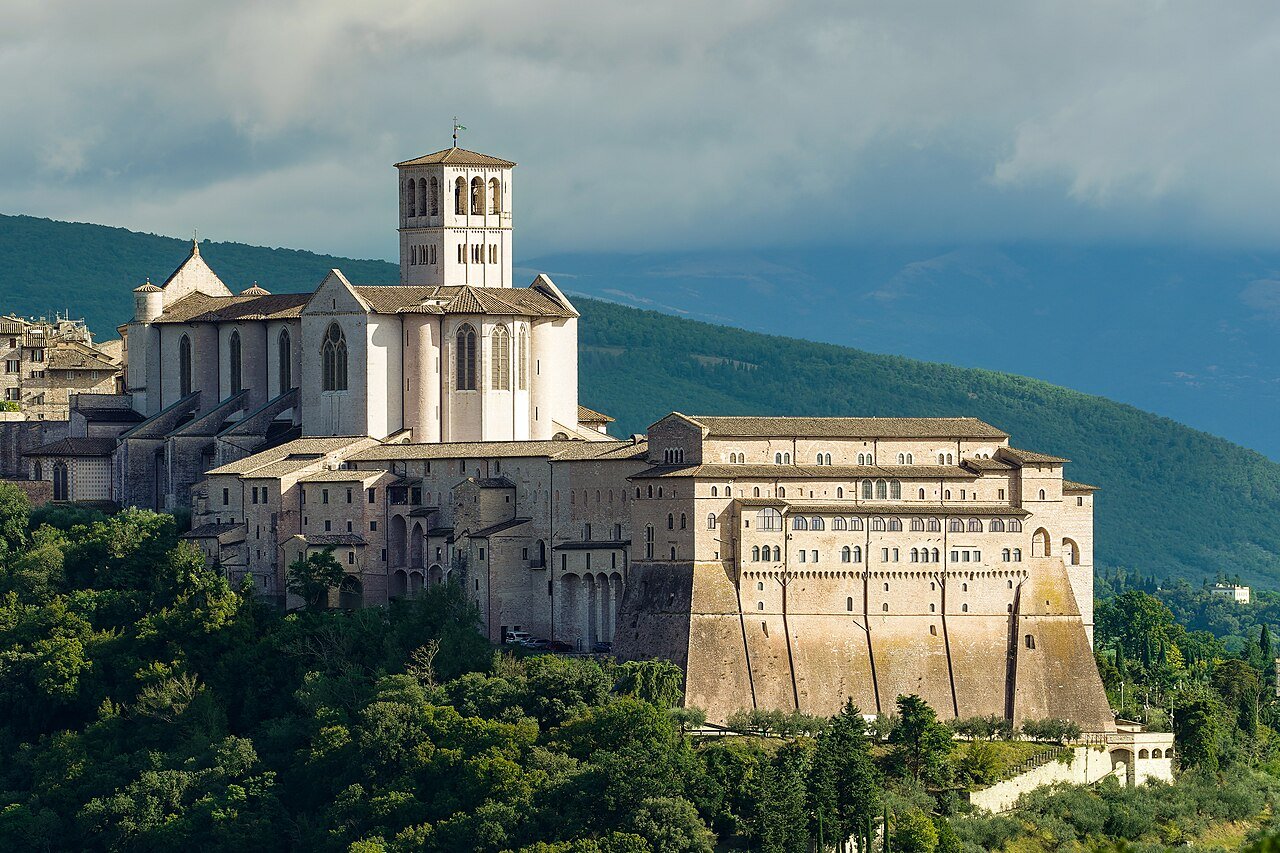
In November 2016, Cardinal Kurt Koch delivered a relic of Francis of Assisi to Patriarch Kirill on behalf of Pope Francis, during Kirill’s 70th birthday celebrations at St. Daniel’s Monastery in Moscow. The Pope’s accompanying message read:
In expressing again my gratitude for presenting me with a piece of the holy relics of Saint Seraphim of Sarov, I am glad to present you with a piece of the relics of St. Francis of Assisi, my heavenly protector.
— Pope Francis to Patriarch Kirill, https://interfax.com/newsroom/top-stories/30024/
Fr. Seraphim Rose taught that the sanctity of Francis of Assisi is “unacceptable to Orthodoxy” due to “the loss of grace which follows on separation from the Church of Christ.” Patriarch Kirill accepted his relics as holy. If Francis is a saint, does this not imply that Patriarch Kirill believes that his resting place must also be holy ground?
Of course, this is precisely what Kirill affirms.
A Roman Catholic Basilica “As Holy as Mount Athos”
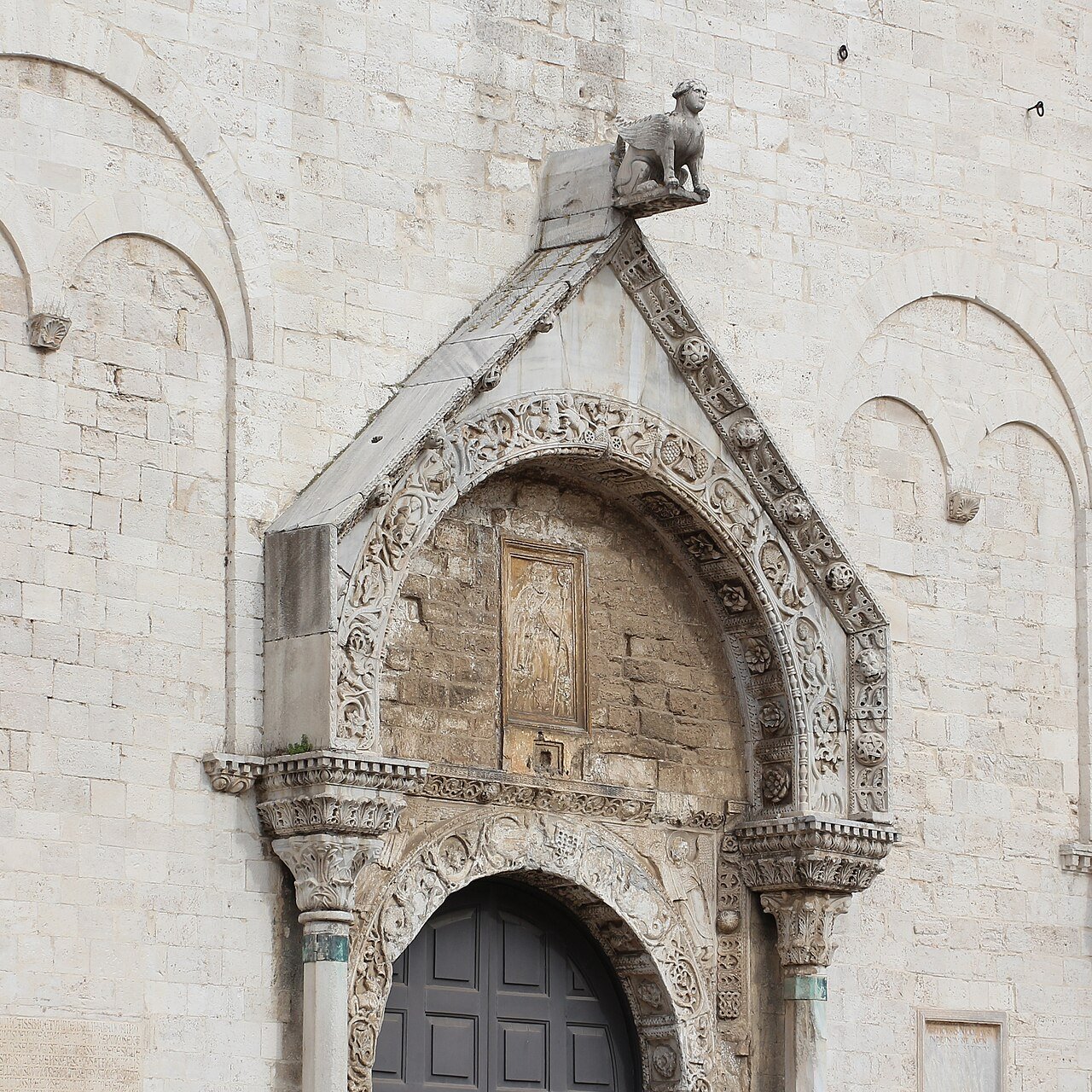
In December 2015, two months before Havana, Patriarch Kirill met with Roman Catholic representatives from the Basilica of St. Nicholas in Bari and declared:
Для русских православных людей Бари — это такое же святое место, как Афон или святые места в Палестине.
For Russian Orthodox people, Bari is the same holy place as Athos or the holy places in Palestine.
— Patriarch Kirill, Meeting with Roman Catholic representatives from Bari, December 2, 2015. https://mospat.ru/news/49956/
Patriarch Kirill elevates a Roman Catholic basilica to the same level as Mount Athos. This is an astronomical statement. He continued:
Одно дело, когда богословы за столом обсуждают богословские вопросы, а другое — когда народ вступает в контакт с нашими западными братьями, причем в святом месте. Очень важно не только богословски воспринимать наши двусторонние отношения, но еще и сердцем чувствовать друг друга.
It is one thing when theologians discuss theological questions at a table, and another when the people come into contact with our Western brothers, and moreover in a holy place. It is very important not only to perceive our bilateral relations theologically, but also to feel each other with the heart.
— Patriarch Kirill, Meeting with Roman Catholic representatives from Bari, December 2, 2015. https://mospat.ru/news/49956/
This is a recurring theme for Patriarch Kirill: theological distinctions matter less than emotional unity.
”The Catholic Church Preserves Evangelical Values”
At the same meeting, Kirill validated the Roman Catholic Church’s spiritual mission:
Успехи вашей миссии среди итальянского народа имеют значение, превышающее рамки итальянской паствы. Это имеет огромное значение для того, чтобы содействовать укреплению отношений между нашими Церквами… Поэтому для нас очень важно, что Католическая Церковь хранит те евангельские ценности, которые сохраняет и Русская Православная Церковь. А для паломников наших это означает, что в Бари они ощущают себя, как дома, что они чувствуют себя среди братьев и сестер.
The success of your mission among the Italian people has significance exceeding the framework of the Italian flock. This has enormous significance for promoting the strengthening of relations between our Churches… Therefore it is very important for us that the Catholic Church preserves those evangelical values that the Russian Orthodox Church also preserves. And for our pilgrims this means that in Bari they feel at home, that they feel themselves among brothers and sisters.
— Patriarch Kirill, Meeting with Roman Catholic representatives from Bari, December 2, 2015. https://mospat.ru/news/49956/
Notice the language. Patriarch Kirill refers to “our Churches,” plural. As stated in Chapter 2, there is only one Church and one Body of Christ, so we see the same heresy of “branch theory” put forth in the Havana Declaration.
Patriarch Kirill states that pilgrims feel at home in Bari, that they are “brothers and sisters” with Roman Catholics, and emphasizes strengthening the relationship between “churches,” with no mention of converting anyone to Orthodoxy.
What “evangelical values” does the Catholic Church preserve? And what is the Catholic Church preserving that the Russian Orthodox Church also preserves? This statement alone should elicit serious responses from the Orthodox faithful.
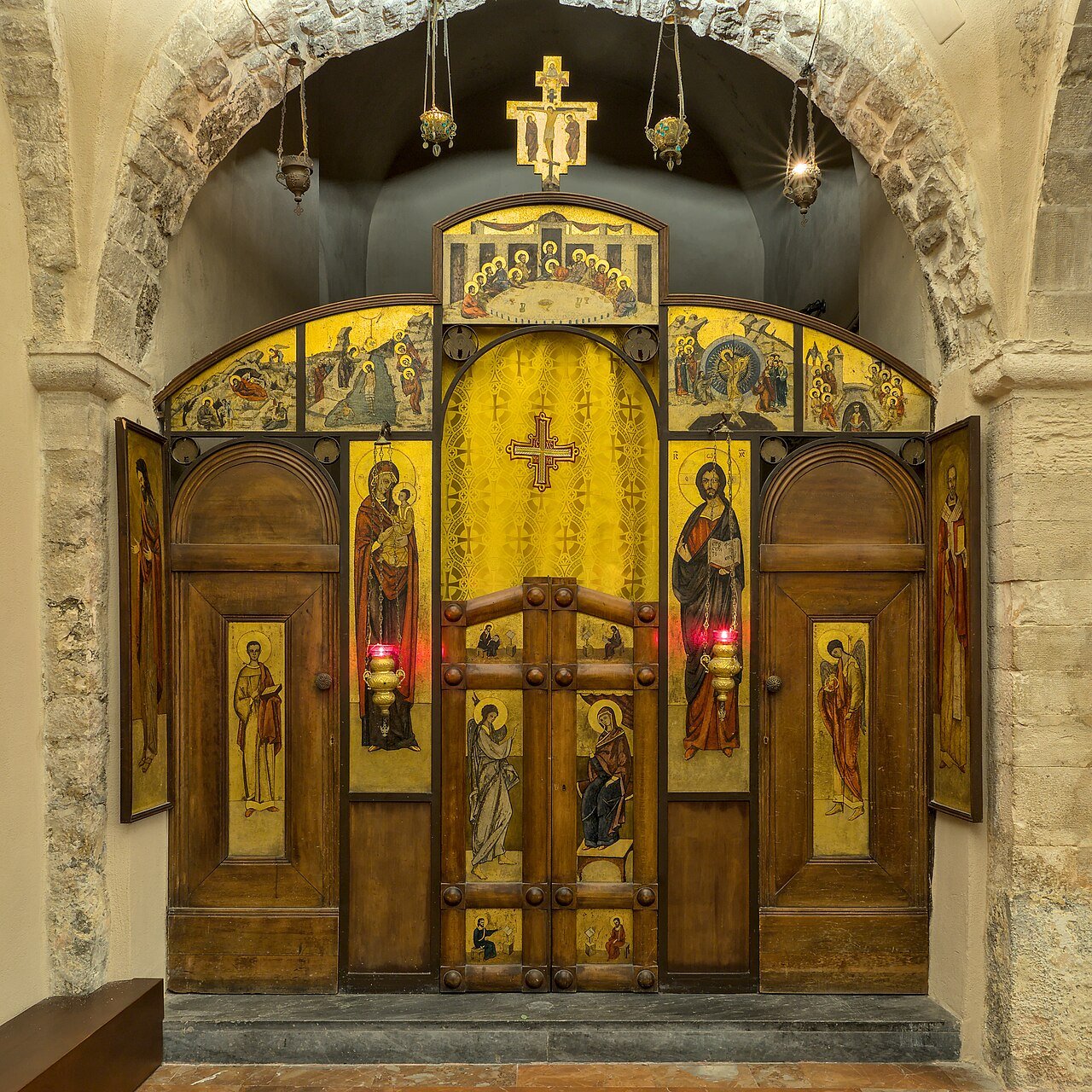
Patriarch Kirill concluded by wishing the Roman Catholic Church success in their pastoral mission:
…чтобы, несмотря ни на какие соблазны и искушения, итальянский народ хранил веру в сердце.
…so that, despite any temptations or trials, the Italian people may keep the faith in their hearts.
— Patriarch Kirill, Meeting with Roman Catholic representatives from Bari, December 2, 2015. https://mospat.ru/news/49956/
If the Roman Catholic Church is heretical, as the Orthodox Church teaches, why would an Orthodox patriarch wish them success in their mission? Heretics have no mission when they themselves are outside the saving faith. The Orthodox mission is to convert them.
The fruit from these statements soon followed.
The Relics Transfer: “Fruit” of Havana
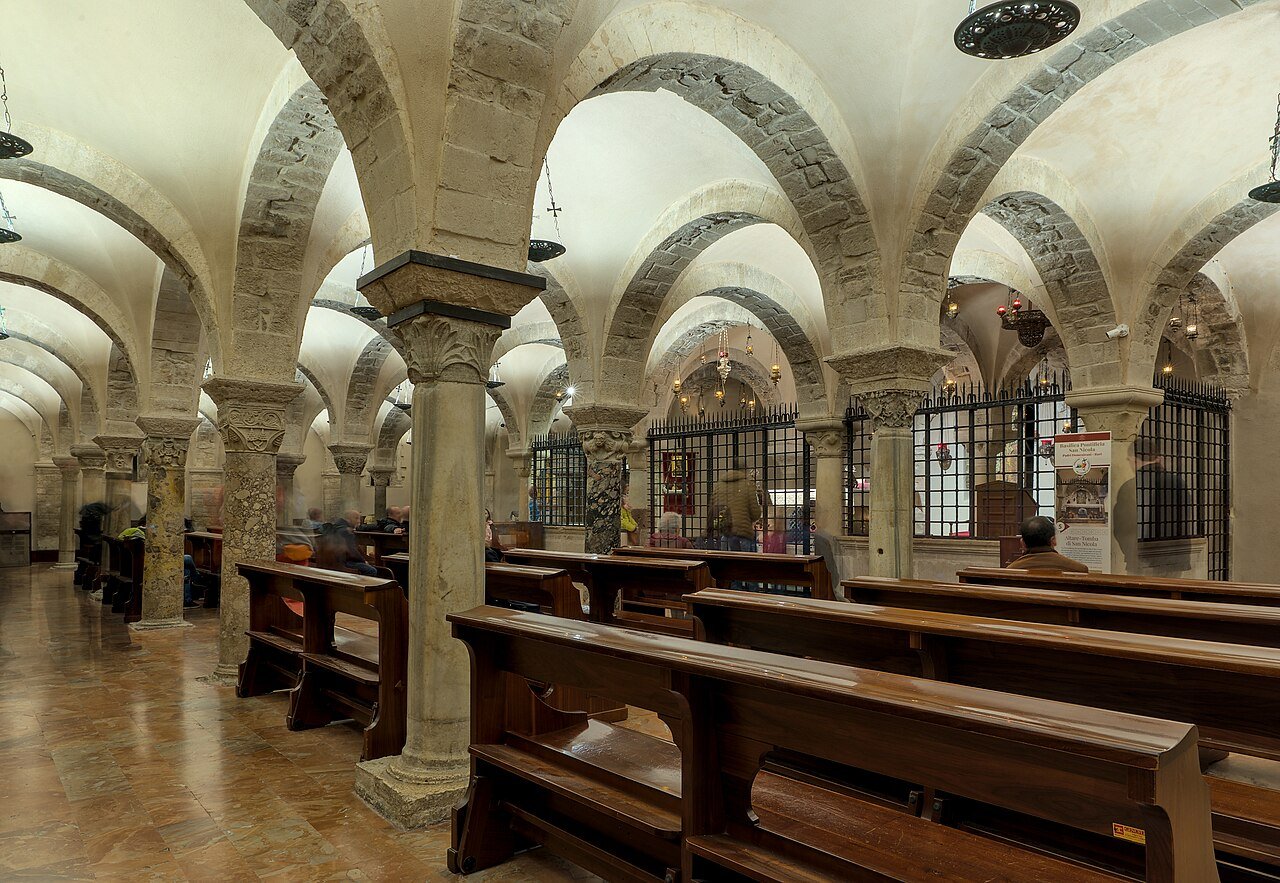
One of the “fruits” of the Havana agreements was the transfer of relics of St. Nicholas from the Basilica of Bari to Moscow and St. Petersburg in May-June 2017:
One of the fruits of the agreements reached in Cuba was an event of the greatest significance for our entire Church: the transfer of the relics of Saint Nicholas of Myra in Lycia from Bari to Moscow and St. Petersburg in May-July 2017. During the stay of the relics in Russia, more than 2 million people venerated them…
— Moscow Patriarchate, “The Internal Life and External Activity of the Russian Church 2009-2019,” https://www.patriarchia.ru/article/99848[4]
The Moscow Patriarchate itself admits that the relics transfer was a “fruit” of the Havana agreements. Over 2.3 million Orthodox Christians venerated relics obtained through ecumenical compromise with Rome.
But it is Patriarch Kirill’s theological explanation of this event that reveals the ecclesiological consequences. At the welcome ceremony in Christ the Savior Cathedral on May 21, 2017, speaking before a Roman Catholic delegation from Bari, Kirill declared:
Сегодня мы еще разделены, поелику богословские проблемы, пришедшие из древности, не дают нам возможности воссоединиться. Тем не менее, как прозревали многие святые люди, если Господу угодно будет соединить всех христиан, то произойдет это не по их усилиям, не благодаря каким-то церковно-дипломатическим шагам, не по каким-то богословским соглашениям, а только если Дух Святый снова соединит всех, кто исповедует Имя Христово. И верим, что святитель Николай, слышащий молитвы христиан Востока и Запада, предстоит пред Господом, в том числе прося у Него соединить Церкви воедино.
Today we are still divided, since theological problems from ancient times do not give us the opportunity to reunite. Nevertheless, as many holy people foresaw, if it pleases the Lord to unite all Christians, this will happen not by their efforts, not through any church-diplomatic steps, not through any theological agreements, but only if the Holy Spirit again unites all who confess the Name of Christ. And we believe that St. Nicholas, who hears the prayers of Christians of East and West, stands before the Lord, including asking Him to unite the Churches into one.
— Patriarch Kirill, address at the reception of St. Nicholas’ relics, Christ the Savior Cathedral, May 21, 2017, https://www.patriarchia.ru/article/98453
“Unite the Churches into one.” Not “bring those who have separated back to the Church,” as the saints teach. “Churches,” plural, implying that both possess ecclesial reality. “Again,” implying that the Holy Spirit once united them and can do so once more, as though the Orthodox Church is merely one half of a broken whole. This is the same branch theory already documented in Chapter 2.
The following day, at an official meeting with the Italian delegation, Kirill called the transfer “a vivid example of our common witness to the Christian faith”:
Вне всякого сомнения, принесение в Россию мощей великого угодника Божия, почитаемого как на Востоке, так и на Западе, является ярким примером нашего общего свидетельства о христианской вере.
Beyond any doubt, the bringing to Russia of the relics of the great man of God, venerated in both East and West, is a vivid example of our common witness to the Christian faith.
— Patriarch Kirill, meeting with the Italian delegation, Christ the Savior Cathedral, May 22, 2017, https://www.patriarchia.ru/article/55312
“Our common witness.” Orthodox and Roman Catholic, witnessing together. The saints teach that Orthodoxy alone witnesses to the fullness of the Christian faith. Kirill teaches that Orthodoxy and Rome share this witness.
On July 28, 2017, the day the relics departed Russia, Kirill delivered a sermon in the Alexander Nevsky Lavra. Speaking before Cardinal Kurt Koch and the Archbishop of Bari, he claimed:
Я вижу в этом, конечно, действие силы Духа Святого, Который привел меня к беседе с Папой Римским в 2016 году, Который, несомненно, одухотворил всех тех, кто в Католической Церкви принимал решение о принесении в Россию мощей святителя Николая.
I see in this, of course, the action of the power of the Holy Spirit, Who led me to conversation with the Pope of Rome in 2016, Who undoubtedly inspired all those in the Catholic Church who made the decision about bringing the relics of St. Nicholas to Russia.
— Patriarch Kirill, sermon on the Day of Baptism of Rus, Troitsky Cathedral, Alexander Nevsky Lavra, July 28, 2017, https://www.patriarchia.ru/article/98631
The Patriarch of Moscow publicly attributes the action of the Holy Spirit to the Roman Catholic Church. The Holy Spirit “undoubtedly inspired” those in the Catholic Church. But St. Nikodemos, compiler of Orthodox canon law, teaches the opposite: heretics have no priesthood, and the rites performed by them are “profane and destitute of grace and sanctification.” If heretics lack the grace of the Holy Spirit, the Holy Spirit does not inspire their institutional decisions. Either St. Nikodemos is wrong, or Patriarch Kirill is.
No Orthodox Christian denies that God, in His sovereignty, can enlighten any individual He chooses, as He did with St. Paul on the road to Damascus. But there is a fundamental difference between God’s sovereign action upon an individual and the claim that the Holy Spirit institutionally acts through a heterodox church. The former is God’s mystery; the latter is an ecclesiological confession that grace resides in heretical institutions. Kirill is making the latter claim.
In the same sermon, Kirill stated the purpose of the entire endeavor:
Думаю, что принесение мощей святителя и чудотворца Николая сделало для примирения Востока и Запада столько, сколько не сделала никакая дипломатия — ни светская, ни церковная.
I think that the bringing of the relics of St. Nicholas has done more for the reconciliation of East and West than any diplomacy, either secular or ecclesiastical.
— Patriarch Kirill, sermon on the Day of Baptism of Rus, Troitsky Cathedral, Alexander Nevsky Lavra, July 28, 2017, https://www.patriarchia.ru/article/98631
The relics of a pre-schism Orthodox saint, kept in a Roman Catholic basilica, transferred through ecumenical agreement with the Pope, and used as a tool for “the reconciliation of East and West.” Not the conversion of the West. Not the return of schismatics to Orthodoxy. Reconciliation: two parties coming together as equals.
The pattern continued.
Accepting More Roman Catholic Relics
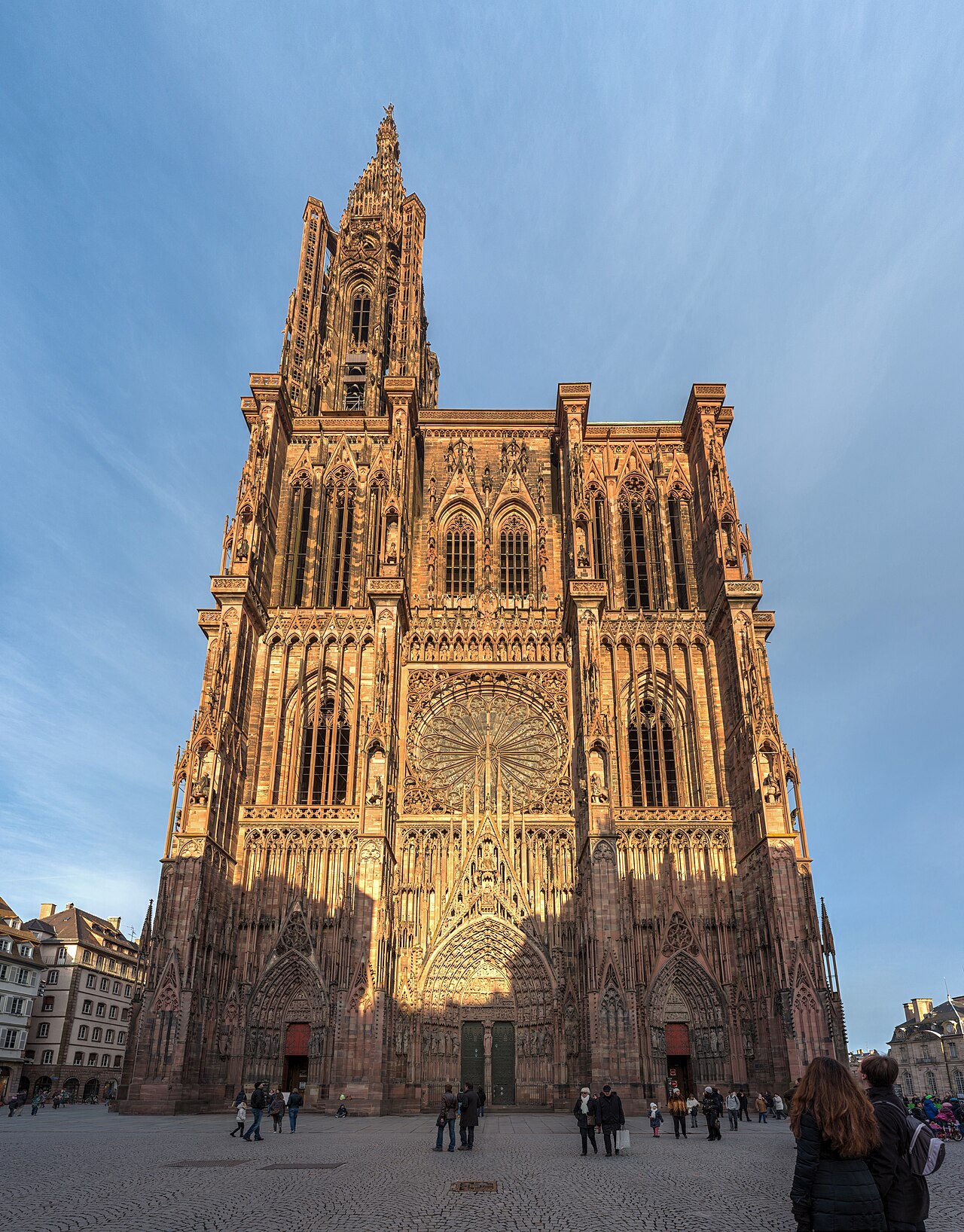
On May 26, 2019, Patriarch Kirill attended a concert at the Roman Catholic Cathedral of Strasbourg, hosted by Archbishop Luc Ravel. In the guest book, Kirill wrote:
Благодарю Его Преосвященство и всех, кто окружил нас теплым гостеприимством, за братский прием, содержательную беседу, свидетельствующую об общности подходов к жизни и свидетельству Церкви в современном обществе. Да благословит Господь христианскую общину Страсбурга.
I thank His Eminence and all who surrounded us with warm hospitality for the fraternal reception, the substantive conversation which testifies to the commonality of approaches to life and the witness of the Church in contemporary society. May the Lord bless the Christian community of Strasbourg.
— Patriarch Kirill, Guest book entry at dinner hosted by Archbishop Luc Ravel, Strasbourg, May 26, 2019. https://mospat.ru/ru/news/46348/
At this event, Archbishop Luc Ravel presented Patriarch Kirill with a relic of Saint Odilia of Alsace (c. 662-720), a pre-schism saint venerated in both East and West.
There is nothing wrong with Orthodox Christians possessing relics of a pre-schism saint, regardless of who previously held them. The issue is what Kirill did to receive them: attending a concert in a Roman Catholic cathedral, writing about “commonality of approaches to life and the witness of the Church,” calling the Roman Catholic community of Strasbourg “Christian,” and accepting the relics as a gesture of inter-church fraternity. The relic is legitimate; the capitulation required to obtain it is not.
C. The Verdict
St. Mark of Ephesus declared the Latins “not only schismatics but heretics.” St. Hilarion Troitsky taught that there is no salvation outside the Church and that the pagan, heretic, and schismatic alike are without grace because they are outside the Church. Fr. Seraphim Rose established that Francis’s sanctity is “unacceptable to Orthodoxy” due to “the loss of grace which follows on separation from the Church of Christ.” St. Justin Popovich called ecumenism “Pan-heresy.”
Patriarch Kirill praises “famous Catholic saints,” accepts relics of Francis of Assisi, declares a Roman Catholic basilica “as holy as Mount Athos,” affirms that “the Catholic Church preserves those evangelical values that the Russian Orthodox Church also preserves,” attributes the Holy Spirit’s action to the Catholic Church, prays for the Holy Spirit to “unite the Churches into one,” and calls the transfer of relics from Rome a tool for “the reconciliation of East and West.”
As Chapter 3 demonstrates: if they have martyrs, they have saints; if they have saints, they have grace; if they have grace, they have valid sacraments; if they have valid sacraments, the distinction between Church and schism is destroyed.
The saints teach that outside the Church there is no salvation and that heretical rites are destitute of grace and sanctification. Patriarch Kirill teaches that the Holy Spirit acts through the Catholic Church, that Roman Catholic saints exist, that Roman Catholic sacred spaces are as holy as Mount Athos, and that Orthodox and Catholic faith constitutes a “common witness.” These positions are irreconcilable.
Patriarch Kirill’s statements exceed even his own institution’s official position. The “Basic Principles of the Attitude of the Russian Orthodox Church to Heterodoxy,” adopted in 2000 under Kirill’s leadership as DECR Chairman, states that the Church “does not assess the extent to which grace-filled life has either been preserved intact or distorted” in non-Orthodox confessions, calling it “a mystery of God’s providence and judgement” (Section 1.17). Kirill does not treat it as a mystery. He treats it as settled: the Holy Spirit “undoubtedly” acts through them, they have “famous saints,” their basilica is “as holy as Athos.” His own institution’s careful agnosticism has been replaced by affirmation.
The ROCOR Anathema Against Ecumenism, proclaimed in 1983 and never formally rescinded, condemns those “who do not distinguish the priesthood and mysteries of the Church from those of the heretics” (for the full text and its history, see Chapter 7). This chapter documents precisely such a failure to distinguish.
Original Greek: “«Ἡμεῖς δὲ αὐτῶν ἐσχίσθημεν πρότερον, μᾶλλον δὲ ἐσχίσαμεν αὐτούς καὶ ἀπεκόψαμεν τοῦ κοινοῦ τῆς Ἐκκλησίας σώματος… Αἱρετικοὶ εἰσίν ἄρα καὶ ὡς αἱρετικοὺς αὐτοὺς ἀπεκόψαμεν.»” ↩
Original Greek: “«Λέγομεν, ὅτι τὸ τῶν Λατίνων βάπτισμα εἶναι ψευδώνυμον βάπτισμα καὶ διὰ τοῦτο, οὔτε κατὰ τὸν λόγον τῆς ἀκριβείας εἶναι δεκτόν, οὔτε κατὰ τὸν λόγον τῆς οἰκονομίας. Δὲν εἶναι δεκτὸν κατὰ τὸν λόγον τῆς ἀκριβείας, α΄. διατὶ εἶναι αἱρετικοί. »” Masterjohn renders
ψευδώνυμον βάπτισμαas “baptism… which falsely is called baptism”; the manuscript preserves the more exact “pseudonymous baptism.” ↩Greek source trail: “οἱ αἱρετικοί ἱερωσύνην δέν ἔχουν, ἄρα καί τά παρ᾿ αὐτῶν ἱερουργούμενα κοινά εἰσι καί χάριτος καί ἁγιασμοῦ ἄμοιρα.” This is quoted as St. Nikodemos, Pedalion, note to Apostolic Canon 68, in
Το σχίσμα του Ζηλωτικού Παλαιοημερολογιτισμού, p. 178. Cf. Fr. George Metallinos, I Confess One Baptism, p. 33: “heretics do not have priesthood, and consequently ‘the rites performed by them are profane and destitute of grace and sanctification.’” ↩Original Russian: “Одним из плодов договоренностей, достигнутых на Кубе, стало событие исключительной важности для всей нашей Церкви — принесение мощей святителя Николая Мирликийского из Бари в Москву и Санкт-Петербург в мае-июле 2017 года. За время пребывания мощей в России им смогли поклониться более 2 миллионов человек…” ↩