
Conclusion
The entire reason for the perdition of sinners today and the entire reason why sin and the Devil have waxed so much in our day, to the point that they reign in the world, is none other than we. For although we see our brothers and sisters sinning openly and committing so many vices, we are not all sedulous to go and correct them, at times with fraternal advice and at times with words of reproof; no, every one of us puts forward a different excuse, and all of us remain silent and leave each person to do those evils that he wishes and desires.
— St. Nikodemos the Hagiorite, Christian Morality, p. 430
The preceding chapters have documented a patriarch’s words and actions, measured them against the consensus of the saints, and let the evidence speak. The record stands. The question now is what the faithful will do with it.
A brief recap
Patriarch Kirill exchanged the Kiss of Peace with the Pope of Rome, breaking a thousand years of Orthodox witness (Chapter 1). He signed a joint declaration in Havana that recognized Roman Catholic sacraments and ecclesiology (Chapter 2; Chapter 3). In his official condolences for Pope Francis, he declared “Memory Eternal”, the prayer reserved exclusively for Orthodox Christians (Chapter 4). He declared that Orthodox and Muslims “pray to one and the same God” (Chapter 5). He venerated Roman Catholic relics and sacred spaces as though they belonged to the Orthodox Church (Chapter 6). He deepened Moscow’s membership in the World Council of Churches and called it “the cradle” of the ecumenical movement (Chapter 7). He prayed with Monophysite clergy who deny the two natures of Christ (Chapter 8).
He glorified Metropolitan Sergius, whose 1927 Declaration subordinated the Church to the Soviet state, as “a confessor of the faith” (Chapter 9). He proclaimed Eternal Memory for Patriarch Sergius, condemned by the Russian hierarchs abroad (Chapter 10). He embraced Fidel Castro, the persecutor of Cuban Christians (Chapter 11). He denied the witness of the Ottoman-era neomartyrs (Chapter 12). His Department for External Church Relations was staffed by documented KGB agents who used the Church as an instrument of Soviet foreign policy (Chapter 13).
He built a theology of sacred nationhood around the “Russian World” concept, condemned as ethnophyletism (the elevation of national identity to a principle of Church organization) by the Council of Constantinople in 1872 (Chapter 15; Chapter 16). He taught that death in battle on behalf of Russia “washes away all sins” (Chapter 17; Chapter 18). He blessed the invasion of Ukraine, a Christian nation, and ordered war prayers read from every pulpit (Chapter 23; Chapter 20). Priests were defrocked for refusing. A hieromonk was imprisoned for condemning the invasion (Chapter 22). His own Ukrainian Orthodox Church, the largest in his canonical jurisdiction, voted in council to cease his commemoration (Chapter 29).
He approved the Holy Eucharist being administered with disposable spoons, the antimension (the consecrated cloth on which the Eucharist is celebrated) removed, and churches closed, treating the Body and Blood of Christ as a vector of disease (Chapter 32; Chapter 33).
Every one of these facts has been documented in the previous chapters. Most of the direct words come from patriarchia.ru, the Moscow Patriarchate’s own website, in their original Russian language. Patriarch Kirill’s own words, translated with the original text preserved.
The photographs, videos, and documents are timestamped and sourced. The canons cited are the explicit legislation of the Ecumenical Councils. The patristic witness spans every era, from St. John Chrysostom to St. Paisios the Athonite, from St. Maximus the Confessor to the New Martyrs of Russia. Even our Russian saints condemn what the Russian patriarch has done.
The Verdict
This is not simply one error. This is not simply an isolated lapse correctable by a clarification or a retraction. Across ecumenism, universalism, Sergianism, nationalism, war theology, and sacramental abuse, the same patriarch has contradicted the same consensus of the saints: in public, repeatedly, and even enforced compliance through the defrocking of clergymen and imprisonment of anyone who goes against him.
The fathers did not treat such issues as a matter of opinion or jurisdictional politics. They treated them as heresy, each one warranting condemnation in its own right.
This book has presented a patriarch’s own words, and measured them against the fathers. The standard applied here is the same standard applied to every clergyman and hierarch in every jurisdiction, which is the consensus of the saints. If that consensus condemns, the condemnation comes strictly from the fathers and saints.
The Response
All the common defenses employed by defenders of Patriarch Kirill have been outlined, and all have been thoroughly answered.
You have no right to judge a patriarch.
The saints commanded it (Chapter 35). St. Paisios taught that every person has the right to speak, regardless of rank. St. John Chrysostom taught that in the discussion of truth, the dignity of persons is not to be considered. Metropolitan Augoustinos taught that when a hierarch deviates from Orthodoxy, the populace must protest. The right to speak was never in question. The obligation to speak was.
“This requires a synod. You cannot act before a synodal judgment.”
The fathers never taught that the faithful must wait in communion with heresy until a synod convenes (Chapter 25). Canon 15 of the First-Second Council addresses this directly (Chapter 24), and every Ecumenical Council that condemned a patriarch did so after the faithful had already separated.
“This is anti-Russian propaganda.”
The primary source for this book is patriarchia.ru. The witnesses include Russian saints: St. Philaret of New York, St. John of Shanghai, the New Martyrs who died resisting the very Sergianism that Patriarch Kirill now glorifies (Chapter 31). Russian saints condemn what the Russian patriarch has done. The accusation of anti-Russian bias does not survive contact with the Russian saints themselves.
“You’re not a saint. Who are you to correct a patriarch?”
St. Symeon the New Theologian was not a bishop when he taught. St. Maximus the Confessor was a monk, not a patriarch, when he stood alone against every see. Eusebius of Dorylaeum was a layman and a lawyer when he stood up during Nestorius’s own sermon and publicly refuted him. The Council of Ephesus vindicated his judgment. None of these men waited for sanctity before they confessed the faith nor did they prescribe this methodology to others. (Chapter 27).
“Keep it private. Tell him his fault between you and him alone.”
The fathers distinguished between private sin and public heresy fifteen centuries ago (Chapter 35). St. Augustine, St. John Chrysostom, and the Ecumenical Councils applied the distinction without exception. Patriarch Kirill did not keep anything private. He published his teaching on his own website and enforced it by defrocking and imprisonment. Persistent and brazen public contradiction of the Orthodox Faith requires public correction.
“You are causing division.”
St. Maximus the Confessor was told the same thing at his trial. He answered that the words of sacred Scriptures and the holy fathers do not tear apart the Church (Chapter 30). The accusation that public correction causes division is the mirror image of the demand for silence: first they say “keep it private,” and when you speak anyway, they say “you are dividing us.”
“What does Kirill’s heresy have to do with me? I’m not in the Moscow Patriarchate.”
Communion is not jurisdictional. ROCOR entered full communion with the Moscow Patriarchate in 2007. Those who commemorate Kirill, or commemorate a bishop who commemorates Kirill, are in communion with everything documented in this book. Chapter 34 documents how this communion chain operates through ROCOR’s Act of Canonical Communion with Moscow.
“You apply the standard selectively. Other patriarchs have done similar things.”
Then let it be applied to every single patriarch who does the same.
This book focuses on Patriarch Kirill because his errors prop up an unjust war in which Orthodox Christians are dying and being tortured. Many who raise this objection do so to excuse their own indifference. Those who accepted the Havana Declaration while rejecting the Council of Crete for lesser offenses have already demonstrated which standard they follow (Chapter 3).
These are not the defenses of Patriarch Kirill. He has not defended himself against the patristic witness, because the patristic witness does not permit a defense. These are the defenses of the faithful who remain in communion with him. This book addressed them because this book was never written for Patriarch Kirill. He knows what he said. He published it. He enforced it. There is nothing left to say about him.
This book is not only about a patriarch. It is about those who watch their Orthodox faith be dismantled and say nothing. Who know what the fathers teach, who can distinguish right from wrong, and who choose silence anyway, because silence costs nothing and confession costs everything.
This book was written for you.
Your Silence
It is not right for you to quarrel on your own behalf. It is, of course, another matter if you react to defend serious spiritual matters, matters that relate to our faith, to Orthodoxy. You have a responsibility to do this.
— St. Paisios the Athonite, Spiritual Counsels, Vol. 2: Spiritual Awakening, pp. 59-60
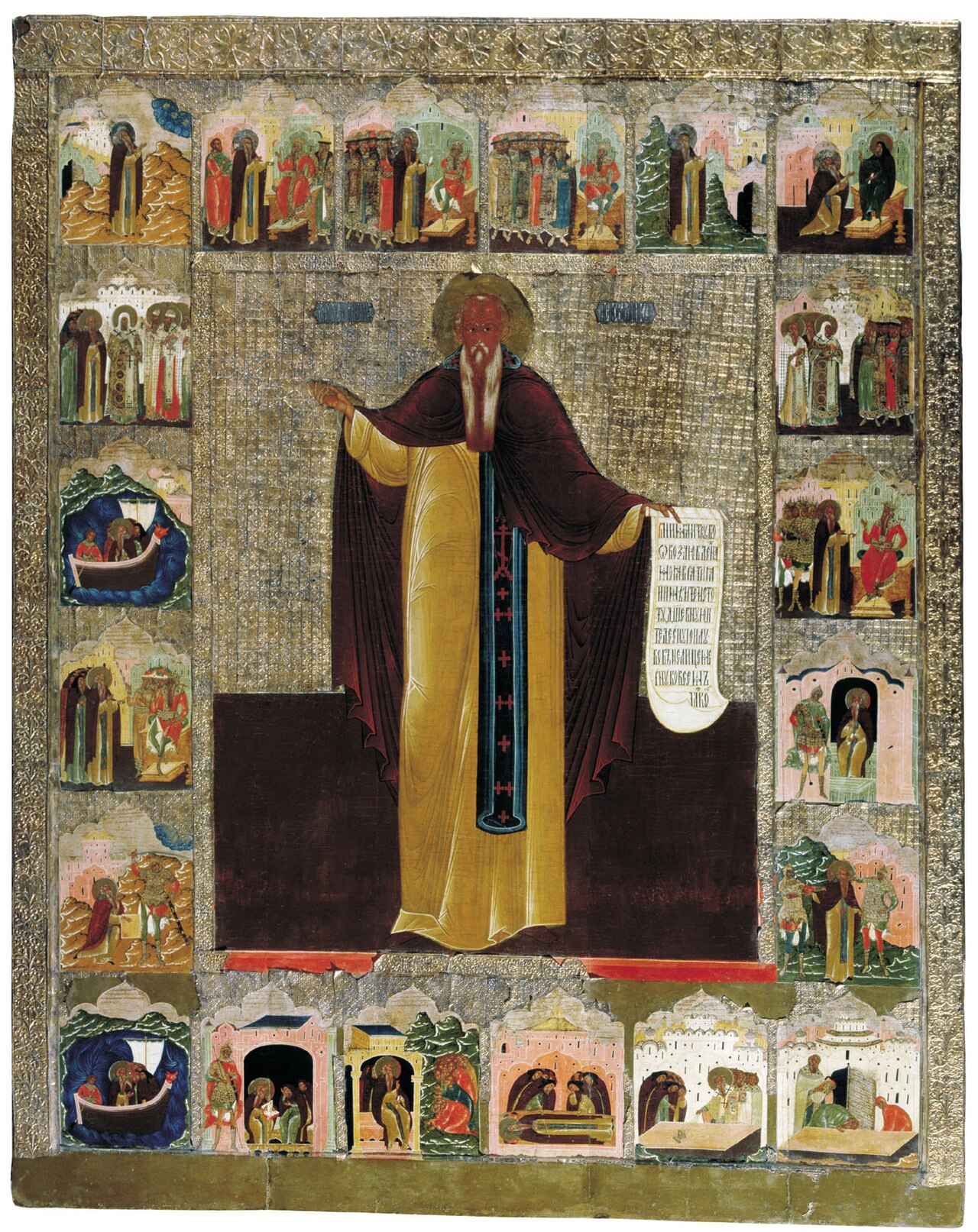
The words that open this chapter were written over two centuries ago. St. Nikodemos the Hagiorite was not describing a hypothetical future. He was describing you.
“Every one of us puts forward a different excuse,” says St. Nikodemos the Hagiorite.
Some say: I am not a theologian. Some say: the bishops will handle it. Some say: I don’t want to cause division. Some say: it is not my jurisdiction. Some say: I will pray about it. Every one of these is an excuse Nikodemos describes. Every one leads to the same place: “all of us remain silent and leave each person to do those evils that he wishes and desires.”
St. Nikodemos the Hagiorite confronted these excuses directly in his Christian Morality:
Why, my brother Christian, whatever station or rank you possess, do you excuse yourself by saying, “I am not a teacher, and for this reason am not under any obligation to edify and counsel my brother into salvation”? Do you hear? The divine Paul says, “edify and correct one another.” For teachers alone, owing to their scarcity, are not sufficient to admonish and correct all Christians. Rather, each Christian needs to admonish and advise his brother, with humility and love, as to what is advantageous and salvific.
— St. Nikodemos the Hagiorite, Christian Morality, commentary on 1 Thessalonians 5:11 (p. 424)
The entire reason. Nikodemos does not say a contributing factor, or a partial cause, or one variable among many. He says the entire reason. He places the blame on the one who saw and said nothing.
St. Basil the Great names the pretense that keeps the silent comfortable:
To display feigned kindness to the wicked is a betrayal of the truth, a detriment to the community, and a habituation to indifference towards evils.
— St. Basil the Great, Long Rules, Resp. 28 (PG 31:989A)
The kindness that tolerates heresy in order to preserve relationships is feigned. It betrays the truth. It habituates the community to indifference. St. Basil does not credit it as charity.
The heartless person is he who keeps silent, not he who reproves, just as he who leaves poison in one who has been bitten is heartless, not he who removes it.
— St. Basil the Great, Short Rules, Resp. 4 (PG 31:1084C-1085A)[1]
The one who reproves is not cruel. The one who stays silent while the poison spreads is cruel.
Papa-Dimitri Gagastathis, a humble parish priest of Platanos, Thessaly, acknowledged both the cost and the necessity:
I think I have grieved them a little, but truth is bitter and it must necessarily be revealed for the benefit and salvation of their souls.
— Papa-Dimitri Gagastathis, “On Truth,” Papa-Dimitri: The Man of God (Orthodox Witness, 2009), p. 98
The one who tells the truth knowing it will grieve others, speaks anyway, because silence would be the greater cruelty.
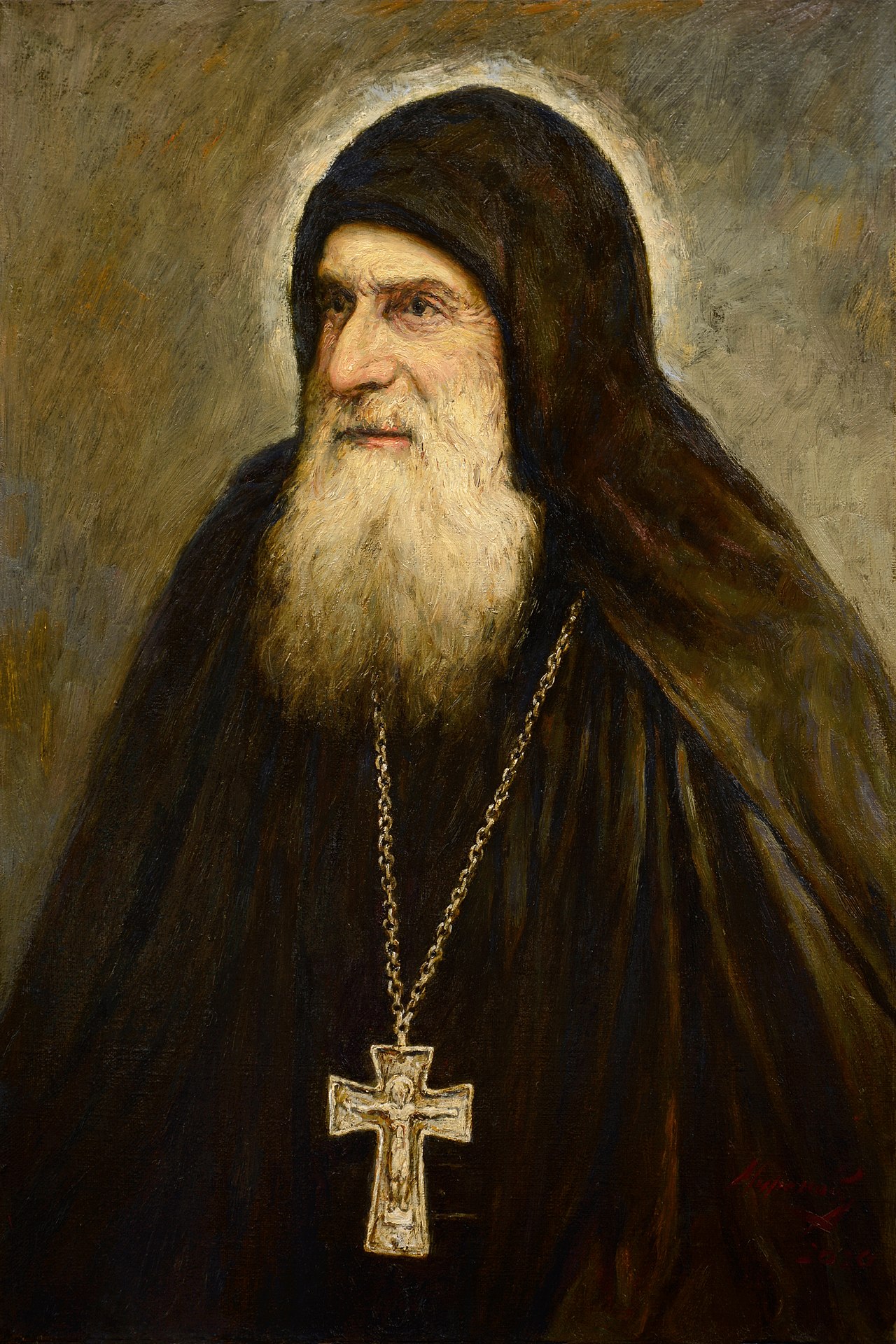
There is a widespread folk saying: “Ignorance is not a sin.” This is incorrect; the sin is merely lessened. We will answer fully for all our actions.
— St. Gabriel (Urgebadze) of Georgia, Great Art Thou, O Lord!, p. 180
We will answer fully for our ignorance. Not partially. Not in proportion to how much we knew. Fully. The one who did not know is not excused; the sin is merely lessened.
And after reading this book, no one can claim ignorance, or attempt to encourage others in this ignorance. The evidence is published on patriarchia.ru. The patristic witness is in print, in the public domain, in the libraries of every Orthodox monastery. None of this is secret. None of this requires special access or theological training. It requires only the willingness and desire to look.
Silence in the face of heresy is a missing of the mark (). Attendance without protest is a missing of the mark. Commemoration without examination is a missing of the mark (Chapter 26). Each one is a capitulation, whether it feels like one or not.
Many priests recite the victory prayer mandated by Patriarch Kirill at Liturgy and say nothing. Many bishops commemorate Patriarch Kirill by name and say nothing. Many lay people hear the name of Patriarch Kirill commemorated and are not disturbed, so long as they can have Holy Communion. The dead children at Kramatorsk, the executed civilians in Bucha, the priests imprisoned for praying for peace (Chapter 23): this is what their silence requires them not to see.
St. Nikodemos states the canonical consequence without qualification. His remedy, reporting to one’s hierarch, addresses the ordinary case. When the offender is the patriarch himself, the canonical procedure changes, as established in Chapter 24. But the condemnation of silence does not:
Whichever of you Christians, knowing that his brother is sinning or is going to sin, and does not either go in person to offer him fraternal counsel so as to deter him from sinning, or, failing that, disclose it discreetly to his Hierarch, Priest, or spiritual Father, so that he might counsel him and hinder him from sinning, but keeps silent, let such a person know that he likewise has the same sin and is liable to the same penitential discipline.
— St. Nikodemos the Hagiorite, Christian Morality, Discourse XI, pp. 430-431
The same sin. The same penitential discipline. Lesser, derivative, weighed differently on the scales: none of these qualifications appear. Identical to the sin of the one who committed it. The absence of a superior to report to for Kirill does not lift the condemnation; it intensifies the obligation on every Christian who sees and knows.
St. Basil’s Seventy-first Canon states the rule in canonical form: those who know of sin and remain silent receive the same penance as the sinner himself, whether the sin be fornication, adultery, or murder.[2]
St. Basil identifies a third kind of participation in sin that “eludes most people”: not cooperating with the sinner, not agreeing with his intent, but simply being aware of his sin and remaining silent. This is the participation of the comfortable, the prudent, and the well-intentioned.
All Christians are bound to keep and carry out all of Christ’s commandments: all Christians, both clergy and laity, both men and women, both young and old, both monastics and seculars, both unimportant and important, both poor and rich, both private citizens and rulers, both kings and Patriarchs, and, quite simply, all people of every station and rank, without any exceptions.
— St. Nikodemos the Hagiorite, Christian Morality, Discourse XIII, p. 519
The tolerance of the majority
There is a persistent, cross-generational refusal to read the fathers. Every heresy in Church history survived because people chose not to examine the patristic teaching that condemned it. The defense is always the same: “I trust my bishop. The Church will sort it out.”
The Church sorts it out through Synods. Synods are composed of bishops. Bishops are formed by the faithful. The faithful are formed by the fathers. If the faithful do not read the fathers, they cannot recognize heresy. If they cannot recognize it, they cannot resist it, and then neither can the bishop nor the church, who come from this same faithful.
St. Athanasius watched this happen. When the first Ecumenical Council gathered at Nicaea, three hundred and eighteen bishops assembled, but the Synaxaristes records that between those who had rallied around Alexander in formal opposition to the Arians and the hardened Arians themselves sat the great majority: bishops who “only desired that they might deliver the Faith to their successors as they received it at holy Baptism,” who “either failed to grasp the nature of this cancer which attacked the body of the Church, or else held to the view of the need for an adequate test if it were to be banished.”
In other words, Orthodox in instinct, unwilling to confront. The Arians (heretics) needed nothing more than their tolerance. And this is the same tolerance that describes the faithful.
St. Athanasius was not tolerant. He spoke, and he was exiled five times for it. While the empire rewarded compromise, he defended the faith. When their silence had done its work and the Arians held nearly every see, he wrote an encyclical to the bishops throughout the world, calling them to defend the faithful who had been abandoned to heretics:
Bestir yourselves, brethren, as being stewards of the Mysteries of God and seeing them now seized upon by others.
— St. Athanasius the Great, Encyclical Epistle, Alexandria (339)[3]
What will we be asked?
Those who have looked away will be asked, eventually, what they knew and when they knew it. The priests who read the war prayers from the pulpit without protest. The faithful who attended and stood and received. The bishops who saw and calculated and waited. The monastics who prayed and kept silent. The theologians who understood and published nothing. Each will be asked, and “I trust my bishop” will not be a sufficient answer, because the fathers have never taught that it was (Chapter 33; Chapter 25).
The saints have spoken. But this is not only the teaching of the saints. God Himself told the Prophet Ezekiel what He requires of those who see and say nothing:
Son of Man, I have made thee a watchman to the House of Israel; and thou shalt hear a word of My mouth, and shalt threaten them from me. When I say to the transgressor, Thou shalt surely die; and thou hast not warned him… to turn from his ways, that he should live; that transgressor shall die in his iniquity; but his blood will I require at thy hand.
— Ezekiel 3:17-18[4]
This is not a saint saying silence is unwise. This is God speaking directly: the blood of those who transgressed, if you stay silent, will be required at your hand.
Archbishop Averky (Taushev), fourth abbot of Holy Trinity Monastery in Jordanville, formed generations of ROCOR clergy and faithful. (Was he anti-Russian too?) He was born in the Russian Empire, driven into exile by the Revolution, and spent his life preserving the faith that the Soviet-controlled Moscow Patriarchate had betrayed. Thus, he did not write words for academics or for polemicists. And these words he wrote, he wrote for every baptized Christian who has ever watched evil spread and decided it was someone else’s problem.
Such people completely ignore the whole series of places in Holy Scripture where it is clearly spoken of the necessity to take decisive measures for the suppression of evil that has impudently raised its head in human society. Christ Himself, the Humble Teacher of Love, took up a whip and drove out those selling in the temple and turned over the moneychangers’ tables and scattered their money.
— Archbishop Averky (Taushev), The Struggle for Virtue (Holy Trinity Publications, 2014), Chapter 8: “Resisting Evil,” p. 104
And if Christ Himself took up a whip against evil that had defiled the sacred, Archbishop Averky poses the question every Christian eventually faces: what, then, must the Christian do when admonishment and gentle persuasion have failed?
When a gentle word of persuasion has no effect, when people are so steeped in evil that they do not yield to any admonishment and continue doing evil, a Christian cannot and should not take refuge in this teaching of the forgiveness of all, sit indifferently with his arms crossed, and apathetically watch as evil abuses good, as it increases and destroys people, his close ones. To indifferently watch the ruin of a close one by one who has lost his senses and become a bearer of evil is nothing other than the breaking of the commandment of love for one’s neighbor.
— Archbishop Averky (Taushev), The Struggle for Virtue (Holy Trinity Publications, 2014), Chapter 8: “Resisting Evil,” p. 104
It is not necessarily the obvious sins such as malice, heresy, and active collaboration with evil that besets us. These times are marked by the more subtle lack of love. Indifference. The quiet decision not to look, not to read, not to speak, not to risk, while the faith is attacked, and while people suffer. The comfortable conclusion that someone else will handle it.
Archbishop Averky does not call this prudence or humility or obedience. He calls it what it is: the breaking of the commandment of love for one’s neighbor, on which, together with love of God, “hang all the Law and the Prophets” (Matthew 22:39-40).
These are also the words of the golden mouth.
Genuine love is shown not by the sharing of a common table, neither with lofty words, nor flattery, but by the correction and the seeking of the good of one’s neighbor.
— St. John Chrysostom, Homilies on the Psalms (PG 54:623)
The love that keeps quiet in order to keep the peace is not the love St. John Chrysostom describes. The love that refuses to examine a patriarch’s words against the fathers because the examination might be painful is not love. It is the indifference that Archbishop Averky condemns, dressed in the language of charity.
The exhaustive evidence has been presented. The fathers have spoken. It would be easy to simply conclude that all of this has been misunderstood, that the saints would not be concerned with any of this, that somehow the patristic witness does not apply here. The evidence does not permit that conclusion.
Undoubtedly, those who concern themselves with the contents of this book will be warned to renounce such curiosities. They may be told to simply go to church, pray to God, and keep the commandments, and that this is enough.
But as St. Seraphim of Sarov once said: do these persons speak as they should?
They have said to you: ‘Go to church, pray to God, keep the commandments of God, do good—that is the aim of the Christian life.’ Some were even indignant with you for being occupied with profane curiosity and said to you: ‘Do not seek things that are beyond you.’ But they did not speak as they should.
— St. Seraphim of Sarov, Conversation with Motovilov, §§5-6
Original Greek: “ἄσπαλγχνός ἐστιν ὁ ἐρησυχάζων, οὐχ ὁ ἐλέγχων· ὥσπερ ὁ τὸν ἰὸν ἐναφεὶς τῷ δηχθέντι ὑπὸ ἰοβόλου, οὐχ ὁ ἐξάγων.” ↩
St. Basil the Great, Canon 71: “As for one who has been aware of their having committed any of the aforesaid sins, and has failed to confess it, but they have been detected or exposed, and convicted of it, he shall do the same time that is done by the perpetrator of the evils, and he himself shall be subject to the same penalty.” The Rudder (Πηδάλιον), trans. D. Cummings (Orthodox Christian Educational Society, 1957), p. 843. ↩
The Great Synaxaristes of the Orthodox Church, trans. Holy Apostles Convent, Vol. 1 (January), pp. 583-584, 622-623. The Synaxaristes describes the “middle party” at Nicaea as bishops “who only desired that they might deliver the Faith to their successors as they received it at holy Baptism” but who “either failed to grasp the nature of this cancer which attacked the body of the Church, or else held to the view of the need for an adequate test if it were to be banished.” On the emperor’s priorities, it notes that “Saint Athanasios deemed the emperor’s course of action as serving political peace and cohesion, instead of proclaiming the truth and the Faith.” ↩
Original Greek: “Υἱὲ ἀνθρώπου, σκοπὸν δέδωκά σε τῷ οἴκῳ Ισραηλ, καὶ ἀκούσῃ ἐκ στόματός μου λόγον καὶ διαπειλήσῃ αὐτοῖς παρ’ ἐμοῦ. ἐν τῷ λέγειν με τῷ ἀνόμῳ Θανάτῳ θανατωθήσῃ, καὶ οὐ διεστείλω αὐτῷ οὐδὲ ἐλάλησας τοῦ διαστείλασθαι τῷ ἀνόμῳ ἀποστρέψαι ἀπὸ τῶν ὁδῶν αὐτοῦ τοῦ ζῆσαι αὐτόν, ὁ ἄνομος ἐκεῖνος τῇ ἀδικίᾳ αὐτοῦ ἀποθανεῖται, καὶ τὸ αἷμα αὐτοῦ ἐκ χειρός σου ἐκζητήσω.” ↩