
The Saints Who Ceased Commemoration
This is the first of four chapters comprising Part VI: The Case for Cessation. This chapter establishes, through fifteen patristic witnesses and six cases of lay action, that cessation of commemoration is canonically permitted before any synodal condemnation.
- Chapter 25 examines what heresy is, how it is defined, and what this means for ROCOR.
- Chapter 26 addresses why communion with heresy requires separation.
- Chapter 27 answers the major objections.
In 1930, Metropolitan Sergius issued a decree that has echoed through Orthodox debates ever since. It claimed that no one may cease commemorating a hierarch unless a council has already condemned him.
Is this claim false? Our Holy Canons and saints have much to say to clarify this for us.
The previous chapters documented Patriarch Kirill’s public teaching and actions. This chapter presents the canonical and patristic justification for cessation of commemoration. The canonical Ukrainian Orthodox Church (documented in the next part) followed the fathers and saints in ceasing commemoration.
The cessation of commemoration of Metropolitan Sergius
On December 17, 1930, Metropolitan Sergius and the Sergian Synod put forth the following decree:
The canons of our Holy Church justify a break with one’s lawful bishop or Patriarch only in one case: when he has already been condemned by a Council or when he begins to preach a known heresy which has also been condemned by a Council.
— Metropolitan Sergius and the Sergian Synod, Decree of December 17, 1930
This decree was a response to multiple hierarchs who in 1927 to early 1928 refused to commemorate Metropolitan Sergius, on account of him betraying the Church by capitulating to the Soviet Union and Communism.[1]
All of the Russian New Martyrs such as Metropolitan Joseph of Petrograd were later canonized by ROCOR as an affirmation of their holiness and their struggle, while Metropolitan Sergius was not canonized, not even by the Moscow Patriarchate over which Patriarch Kirill currently presides (at least not yet, though they are desperately trying).
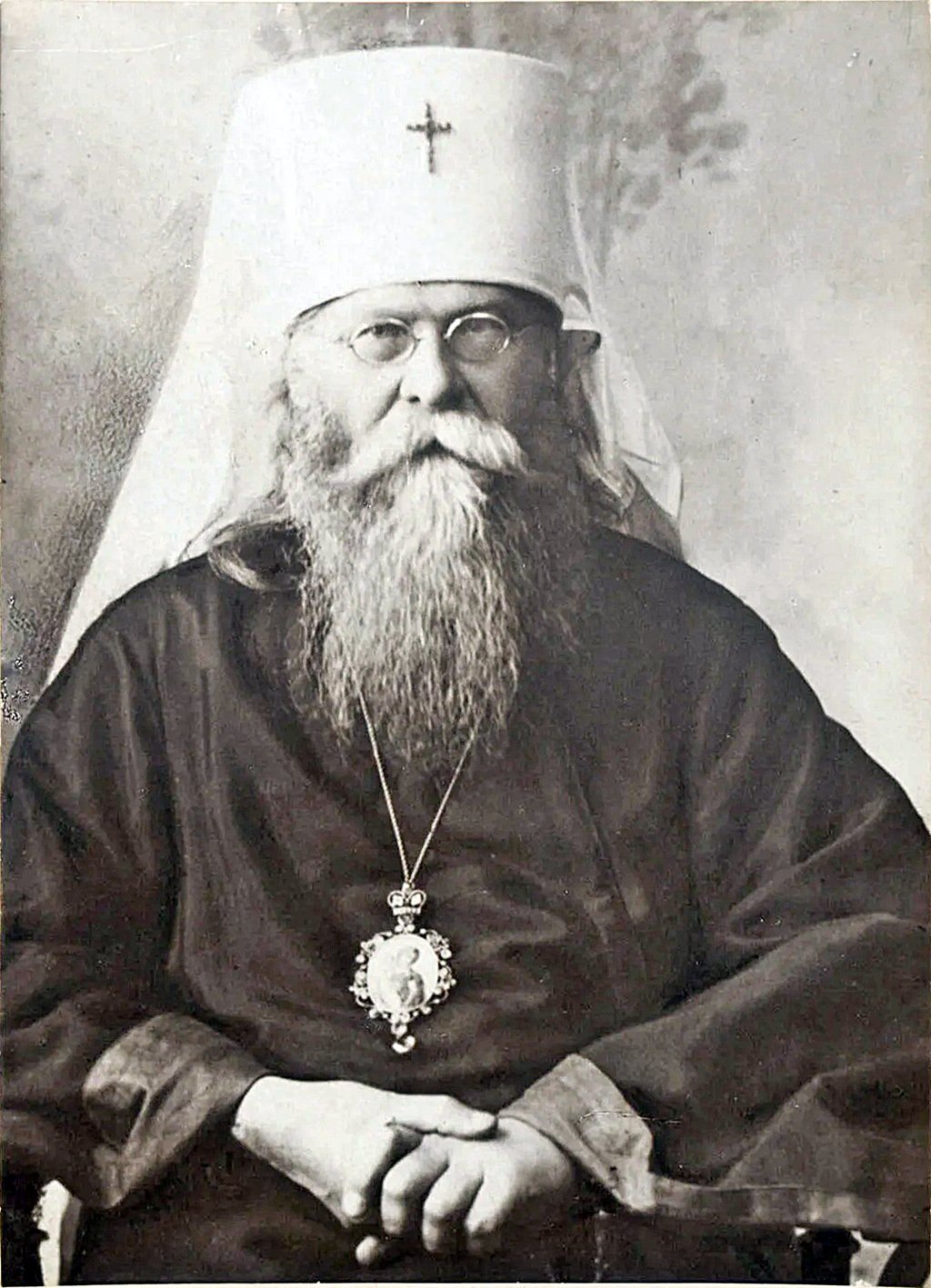
This decree presents an opportunity for learning and reflection. Many in our own time claim that Canon 15 of the 1st & 2nd Synod of Constantinople cannot be invoked because the particular bishop and his errant teaching have not been formally condemned by a synod.
This is the exact argument Metropolitan Sergius and the Sergian Synod made. And it was not a one-time decree. Sixty years later, the Moscow Patriarchate’s Bishops’ Council restated it at the conciliar level. In 1990, responding to ROCOR’s demand that the Moscow Patriarchate renounce the 1927 Declaration, the council declared:
With all definiteness we are obliged to emphasize that the 1927 Declaration contains nothing that would be contrary to the Word of God, that would contain heresy, and thus would give grounds for departing from the organ of church governance that accepted it.
— “Appeal of the Council of Bishops to the Archpastors, Pastors, and All Faithful Children of the Russian Orthodox Church,” 1990. https://www.patriarchia.ru/article/99601[2]
This is Sergius’s 1930 argument elevated to conciliar authority: the Declaration was not heresy, therefore no one had canonical grounds to separate.
We can clearly see then that the saints who separated, who were tortured and shot for refusing the Declaration, are supposedly overruled by the council that inherited Sergius’s institutional legacy. The “wait for a council” argument is active institutional policy, deployed by the very institution whose heresy is in question.[3]
And yet we already understand this to be wrong by the position of the Russian New Martyrs, and their subsequent glorification. ROCOR canonized these saints in 1981. Remarkably, the Moscow Patriarchate itself canonized Metropolitan Cyril of Kazan at its Jubilee Council in 2000, the very hierarch who broke communion with Sergius and whose epistles (quoted later in this chapter) provide the definitive framework for cessation of commemoration. Yet the Patriarchate has never canonized Metropolitan Joseph of Petrograd, the leader of the Josephite movement, and continues to glorify Metropolitan Sergius himself as “the savior of the Russian Church” (as documented in Chapter 9). The institution that canonized Cyril, who refused Sergius, simultaneously glorifies the man Cyril refused. It venerates the resistance and the capitulation at the same time, as though both were faithful. This is a contradiction.
The Church overwhelmingly agreed with the interpretation of the Russian New Martyrs and not Metropolitan Sergius.
Therefore, those who hold a similar position today that we cannot cease commemoration before a formal council, then, have repeated Metropolitan Sergius’ error.
What commemoration actually means
Before examining the patristic witnesses to cessation of commemoration, we must understand what commemoration means liturgically.
Commemoration in the liturgical sense
Commemoration is declaration of Eucharistic communion.
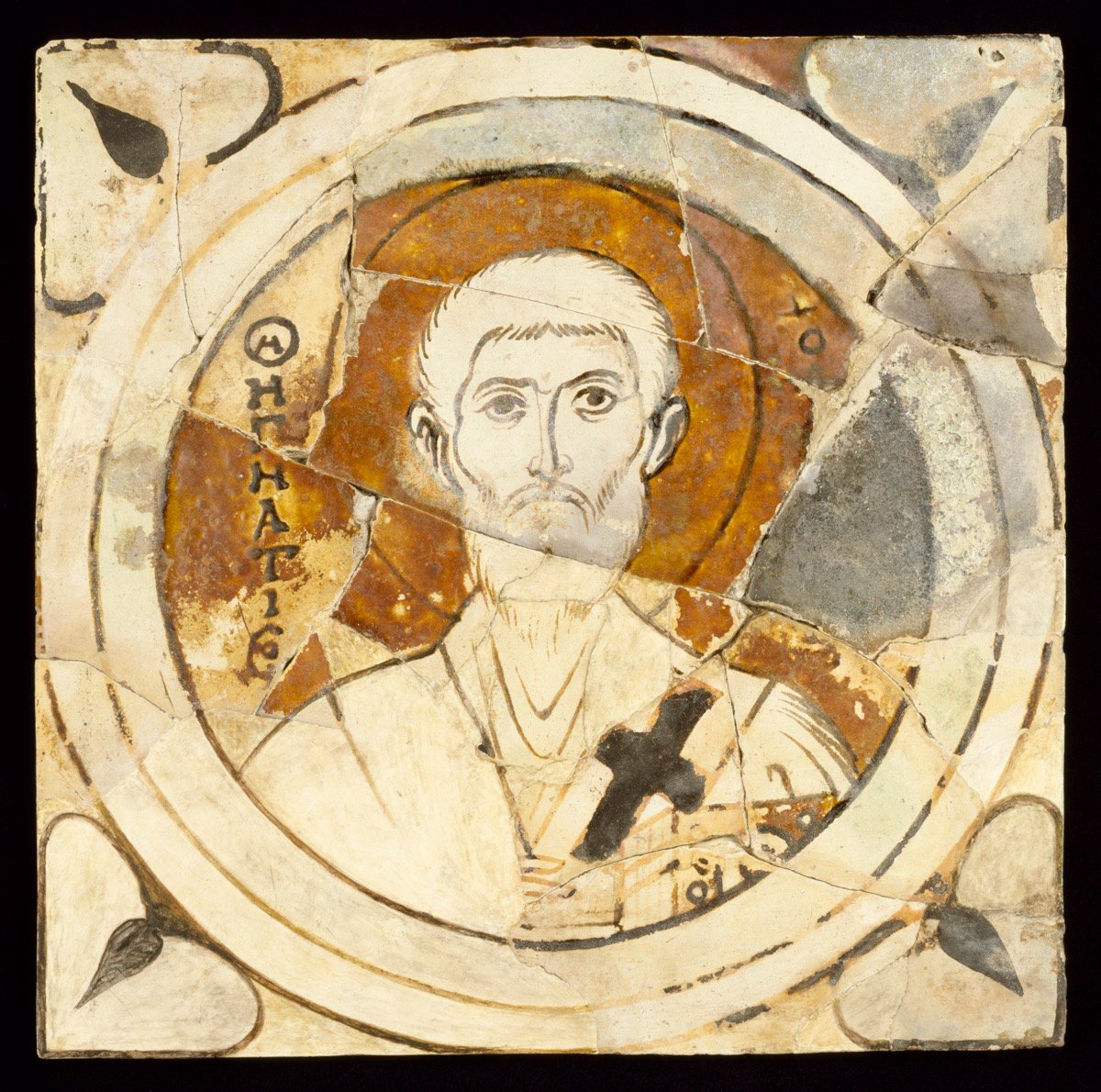
The bishop whose name is commemorated in the Liturgy is the one through whom the local church is united to the whole Body of Christ. St. Ignatius the God-bearer, a disciple of the Apostles and martyr, articulated this clearly:
Take great care to keep one Eucharist. For there is one flesh of our Lord Jesus Christ and one Cup to unite us by His blood; one sanctuary, as there is one bishop, together with the presbytery and the deacons, my fellow servants. Thus all your acts may be done accordingly to God’s will.
— St. Ignatius the God-bearer, To the Philadelphians iv, cited in Fr. Emmanuel Hatzidakis, The Heavenly Banquet, p. 84
The Diptychs, the liturgical lists of bishops commemorated, are a visible sign of the unity of the Church. They reveal which churches maintain canonical ties and Eucharistic communion with one another. To strike a bishop’s name from the Diptychs is to break communion with that bishop and all who commune with him.[4]
Commemoration is a sacramental act, far more than a sign of unity. At the Proskomide (the preparation of the Eucharistic elements before the Liturgy), the priest cuts a particle from the prosphora for each person commemorated and places it near the Lamb. St. Symeon of Thessalonica explains what happens next:
Because it is placed near the eucharistic Bread, when that becomes the Body of Christ in the course of the Liturgy, the particle too is immediately sanctified. And when it is placed in the Chalice, it is united with the holy Blood. That is why it transmits divine grace to the soul of the one for whom it is offered. So a spiritual communion takes place between that person and Christ.
— St. Symeon of Thessalonica, On the Sacred Temple 103, PG 155:748D-749A
St. Symeon also teaches that the same sacramental mechanism operates in reverse for the unworthy:
While an offering on behalf of those making it worthily can be quite beneficial, one made on behalf of unworthy persons can be equally disastrous and harmful… The priest should observe closely, so as not to receive an offering from anyone who wishes to present one, and should not make any on behalf of those who sin without any shame, so as not to be condemned along with them.
— St. Symeon of Thessalonica, cited in St. Paisius Velichkovsky, Starets Paisii Velichkovskii (Platina, CA: St. Herman Press, 1994), pp. 248-249
The priest who commemorates the unworthy is “condemned along with them.” St. Paisius Velichkovsky, commenting on this teaching, concluded: “Whoever dares to commemorate such people shall give an awesome answer for it before Christ God on the day of His Awesome Judgment” (p. 249).
To commemorate a bishop is to place that bishop in spiritual communion with Christ through the Eucharistic sacrifice.
St. Dionysius the Areopagite explains why names are read at the altar:
Of course you should note that even though these names are found in blessed commemorative lists, this is not because godly reminders, unlike reminders to ourselves, have need of commemorative imagery. The intention, rather, is somehow to convey in a fitting manner that God honors and knows forever those whose perfection has been achieved through conformity to Him. As Scripture says, “He knows those who are His” [2 Tim. 2:19] and “precious in the sight of the Lord is the death of His pious ones” [Ps. 114 (116):16]… It is while there are placed on the divine altar the reverend symbols by which Christ is signaled and partaken that one simultaneously reads out the names of the Saints. It is made clear in this way that they are unshakably bound to Him in a sacred and transcendent union.
— St. Dionysius the Areopagite, Ecclesiastical Hierarchy III.9, PG 3:437B-437C; cited in Fr. Emmanuel Hatzidakis, The Heavenly Banquet, p. 289[5]
The names read at the altar are declarations of sacred union. They are not simply administrative entries or external legalism. The named are “unshakably bound” to Christ through the Eucharistic act.
The Athonite Fathers confirmed this understanding in their Confessional Letter to Emperor Michael VIII Palaiologos (c. 1274), written in protest of the imposed false-union with the Latins at the Council of Lyon:
The Orthodox Church of God from the very beginning has acknowledged that mentioning a hierarch’s name inside the sanctuary means complete communion with him. For it is written in the commentary on the Divine Liturgy that the celebrant commemorates the bishop’s name, demonstrating his submission to a superior, and that he is in communion with him, and a successor in the Faith and in the holy Mysteries.
— Athonite Fathers, Confessional Letter to Emperor Michael VIII Palaiologos (c. 1274), in V. Laurent and J. Darrouzès, eds., Dossier grec de l’Union de Lyon (1273-1277) (Paris, 1976), p. 399; Modern Greek translation at https://www.impantokratoros.gr/66219A13.el.aspx[6]
St. Theodore the Studite draws out the spiritual consequence with precision. Writing to a correspondent who was afraid to urge his priest to stop commemorating a heresiarch, St. Theodore is measured about whether that fear was excusable, but unequivocal on the central fact:
You told me that you are afraid to tell your priest not to commemorate the heresiarch; I do not presently dare to speak to you decisively about this; yet the communion has defilement from the mere act of naming him, even if the one naming is Orthodox.
— St. Theodore the Studite, Epistle 49, PG 99, 1668–1669; F846, 16; ΕΠΕΦ 18Γ, 512–514[7]
The mere act of naming the heresiarch in the Liturgy defiles the one who names him, even if that person is personally Orthodox in their belief.
The communion is defiled simply by commemorating him, even if he who is commemorating is Orthodox.
— St. Theodore the Studite, Epistle II.15 (to the Patriarch of Jerusalem), PG 99:1164
Two different epistles, two different recipients, the same unwavering teaching: the commemorator’s personal orthodoxy does not shield the communion from defilement.
This is the spiritual weight of commemoration; a participation in the faith of the one commemorated. Anyone who then claims that this is a neutral administrative act thinks differently than our saints.
If commemoration carries this weight, then those bishops who continue commemorating a heretical patriarch bear a corresponding responsibility. St. Nikodemos the Hagiorite describes what is expected of them:
They are those sentinels who stand day and night on the walls of the spiritual Jerusalem of the Holy Church, preaching the word of the Lord and not keeping silent. They are those defensive watchmen and watch-towers given by the Lord to the new Israel to reveal the statutes of the Lord to them and to turn them back from error and sin; for if they keep silent, the blood of the people will be demanded from their hands.
— St. Nikodemos the Hagiorite, Christian Morality, Discourse XI, pp. 424-425, citing Isaiah 62:6 and Ezekiel 3:17-18
Bishops who continue commemorating a heretical patriarch are sentinels who have abandoned their post.
St. Maximus the Confessor, who refused communion with the Eastern patriarchates during the Monothelite heresy, articulated this with precision. When the prefect objected that the fathers of the ecumenical synods had retained Constantinople in their diptychs, St. Maximus replied:
What is the profit in commemorating them, when you throw out their doctrines?
— St. Maximus the Confessor, in The Great Synaxaristes of the Orthodox Church, trans. Holy Apostles Convent, Vol. 1 (January), p. 861
Commemorating our saints without doctrinal fidelity is an empty form.
This is why cessation of commemoration is so serious, and why the question of when it is permitted is so consequential.
When is cessation of commemoration permitted?
Some argue that cessation of commemoration is only permitted after a synod has formally convicted the bishop of heresy.
In Orthodoxy, “the correct proclamation” of the word of truth is never considered in advance as a given, no matter how senior the “Head” who is being commemorated. In a situation when the integrity of his orthodox mind-set is in question, all of us must pray even more intensely and more often for him, instead of arbitrarily ceasing to commemorate him officially, and becoming in this way, tragically “without head.” Except of course unless the “Leader” in question is already known to have been convicted of a concrete heresy under a Canonical Orthodox Synod.
— Archbishop Stylianos of Australia, cited in Fr. Emmanuel Hatzidakis, The Heavenly Banquet, p. 294
This position sounds reasonable. Who wants to be “tragically without head”? Who wants to act “arbitrarily”?
Yet this position contradicts Canon 15 of the First-Second Council (861 AD).
The Canon explicitly addresses bishops who “publicly preach heresy” and states that those who separate from such bishops before any synodal condemnation “have not condemned bishops, but pseudo-bishops and pseudo-teachers.”
The Canon does not say “wait for a synod.” It says those who separate from a bishop publicly preaching heresy are “not only not subject to canonical penalty” but “shall be deemed worthy of the honor befitting the Orthodox.”[8]
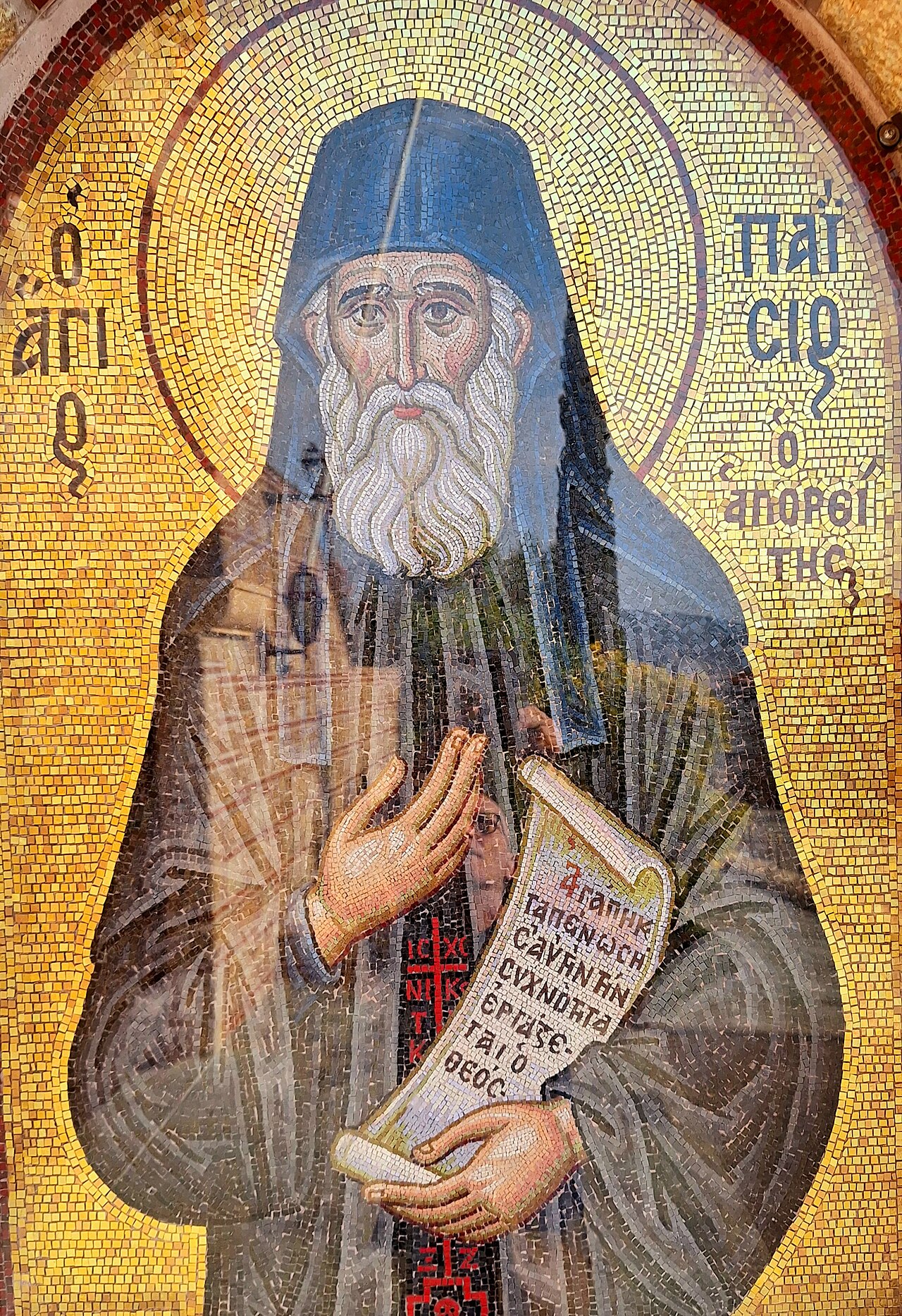
The saints did not wait. St. Hypatius of Rufinianai erased Nestorius from the Diptychs three years before the Third Ecumenical Council met to condemn him. St. Paisios did not wait for a Council to cease commemoration of Patriarch Athenagoras. Almost the entire Holy Mountain did the same. No synod had convicted Athenagoras. They were never condemned as schismatics for this action.
The “wait for a synod” position creates an accountability trap: the hierarchs who would be responsible for convening such a synod are often the ones committing the heresy, or in communion with those who do. Requiring synodal conviction before cessation of commemoration in today’s day and age often means the heretical party must convict itself… which of course is very unlikely to happen.
This would be as senseless as expecting someone guilty of murder to be their own prosecutor. Can one rely on the conscience of violators of the law (and in our case our Holy Canons) to give others all the necessary means and tools for their own condemnation?
The word “arbitrarily” in Archbishop Stylianos’s formulation is a strawman. Arbitrary cessation is not the goal. Canon 15 specifies “publicly preaching heresy,” which is precisely what the documented evidence in this book overwhelmingly demonstrates. Surely the canonical Ukrainian Orthodox Church has not arbitrarily ceased commemoration of Patriarch Kirill, and yet this is exactly what is being implied.
The position that hierarchs cannot be held accountable until a synod convicts them effectively renders them immune from accountability for public heresy. This contradicts both Canon 15 and the practice of the glorified saints.
A related objection holds that only a clerical elite may invoke Canon 15.
Metropolitan Neophytos of Morphou, for example, has argued that cessation of commemoration should only be undertaken by “theologians” and “ascetics” who “know the limits of the canons,” not by ordinary Orthodox Christians:
Let some people cut it off [the commemoration] — those who are well‑known, who are theologians, who are ascetics. Because they know the limits of the canons. But those who don’t understand them? And the people don’t understand them [the limits]… What happens then?
— Metropolitan Neophytos of Morphou, https://www.youtube.com/watch?v=Nfw0JRoFGT4, 0:58–2:57[9]
This position creates a clerical elite with exclusive authority over canonical discernment. Yet Canon 15 makes no such distinction, nor do the clerics who invoke Canon 15 call their own credentials or holiness into question. The Canon speaks of “those who separate” from a bishop publicly preaching heresy; it does not restrict this to theologians or monastics. And as the following chapters will demonstrate, the saints themselves did not reserve this duty to an elite class.
Both objections, “wait for a synod” and “leave it to the experts,” share a common assumption: that a council or an elite class holds exclusive authority over the recognition of heresy. St. Theodore the Studite dismantled this assumption by addressing the nature of councils themselves:
A council does not consist simply in the gathering of bishops and priests, no matter how many there are. For Scripture says that one doing the will of the Lord is better than thousands who transgress [Ecclus. 16:3]. A council occurs when, in the Lord’s name, the canons are thoroughly searched out and maintained. And a council is not to bind and loose in some random way, but as seems proper to the truth and to the canon and to the rule of strictness… No authority whatever has been given to bishops for any transgression of a canon. They are simply to follow what has been decreed, and to adhere to those who have gone before.
— St. Theodore the Studite, Epistle I.24 (PG 99:985ABC), in Patrick Henry III, Theodore of Studios: Byzantine Churchman (Ph.D. diss., Yale, 1968), pp. 118–120; http://orthodoxinfo.com/ecumenism/sttheo_canon.aspx
A gathering of bishops that violates the canons is not a synod (council). And no bishop, regardless of rank, has authority to transgress what the canons decree.
St. Joseph of Petrograd addressed this objection directly. Some claimed that the canons only permit separation for “heresy condemned by a council.” St. Joseph replied:
The defenders of Sergius say that the canons allow one to separate oneself from a bishop only for heresy which has been condemned by a council. Against this one may reply that the deeds of Metropolitan Sergius may be sufficiently placed in this category as well, if one has in view such an open violation by him of the freedom and dignity of the Church, One, Holy, Catholic, and Apostolic.
But beyond this, the canons themselves could not foresee many things. And can one dispute that it is even worse and more harmful than any heresy when one plunges a knife into the Church’s very heart: Her freedom and dignity? Which is more harmful: a heretic or a murderer (of the Church)?
— St. Joseph of Petrograd, Epistle to an Archimandrite of Petrograd (1928), Russia’s Catacomb Saints (Platina, CA: St. Herman of Alaska Brotherhood, 1982), p. 129
That the Canons could not foresee many things is of course true; if the Canons could foresee everything, why would we continually see new canons introduced with the passing of time?
Metropolitan Joseph was executed by the Soviets in 1938 and glorified by ROCOR in 1981. His argument is canonical: betrayal of the Church’s freedom is worse than heresy, because it destroys the very conditions under which the Church can function. Those who demand a prior synodal condemnation before any action can be taken have no answer to this.
Patristic witnesses to cessation of commemoration before conciliar condemnation
Geronda Ephraim
Geronda Ephraim of Arizona and Philotheou (†2019) was the spiritual child of St. Joseph the Hesychast. Many in our time laud him as a saint, and so his words bear much weight.
He commented on this very rupture of communion from Patriarch Sergius, which goes hand in hand with cessation of commemoration:
This communion was abruptly cut off by the capitulation of the locum tenens and later Patriarch [Sergius] in his infamous declaration, something totally unacceptable to the Bishops in exile, assuring the full submission of the Church to the atheist regime and ordering the faithful to show full obedience to and pray for the Soviet authorities. In my opinion, this rupture in communion was justified by the Canons, which provide for the cessation of all commemoration of the first Hierarch of a local Church in the event that he preaches heretical teachings; for Marxism is not only a political system, but entails a secular worldview, indeed a heresy.
— Geronda Ephraim of Arizona, “My View of the Russian Orthodox Church Abroad” (1991), Orthodox Tradition, Vol. IX, No. 1, pp. 17-18. http://orthodoxinfo.com/ecumenism/ephraim_roca.aspx
Notice that he doesn’t need to appeal to the sanctity of those who invoke Canon 15, but simply the grounds stated in the Canon itself, which simply requires heresy.
Geronda Ephraim affirms that those who ceased commemoration of Patriarch Sergius were correct to do so, being justified by the Canons of the Church. On what grounds? Heresy. The heresy in question? Marxism. Has Marxism ever been formally condemned by a synod? No. Yet Geronda Ephraim deemed cessation justified.
This contradicts the so-called boundaries of this canon given by modern theologians and academics who say that cessation of commemoration requires a formal condemnation of the particular heresy and the person in question by a synod.
This position, that cessation requires prior synodal condemnation, manifestly contradicts the patristic tradition, through the witness of Geronda Ephraim, St. Joseph of Petrograd, and countless other saints. Geronda Ephraim’s understanding of heresy, as the following sections will show, stands within the patristic tradition.
Now let it be understood: heresy should be condemned formally at a council, and such a council should be called, and would be a great joy and bulwark for the piety of the Church. However, it is manifestly incorrect to say that heresy is only heresy once being condemned in council. This is a complete innovative premise that has no basis in the patristic witness.
Did St. Joseph the Hesychast say commemoration is not a sin?
Some will object that Geronda Ephraim’s own elder, St. Joseph the Hesychast, taught the opposite. In My Elder Joseph the Hesychast (ch. 269), Geronda Ephraim records a conversation in which Papa-Haralambos asked St. Joseph whether commemorating the Patriarch was sinful:
“Go and commemorate him, and when you return tell me what you felt.”
I did as he said, and rarely have I received so much grace during the Divine Liturgy as I did that time! The tears flowed like a river throughout the Liturgy… When I returned back to Geronda, he said, “Surely you were flooded with grace.”
“Yes, Geronda,” I said, and I told him what I had experienced.
“Do you see, my child, that you are not sinning by commemorating the Patriarch, no matter what he said or did, since he has not been deposed?”
— St. Joseph the Hesychast, as recounted by Papa-Haralambos, in Elder Ephraim of Arizona, My Elder Joseph the Hesychast, ch. 269
This passage is frequently cited as proof that commemoration is never sinful absent a formal deposition, regardless of what the Patriarch teaches.
The quote addressed a specific dispute that was not heretical. St. Joseph himself, in the very same book, stated plainly:
The calendar issue does not affect the salvation of the faithful because it is not a dogmatic issue. There can be differences between local churches in non-dogmatic issues of a liturgical or administrative nature. This does not deprive them of God’s grace.
— St. Joseph the Hesychast, in Elder Ephraim of Arizona, My Elder Joseph the Hesychast, ch. 268
His brotherhood had left the zealots over a non-dogmatic question; his counsel to Papa-Haralambos concerned that same non-dogmatic question. The Patriarch had not committed heresy; therefore commemorating him was not sinful.
The authoritative interpretation comes from the very man who recorded the quote. Geronda Ephraim, as shown above, affirmed that cessation from Patriarch Sergius was “justified by the Canons” on grounds of heresy, without any deposition. He saw no contradiction between his elder’s counsel and the Canon 15 framework, because there is none: the counsel addressed a non-heretical dispute; cessation is for heresy.
Joseph’s spiritual descendants confirm this reading. The Orthodox Word (Vol. 3, No. 1, 1967) documents that Holy Transfiguration Monastery in Boston, which followed “the saintly Elder Joseph of Nea Skete,” initially commemorated the Ecumenical Patriarch per the Athonite Typikon. After Patriarch Athenagoras met Pope Paul VI in Jerusalem in 1963:
Since then the commemoration of the Patriarch, whose other uniate actions as well have caused great unrest in the Orthodox world, was omitted, as it was also omitted on the Holy Mountain by most monasteries, including St. Paul’s, to which Holy Transfiguration Monastery belongs.
— The Orthodox Word, Vol. 3, No. 1, Jan-Feb 1967, p. 34
St. Paul’s Monastery: the very place where Papa-Haralambos had served and received grace. When the question shifted from a non-dogmatic dispute to ecumenism with Rome, Joseph’s own spiritual descendants drew the line.
The quote, read honestly, supports the Canon 15 framework rather than undermining it. It establishes that a non-heretical dispute does not justify cessation. It says nothing about heresy, because heresy was not at issue.
St. Athanasius the Great
This pattern of faithful separation from heresy goes back to the earliest centuries of the Church. When St. Athanasius faced the Arian crisis in the 4th century, the vast majority of bishops had embraced or compromised with heresy. The emperors supported Arius. Synods were convened that condemned Athanasius and vindicated the heretics. Most of the Church’s hierarchy had fallen. Yet St. Athanasius refused to commune with heretical bishops. He was persecuted, exiled five times, hunted, and slandered. For decades, the institutional Church appeared to be against him.
But St. Athanasius held to the deposit of faith. He knew that the faith is greater than any hierarch, greater than any emperor, greater than even any synod that contradicts the apostolic teaching. St. Gregory the Theologian called him “the Pillar of the Church” (Oration 21), and a later Latin epithet captured his struggle perfectly: Athanasius contra mundum, Athanasius against the world.
The Church vindicated him. Those who communed with Arian bishops, even when those bishops held legitimate institutional authority, were in error. Those who refused, even when it meant isolation and persecution, preserved the faith.
St. Athanasius did not wait for a council’s permission to refuse communion with Arian bishops. He acted, was persecuted for decades, and only later did the Second Ecumenical Council (381 AD) confirm what he had confessed all along. The council did not create Orthodoxy; it recognized what was already true.
This is the consistent pattern: our councils vindicate departures from heretics after the fact, not before. How then does it make sense to require a council before being able to identify heresy and heretics?
An additional case from this same era further illustrates the principle.
St. Alexander of Constantinople
Theodoret of Cyrus records that in 336, the Eusebians pressured St. Alexander, Bishop of Constantinople, to receive Arius back into Eucharistic communion. The emperor had summoned Arius and accepted his profession of faith; the Eusebians threatened that they would force his reception into the Church the next day. Alexander refused:
The blessed Alexander, Bishop of Constantinople, opposed them, saying that the inventor of heresy must not be received into communion.
— Theodoret of Cyrus, Ecclesiastical History I.13, PG 82:949C[10]
Faced with the threat that Arius would be forced into communion the very next day, Alexander entered the church, fell prostrate before the altar, and prayed:
If Arius is to be assembled tomorrow, release me your servant, and do not destroy the pious with the impious. But if you spare your Church… take Arius away, lest when he enters the church, heresy seem to enter with him, and henceforth impiety be considered piety.
— Theodoret of Cyrus, Ecclesiastical History I.13, PG 82:949D-952A; cf. New Advent’s NPNF translation[11]
Alexander’s prayer was answered. Arius died that very day before being received into communion. The Church celebrated the Liturgy the next morning “in piety and Orthodoxy.”
The principle Alexander articulated is exactly the concern that governs cessation of commemoration: receiving a heretic into communion affects the whole Church. It makes heresy “seem to enter” with him. Impiety is “considered piety.” This is what occurs when Orthodox hierarchs commune with those who teach contrary to the faith: the boundary between truth and error is erased in the minds of the faithful.
St. Basil the Great confirms the converse: when heresy enters, the guardian of the Church departs with the faithful who refuse it. St. Basil assured those who separated that “the angel who watches over the Church” departed with them (Ep. 238), as examined further in Chapter 26: Why Communion with Heresy Requires Separation. St. Theodore the Studite drew the corollary: the angel who oversees all that happens in the church departs, and the temple becomes a mere house (cf. Matt. 23:38, “Behold, your house is left unto you desolate”).[12] The angel does not remain with the walls. The angel follows the faithful in their departure.
St. Hypatius of Rufinianai
A century later, we find the same witness in the 5th century with St. Hypatius, Abbot of the Monastery of Rufinianai in Chalcedon.
In 428, Nestorius, the heresiarch who denied the title Theotokos (Mother of God) to the Virgin Mary, became Patriarch of Constantinople. When his presbyter Anastasios preached from the pulpit of Hagia Sophia that the Theotokos should be called “Christotokos” and not “Theotokos”, Nestorius did not correct him. The faithful considered Nestorius’s silence as agreement with this heretical view, which indeed it was.
St. Hypatius immediately erased the name of Nestorius from the Church diptychs so that he would not be commemorated. When Bishop Eulalius reproached him for this action, the zealous elder replied:
Ever since I learned that he prattles unjust things about my Lord, I am not in communion with him neither do I exalt his name, for that man is not a bishop.
— Callinicus, The Life of Saint Hypatius, §107, trans. John S. Daly; https://web.archive.org/web/20220123001012/https://romeward.com/articles/239752903/an-extract-from-the-life-of-saint-hypatius
And when Bishop Eulalius threatened him again, St. Hypatius replied with steadfastness and a spirit of martyrdom:
Do as you wish, for I have made up my mind to suffer all things and thus I did this.
— Callinicus, The Life of Saint Hypatius, §107, trans. John S. Daly; https://web.archive.org/web/20220123001012/https://romeward.com/articles/239752903/an-extract-from-the-life-of-saint-hypatius
Where is the “necessary synod” of its proponents here in this aforementioned example?
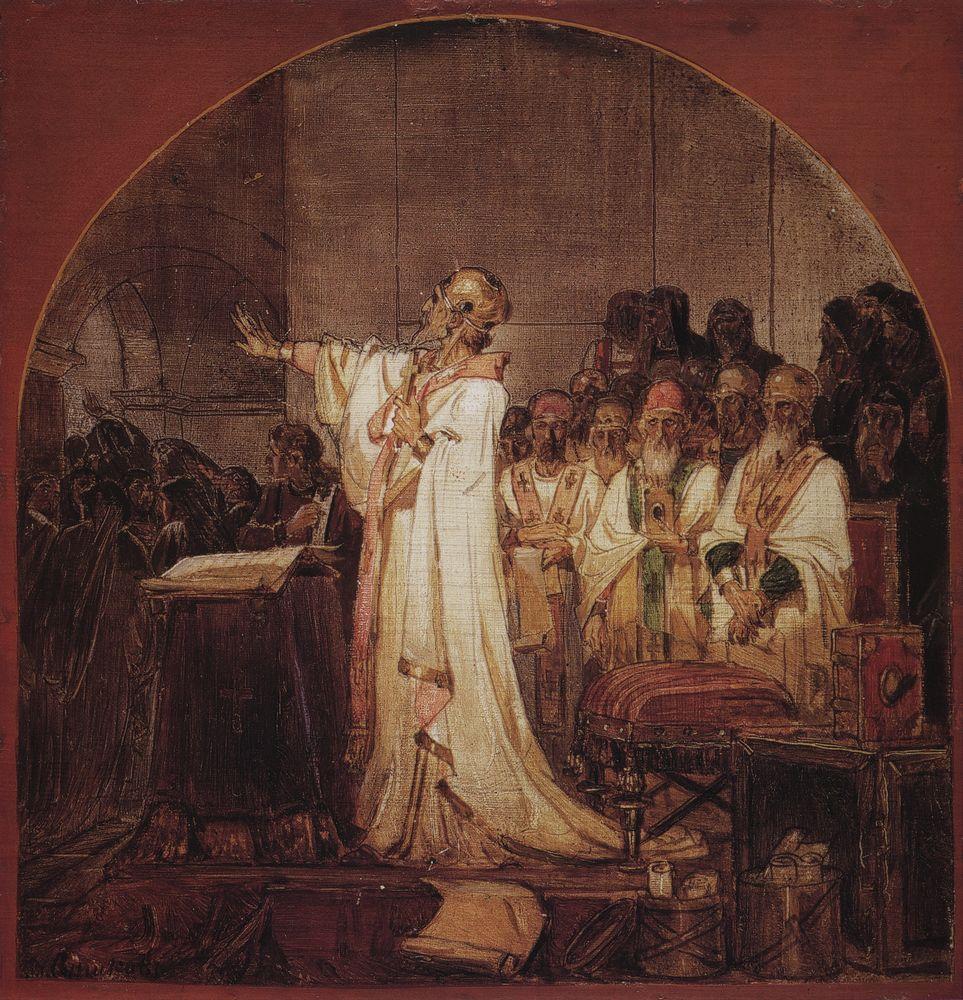
No council had yet convened to condemn Nestorius. The Third Ecumenical Council at Ephesus would not meet until 431, three years later. Yet St. Hypatius acted without waiting for any synod, and he was vindicated. He is now glorified as a saint, while Nestorius is anathematized.
All who seek to claim that synods are required to cease commemoration insult the saints themselves that ceased commemoration, and then shamelessly, having no argument, judge those who cease commemoration in line with our saints to be puffed up and “think themselves saints”.
This line of argumentation will be fully dealt with in Chapter 27: “You’re Not a Saint”.
St. Maximus the Confessor
St. Maximus the Confessor (†662) broke communion with the Eastern patriarchates when they embraced the Monothelite heresy. The Sixth Ecumenical Council would not condemn this heresy until 681, nearly twenty years after his death. No council authorized his separation, nor was he a clergyman, but was simply a monk.
The scope of his separation is critical to understand. The Synaxaristes records that his interrogators demanded he explain why he had separated “not only with the Patriarch of Constantinople but also the patriarchates of Antioch, Alexandria, and Jerusalem,” noting that “all these churches and the provinces under them are in concord” (Synaxaristes, January, p. 837).
St. Maximus did not separate only from the Patriarch of Constantinople, who was the primary source of heresy. He separated from every bishop and every province in communion with that patriarch. When Bishop Theodosios of Caesarea in Bithynia, a suffragan bishop under Constantinople, came to negotiate on behalf of Patriarch Peter, Maximos would not commune with him either, despite Theodosios not being a heresiarch himself. The chain of communion according to St. Maximus meant that communion with the heretical patriarch made everyone under him complicit.
When these interrogators urged that he must “enter into communion at once,” St. Maximus replied:
On what basis have all the churches entered into communion? If it is on a foundation of truth, as that professed by blessed Peter, I do not wish to be separated from them.
— St. Maximus the Confessor, in The Great Synaxaristes of the Orthodox Church, trans. Holy Apostles Convent, Vol. 1 (January), p. 837
Communion matters only if it rests on truth. When truth is absent, communion becomes a transgression:
As long as the scandal of heresy persists in the Church of Constantinople and her bishops are miscreants, I will not enter into communion with her. It would be a transgression.
— St. Maximus the Confessor, in The Great Synaxaristes of the Orthodox Church, trans. Holy Apostles Convent, Vol. 1 (January), p. 841
When pressed further, he stated the doctrinal grounds for his refusal:
I cannot enter into communion with the throne of Constantinople, because the leaders of that patriarchate have rejected the resolutions of the four ecumenical synods. Instead, as their rule, they have accepted the Alexandrian Nine Chapters. Thereafter, they accepted the Ekthesis of Patriarch Sergios and then the Typos, which rejects everything that was proclaimed in the Ekthesis, thereby excommunicating themselves many times over. Together with having excommunicated themselves, they have been deposed and deprived of the priesthood at the Lateran Council held in Rome. What Mysteries can such persons perform? What spirit comes upon what they celebrate or those ordained by them?
— St. Maximus the Confessor, in The Great Synaxaristes of the Orthodox Church, trans. Holy Apostles Convent, Vol. 1 (January), p. 857
“What Mysteries can such persons perform?” St. Maximus never established a parallel hierarchy as Old Calendarists do. He was, as he himself said, “but a simple monk.” Yet he stood against the entire institutional Church and was tortured for his confession: his tongue was cut out and his right hand severed. He died in exile in 662. The Sixth Ecumenical Council vindicated him in 681.
The chain of communion is further demonstrated by a remarkable episode at Bizye. After St. Maximus refuted the Monothelite position so thoroughly that Bishop Theodosios and the two consuls were moved to contrition, Theodosios personally confessed Orthodoxy: “As the fathers confess, so do I.” He put his confession in writing. He then urged St. Maximus: “Commune with us and let there be union.” St. Maximus refused:
I do not dare to receive thy document concerning such a matter. I am but a simple monk. But if God has given compunction to thy heart, so that thou hast received the words of the holy fathers, thou shouldest dispatch, as the canons demand, this written confession to the Pope of Rome, the emperor, and the patriarch. For I cannot commune unless these events come to pass.
— St. Maximus the Confessor, in The Great Synaxaristes of the Orthodox Church, trans. Holy Apostles Convent, Vol. 1 (January), p. 845
There is an absolutely critical point to understand here. Theodosios was personally Orthodox. He had just confessed the correct faith in writing. Yet St. Maximus would not commune with Theodosios, because Theodosios remained institutionally connected to the heretical patriarch. He didn’t commune with him on account of the heretics Theodosios was in communion with. Until the confession reached the patriarch and the pope, until the institutional heresy was corrected, communion remained impossible.
This is the patristic precedent for why one cannot say “Oh my priest is fully Orthodox” while their priest remains in communion with a heretical patriarch. St. Theodore the Studite would articulate the principle explicitly centuries later: “Priests should not only not commemorate the names of heretics… but not even of those in communion with them” (Ep. 49). St. Maximus lived this principle before St. Theodore wrote it down: separation extends not only to those in heresy, but to those in communion with them.
When accused of causing division, St. Maximus was confronted directly:
Only thou, O father, hast caused consternation. On account of thee, there are many who refuse communion with the Church of Constantinople.
— St. Maximus the Confessor’s interrogators, in The Great Synaxaristes of the Orthodox Church, trans. Holy Apostles Convent, Vol. 1 (January), p. 859
St. Maximus replied:
Who is able to prove that I have ordered anyone not to have communion with the Constantinopolitan Church?
— St. Maximus the Confessor, in The Great Synaxaristes of the Orthodox Church, trans. Holy Apostles Convent, Vol. 1 (January), p. 859
He did not order anyone to separate. Others separated because they recognized the truth he confessed. The accusation of “causing division” was leveled at St. Maximus in the seventh century exactly as it is leveled today at anyone who ceases commemoration without forcing or ordering anyone else to do this.
Subsequently, when St. Maximus was accused of anathematizing the emperor by anathematizing the Typos, St. Maximus drew the distinction that governs this entire discussion:
I have not anathematized the emperor. I have anathematized the document which is alien to the Orthodox Faith of the Church.
— St. Maximus the Confessor, in The Great Synaxaristes of the Orthodox Church, trans. Holy Apostles Convent, Vol. 1 (January), p. 861
The heresy is condemned, not the person. This is what cessation of commemoration means: not a judgment on the patriarch’s soul, but a refusal to be in communion with his heretical teachings.
Metropolitan Cyril of Kazan: Breaking Communion Without Declaring Gracelessness
The most sophisticated ecclesiological treatment of cessation of commemoration comes from Metropolitan Cyril (Smirnov) of Kazan (1863-1937). He was the most authoritative hierarch in the Russian Church after Patriarch Tikhon’s death, chosen by Patriarch Tikhon as first of three candidates for Locum Tenens (temporary custodian of the patriarchal throne), and secretly elected by 72 free bishops in 1926 to be the new Patriarch. His epistles, written from exile in 1929, provide the definitive patristic framework for understanding what cessation of commemoration means and does not mean.
Metropolitan Cyril broke communion with Metropolitan Sergius not to declare him graceless, but as a form of fraternal correction:
I am not separating from anything holy, from anything that authentically belongs to the Church. I fear only to approach and cling to that which I recognize as sinful in its origin, and therefore I refrain from brotherly communion with Metropolitan Sergius and the Archpastors who are one in mind with him, since I have no other means of accusing a sinning brother.
— Metropolitan Cyril of Kazan, Epistle No. 1 (June 6/19, 1929), The Orthodox Word, Vol. 13, No. 4 (July-August 1977), p. 177; http://orthodoxinfo.com/ecumenism/cat_cyril.aspx
Note that he recognizes breaking communion as a form of fraternal correction, not as a declaration that the other party has ceased to be Christian or is graceless, as misguided Old Calendarist schismatics (GOC, TOC) believe.
Metropolitan Cyril explicitly rejected the idea that Sergianist sacraments were thereby invalid:
By thus refraining, for my part, I am not in the least affirming or suspecting any lack of grace in the sacred actions and Mysteries performed by Sergianists (may the Lord God preserve us all from such a thought!), but I only underline my unwillingness and refusal to participate in the sins of others.
— Metropolitan Cyril of Kazan, Epistle No. 1 (June 6/19, 1929), The Orthodox Word, Vol. 13, No. 4 (July-August 1977), p. 177; http://orthodoxinfo.com/ecumenism/cat_cyril.aspx
One can break communion over administrative sin, moral apostasy, or betrayal of the Church’s freedom without thereby declaring the offending party’s sacraments to be “without grace.” The two questions are distinct. Any pastoral accommodation Metropolitan Cyril offered to isolated laypeople without an Orthodox alternative rests on this same premise: since he held the Sergianist Mysteries to be valid, the layperson’s question was pastoral rather than sacramental; that premise does not carry over to situations where the Fathers teach that a heretical bishop’s commemoration defiles the Mystery itself.
Metropolitan Cyril also addressed those who argue that “canonical obedience” requires following hierarchs regardless of their actions:
Church discipline is capable of preserving its efficacy only as long as it is an actual reflection of the hierarchal conscience of the Catholic Church; and discipline can never itself replace this conscience. As soon as it produces its demands not by force of the indications of this conscience, but by impulses foreign to the Church and insincere, the individual hierarchal conscience unfailingly will stand on the side of the Catholic-hierarchal principle of the Church’s existence, which is not at all one and the same thing as outward unity at any cost.
— Metropolitan Cyril of Kazan, Epistle No. 2 (1929), The Orthodox Word, Vol. 13, No. 4 (July-August 1977), p. 181; http://orthodoxinfo.com/ecumenism/cat_cyril.aspx
When discipline serves “impulses foreign to the Church,” individual conscience must stand with the Orthodox Catholic (Universal) principle, even at the cost of outward unity.
How did Metropolitan Sergius respond to this fraternal correction? Not with repentance, but by declaring the non-Sergianists “without grace.” On July 24/August 6, 1929, he and his Synod declared that the Mysteries of those who separated were “invalid” and compared them to the openly schismatic Renovationists (a Soviet-created parallel church structure). Metropolitan Cyril called this “blasphemy.”
When Sergius accused Cyril of “schism,” Cyril replied that this reflected Sergius’s fundamental error:
This proceeds, of course, from the fact that you and the Synod understand a negative attitude to your activity in church administration to be a denial of the Church Herself, Her Mysteries and all Her holy things.
— Metropolitan Cyril of Kazan, Epistle No. 3 (October-November 1929), The Orthodox Word, Vol. 13, No. 4 (July-August 1977), pp. 182-183; http://orthodoxinfo.com/ecumenism/cat_cyril.aspx
This is precisely the error of Patriarch Kirill’s defenders today: they treat criticism of Kirill’s war theology as an attack on the Church, when in fact it is a defense of the Church against one hierarch’s betrayal.
Metropolitan Cyril’s framework resolves the false dilemma that Patriarch Kirill’s defenders present: “Either you’re in communion with Kirill, or you’re declaring the Moscow Patriarchate graceless.” Metropolitan Cyril shows a third way: breaking communion as fraternal correction, without pronouncing on the ultimate question of grace. This is exactly the position of Metropolitan Onuphry and the Ukrainian Orthodox Church when they ceased commemorating Patriarch Kirill in May 2022 (covered in depth in Chapter 29: The UOC Ceases Commemoration).
Holy Hieroconfessor Peter of Voronezh: A Canonized Saint Who Refused Sergius
Archbishop Peter (Zverev) of Voronezh (1878-1929) provides another witness from this same period. He was arrested multiple times for his faith and eventually martyred. When interrogated by Soviet authorities about his refusal to recognize Metropolitan Sergius, he gave this reply:
“Why do you not recognize Metropolitan Sergius and why do you open a church illegally?”
I replied: “I cannot recognize Metropolitan Sergius because he was a renovationist and according to our holy canons he has illegally taken the place of the locum tenens of the Patriarch.”
— Holy Hieroconfessor Peter of Voronezh, Orthodox Life, Vol. 45, No. 5 (Sep-Oct 1995), pp. 4-5
Note Archbishop Peter’s reasoning: he appeals to “our holy canons.” His reasoning is strictly canonical: Sergius had been a renovationist, and his assumption of authority was canonically invalid. Archbishop Peter also recorded how the faithful wept when they read Sergius’s lie that “no one was exiled or arrested for church activity.”[13]
Archbishop Peter was martyred in 1929 and is now glorified as a saint.
Thus we have five historical cases spanning seventeen centuries, where holy men ceased commemoration before any council ruled: St. Hypatius with Nestorius, St. Maximus the Confessor with the Eastern patriarchates, the Russian New Martyrs with Sergius, Metropolitan Cyril providing the ecclesiological framework, and Holy Hieroconfessor Peter of Voronezh explicitly citing canonical grounds. All were vindicated by the Church. This is the patristic pattern. Chapter 25 examines in detail why councils confirm what the faithful already recognize; Chapter 30 distinguishes this diagnostic action from the juridical claims of Old Calendarism.
Cessation of commemoration is valid according to the canons and the Church. According to our saints, it does not require a council to condemn the particular manifestation of heresy nor to condemn the person who teaches it.
All that matters is that the bishop or hierarch has taught heresy boldly “in public” and has been corrected and given sufficient opportunity to come around.
St. Mark of Ephesus: No Authority Can Override the Faith
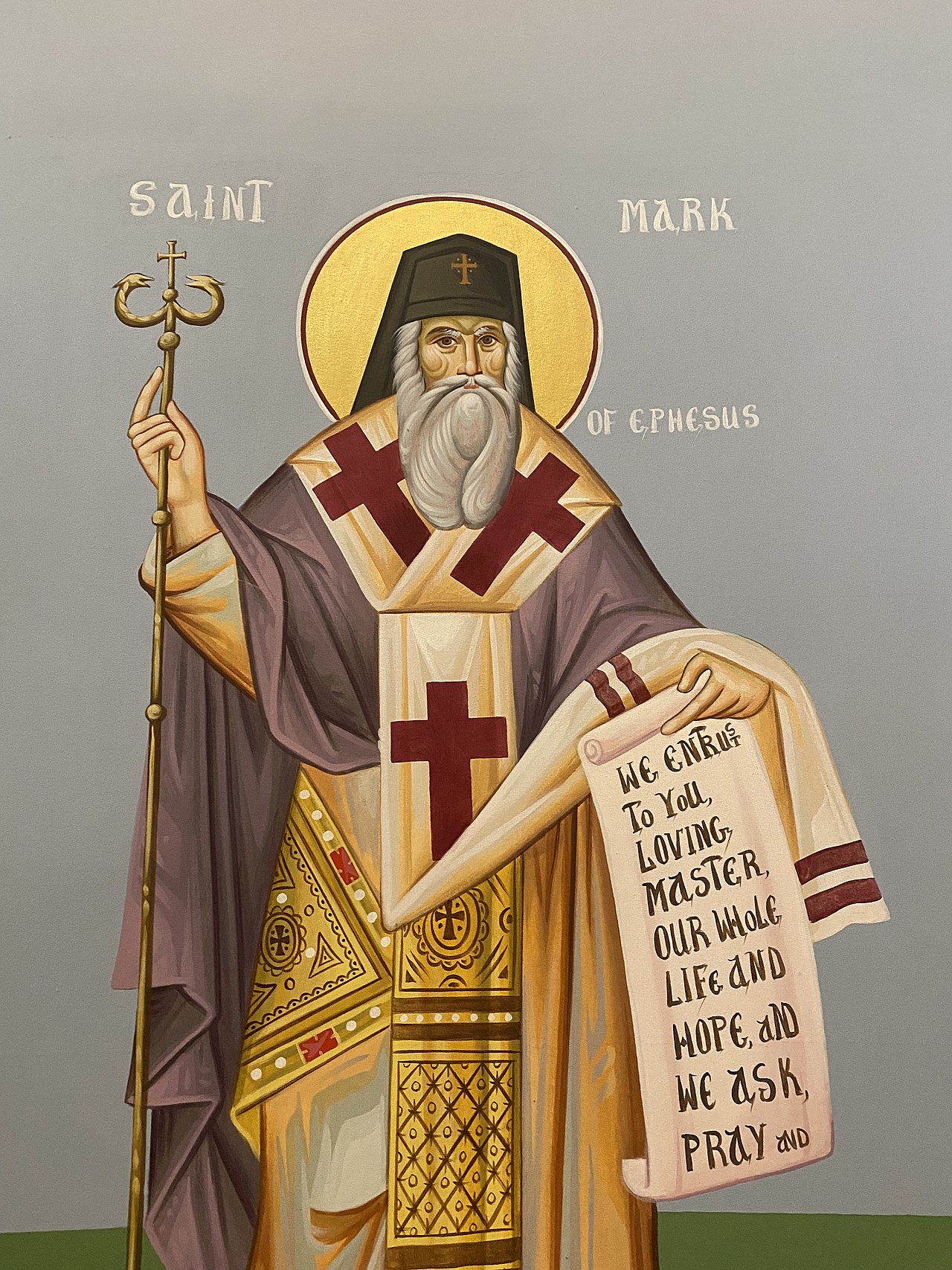
The Pillar of Orthodoxy, St. Mark of Ephesus, who alone refused to sign the false Union of Florence, articulated the principle that governs all such situations:
Let no one dominate in our faith: neither emperor, nor hierarch, nor false council, nor anyone else, but only the one God, Who both Himself and through His Disciples has handed it down to us.
— St. Mark of Ephesus, Epistle to the Abbot of Vatopedi Monastery, pt. 2, http://orthodoxinfo.com/ecumenism/stmark.aspx
No emperor. No hierarch. No false council. And of course, this applies to any and all Patriarchs as well.
St. Mark understood what modern Orthodox often forget: hierarchical position does not confer the right to innovate. A patriarch who teaches contrary to what God “has handed down to us” through the Apostles and Fathers has no claim to obedience in that teaching.
Commenting on the Apostle Paul’s warning that even “an angel from heaven” is subject to anathema if he preaches a false gospel (Gal. 1:8), St. Mark adds: “No one may cite in justification of oneself an especially high rank” (The Great Synaxaristes of the Orthodox Church, trans. Holy Apostles Convent, Vol. 1 (January), p. 771). Rank does not sanctify error.
St. Mark also testified to what separation from error actually accomplishes:
I am absolutely convinced that the farther I stand from him and those like him, the nearer I am to God and all the saints; and to the degree that I separate myself from them am I in union with the Truth and with the Holy Fathers, the Theologians of the Church.
— St. Mark of Ephesus, Deathbed Address, http://orthodoxinfo.com/ecumenism/stmark.aspx
Separation from error is gain. The farther one stands from those who compromise the faith, the nearer one stands to God, to the saints, to truth itself.
The cost of that gain was severe. After refusing to sign the decree of union, St. Mark returned to Constantinople, where the faithful greeted him as a hero of the faith. The emperor, seeking to win him over to the unionist camp, offered to make him Patriarch of Constantinople. He declined and left the capital. His plan was to flee to Mt. Athos, but he was recognized at the port of Lemnos and detained by the emperor’s soldiers, who placed him under house arrest. He was kept a virtual prisoner on the island for two years, after which he was allowed to return to Constantinople, though he was not permitted to celebrate the Divine Liturgy. St. Mark had severed communion with the unionist Patriarch Metrophanes II after the Council of Florence; on his deathbed, he reiterated this severance, extending it beyond death, and named Gennadios Scholarios the new leader of the Orthodox party. He died on 23 June 1445.[14] [15]
St. Mark was thus offered the highest ecclesial office as a bribe for compliance, he refused; persecuted by the state for his refusal, he endured; banned from celebrating the Liturgy, he did not recant; and with his final breath, he severed communion with the patriarch who had embraced the false union. This is the testimony of a saint on his deathbed, with nothing left to prove and eternity before him.
When Pope Eugenius was shown the Act of Union signed by all the Greek delegates at Florence, he searched for one name, that of St. Mark of Ephesus. Not finding St. Mark’s signature, he said: “And so we have accomplished nothing.” One man’s refusal, grounded in the faith of the Fathers, rendered the entire synod meaningless.
And so not only can one act before a synod, a synod in and of itself even does not bear authority until it is embraced by the pleroma of the faithful. This is why the Church has had many synods that it has emphatically not recognized, deeming them “robber synods”.
Bishop Victor of Glazov: Communion as Renunciation of Christ
Bishop Victor of Glazov (1875-1934) was the first hierarch to break with Metropolitan Sergius after the 1927 Declaration. His flock joined him in separating, which led to his arrest and incarceration in the Solovki concentration camp. From this period of confessorship, Bishop Victor left the following theological statement:
But if it be not so, then let us guard ourselves from communion with them, knowing that communion with those who have fallen away is our own renunciation of Christ the Lord.
— Bishop Victor of Glazov, “A Letter to Friends” (December 1927), The Orthodox Word, Vol. 7, No. 3 (May-June 1971), p. 117
Bishop Victor identifies continued communion with those who have fallen away as “our own renunciation of Christ the Lord.” The stakes could not be higher: when we commune with enemies of Christ, we participate in the denial of Christ Himself.
This same Bishop Victor also taught that one must confess the truth even against hierarchs who oppose:
My friends, if we truly believe that outside the Orthodox Church a man has no salvation, then when her truth is perverted we cannot remain her indifferent worshippers in the dark, but we must confess before everyone the truth of the Church. And if others, even in an innumerable multitude, even chief hierarchs, remain indifferent and can even use their interdictions against us, there is nothing surprising in this.
— Bishop Victor of Glazov, “A Letter to Friends” (December 1927), The Orthodox Word, Vol. 7, No. 3 (May-June 1971), p. 117
“Even chief hierarchs” may use interdictions against those who confess the truth. “There is nothing surprising in this.” Bishop Victor did not imagine that hierarchical consensus equals truth. He understood that the majority may err, and that the individual conscience must stand with the Church’s unchanging teaching even against ecclesiastical pressure. This same ecclesiastical pressure has persecuted many of our saints, as can be clearly seen by anyone who regularly engages with and reads the Lives of our Orthodox saints (as all Orthodox Christians are called to do without stint, though few do).
Holy New Martyr Bishop Damascene (Tsedrick) of Starodub, who stood against Metropolitan Sergius’s capitulation and was arrested and exiled for his disobedience, sent epistles of consolation to his persecuted flock. His words speak directly to those who today feel outnumbered by the institutional consensus:
Does one need to step back before the attack of militant atheism? May this not be! No matter how few we might be, the whole power of Christ’s promises concerning the invincibility of the Church remain with us. With us is Christ, the Conqueror of death and hell. The history of Christianity shows us that, in all the periods when temptations and heresies have agitated the Church, the bearers of Church Truth and the expressors of it were few, but these few with the fire of their faith and their zealous standing in the Truth have gradually ignited everyone… The same thing will happen now if we few will fulfill our duty before Christ and His Church to the end. The fearless confession of faith and of one’s hope and a firm standing in the Church’s laws are the most convincing refutation of the Sergian deviation and are an unconquerable obstacle to the hostile powers directed against the Church. Fear not, little flock, for it is your Father’s good pleasure to give you the Kingdom (Luke 12:32).
— Holy New Martyr Bishop Damascene (Tsedrick) of Starodub (†1937), translated by Fr. Seraphim Rose in Russia’s Catacomb Saints (St. Herman of Alaska Brotherhood), pp. 227-228
“The bearers of Church Truth and the expressors of it were few.” This is the perpetual condition of Orthodoxy under persecution. Those who demand a synodal majority before they will confess the truth have inverted the entire history of the Church. The saints were always the minority. The councils that condemned heresies often assembled against the will of the majority of bishops. Bishop Damascene knew this because he lived it: he chose exile and death over the comfort of institutional compliance.
The Catacomb Epistle of 1962: Turning the Accusation Around
The most devastating response to the “wait for a synod” objection comes from inside the Soviet Union itself. In 1962, during the Khrushchev persecution, a member of the Catacomb Church wrote an epistle addressing this exact argument. Lev Regelson, who first published it, identifies the author as “one of the spiritually authoritative persons of the Catacomb Church.”[16]
The epistle begins by stating the so-called objection and claim against them:
“But have you not violated the church canons which forbid clergy to cease communion with their Metropolitans and Bishops before a conciliar judgment?” This is an argument that seems very weighty. But let us examine it.
— A Catacomb Epistle of 1962, The Orthodox Word, Vol. 17, No. 1 (Jan-Feb 1981), p. 30
Rather than address the spurious accusation, the epistle then asks a much more appropriate question:
And first of all let us ask: Do we have periodic (once every year and once every three years) councils where we might appeal? After all, according to the canons, these councils are an obligatory church institution. It turns out that our accusers are the first violators of the canons, and they compel us also not to observe them.
— A Catacomb Epistle of 1962, The Orthodox Word, Vol. 17, No. 1 (Jan-Feb 1981), p. 30
And then the conclusion:
After all, one cannot accuse us of “separating before a council,” if these councils in general are not even called!
— A Catacomb Epistle of 1962, The Orthodox Word, Vol. 17, No. 1 (Jan-Feb 1981), p. 30
The epistle goes further, addressing the objection that councils have been held:
They will say, “For the past twenty years there were councils and conferences.” But what kind? These were conferences of “yes-men” who obediently stamped the orders, first of Karpov and then of Kuroyedov. And after all, the canons forbid any kind of pressure of the civil authority on the members of a council, and all the decrees of bishops which have been compelled by such pressure are declared to be invalid.
— A Catacomb Epistle of 1962, The Orthodox Word, Vol. 17, No. 1 (Jan-Feb 1981), p. 30
This argument applies directly to Patriarch Kirill’s situation. Where is the free council that might address his ecumenism and war theology? The Pan-Orthodox conferences that are held are subject to diplomatic pressures. Any synod that might address Kirill’s actions is either under his control (the MP synod) or entangled in political considerations. Thus, those who brazenly demand “wait for a council” curiously do not even call such councils, and the councils they do call are compromised.
The Catacomb faithful, writing from inside the persecution, were not the ones violating the canons by separating. Those who demanded impossible conditions while refusing to create the very institutions the canons require were the real violators.
First-Hand Witness: Professor Andreyev and the Catacomb Church
Professor Ivan Andreyev, a member of the Catacomb Church from 1927 to 1944 who attended secret consecrations in the Solovetsky Concentration Camp, testified to what the Catacomb faithful believed:
It is better not to go to any church whatever or receive communion at all than to be implicated in a church of evil-doers.
— Professor Ivan Andreyev, “The Catacomb Church in the Soviet Union”, Orthodox Life, Vol. 1, No. 2 (Mar-Apr 1951), p. 13
Andreyev records that those who followed this path “were persecuted by the Soviet priests who called them ‘schismatics’ and ‘sectarians.’” The pattern is unchanged: those who refused communion with a compromised hierarchy were called “schismatics” then, just as faithful Orthodox who question Patriarch Kirill, refused to commemorate him, or refuse to go to the churches he is commemorated, are called “schismatics” today.
Vladimir Kara-Murza, an Orthodox Christian who was sentenced to twenty-five years for documenting the war Kirill blessed, described the same dilemma facing the faithful in Russia:
There are many people… who cannot go and participate in a liturgy where the patriarch is being prayed for, the same patriarch who is blessing this criminal war of aggression. They cannot go to a liturgy where this so-called prayer for victory is being said.
— Vladimir Kara-Murza, Atlantic Council Eurasia Center, September 17, 2025, https://www.youtube.com/watch?v=JSp-10UsoOE&t=2634s
The Catacomb Christians said it was “better not to go to any church whatever” than to be implicated in a church of evil-doers. Orthodox faithful in Russia today face the same choice.
St. John of Shanghai: Refusing to Meet a Soviet-Aligned Bishop
St. John of Shanghai and San Francisco, now glorified as a saint, demonstrated this principle. After World War II, many Russian émigrés in Shanghai took Soviet passports, placing themselves under Soviet authority and thereby under the Moscow Patriarchate, which had capitulated to the Soviet state through Sergius’s Declaration. Archbishop Victor of the Beijing Mission was among those who accepted a Soviet passport.
Protopresbyter Elias Wen recounts what happened next:
Vladika John gathered together all of the clergy and announced that he would not meet with Vladika Victor. We supported him in this.
When Archbishop Victor arrived in Shanghai from Peking, eight Komsomol youth accompanied him as he walked toward the cathedral… The next day, it happened I had to meet with Archbishop Victor. He called us “Johnites.” “Yes, and do you know why we favor Vladika John?” I asked him… “You are now a Soviet citizen, and it is impossible to have any interaction with you.”
— Protopresbyter Elias Wen, reminiscence from Man of God
“It is impossible to have any interaction with you.” Not private disagreement while maintaining public communion. Not waiting for a synod to convict. A saint, acting on principle, refusing to meet with a hierarch who had aligned himself with godless authority.
St. John Maximovitch (of Shanghai and San Francisco) understood this pattern as part of a larger spiritual reality. In his teaching on the Antichrist, he described how worldly power would offer the Church permission to function in exchange for submission:
He will let the Church function, and allow her to hold Divine services, he will promise to build magnificent temples: provided he is recognized as the “Supreme Being” and that he is worshipped… There will be a mass falling away from the faith; even many bishops will betray the faith, justifying themselves by pointing to the splendid position of the Church.
A search for compromise will be the characteristic disposition of men. Straightforwardness of confession will vanish. Men will cleverly justify their fall, and an endearing evil will support such a general disposition. Men will grow accustomed to apostasy from the truth and to the sweetness of compromise and sin.
— St. John of Shanghai and San Francisco, Man of God, “The Signs of the End of the World and the Second Coming”
“Bishops will betray the faith, justifying themselves by pointing to the splendid position of the Church.” This is the Sergianist argument: we preserved the hierarchy, the sacraments, the church buildings. We maintained the “splendid position.” And this is exactly what Patriarch Kirill venerates Metropolitan Sergius for. However, St. John of Shanghai and San Francisco identifies this justification as apostasy, not faithfulness.
This pattern manifested in St. John’s own lifetime. He taught explicitly why ROCOR refused communion with the Moscow Patriarchate:
Aware of the submission of the Moscow church authority to the Soviet government, and knowing that the Moscow Patriarch is not a free servant of God and His Church but rather a puppet of the godless authorities, those holy communities and institutions refused to recognize his authority and have remained in submission to the authority of the free part of the Russian Church.
— St. John of Shanghai and San Francisco, Man of God, “An Appeal for Aid to the Holy Land”
“A puppet of the godless authorities.” The Moscow Patriarch was allowed to function, allowed to hold Divine services, allowed to maintain church buildings. In exchange, it submitted to godless authority. And those who pointed to the “splendid position” of the preserved church organization were, in St. John’s framework, following the pattern of apostasy he warned about.
Those who refused communion with this “puppet” did so “although such recognition would have brought great advantage materially.” They chose faithfulness over advantage.
Fr. Seraphim Rose: The Canonical Obligation to Separate
Fr. Seraphim Rose, writing from the Platina monastery in 1970, articulated ROCOR’s canonical rationale for refusing all contact with the Moscow Patriarchate. His letter to Fr. David Black addresses the misconception that ROCOR’s stance was primarily about canonical technicalities:
The case of the Synod is based upon one thing: faithfulness to Orthodoxy, first in spirit, and then to every possible canon. Contrary to one widespread misconception, the Synod has never condemned or judged the Soviet Church or declared it to be without grace; it has many times emphasized (chiefly in the Russian language, to be sure) that the judgement of this Church and its hierarchs must be left to a future All-Russian Sobor in a free Russia, and that until such a Sobor can be called, no question affecting the whole of Russian Orthodoxy — as well as any pan-Orthodox questions — can be resolved. And until that time the free Russian Church can and will enter into no contact whatever, no negotiations, no dialogue, will not even sit at the same table with the representatives of Moscow — not because they are uncanonical (although there is much that is uncanonical in their behavior) but because they collaborate with and serve the most determined enemies the Church of Christ has yet fought against. If every Orthodox Christian is commanded by the canons to depart from a heretical bishop even before he is officially condemned, or be guilty also of his heresy, how much more must we depart from those who are worse (and more unfortunate) than heretics, because they openly serve the cause of Antichrist?
— Fr. Seraphim Rose, Letter to Fr. David Black, April 23/May 6, 1970, Letters from Father Seraphim. http://www.orthodoxriver.org/post/letters-of-fr.-seraphim-rose/
Fr. Seraphim’s argument is an a fortiori one (from the lesser to the greater). Canon 15 commands separation from heretical bishops even before official condemnation. But those who collaborate with the persecutors of the Church are worse than heretics, because they “openly serve the cause of Antichrist.” If the lesser case (heresy) warrants separation, how much more the greater? The point is not to rank offenses, but to show that separation is warranted on multiple independent grounds, each sufficient on its own.
Fr. Seraphim also preserves the nuance Metropolitan Cyril of Kazan articulated: ROCOR “never condemned or judged the Soviet Church or declared it to be without grace.” Breaking communion as fraternal correction, not as a declaration of gracelessness. ROCOR’s pre-2007 stance was canonically consistent with the patristic standard.
This distinction is critical, and it is precisely where modern Old Calendarist factions err.
Old Calendarists, for those unaware, are not those simply on the Old Calendar, but schismatic factions who have broken off from the Church following the lamentable introduction of the New Calendar. These groups are numerous, though the most recognizable of them are the so-called Genuine Orthodox Christians, otherwise known as the GOC, and the so-called True Orthodox Christians, known as the TOC.
According to Fr. Seraphim Rose, whom the Old Calendarists rightly venerate, those who declare the official churches entirely without grace have exceeded the canonical warrant. Canon 15 authorizes separation from a bishop who publicly preaches heresy. It does not authorize individual Christians or small synods to pronounce on the ultimate question of grace in another church’s sacraments. Metropolitan Sergius made this very error in 1929 when he declared the non-Sergianists “without grace,” and Metropolitan Cyril called it “blasphemy.” The Old Calendarist position mirrors and repeats the Sergianist error it claims to oppose: arrogating to a faction what belongs to the whole Church in council. Fr. Seraphim himself named this error for what it is:
To give communion to Roman Catholics is surely an anti-canonical act, but in itself it does not constitute a “heresy” that deprives a whole Church of the grace of God and makes everyone in the Church a “heretic” — that is Jesuit thinking, not Orthodox.
— Fr. Seraphim Rose, Letter to John Hudanish (c. 1980), Letters of Fr. Seraphim Rose
“Jesuit thinking, not Orthodox.” The Russia’s Catacomb Saints commentary, written under Fr. Seraphim’s direction, applies this directly to the Old Calendarist situation. It frames Metropolitan Cyril’s position as “the balanced ‘royal path’ of Orthodox moderation, between the extremes of Renovationism and Sergianist legalism on the one hand, and a too-hasty accusation of Sergianist heresy or lack of grace on the other,” and then states: “the denial of grace in the Mysteries either of new-calendarists or old-calendarists has only served to increase the spirit of factionalism and to hinder any possible reconciliation” (Russia’s Catacomb Saints, p. 258).
The GOC and TOC, who declare New Calendar sacraments graceless, have repeated the very error that Metropolitan Sergius committed when he declared non-Sergianist sacraments graceless. They venerate the Russian New Martyrs who broke communion with Sergius, yet they imitate not the New Martyrs’ example but Sergius’s reaction to it. The New Martyrs separated; Sergius declared them graceless. The GOC/TOC separate; and then they too declare the other side graceless. They have more in common with the man their saints opposed than with the saints themselves.
Many Old Calendarists greatly revere Fr. Seraphim Rose, yet Fr. Seraphim himself wrote that ROCOR’s separation from Moscow was “not because they are uncanonical (although there is much that is uncanonical in their behavior) but because they collaborate with and serve the most determined enemies the Church of Christ has yet fought against.” The basis for separation was faithfulness to Orthodoxy, not a pronouncement on the canonicity or grace of another church. Those who claim Fr. Seraphim while declaring entire churches graceless have not read him.
Cessation of commemoration is a canonical act of protest, a refusal to participate in the sin of another, and a call to repentance. Those who turn it into a declaration of gracelessness have left the patristic path, and those who claim it is inherently schismatic have constructed a strawman the witness of the Fathers thoroughly dismantles. Canon 15 occupies the middle ground: separation without declaration of gracelessness, protest without schism, faithfulness without arrogance. For a fuller treatment of the Old Calendarist error and the damage it has caused to legitimate canonical resistance, see Chapter 30.
Prophet Elias Skete: Canon 15 on Mount Athos (1992)
The pattern continued into our own time. On May 20, 1992, the brotherhood of Prophet Elias Skete (a smaller monastic community) on Mount Athos was expelled for refusing to commemorate Ecumenical Patriarch Bartholomew. They had originally ceased commemoration of Patriarch Athenagoras in 1957, following St. Paisios and the other Athonite monasteries who protested his meetings with the Pope, and maintained this stance through the succession of patriarchs.
In their Open Letter explaining their position, the brotherhood cited the exact canons this chapter has been examining:
The cessation of commemoration is the right and duty both for us and for every Orthodox Christian, according to the divine and sacred canons of the Church, namely Apostolic Canon 31 and the 15th Canon of the Proto-Deutera Synod.
— Open Letter of the Brotherhood of Prophet Elias Skete (May 1992), Orthodox Life, Vol. 42, No. 4 (July-August 1992), pp. 1-23
A “duty,” the monks called it. They were expelled from the Holy Mountain for fulfilling it.
Igumen Luke (Murianka) of Holy Trinity Monastery, Jordanville (now Bishop Luke) commenting on this expulsion, posed the question clearly:
If, on the one hand, we see a group of humble monks, faithful to the doctrine, canons and traditions of the Orthodox Church (canonically and dogmatically persecuted) and, on the other hand, the power, authority, wealth, and positions of official World Orthodoxy, there is no question in my mind whom we should follow.
— Bishop Luke, Orthodox Life, Vol. 42, No. 4 (July-August 1992)
The case was heard by the Greek Council of State in October 1995.[17]
As established in Chapter 17: Does Dying in War Wash Away All Our Sins?, economia requires genuine need, acknowledgment of deviation, unharmed dogmatic integrity, and acceptance by the Church’s conscience. Those who argue for patience, for waiting, for continued communion out of “mercy” while hierarchs practice ecumenism, are not exercising economia. Every witness of the Fathers confirms that economia in matters of heresy constitutes betrayal.
The approach of breaking communion without declaring the other side graceless follows the pattern of St. Theodore the Studite in the ninth century. The Zealots of Mount Athos pointed to this precedent:
The question arises: did they have the right to do this? Certainly yes, given that in the past also (9th century) the great and holy Abbot Theodore of Studion likewise broke off communion with all those in communion with Presbyter Joseph, the priest who had blessed the unlawful fourth marriage of Emperor Constantine VI.
— Theodoritos, Monk of St. Anne’s Skete, The Orthodox Word, Vol. 8, No. 5 (September-October 1972), p. 226
St. Theodore broke communion with Presbyter Joseph and, beyond that, with all in communion with Presbyter Joseph. This establishes the patristic precedent for what modern critics call “guilt by communion”: if you remain in communion with someone who has departed from the faith, you share in their departure. St. Theodore himself stated the consequence in a letter to the Patriarch of Jerusalem:
Even if in their thinking they did not founder, nevertheless, on account of their communion with heresy, they too were destroyed alongside the others.
— St. Theodore the Studite, Epistle II.15 (to the Patriarch of Jerusalem), PG 99:1164AB
Private disagreement with heresy does not protect those who maintain communion with it. They are destroyed alongside those they communed with.
St. Theodore was accused of schism by the very synod he opposed. A council in 809 anathematized him and his followers as schismatics. His response:
We are not schismatics from the Church of God; God forbid that we should ever come to that! But although our sins are many, nevertheless we are of one body with the Church; we are its children and the children of its divine dogmas; and we strive to keep its canons and constitutions… This is not a schism of the Church.
— St. Theodore the Studite, Epistle I.28 (PG 99:997CD, 1001D), in Patrick Henry III, Theodore of Studios: Byzantine Churchman (Ph.D. diss., Yale, 1968), pp. 123, 109; http://orthodoxinfo.com/ecumenism/sttheo_canon.aspx
In another epistle, St. Theodore defined the standard: “he is not completely, but only halfway Orthodox, who seems to have right faith while not being guided by the divine canons.”[18] And when the Iconoclastic Synod of 815 demanded submission, he declared: “If anyone at all from among our contemporaries or from earlier times, if even Peter and Paul should come from heaven itself teaching and preaching something other than this faith, we could not receive him into communion.”[19]
The Church vindicated St. Theodore as a saint. The accusers, not the accused, were in error.
Again, we see that a council in and of itself does not determine anything in the Orthodox Church, unless it is embraced by the faithful. That St. Theodore the Studite was anathematized means absolutely nothing, as we now deem him to be a saint and thus the “council” is rendered null and void.
And so, here we have a concrete modern case: monks expelled from the holiest place in Orthodox Christianity for applying Canon 15 against an ecumenist patriarch. This is not theory, nor ancient history. This happened in 1992. And ROCOR’s own Igumen Luke, now Bishop Luke of Syracuse, affirmed the position of these monks.
Today, that same ROCOR communes with a patriarch whose ecumenism it once condemned.
ROCOR’s Pre-Unification Witness: The Repentance Service (1991)
The preceding sections establish the patristic and canonical principles. But how did ROCOR apply these principles in practice before the 2007 reunification with Moscow?
In September 1991, Archbishop Lazarus (Zhurbenko) of Tambov and Obayan received clergy leaving the Moscow Patriarchate through a formal act of repentance. This service was documented by Paul Ivanov and published in both Orthodox Russia (No. 22, 1991) and Orthodox Life (Vol. 42, No. 1, January-February 1992).
The fact that ROCOR’s official journals published this reception service without correction or caveat indicates it was treated as normative episcopal practice.[20]
Those being received were asked eight questions:
- Do you reject Metropolitan Sergius’s 1927 Declaration as heresy?
- Do you repent for any defamation of the Holy New Martyrs and Confessors?
- Do you renounce the heresy of ecumenism and joint prayer with heretics?
- Do you promise never to inform on fellow Orthodox to the authorities?
- Do you promise not to commemorate atheistic rulers in the services?
- Do you repent for subordinating the Church to political interests?
- Do you repent for participating in the veneration of the “eternal flame” (Soviet war memorial)?
- Do you repent for sacraments performed under spiritual compromise?
The scriptural basis cited was II Corinthians 6:17: “Wherefore come out from among them, and be ye separate, saith the Lord.”
Note the importance of commemoration in the eight questions being asked. Many tell us that commemoration is mostly just a minor, legalistic detail. It did not seem a minor detail to Archbishop Lazarus or ROCOR.
Now, contrast this with ROCOR’s current position. Before 2007, clergy leaving the Moscow Patriarchate had to formally renounce Sergianism, ecumenism, and collaboration with godless authorities. Now ROCOR communes with and commemorates Patriarch Kirill, whose documented actions throughout this book violate every one of these eight questions. The implications of this contradiction are examined in the next chapter, Chapter 25: On Heresy, Synods, and Right Belief.
The eight questions of 1991 are an indictment of the 2007 reunification. Either the questions were valid then, in which case the reunification without repentance was a betrayal. Or the questions were invalid then, in which case ROCOR’s pre-unification witness against Sergianism was a lie. There is no third option.
This outcome was prophetically anticipated.
In 1994, I. Lapkin warned in Orthodox Life:
The Russian Church will meet its end when “the Moscow Patriarchate will agree to all the demands of the Free Russian Church, renounce the Declaration of Metropolitan Sergius, canonize the New Martyrs, leave the World Council of Churches, stop all ecumenical activity: all this without any corresponding inner rebirth. All this good may be done as a political move and then the Russian Church Abroad will have no reason not to sit down at the negotiation table. Then, by majority vote, the truth will be suppressed.
— I. Lapkin, Orthodox Life, Vol. 44, No. 6 (Nov-Dec 1994), p. 47
Moscow did canonize some New Martyrs in 2000, though notably not the martyrs of the Catacomb Church. Moscow did formally recognize ROCOR’s legitimacy. But the inner rebirth never came. Patriarch Alexis II, who signed the Act of Canonical Communion, had been implicated in KGB collaboration (codename “Drozdov”). His successor Patriarch Kirill glorifies Metropolitan Sergius to this day. The ecumenist activities and dialogues have accelerated, not ceased.
Thus, by majority vote, the truth was suppressed, as I. Lapkin prophetically declared.
St. Gregory the Theologian’s principle applies: “We should strive for a ‘good’ division and avoid a ‘treacherous’ union.”[21] The treacherous union was chosen.
The Laity Acted Before Councils: Historical Precedents
The preceding section established the patristic witness from saints and hierarchs. But the historical record proves something further: the Orthodox laity did far more than “pray and obey.” They interrupted sermons, refused to enter churches held by heretical bishops, and physically separated themselves from hierarchs who betrayed the faith, often decades or centuries before a Council formally vindicated them.
St. John Chrysostom himself, one of the Three Holy Hierarchs, addresses the responsibility of laymen directly:
The whole responsibility for schism is borne not only by its perpetrators, or by the hierarchs and clergy of the schismatic body, but also by all laymen who follow them, since they support the schism.
— St. John Chrysostom, The Orthodox Word, Vol. 1, No. 2 (March-April 1965)
The laymen who follow schismatics “support the schism” and bear responsibility for it. Thus we see, St. Chrysostom does not excuse the laity for “just following their bishop.” He holds them accountable for their own choices and decisions. Those who claim that laymen should simply obey their hierarchs regardless of the hierarchy’s actions, then contradict St. Chrysostom directly.
The historical examples that follow prove this principle was lived out by the faithful across the centuries.
Eusebius the Lawyer Interrupts Patriarch Nestorius (428-429 AD)
This is perhaps the most explosive example of lay resistance in Church history. It proves that even a layman has the right to judge a Patriarch’s sermon in real-time.
When Nestorius’s presbyter publicly denied the Theotokos (as detailed above), St. Hypatius was not the only one who acted. The Catholic Encyclopedia records that Eusebius, who was a layman (an advocate, or lawyer) at the time, took public action:
At the end of 428, or at latest in the early part of 429, Nestorius preached the first of his famous sermons against the word Theotokos… The first to raise his voice against it was Eusebius, a layman, afterwards Bishop of Dorylaeum.
— Catholic Encyclopedia, “Nestorius and Nestorianism,” https://www.newadvent.org/cathen/10755a.htm
Eusebius did not wait for the synod. He stood up during the sermon and publicly proclaimed that “the eternal Word had submitted to be born a second time.”[22] The congregation did not silence the layman for being “disobedient.” They applauded him and drowned out the Patriarch’s voice.
Let us stop for a second, to even try to imagine a layman in our times standing up during a sermon given by a Patriarch (let alone a priest), and to shout and publicly correct them in front of everyone! And even if this did happen, for them to not be severely chastised and looked down upon by most of the people present in these times.
Eusebius then posted throughout Constantinople his famous Contestatio, a public document summoning the faithful to rise against Nestorius and demonstrating that his teaching was identical to the heresy of Paul of Samosata.[23]
The Council of Ephesus would not meet until 431, three years later. Yet a layman judged a Patriarch’s theology on the spot before a synod and was vindicated by the Church. He did not wait for any synod, he did not ask for a blessing, he did not send him a personal letter of disagreement first. He disagreed and corrected a Patriarch immediately on the spot. Eusebius was later ordained Bishop of Dorylaeum and is venerated as a saint by the Orthodox Church. His “holy disobedience” saved the Church from Nestorianism before any synod condemned it.
The Johannites Refuse the “Official” Church (404-413 AD)
When St. John Chrysostom was unjustly deposed by a synod of bishops and the Emperor in 404, the faithful of Constantinople did not accept the “canonical” decision.
The historian Sozomen records what happened: Arsacius was installed as the new Patriarch. He was canonically ordained, recognized by the State, and is himself venerated as a saint (October 11). Yet the faithful refused to enter the churches where he served. They preferred to hold their religious assemblies “in the open air in the suburbs of the city” rather than be in communion with a bishop who had usurped the throne of their spiritual father.[24]
They were derisively called “Johannites.” They endured persecution, property confiscation, and exile for refusing to commune with the “official” bishop:
An imperial rescript was obtained imposing the severest penalties on all who dared to reject the communion of the patriarchs. A large number of the bishops of the East persevered in the refusal, and suffered a cruel persecution.
— Dictionary of Christian Biography, “Atticus, archbishop of Constantinople”
These assemblies continued for nearly a decade. The Johannites only returned when St. Atticus (commemorated January 8), seeing the Church on the point of division, restored St. John Chrysostom’s name to the diptychs around 412-415.[25]
Notice what this example shows; it is not the faithful that cause division when protesting and refusing to enter churches, but actually the Patriarchs and bishops for not having properly acted against impiety in the first place. Such protesting unfortunately bring about the accusation of division, but actually it is the mechanism by which God pleasing union can actually even take place. Such a union strengthens the Church more than simply being indifferent, and that indifference for the Johannites would have been simply continuing to go to Church, despite the persecution of the golden mouth, St. John Chrysostom.
Undoubtedly, as St. Paisios says, many in our time do not have the strength or fortitude as the Johannites did, to withstand cruel and unjust persecution for the sake of righteousness, though they call themselves Christians after their namesake Christ, Whom without stint called each and every Christian to the same cross of persecution and suffering that he bore.[26]
The synod that deposed St. John Chrysostom stands condemned by history. The “disobedient” laity who worshipped outdoors rather than commune with a usurper were the ones who remained faithful. St. John Chrysostom is now venerated as one of the Three Holy Hierarchs.
The Spanish Bishops: Laity Depose and Replace (c. 254 AD)
The most aggressive example of lay action comes from the earliest centuries. In Spain, two bishops, Basilides and Martial, had lapsed into idolatry during persecution and obtained certificates (libelli) from Roman magistrates attesting to their apostasy. The local clergy and laity did not wait for a synod. They deposed these bishops and elected replacements: Sabinus and Felix.
When the deposed bishops appealed to Rome, the African bishops under St. Cyprian were consulted. St. Cyprian’s response in Epistle 67 not only upheld the Spanish faithful’s action but praised it as proper exercise of their apostolic rights:
On which account a people obedient to the Lord’s precepts, and fearing God, ought to separate themselves from a sinful prelate, and not to associate themselves with the sacrifices of a sacrilegious priest, especially since they themselves have the power either of choosing worthy priests, or of rejecting unworthy ones.
— St. Cyprian of Carthage, Epistle 67, c. 254 AD, in Ante-Nicene Fathers, Vol. V (online at New Advent). https://www.newadvent.org/fathers/050667.htm
St. Cyprian explicitly affirmed that the laity possess “the power of rejecting unworthy” bishops! He called such a people “obedient” and “fearing God”!
Would this not be perceived as a remarkable and incorrect statement by an overwhelming amount of Orthodox Christians in our time, who are taught that it is not their place to discern whether a bishop is unworthy or not? And notice that St. Cyprian did not say this only the purview of saints, or only relevant for a particular time period, or any other measure by which many would wish to restrict his statement as supposedly not applying to our times.
The Spanish faithful exercised this power without waiting for any synod or council. St. Cyprian validated their action after the fact, but they had already acted on their own discernment. Did they need to wait for a synod? No. Were they clergymen? No. Did St. Cyprian call them proud, or puffed up for this? No.
This is the patristic precedent that modern defenders of unconditional obedience cannot answer: a Church Father praising laypeople for acting correctly even against clergymen without needing conciliar authorization.
The Rejection of the Council of Florence (1439-1444)
This is the ultimate example of the “collective conscience” of the people overruling the hierarchy.
At the Council of Florence (1438-1439), the Patriarch of Constantinople and almost the entire delegation of bishops signed a Union with Rome, accepting papal supremacy and the Filioque. Only one bishop refused to sign: St. Mark of Ephesus. They returned to Constantinople expecting to be hailed as saviors of the Empire.
The faithful refused to receive them. They refused communion from the unionist hierarchs. The union failed because of St. Mark of Ephesus’s singular refusal to sign, and the rallying of the laity of Constantinople against the decree.[27]
St. Mark himself, on the day of his death in 1444, extended his refusal of communion even beyond death:
Concerning the Patriarch I shall say this, lest it should perhaps occur to him to show me a certain respect at the burial of this my humble body, or to send to my grave any of his hierarchs or clergy or in general any of those in communion with him in order to take part in prayer… I do not desire, in any manner and absolutely, and do not accept communion with him or with those who are with him, not in this life nor after my death.
— St. Mark of Ephesus, “Address on the Day of His Death” (1444), http://orthodoxinfo.com/ecumenism/stmark.aspx
This is interesting. Many of our hierarchs prioritize niceness and diplomacy, but here St. Mark of Ephesus gives, to a Patriarch of the Church, not tenderness, but a rebuke so fierce to the extent that he wishes them to not even show to his funeral, and for this to even apply posthumously, wanting nothing to do with them even in the next life! And yet such examples would certainly be called “unforgiving” by an overwhelming amount of Orthodox.
But in our modern day, our contemporary and modern Orthodox Christian cry out against such behavior, saying: “Where is the love?”
Thus, notice the importance St. Mark of Ephesus assigns to communion. He refuses communion with them even in the next life.
As quoted earlier in this chapter, he declared in the same address: “the farther I stand from him and those like him, the nearer I am to God and all the saints.”
Why did Union of Florence fail? It failed only because the simple people refused to accept it. The hierarchy had signed it, but the laity, holding no ecclesiastical honors, annulled it. The Russian Orthodox Church, upon learning of the union, also rejected it and ousted any prelate sympathetic to it.[28] Therefore, history has vindicated the faithful who refused communion with unionist bishops.[29]
Fr. Neketas Palassis: Canon 15 Applied in 1968
In the 1960s, Fr. Neketas Palassis, a Greek Orthodox priest in Seattle, protested the ecumenist actions of Archbishop Iakovos and Patriarch Athenagoras for three years before concluding he could no longer remain in communion. He wrote to his archbishop: “As a priest who has taken an oath before the altar and of God to serve him and His Church and people, I can no longer commemorate you as Archbishop because of your Uniate actions. I am deeply sorry that I did not take such an action earlier.”[30]
St. Philaret of New York, First Hierarch of the Russian Orthodox Church Abroad, whose relics are incorrupt, officially received Fr. Neketas based on Canon 15 of the First-Second Council. The Holy Synod resolution of February 10, 1968, states:
The letter of His Eminence Archbishop Iakovos addressed to Father Neketas Palassis on July 13, 1967, clearly indicates that all the measures censuring him on the part of the Greek Archdiocese of North America are caused by his disagreement with some theological views expressed by Archbishop Iakovos as well as by Patriarch Athenagoras. These views were expressed openly many times showing the divergency of those Hierarchs from the traditional Orthodox doctrine. Agreeing with the Priest Neketas Palassis that this fact presents a reason for him to renounce further subordination to His Eminence Archbishop Iakovos on the ground of the 15th Canon of the First and Second Council of Constantinople and also taking into consideration that he has no possibility to appeal to His Holiness the Patriarch of Constantinople as far as the latter also openly propagates the unorthodox ecumenical doctrine on the Holy Church, I consent to provisionally accept the Priest Neketas Palassis into the clergy of the Western American Diocese until the situation in the Holy Church of Constantinople does not change.
— St. Philaret of New York, Holy Synod Resolution (February 9, 1968), https://www.theorthodoxarchive.org/post/concerning-the-reception-of-fr-neketas-palassis-into-rocor-by-st-philaret-of-ny-based-on-canon-15
This is the most documented modern application of Canon 15 by a glorified saint. Note three things. First, St. Philaret explicitly names Canon 15 as the canonical basis for the reception. Second, he identifies the reason: the hierarchs’ views “were expressed openly many times showing the divergency of those Hierarchs from the traditional Orthodox doctrine.”
This is the language of Canon 15 itself: publicly preached heresy. Third, the reception is “provisional,” pending correction: “until the situation in the Holy Church of Constantinople does not change.” This is not schism. This is canonical separation awaiting reconciliation, the same pattern documented throughout this chapter.
The Georgian Monasteries: Canon 15 Applied in 1997
The principle of cessation of commemoration did not end with the Fathers. In May 1997, four Georgian monasteries ceased commemorating their own Patriarch based on Canon 15 of the First-Second Council:
In May of 1997 four Georgian monasteries led by their abbots severed eucharistic communion with the Georgian Catholicos, Patriarch Elias II due to his fall into the heresy of ecumenism.
— Orthodox Life, Vol. 47, No. 4 (Jul-Aug 1997), p. 43
The monasteries and their abbots included St. Shio Mghvime Monastery (Archimandrite George and five monastics), Betania Monastery (Hieromonk Haggai, Monk Eutyches), and Zarzma Monastery (Archimandrite George).
The statement accompanying this action identified ecumenism as heresy and declared separation the only faithful response:
Of all the errors which the so-called “Ecumenism” comprises, the most fundamental and profound is its error concerning the very nature of the Church itself. This is an ecclesiological heresy… The Church’s rejection of the heresy of Ecumenism must be expressed by its departure from the WCC. There is no other way.
— Statement of the Georgian Monasteries (1997), Orthodox Life, Vol. 47, No. 4 (Jul-Aug 1997), pp. 44, 47
This is the pattern of Canon 15 applied in living memory: monasteries identifying their patriarch’s public heresy, severing eucharistic communion, and declaring that “there is no other way.” The Georgian Orthodox Church subsequently left the World Council of Churches. The WCC General Secretary received official notification of Georgia’s decision to leave.[31]
If Georgian monasteries could cease commemorating their patriarch for ecumenism in 1997, the question of commemorating Patriarch Kirill is of course not theoretical.
The 1848 Encyclical: The Doctrinal Foundation
In 1848, the Patriarchs of the East (Constantinople, Alexandria, Antioch, Jerusalem) wrote a reply to Pope Pius IX. In it, they formalized why the laity have this authority. They explicitly state that the guardian of the faith is the body of the Church, the people themselves:
Neither Patriarchs nor Councils could then have introduced novelties amongst us, because the protector of religion is the very body of the Church, even the people themselves, who desire their religious worship to be ever unchanged and of the same kind as that of their fathers.
— Encyclical of the Eastern Patriarchs (1848), http://orthodoxinfo.com/ecumenism/encyc_1848.aspx
The Orthodox understanding here has nothing to do with Protestant democratization. The Holy Spirit indwells the entire Body of Christ, and the faithful, nourished on prayer and the lives of the saints, possess the discernment to recognize when their hierarchs betray the apostolic deposit.
Summary: The Faithful Were Right
When the Spanish bishops lapsed into idolatry around 254, the people deposed them and elected replacements. The people were vindicated.
When a synod deposed St. John Chrysostom in 404, the people refused to enter the churches and worshipped outside. The people were vindicated, and St. John Chrysostom is now honored as a great saint.
When Patriarch Nestorius began preaching heresy in 428, a layman named Eusebius interrupted him and posted his Contestatio. The layman was vindicated, and Nestorius was condemned at the Third Ecumenical Council.
When the bishops signed Union with Rome at the Council of Florence in 1439, the people refused communion with them, and St. Mark of Ephesus refused burial in unionist-controlled churches. The people were vindicated, and the union was rejected.
When Patriarch Ilia II of Georgia practiced ecumenism in 1997, four monasteries ceased his commemoration, citing Canon 15 of the First-Second Council. Georgia withdrew from the World Council of Churches.
Thus, scrutinizing hierarchs and separating from them when they err is the primary mechanism by which the Holy Spirit has preserved the Orthodox Church from heresy. It is not a small matter, nor is it a secondary matter. It is a PRIMARY matter.
The witness of the Catacomb Church confirms that this pattern continues to the end. When the majority of hierarchs accommodate error, it is the simple faithful who preserve the truth:
And perhaps the last “rebels” against the betrayers of the Church and the accomplices of Her ruin will be, not only not bishops and not archpriests, but the simplest mortals, just as at the Cross of Christ His last gasp of suffering was heard by a few simple souls who were close to Him.
— St. Herman Brotherhood, “Metropolitan Joseph of Petrograd and the Beginning of the Catacomb Church,” The Orthodox Word, Vol. 7, No. 1 (January-February 1971), p. 21
This prophecy is being fulfilled. When bishops and archpriests accommodate ecumenism and Sergianism, it is the “simplest mortals” who continue to resist. The simple clergy who refuse to commemorate heretical hierarchs (along with the faithful who resist such commemoration) are not rebels against the Church. They are the last witnesses to her truth.
The Evidence Converges
The preceding witnesses establish that cessation of commemoration is canonically permitted when a bishop publicly preaches heresy, and that the faithful have always exercised this right before any council acted.
At this point, a predictable objection emerges: “Cessation may be permitted in principle, but Patriarch Kirill’s teaching has not been formally determined to be heresy. No council has condemned him.”
This is Metropolitan Sergius’s argument from 1930. The reader has just encountered fifteen saints and six historical cases that refute it.
Parts I through V of this book establish that Patriarch Kirill publicly preaches cacodox (κακοδοξία: bad belief, the opposite of orthodox) teaching and heresy (κηρύττει δημοσίᾳ κακοδοξίαν καὶ αἵρεσιν), openly, shamelessly, and without apology (γυμνῇ τῇ κεφαλῇ καὶ παρρησίᾳ). Canon 15 and the Rudder declare that those who separate from such a bishop before any synodal examination (πρὸ συνοδικῆς ἐξετάσεως) have not caused schism but have freed the Church (ἠλευθέρωσαν τὴν Ἐκκλησίαν) from the heresy of her pseudo-bishops (ψευδεπισκόπων). They are deemed worthy of the honor befitting the Orthodox.
Those who have patiently read this chapter should no longer question whether cessation is permitted on account of heresy. Those who have read the previous chapters should no longer question whether Patriarch Kirill’s public teaching is problematic.
The only remaining question is whether the reader can explain why fifteen saints were right to act without waiting for conciliar authorization, but those who act today on identical grounds are wrong.
Most will not attempt to answer this question. They will instead repeat the objections the fathers already addressed: “It must be condemned as heresy by a council first.” “You cannot determine for yourself what is heresy.” “This is for the bishops to decide, not the laity.” These are not new objections. The fathers answered every one of them. But answering requires reading what the fathers wrote, and this is precisely what most refuse to do.
The following three chapters close these remaining objections through consensus patrum.
- Chapter 25: On Heresy, Synods, and Right Belief, presents the patristic and canonical definition of heresy and heretic, and demonstrates that councils confirm rather than create condemnations.
- Chapter 26: Why Communion with Heresy Requires Separation, presents the consensus on the soteriological effect that heresy has, and why we are commanded to separate ourselves from it.
- Chapter 27: “You’re Not a Saint”, answers the most common objections to separation, and addresses the pastoral question of those who do not know.
Those who refuse to engage with this evidence have made their choice.
Metropolitan Sergius (Stragorodsky), Synodal Decree of December 17, 1930. This decree was issued in response to the many hierarchs who had separated from Sergius following his 1927 Declaration. English translation in Orthodox Life, various issues. The text is preserved in various sources documenting the Sergianist controversy. For context, see Lev Regelson, The Tragedy of the Russian Church 1917-1953 (Paris: YMCA Press, 1977); Ivan Andreyev, Russia’s Catacomb Saints (St. Herman Press, 1982); and Orthodox Christian Information Center, “The Epistles of Metropolitan Cyril of Kazan,” http://orthodoxinfo.com/ecumenism/cat_cyril.aspx. ↩
Original Russian: “Со всей определенностью мы обязаны подчеркнуть, что Декларация 1927 года не содержит ничего такого, что было бы противно слову Божию, содержало бы ересь и, таким образом, давало бы повод к отходу от принявшего его органа церковного управления.” ↩
“Appeal of the Council of Bishops to the Archpastors, Pastors, and All Faithful Children of the Russian Orthodox Church,” 1990. Russian title: “Воззвание Архиерейского Собора к архипастырям, пастырям и всем верным чадам Русской Православной Церкви.” Full text at https://www.patriarchia.ru/article/99601. The declaration was issued in response to ROCOR’s May 1990 Mansonville Council, which had called on the Moscow Patriarchate to renounce the 1927 Declaration. ↩
Fr. Emmanuel Hatzidakis, The Heavenly Banquet, p. 294: “The Diptychs are a visible sign of the unity of the Church. They reveal the local churches with which a given church maintains canonical ties and with which she is in Eucharistic communion. Striking the name of a head of a local church from the Diptychs was equivalent to breaking communion with that church.” ↩
Original Greek: “Τῶν δὲ ἱερῶν πτυχῶν ἡ μετὰ τὴν εἰρήνην ἀνάρρησις ἀνακηρύττει τοὺς ὁσίως βεβιωκότας καὶ πρὸς ἐναρέτου ζωῆς τελείωσιν ἀμεταστάτως ἀφικομένους ἡμᾶς μὲν ἐπὶ τὴν δι’ ὁμοιότητος αὐτῶν μακαριστήν ἕξιν καὶ θεοειδῆ λῆξιν προτρέπουσα καὶ χειραγωγοῦσα, τοὺς δὲ ὡς ζῶντας ἀνακηρύττουσα καὶ ὡς ἡ θεολογία φησὶν οὐ νεκρωθέντας, ἀλλ’ εἰς θειοτάτην ζωὴν ἐκ θανάτου μεταφοιτήσαντας. Σκόπει δέ, ὅτι καὶ μνημοσύνοις ἱεροῖς ἀνατέθεινται τῆς θείας μνήμης οὐκ ἀνθρωπικῶς ἐν τῇ τοῦ μνημονικοῦ φαντασίᾳ δηλουμένης, ἀλλ’ ὡς ἄν τις φαίη θεοπρεπῶς κατὰ τὴν ἐν θεῷ τῶν τετελεσμένων θεοειδῶν τιμίαν καὶ ἀμετάστατον γνῶσιν. «Ἔγνω» γὰρ ἔφη τὰ λόγια «τοὺς ὄντας αὐτοῦ» καὶ «Τίμιος ἐναντίον κυρίου ὁ θάνατος τῶν ὁσίων αὐτοῦ»…. ὡς ἐπιτεθέντων τῷ θείῳ θυσιαστηρίῳ τῶν σεβασμίων συμβόλων, δι’ ὧν ὁ Χριστὸς σημαίνεται καὶ μετέχεται, πάρεστιν ἀδιαστάτως ἡ τῶν ἁγίων ἀπογραφὴ τὸ συνεζευγμένον αὐτῶν ἀδιαιρέτως ἐμφαίνουσα τῆς πρὸς αὐτὸν ὑπερκοσμίου καὶ ἱερᾶς ἑνώσεως.” Hatzidakis’s printed English citation gives “[Ps. 114 (116):16].” In the KJV and NKJV, the quoted clause is Psalm 116:15; the differing number reflects Septuagint and Masoretic psalm numbering, not a different passage. ↩
Original Greek: “«Ἄνωθεν γὰρ ἡ τοῦ Θεοῦ ὀρθόδοξος Ἐκκλησία τὴν ἐπὶ τῶν ἀδύτων ἀναφορὰν τοῦ ὀνόματος τοῦ ἀρχιερέως, συγκοινωνίαν τελείαν ἐδέξατο τοῦτο. Γέγραπται γὰρ ἐν τῇ ἐξηγήσει τῆς θείας λειτουργίας, ὅτι ἀναφέρει ὁ ἱερουργῶν τὸ τοῦ ἀρχιερέως ὄνομα, δεικνύων καὶ τὴν πρὸς τὸ ὑπερέχον ὑποταγήν, καὶ ὅτι κοινωνός ἐστιν αὐτοῦ, καὶ πίστεως καὶ τῶν θείων μυστηρίων διάδοχος.»” ↩
Original Greek: “ἔφης δέ μοι, ὅτι δέδοικας εἰπεῖν τῷ πρεσβυτέρῳ σου μὴ ἀναφέρειν τὸν αἱρεσιάρχην, καίτοι περὶ τούτου εἰπεῖν σοι τὸ παρόν, οὐ καταθαρρῶ· πλὴν ὅτι μολυσμὸν ἔχει ἡ κοινωνία ἐκ μόνου τοῦ ἀναφέρειν αὐτόν, κἂν ὀρθόδοξος εἴη ὁ ἀναφέρων.” This is the older Greek text used for the translation above; the linked Pantokratoros page supplies a modern Greek rendering. ↩
Canon 15 of the First-Second Council (861 AD). ↩
Original Greek: “«Να το κόψουν… κάποιοι που είναι επώνυμοι, που είναι θεολόγοι, που είναι ασκητές… Διότι αυτοί ξέρουν τα όρια των κανόνων. Αυτοί που δεν τα ξέρουν όμως, και ο λαός δεν τα ξέρει.»” ↩
Original Greek: “ὁ τῆς Κωνσταντινουπόλεως ἐπίσκοπος ὁ μακαρίτης Ἀλέξανδρος ἀντέλεγε, φάσκων μὴ δεῖν εἰς κοινωνίαν δεχθῆναι τὸν τῆς αἱρέσεως εὑρετήν.” ↩
Original Greek: “Εἰ Ἄρειος αὔριον συνάγεται, ἀπόλυσον ἐμὲ τὸν δοῦλόν σου, καὶ μὴ συναπολέσῃς εὐσεβῆ μετὰ ἀσεβοῦς. Εἰ δὲ φείδῃ τῆς Ἐκκλησίας σου… ἆρον Ἄρειον, ἵνα μὴ, εἰσελθόντος αὐτοῦ εἰς τὴν ἐκκλησίαν, δόξῃ καὶ ἡ αἵρεσις συνεισέρχεσθαι αὐτῷ, καὶ λοιπὸν ἡ ἀσέβεια νομισθῇ ὡς εὐσέβεια.” ↩
St. Theodore the Studite, responses to questions of monks, EPE 18G. Theodore cites St. Basil (Ep. 238) as his authority and extends the principle: the angel departs from the temple when heresy enters, and what remains is merely a building, connecting the teaching to Christ’s words in Matthew 23:38. ↩
Bishop Peter recorded: “At this time they published in a Russian newspaper Metropolitan Sergius’ declaration to the effect that Orthodoxy was triumphing in our country, that no one was exiled or arrested for church activity, and that those who had been exiled were enemies of Soviet power. When we read this newspaper, there was great weeping in the church. Everyone wept, and when we began to sing ‘O Fervent Intercessor,’ the whole church was sobbing.” Orthodox Life, Vol. 45, No. 5 (Sep-Oct 1995), p. 4. ↩
The chronology is disputed. Archimandrite Maximos Constas, St. John Chrysostom and the Jesus Prayer: A Contribution to the Study of the Philokalia (Columbia, MO: Newrome Press, 2019), pp. 55-58, gives June 23, 1445. The OrthodoxInfo/Pogodin biography, The Orthodox Word, Vol. 3, No. 3 (June-July 1967), p. 97, and The Synaxarion, January-February, p. 221, give June 23, 1444. Ewan Davies reviews the conflicting evidence and argues for June 1445 in “The Date of Mark of Ephesus’ Death: A New Proposal”, Journal for Late Antique Religion and Culture 19, no. 1 (2025). ↩
St. Mark had refused communion with the unionists from the moment he returned to Constantinople in 1440, years before his repose. His deathbed address formally extended this severance beyond death: “I do not desire, in any manner and absolutely, and do not accept communion with him or with those who are with him, not in this life nor after my death.” ↩
The epistle was first published in Lev Regelson, Tragedy of the Russian Church (YMCA Press, Paris, 1977), pp. 187-193. It circulated in samizdat before that. Reprinted in The Orthodox Word, Vol. 17, No. 1 (January-February 1981), pp. 23-34. ↩
The brotherhood of Prophet Elias Skete was expelled from Mount Athos on May 20, 1992, for refusing to commemorate the Ecumenical Patriarch. They had ceased commemoration since 1957 (under Patriarch Athenagoras) and maintained this stance through the succession to Patriarch Bartholomew. The Greek Council of State heard their case on October 10, 1995. Documentation: Orthodox Life, Vol. 42, No. 4 (July-August 1992), pp. 1-23; Orthodox Life, Vol. 45, No. 6 (November-December 1995), pp. 24-32. ↩
St. Theodore the Studite, Epistle I.25 to Patriarch Nicephorus (PG 99:989A), in Patrick Henry III, Theodore of Studios: Byzantine Churchman (Yale, 1968), p. 280; http://orthodoxinfo.com/ecumenism/sttheo_canon.aspx ↩
St. Theodore the Studite, Epistle II.1 to the Iconoclastic Synod (PG 99:1120A), in Patrick Henry III, Theodore of Studios: Byzantine Churchman (Yale, 1968), p. 301; http://orthodoxinfo.com/ecumenism/sttheo_canon.aspx ↩
Paul Ivanov, “The Return of St. Joasaph,” Orthodox Life, Vol. 42, No. 1 (January-February 1992), pp. 16-22. Originally published in Orthodox Russia (Православная Русь), No. 22, 1991. The service was performed by Archbishop Lazarus (Zhurbenko) of Tambov and Obayan on September 1/14, 1991 in Obayan, Russia. Igumen Luke was Managing Editor of Orthodox Life at the time of republication. ↩
St. Gregory the Theologian’s distinction between “good division” and “treacherous union” is cited in Orthodox Life, Vol. 44, No. 6 (Nov-Dec 1994), p. 50. The principle warns that unity without truth is worse than separation for truth’s sake. ↩
John A. McGuckin, St. Cyril of Alexandria and the Christological Controversy: Its History, Theology, and Texts (Leiden: Brill, 1994; repr. Crestwood, NY: SVS Press, 2004), 20–32. McGuckin recounts how Eusebius, then a lay lawyer in Constantinople, publicly protested Nestorius’s sermon against the title Theotokos in early 429, comparing his teaching to the condemned heresy of Paul of Samosata. The original text of Eusebius’s protest survives in the Acta Conciliorum Oecumenicorum (ACO 1.1.1.101–102). ↩
The Contestatio adversus Nestorium is preserved in the works of Marius Mercator, a 5th-century Latin Christian writer. The document correlated Nestorius’s teachings with the heresy of Paul of Samosata. See the Catholic Encyclopedia, “Eusebius of Dorylaeum”, and the Biblical Cyclopedia, “Eusebius of Dorylaeum.” https://www.biblicalcyclopedia.com/E/eusebius-of-dorylaeum.html ↩
Sozomen, Ecclesiastical History, Book VIII. Also documented in Henry Wace and William C. Piercy, eds., A Dictionary of Christian Biography and Literature to the End of the Sixth Century A.D., with an Account of the Principal Sects and Heresies, “Atticus, archbishop of Constantinople”: “A large proportion of the Christian population of Constantinople still refused communion with the usurper, and continued to hold their religious assemblies, more numerously attended than the churches, in the open air in the suburbs of the city.” ↩
Socrates Scholasticus, Ecclesiastical History VII.25 (NPNF Series II, Vol. 2): “Perceiving that the church was on the point of being divided inasmuch as the Johannites assembled themselves apart, he ordered that mention of John should be made in the prayers, as was customary to be done of the other deceased bishops; by which means he trusted that many would be induced to return to the Church.” https://ccel.org/ccel/schaff/npnf202/npnf202.ii.x.xxv.html ↩
St. Paisios the Athonite, Spiritual Counsels, Vol. 2: Spiritual Awakening, p. 42: “But I suppose many Christians nowadays are not made for battles. The early Christians were tough nuts; they transformed the world.” ↩
Joseph Gill, The Council of Florence (Cambridge: Cambridge University Press, 1959), documents how the Greek delegation signed the decree of union on July 6, 1439, with the sole exception of St. Mark of Ephesus. Upon their return, the Eastern bishops found their agreement broadly rejected by the monks, the populace, and the civil authorities. See also Steven Runciman, The Great Church in Captivity (Cambridge: Cambridge University Press, 1968), 103–115. ↩
When Metropolitan Isidore of Kiev returned from Florence in 1441 and read aloud the decree of union during the liturgy in the Dormition Cathedral, naming the Pope as primate, Grand Prince Vasily II had him arrested. A Council of Russian Bishops convened in Moscow in 1441 condemned Isidore as a heretic and apostate. In 1448, the Russian bishops elected St. Jonah as Metropolitan without the blessing of the Constantinopolitan Patriarch, effectively declaring the Russian Church autocephalous. Steven Runciman, The Fall of Constantinople 1453 (Cambridge: Cambridge University Press, 1965), ch. 1. See also John Meyendorff, Byzantium and the Rise of Russia (Cambridge: Cambridge University Press, 1981; repr. Crestwood, NY: SVS Press, 1989). ↩
Archimandrite Maximos Constas confirms this ecclesiological principle: “Even the opinions of bishops are subject to a higher authority, namely, that of a council. And councils themselves, finally, are subject to the judgment of the whole body of the faithful, the body of Christ, which alone can discern the fullness of the truth of the Church.” Archimandrite Maximos Constas, St. John Chrysostom and the Jesus Prayer (Newrome Press, 2019), pp. xxxvi-xxxvii. ↩
Fr. Neketas Palassis, letter to Archbishop Iakovos (1967). The primary document (St. Philaret’s Holy Synod resolution receiving Fr. Neketas on Canon 15) is preserved at The Orthodox Archive: https://www.theorthodoxarchive.org/post/concerning-the-reception-of-fr-neketas-palassis-into-rocor-by-st-philaret-of-ny-based-on-canon-15. The letter itself is also documented in Nektarios Harrison, The History of Resistance (2024), pp. 155-157. ↩
Orthodox Life, Vol. 47, No. 4 (Jul-Aug 1997), p. 48: “The general secretary of the World Council of Churches has now received official notification from the Georgian Orthodox Church of its decision to leave the World Council of Churches.” ↩