
The Permanent Partnership with Rome
In previous chapters we have outlined The Havana Declaration. However, this was not an isolated event. Four years earlier, Patriarch Kirill was already treating Rome as though the Great Schism’s dogmatic issues were minor pastoral disagreements:
Мы, действительно, по многим вопросам являемся единомышленниками, и это в первую очередь касается пастырских вопросов, связанных с жизнью современного человека.
We are indeed like-minded on many issues, and this primarily concerns pastoral questions related to modern human life.
— Patriarch Kirill, meeting with Italian Prime Minister Mario Monti, St. Daniel Monastery, Moscow, July 22, 2012. https://mospat.ru/ru/news/53907/
Because Kirill was describing relations with the Roman Catholic Church, not merely civic relations with Italy, this “pastoral” language already treated Catholic ecclesial life as a field of shared Christian concern.
Havana was the public expression of a theology Patriarch Kirill had been teaching for years, and it did not end there.
When Pope Francis died, Patriarch Kirill would offer him the prayers the Church reserves for her own faithful, and when a new Pope was elected, the partnership resumed immediately.
The Patristic Standard: Memory Eternal is Reserved for the Orthodox
On April 21st, 2025, Pope Francis passed away. Patriarch Kirill sent condolences. Some will say this is a matter of human decency, but the words Patriarch Kirill chose are not generic condolences; they are liturgical prayers with precise theological meaning.
Before examining his statement, the patristic standard must be established.
“Memory Eternal,” the prayer said at funeral services and panikhidas (memorial services), is reserved for Orthodox Christians, apart from a narrow economia for those moving toward Orthodoxy. This is a matter of explicit decree.
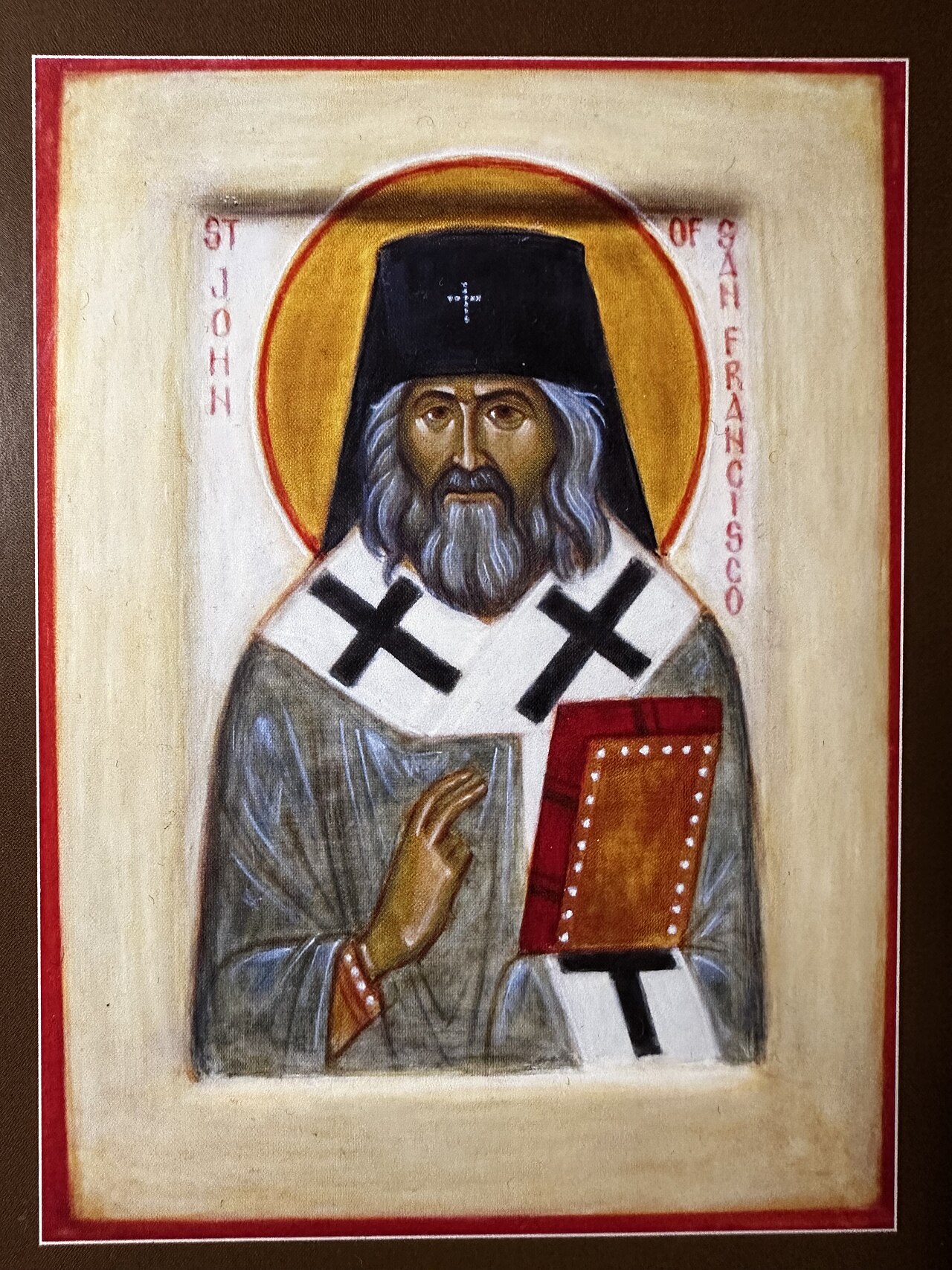
St. John of Shanghai and San Francisco, of ROCOR no less, made this clear:
Clergy are reminded that only persons belonging to the Orthodox Church are to be commemorated at the Divine Liturgy, inasmuch as such commemoration makes the persons commemorated participants of the divine service, in which only Orthodox Christians may participate. Similarly, those who have consciously committed suicide may not be commemorated, as they have left the Church of their own will.
The same should be said about funerals, panikhidas, and other services intended to be performed for Orthodox faithful, as is clear from the very words and expressions used therein.
— St. John of Shanghai and San Francisco, Decree on the Commemoration of the Non-Orthodox, Decree No. 39, Western European Archdiocese of ROCOR, September 23, 1951; https://www.pravmir.com/selected-decrees-and-instructions-of-st-john-of-shanghai-and-san-francisco/
Many who venerate St. John Maximovitch nevertheless commemorate non-Orthodox, using the very expressions he criticized.
The only exception is for persons who exhibited goodwill toward Orthodoxy, were clearly on the path to conversion, and took part in the liturgical life of the Church:
As an exception for those persons who during their lives demonstrated goodwill towards the Orthodox faith and took part in its life to the best of their abilities, a prayer for the reposed [zaupokoinoe molenie] may be served, consisting of the chanting or reading of the seventeenth kathisma (Psalm 118) with the addition of a short litany for the repose of the departed and [the chanting of] “Eternal Memory.”
— St. John of Shanghai and San Francisco, Decree on the Commemoration of the Non-Orthodox, Decree No. 39, Western European Archdiocese of ROCOR, September 23, 1951; https://www.pravmir.com/selected-decrees-and-instructions-of-st-john-of-shanghai-and-san-francisco/
This exception applies to someone seriously inquiring into Orthodoxy, and even then it represents extreme economia from a very holy man.
Thus, this extreme economia cannot apply to the Pope, whom the Church’s saints unanimously consider a heretic, and who expressed no intention of converting to Orthodoxy, let alone participating in its life or showing goodwill toward the faith.
What Patriarch Kirill Said About the Pope
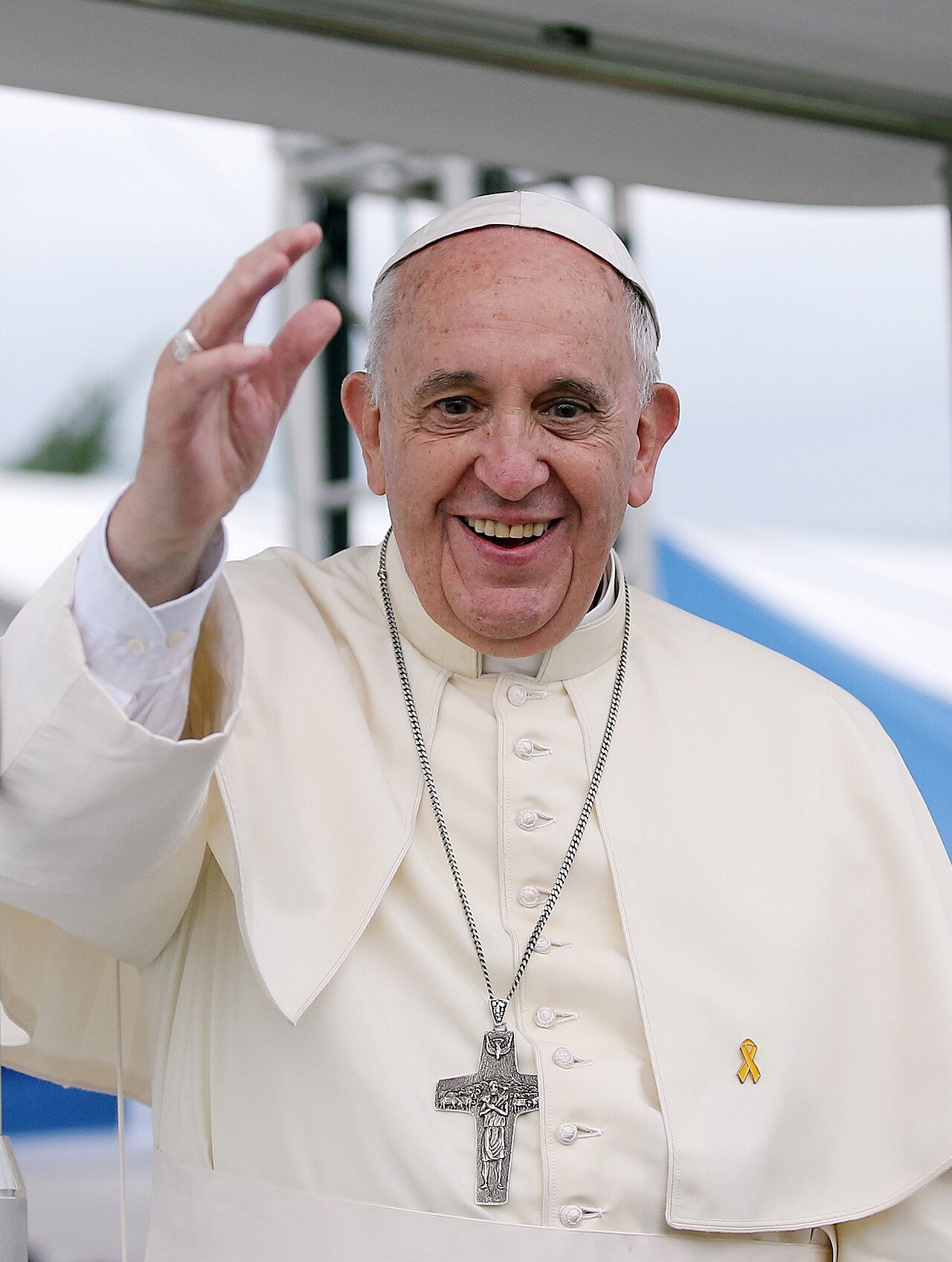
With this standard established, here is what Patriarch Kirill declared when Pope Francis died:
Всемилостивый Господь да упокоит душу служителя Своего, преставившегося на второй день празднования Воскресения Христова христианами всего мира, в селениях праведных. Да приведет Он его «от смерти к жизни» (Ин. 5.24), прощая все прегрешения вольные и невольные, и да сотворит ему вечную память!
May the All-Merciful Lord grant rest to the soul of His departed servant, who passed away on the second day of the celebration of Christ’s Resurrection by Christians worldwide, in the abode of the righteous. May He lead him “from death into life” (John 5:24), forgiving all sins, voluntary and involuntary, and may He grant him eternal memory!
— Patriarch Kirill, Condolences on the passing of Pope Francis, April 21, 2025, https://mospat.ru/ru/news/93119/
“May He grant him eternal memory.” The very prayer St. John of Shanghai restricted to Orthodox Christians, apart from a narrow economia for those moving toward Orthodoxy, Patriarch Kirill offered for the Pope.
The Implications
The Orthodox Church is the sole, undivided Body of Christ, and in her only exists salvation, as St. Cyprian of Carthage teaches (extra ecclesiam nulla salus, “outside the Church there is no salvation”).
When “Memory Eternal” is offered for those outside the Orthodox Faith, something different from what has been handed down is being preached, greatly confusing the faithful. Why?
If we state atheists, pagans, heterodox, and heretics can all be remembered eternally in the kingdom of heaven, then there is no reason whatsoever to convert to Orthodoxy.
Grief tempts us to extend Orthodox prayers to those outside the Church out of love. But these prayers belong to the Church, not to us. To use them contrary to how the Church prescribes is to place sentiment above teaching. Many Orthodox, thinking their love exceeds that of the saints who established these boundaries, would say “Memory Eternal” even for secular celebrities who never considered themselves Christian. The logic leads to its conclusion: if we may pray for the heterodox as we pray for the Orthodox, why not give them Communion? Sentiment overriding tradition is how dogma has been eroded throughout Church history. The indirect message is that conversion, baptism, and participation in the life of the Church are optional.
Kindness to those outside the Church does not require betraying the boundaries established by the Fathers and saints. To do so implies that the saints who established them were unloving.
St. Ignatius Brianchaninov, one of the greatest Russian saints and a bishop of the Russian Orthodox Church, defines the boundary with precision:
It is forbidden to pray for heretics, as though they were members of the Church, nor to take a portion of the holy bread prosphoron […] but pray for their conversion; that is allowed.
— St. Ignatius Brianchaninov, Harbor for Our Hope, “From My Hand and Heart,” p. 15
Pray for their conversion: allowed. Pray for them as members of the Church: forbidden. “May He grant him eternal memory” is not a prayer for conversion. It is a prayer for repose “in the abode of the righteous,” offered for a man who never sought to enter the Orthodox Church. Patriarch Kirill crossed the line that St. Ignatius drew.
The criteria acknowledged within ROCOR
A prominent ROCOR priest, writing on a widely-read blog, confirms this teaching:
When considering whether it is proper to say “Memory Eternal!” with reference to someone who is not an Orthodox Christian, you should consider whether or not it would be proper to do the funeral service or a pannikhida for them. And the answer is “No.”
[…]
And if we are not permitted to sing “Memory Eternal!” even at the burial of a non-Orthodox Christian under such circumstances, we should not say it with regard to them in other contexts either.
— “Stump the Priest: Memory Eternal,” blog post, https://fatherjohn.blogspot.com/2020/09/stump-priest-memory-eternal.html
Many focus on errors outside their jurisdiction while invoking “economia” for their own. St. John of Shanghai explicitly decreed that “Memory Eternal” is reserved for Orthodox Christians, apart from a narrow economia for those moving toward Orthodoxy. Patriarch Kirill offered this prayer for the Pope. ROCOR’s own teachers agree with the patristic teaching.
From Francis to Leo: The Pattern Continues
Pope Francis died on April 21, 2025. Eighteen days later, Patriarch Kirill sent a congratulatory letter to his successor, Pope Leo XIV:
Искренне надеюсь, что при Вашем участии отношения наших Церквей будут поступательно развиваться для совместного свидетельства о Христе и явления человечеству непреходящей красоты жизни, основанной на заповедях Божиих.
It is my sincere hope that with your participation relations between our two Churches will be developing steadily, so that we could bear joint witness to Christ and reveal to humankind the imperishable beauty of life based on God’s commandments.
— Patriarch Kirill, Congratulations to Pope Leo XIV on his election, May 9, 2025, https://www.patriarchia.ru/article/115609
“Joint witness to Christ.” The man for whom Kirill just offered “Memory Eternal” is barely in the ground, and the same theology of partnership resumes with his successor.
The congratulation was not a formality. On June 4, Putin called Pope Leo XIV and, at Kirill’s request, conveyed the Patriarch’s personal greetings. The Pope thanked Kirill and affirmed that “common Christian values” unite them.[1] Within six months of Leo XIV’s election, Moscow Patriarchate officials met the new Pope at least four times: Metropolitan Nestor at the papal audience (May 19), Metropolitan Antony at the Vatican (July 26), the deputy chairman of the Department for External Church Relations (DECR) (September 3), and Metropolitan Antony again at the Sant’Egidio interfaith forum in Rome (October 28).[2]
On Leo’s 70th birthday, Kirill’s language deepened further:
Убежден, что братское соработничество с Русской Православной Церковью в духе любви, которая, по слову апостола Павла, сорадуется истине (1 Кор. 13:6), будет иметь ключевое значение на этом пути.
I am convinced that fraternal co-laboring with the Russian Orthodox Church in the spirit of love, which, in the words of the Apostle Paul, rejoices in the truth (1 Cor. 13:6), will be of key importance on this path.
— Patriarch Kirill, Congratulations to Pope Leo XIV on his 70th birthday, September 14, 2025, https://www.patriarchia.ru/article/117196
“Fraternal co-laboring.” This language appeared months after Francis’s death, addressed to a new Pope. It is a deliberate theological claim: Rome and Moscow are partners in proclaiming the Gospel, and the Pope is a co-laborer in Christ’s work. The saints who condemned communion with Rome would not recognize this language.
Thus, the pattern is repeated. It did not begin with Francis, and it did not end with his death.
St. John of Shanghai explicitly decreed that “Memory Eternal” and funeral prayers are reserved for Orthodox Christians, apart from a narrow economia for those moving toward Orthodoxy. St. Ignatius Brianchaninov forbade praying for heretics as though they were members of the Church. Patriarch Kirill offered these very prayers for the Pope, then immediately resumed the partnership with his successor. Those within ROCOR who correctly teach this same standard have said nothing. The witness of the saints is clear. The violation is documented. The silence of Kirill’s defenders speaks for itself.
The hypocrisy extends beyond commemorating the heterodox to incorrectly affirming their faith in the one true God.
“По просьбе Патриарха Московского и всея Руси Кирилла Владимир Путин передал Папе Римскому Льву XIV пожелания успехов в пастырском служении” / “At the request of Patriarch Kirill of Moscow and All Rus’, Vladimir Putin conveyed to Pope Leo XIV wishes for success in his pastoral ministry.” Kremlin press service, reported at https://www.patriarchia.ru/article/116024, June 4, 2025. Pope Leo “упомянул Патриарха Кирилла, поблагодарив его за добрые пожелания… и подчеркнул, что общие христианские ценности могут быть светом, помогающим искать мир” / “mentioned Patriarch Kirill, thanking him for good wishes… and emphasized that common Christian values can be a light helping to seek peace.” Vatican press office statement, same source; https://www.vaticannews.va/en/pope/news/2025-06/pope-leo-xiv-phone-call-russian-president-vladimir-putin.html. ↩
Metropolitan Nestor at Pope Leo XIV’s meeting with Christian representatives, May 19, 2025, https://www.patriarchia.ru/article/115790, English: https://mospat.ru/en/news/93259/; Metropolitan Antony meets Pope Leo XIV at the Vatican, July 26, 2025, https://www.patriarchia.ru/article/116651, English: https://mospat.ru/en/news/93436/; Deputy DECR chairman (Protopriest Igor Vyzhanov) meets Pope at WCC Joint Working Group audience, September 3, 2025, https://www.patriarchia.ru/article/117178; Metropolitan Antony at Sant’Egidio “Dare for Peace” forum, October 28, 2025, https://www.patriarchia.ru/article/117992. ↩