
Introduction
There are two cases when one may be permitted to say something unfavorable about one’s fellow. The first is when a person needs to discuss with other discerning people a method for correcting someone who has sinned. The second is when one needs to protect brethren who, out of ignorance, are in danger of mistaking evil for good.
— St. Basil the Great, The Lesser Rules, Question 25 (PG 31, 1100C), quoted in Hieromonk Gregorios, Do Not Judge, p. 37; cf. Ascetic Works of Saint Basil, pp. 239–240[1]
Patriarch Kirill (Gundyaev) I of Moscow and All Russia leads the largest Orthodox Church in the world: 180 million faithful, more than 36,000 churches and liturgical facilities, and over 300 dioceses.[2] His influence extends to Orthodox faithful across Central and Eastern Europe, the Americas, and Africa, with many regarding him as a stalwart of traditional Orthodoxy and a thundering spiritual authority.
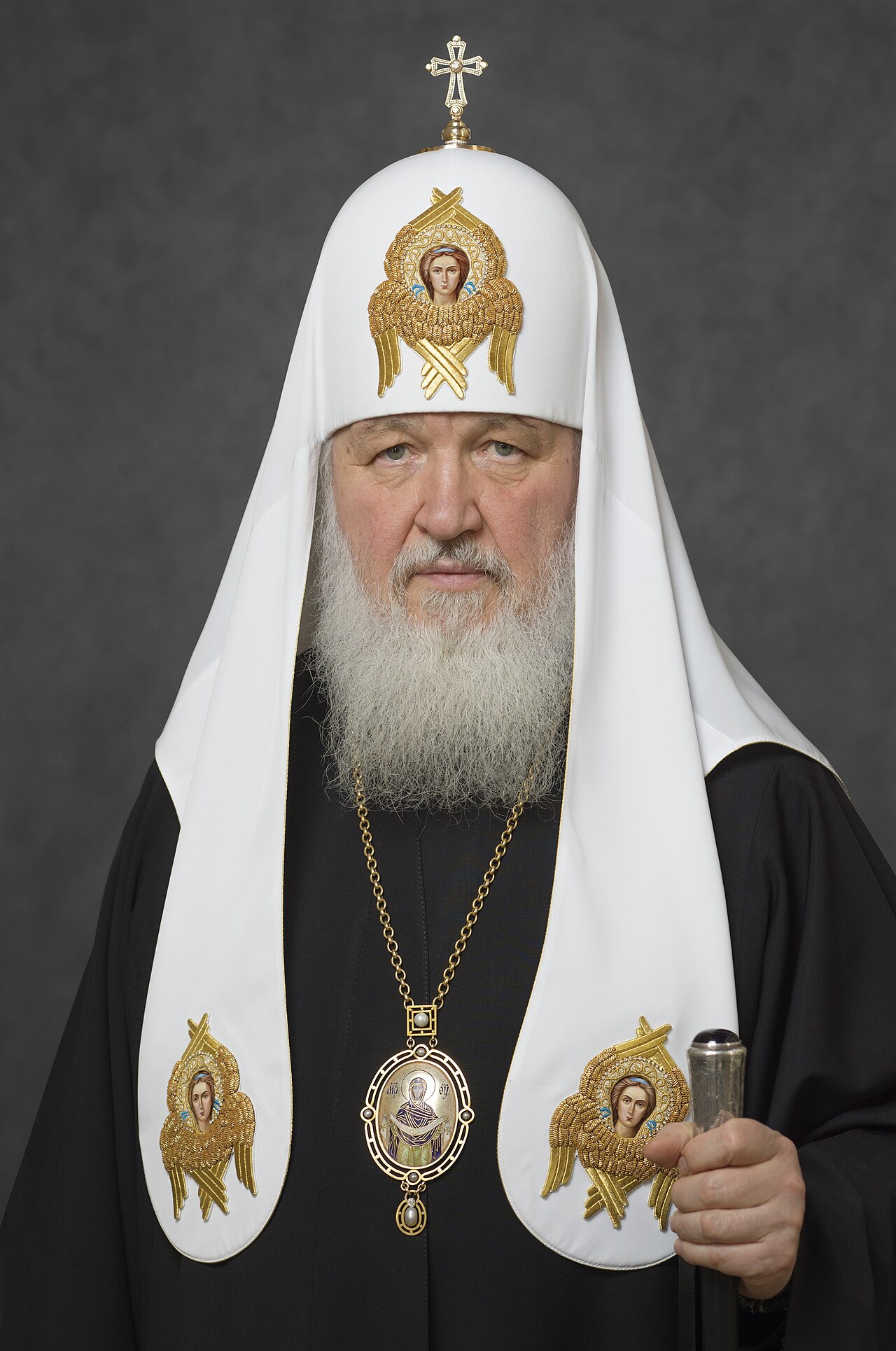
Before becoming Patriarch in 2009, Patriarch Kirill spent nearly four decades shaping the Moscow Patriarchate’s foreign policy.[3][4]
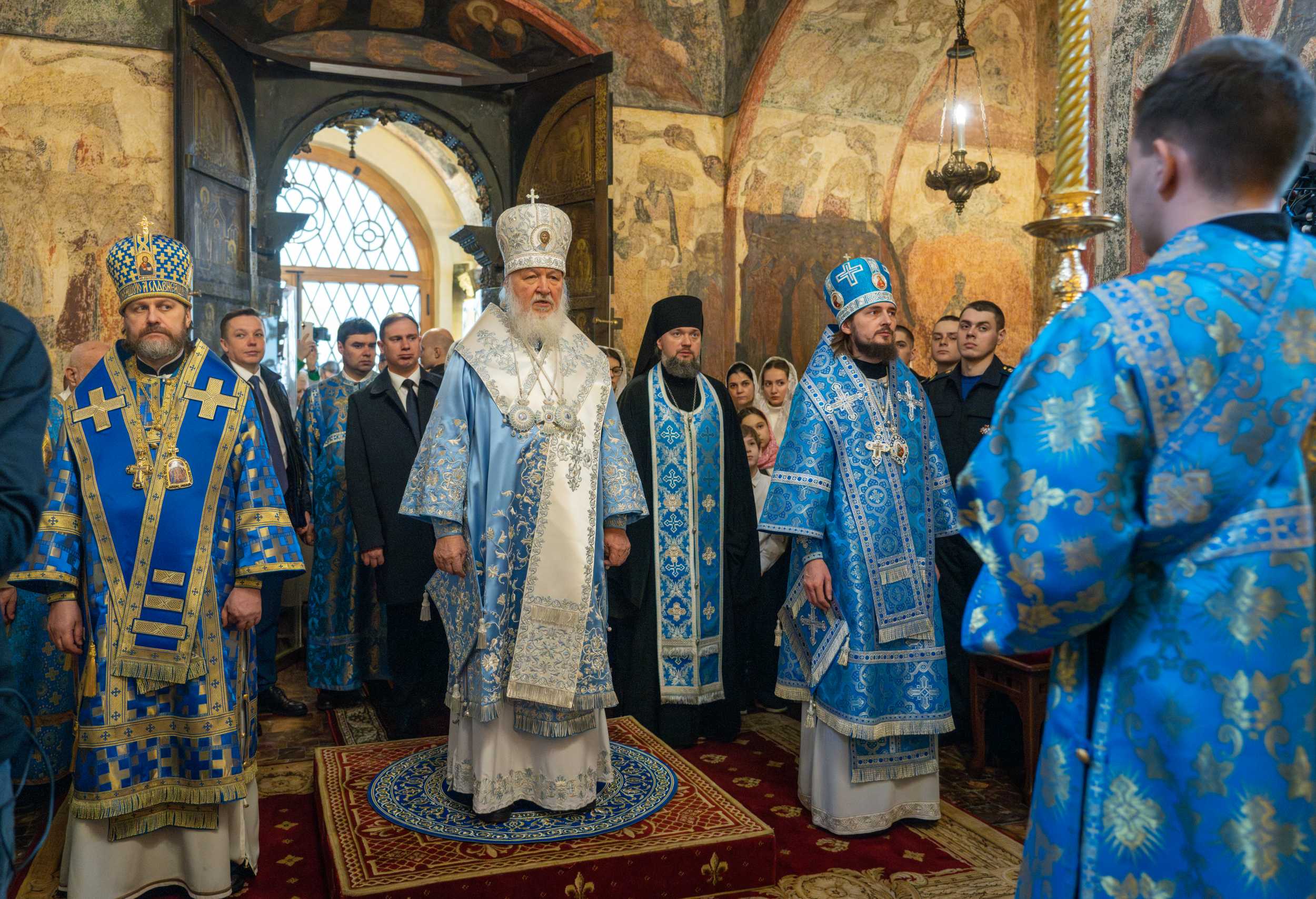
The Russian Orthodox Church Outside of Russia (ROCOR) is formally a self-governing part of the Moscow Patriarchate. The name of Patriarch Kirill is commemorated in every ROCOR liturgy, and the Patriarch confirms the election of ROCOR’s own First Hierarch.[5] ROCOR is canonically bound to the Patriarch whose teachings this book examines.
Therefore, Patriarch Kirill, through his teaching and example, shapes how millions understand Orthodoxy.
For Those Who Are Struggling
Across the Orthodox world, many faithful believers face an agonizing question. They love their church, their parish, their traditions. They venerate the saints (including those of Russia) and treasure the liturgical inheritance of centuries. Yet they sense something is wrong. They hear their patriarch speaking in ways that trouble them, and they fear saying anything about it: fear of schism, of being wrong, of losing their community if they speak. They are told, directly or indirectly, that their discomfort is a product of Western bias rather than genuine discernment.
This book is written for them.
For those who don’t sense these same issues… please continue reading on.
On Sources
This book includes over 100 direct citations from Patriarch Kirill, presented wherever possible in his original Russian with direct source links. Two official Moscow Patriarchate websites are cited extensively:
patriarchia.ru is the main official website of the Russian Orthodox Church, publishing news, official statements, and documents from the Patriarch and Holy Synod.
mospat.ru is the official website of the Department for External Church Relations (DECR), which Patriarch Kirill personally chaired from 1989 to 2009 and which continues to report directly to him.
This book cites over 1,000 passages from the Church Fathers, Ecumenical Councils, Holy Canons, and contemporary Orthodox elders. The patristic citations were compiled from published English translations wherever available, drawing from standard collections including the Nicene and Post-Nicene Fathers, the Ante-Nicene Fathers, the Philokalia, and scholarly editions from Orthodox publishers. Where no existing English translation was available, the authors translated directly from the Greek, consulting both the Patrologia Graeca (PG) and modern Greek critical editions.
All patristic citations were reviewed against the original Greek by a native Greek-speaking theological reviewer. The Greek original text has been provided in the footnotes for many citations, so that readers with knowledge of Greek can verify the translations independently. The source line accompanying each blockquote identifies the specific work, edition, and page number.
A word for the skeptical
The Russian Orthodox Church is a beloved institution to the faithful (and even the writers of this text). The Russians have contributed much to our Holy Orthodoxy, and have given birth to numerous saints and elders. Patriarch Kirill, its current leader, is overwhelmingly seen as a charming, charismatic, and outspoken figure, praised even outside of Orthodoxy for his “godly wisdom, scriptural insight, and modern-day proverbs.”[6]
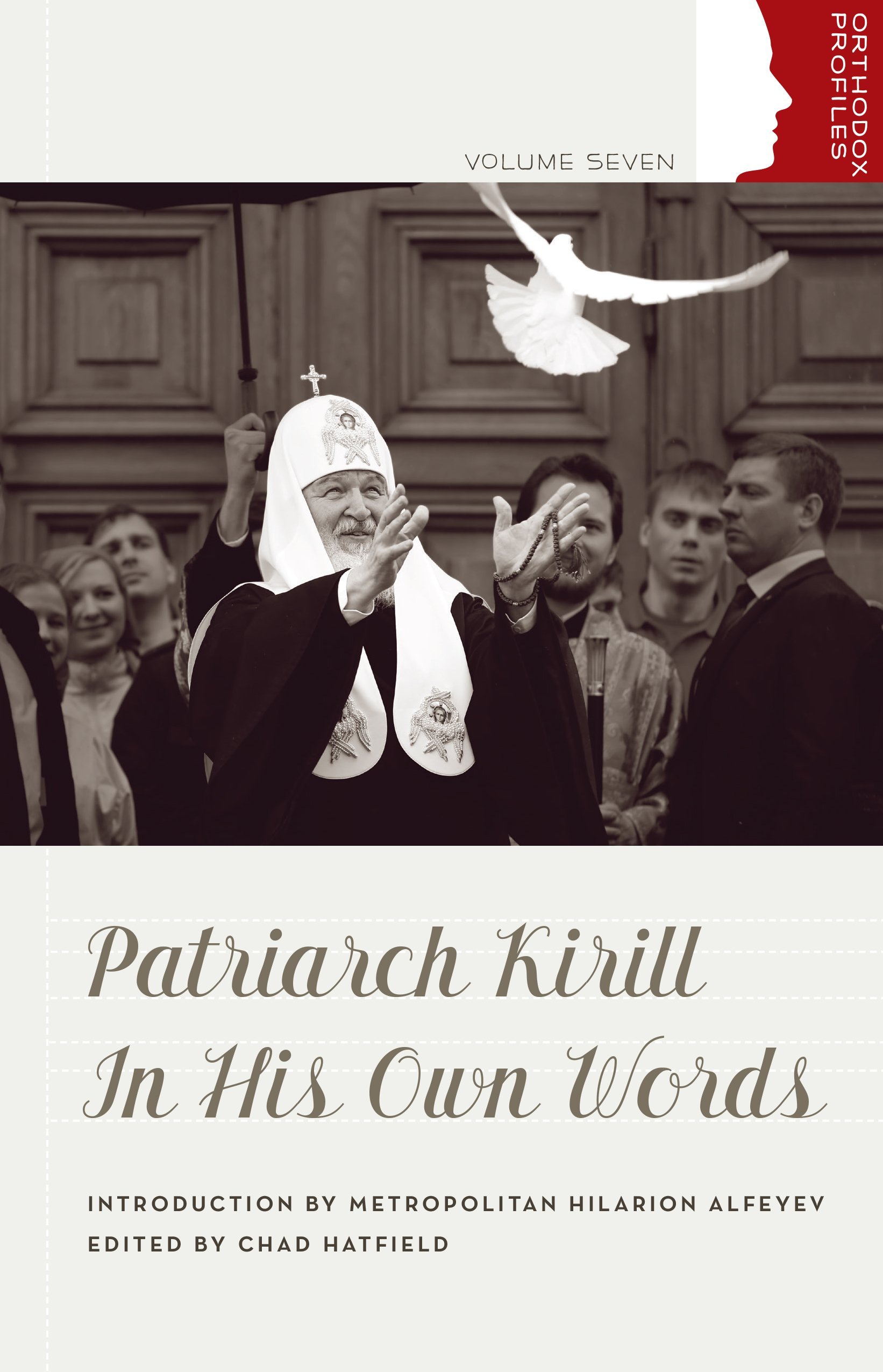
Because of this, many of our brethren will be surprised by the overwhelming evidence in the following chapters. Unfortunately, many supporters of Patriarch Kirill and the Russian Orthodox Church (whom we do not hold anything against) will attempt to dismiss this evidence as fabrication, misinformation, anti-Russian propaganda, cherry-picking, slander, or a secret operative move. Some even insist that any critical assessment of the Patriarch is merely a product of “post-Cold War biases.”[6]
The corpus of evidence in this study is overwhelming. Patriarch Kirill’s direct words are quoted extensively, including his original Russian, along with easy-to-access links. Most of these sources are on official sites of the Moscow Patriarchate, patriarchia.ru and mospat.ru, and this will make it very hard for this evidence to be brushed aside as disinformation.
This text does not seek to present an Anti-Russian view. It draws heavily on the witness from numerous Russian saints, including St. Ignatius Brianchaninov, St. Theophan the Recluse, St. John of Kronstadt, and Hieromartyr Daniel Sysoev of Moscow, and many more. The following chapters are saturated with the witness of our Holy Russian saints. Their witness will make the position of “Western propaganda” untenable.
The patristic witness includes Russian, Greek, and Serbian Fathers, ROCOR luminaries, Athonite elders, and contemporary confessors and Elders of the Church, many of whom are revered as saints.
Consensus Patrum: The Standard of Evaluation
The standard by which this book examines Patriarch Kirill is consensus patrum: the agreement of the Church Fathers.
St. John of Damascus, that pillar of Orthodox theology, articulated the principle with characteristic precision:
The rare cannot become law in the Church, nor does one swallow bring the spring, just as Gregory the Theologian accepts, and the truth is that not even a single word is capable of overturning the tradition of the entire Church, from the ends of the earth to its farthest reaches…. So accept, then, the multitude of Scriptural and patristic sayings.
— St. John of Damascus, Three Treatises on the Divine Images, Treatise I.25-26[7]
This book presents an exhaustive collection of patristic quotes and scriptural verses, with the sole purpose of proving consensus patrum on the statements and actions of Patriarch Kirill presented in each chapter. With over 1,000 block quotes, it will be difficult to dismiss this as cherry-picking.
Readers interested in the topic of Consensus Patrum can turn to Appendix A for a detailed explanation; understanding consensus patrum is critical to understanding how Orthodoxy works in our times, an understanding lost on many of our brethren.
This work is therefore thoroughly one of consensus patrum. Those who choose to dissent from the positions in this book should not dissent based on their feelings or opinions, as this has no place in the Orthodox Church, but rather by presenting a greater and more accurate consensus patrum, after first understanding consensus patrum. However, after spending hundreds of hours sourcing and compiling, we entreat readers to read on, and engage with the consensus patrum presented in this work.
What consensus patrum means, who qualifies as a true theologian in the Orthodox sense, why academic credentials do not confer theological authority, and why those who remain stuck on “who decides?” have rejected the patristic framework entirely: all of this is explained in Appendix A, which we strongly encourage every reader to read.
A 15-Minute Catechism
While many will want to skip ahead, we recommend every reader fully read the introduction. Our times are marked by many misunderstandings of what the Orthodox Church and her saints teach, and many concerns that arise are answered within 15 minutes of reading; it will also provide the framework upon which this book rests.
Please read on.
On Schism
Let it be known right from the start: this book in no way, shape, or form advocates for anyone to go around deeming any jurisdiction, nor any saint, nor any sacraments graceless. There are unfortunately many schismatics, who, like vultures, swoop in on heresy that materializes within the canonical Church as a sort of marketing opportunity to cajole and lure people into their much greater heresy[8].
This work will thoroughly address these schismatic groups and the topic of schism in Chapter 30: Correct Critique Is Not a Bridge to Schism and Chapter 31: In Defense of the Moscow Patriarchate Saints.
Answering Common Objections
On Judgment
Orthodox Christians are often erroneously told to ignore the actions of their hierarchs and focus on their own sins rather than judging, as Matthew 7:1 tells us: “Judge not, that you be not judged.”
Most Orthodox Christians misunderstand this verse. The golden mouth, St. John Chrysostom, clarifies:
“Judge not that you be not judged” concerns life, not faith.
— St. John Chrysostom, Homily 34 on Hebrews, https://www.newadvent.org/fathers/240234.htm[9]
Constantine Zalalas, Orthodox theologian and lecturer (M.A. Dogmatic Theology), further helps us understand St. John Chrysostom:
“Do not judge, so you will not be judged” applies to all matters of lifestyle and not in the matters of faith.
— Constantine Zalalas, https://www.youtube.com/watch?v=o4GWNHXsUrE&t=487s, 00:08:07
Anyone who examines their hierarchs in matters of faith, whether it be their teachings or actions, has not engaged in sinful judgment as some incorrectly believe.
Those who state such claims themselves do not believe this, as by their own litmus, they would also be sinfully judging by such criticism. Just as we understand this to be a form of God-pleasing correction, we can then understand that not all correction is sinful judgment.
Aren’t Patriarchs basically saints?
Some object: “But Patriarch Kirill is the Patriarch. Who are you, or I comparatively?” St. John of Shanghai and San Francisco, a great saint of ROCOR, helps us to understand this error:
And these were those who called themselves “right-believing,” who considered themselves to be Orthodox. The iconoclast heresy prevailed for a hundred and fifty years before it was finally eradicated.
— St. John of Shanghai and San Francisco, Man of God, “Orthodoxy” sermon, p. 157
For 150 years, iconoclasts, many of whom were clergymen, bishops and patriarchs, considered themselves to be Orthodox, and yet they were not right-believing, thus were not Orthodox at all (Orthodoxy means “right belief”). Thus, no title bestowed by the Church, including “Patriarch,” guarantees infallibility and correct faith. It never has, and never will. The ultimate measure for Orthodox Christians is whether the teaching conforms to the consensus patrum and Holy Tradition.
If examining faith is not sinful judgment, then neither is it optional.
What if I’m just a lay person?
In 1848, the four Eastern Patriarchs confirmed the role of the faithful in protecting the faith:
Neither Patriarchs nor Councils could then have introduced novelties amongst us, because the protector of religion is the very body of the Church, even the people themselves, who desire their religious worship to be ever unchanged and of the same kind as that of their fathers.
— Encyclical of the Eastern Patriarchs, 1848, http://orthodoxinfo.com/ecumenism/encyc_1848.aspx[10]
Careful examination of our tradition and the holy resistance contained in it proves this in practice. When appropriate, simple laypeople rebuked patriarchs.[11] Clergy deposed their own hierarchs and elected replacements.[12] Congregations refused communion with heretical prelates for decades.[13] The people of Constantinople rejected the Council of Florence even after their bishops had signed it.[14] And even more than this, the saints did not chastise the faithful for these actions, but lauded them for it.[15][16]
Exposing error in matters of faith, when done appropriately, is not sinful. St. Ignatius Brianchaninov, a towering Russian saint, teaches that revealing abuses within divine institutions is not disrespect but reverence: it preserves what God has entrusted to men in its proper state of holiness (The Field, p. 296).
A note on silence
The authors of this text do not write because they think themselves saints. They write because they fear disobeying the saints, and will be held accountable if they stay silent.
Why? Because the Fathers teach that silence in the face of heresy is complicity.
To suppress confession of the faith is to deny it.
— St. Maximus the Confessor, https://www.patristicfaith.com/orthodox-christianity/should-we-ever-be-silent-on-the-matters-of-faith-lessons-from-the-life-of-st-maximus-the-confessor/[17]
It is a commandment of the Lord not to remain silent when the faith is in danger.
— St. Theodore the Studite, Letter 81, https://www.sostis.gr/blog/item/1445-otan-prokeitai-gia-tin-pisti-na-min-siwpoume[18]
An error which is not resisted is approved.
— Pope St. Felix III, cited in Pope Leo XIII, Inimica Vis (1892), §7
Elder Gabriel of Koutloumousiou Monastery, a disciple of St. Paisios, invoked St. Gregory Palamas on the three forms of atheism:
The first type of atheism: the atheist who says God does not exist. The second type of atheism is the heretic. Third type of atheism is when the faith is in danger and I am silent… I don’t speak up.
— Elder Gabriel of Koutloumousiou Monastery, https://www.youtube.com/watch?v=HXJ65qfUdGY, 00:04:15[19]
These saints spoke axiomatically and thus their teachings apply to all Orthodox Christians, not just to some small group of holy elders and saints, as some prefer to imagine. Their words clearly show that this is not how they thought of the matter.
Metropolitan Philaret of New York, Third First Hierarch of ROCOR and a confessor whose incorrupt relics testify to his holiness, applied this same principle in the twentieth century:
We observe, however, that nobody in a higher position than our own is raising his voice; and this fact constrains us to speak out, lest at the Last Judgment we should be reproached for having seen the danger of Ecumenism threaten the Church, and yet not having warned her Bishops.
— Metropolitan Philaret (Voznesensky), First Sorrowful Epistle, July 27, 1969. Orthodox Life, Holy Trinity Monastery, Jordanville. http://orthodoxinfo.com/ecumenism/sorrow.aspx
When those who should be speaking out in higher positions are not, those in lower positions are then constrained to speak. The following chapters will prove that many in positions of authority are not speaking up out of fear or supposed virtue.
On “harshness”
Some may find this study and the saints quoted within it harsh. The Holy Monastery of Stavronikita on Mount Athos, in a letter co-signed by St. Paisios the Athonite, helps to establish the correct mindset.
The Fathers of the Church who appeared “harsh” in the observation of dogma are those who loved their fellow man more than anything. Since they recognized His unfathomable depths, they did not want to mock him through niceties and empty love, but they honored Him by the Gospel of Truth, which grants the blessed life in the Holy Spirit. Rigid adherence to dogma is therefore not narrow-mindedness, nor is the struggle for Orthodoxy bigotry, but rather this is the sole means of authentic love.
— Letter of the Holy Monastery of Stavronikita, Mount Athos (1968), signed by Fr. Vasileios (Gontikakis) and St. Paisios the Athonite; reproduced in Protopresbyter Anastasios K. Gotsopoulos, On Common Prayer with the Heterodox, p. 83[20]
Why should I read a book about a Patriarch?
One of the most common objections will be:
“What is this about the Patriarch? What is this about heresy? Forgive me, I am only to see my own sins, and not to judge my brother, let alone the Patriarch. Let us then pray, and attend to ourselves, and not others.”
To this mindset, we respond:
Many chapters in the book are written around the premise of Consensus Patrum as described previously. Each chapter qualifies its importance by carefully examining the teachings and actions of our fathers and saints.
Those who think to espouse an indifferent position because “why does a Patriarch concern me” may not yet have encountered what the saints themselves taught about these matters. They will be surprised to find that St. Justin Popovich, St. Paisios the Athonite, Metropolitan Augoustinos Kantiotes, and many other saints and holy figures disagree with them. The only way a person can proceed with this position (which does not come from our saints) is if they refuse to read the following chapters which seek to dismantle it.
As far as heresy supposedly not being relevant to us, let us attend to the words of the great Russian Patriarch, St. Tikhon of Moscow:
At the beginning, not only pastors alone suffered for the faith of Christ, but lay people also, men, women and even children. Heresies were fought against by lay people as well.
— St. Tikhon of Moscow, Homily on the Sunday of Orthodoxy, February 23, 1903
St. Tikhon of Moscow isn’t just any saint. His decree (Ukaz 362, 1920) serves as the canonical foundation on which ROCOR (Russian Orthodox Church Outside of Russia) was formed and justified. He cannot be easily dismissed.
Does St. Tikhon then say here that the early Christians, including women and children, simply focused on their own sins, and thus could rightly ignore heresy?
The purpose of this book then, is not only to present the witness of Patriarch Kirill, but to also call the faithful to return to the command of the saints: read the lives of the saints. Those who do not read the lives of the saints are those with this mistaken understanding. Read them, and read them in abundance. Anyone who states with “superficial humility” that they can ignore heresy because they need to focus on their own sins betrays that they have not yet started reading the lives of the saints, for they would know our saints never made such statements, nor practiced, nor taught this to anyone, at any time. It is precisely this neglect that is the root of many evils in our time, and it is precisely why we call them back to the saints.
It is not right for you to quarrel on your own behalf.
It is, of course, another matter if you react to defend serious spiritual matters, matters that relate to our faith, to Orthodoxy. You have a responsibility to do this.
— St. Paisios the Athonite, Spiritual Awakening (Πνευματικὴ Ἀφύπνισις, Λόγοι Β΄), pp. 59-60[21]
Each chapter seeks to present an expansive collection of patristic quotes on these particular topics in English, the product of months of research and effort, specifically assembled to help the faithful understand the mindset of the saints on these matters.
The reading of the lives of the saints is the remedy, and the relevant consensus patrum on each matter has been humbly gathered in the chapters that follow to assist in this. Anyone who thinks this is irrelevant to them would be greatly assisted in reading on to discover what the saints believed about these things, so that personal opinions can be laid down and the mindset of the saints be acquired in its stead.
Last note before the beginning of the study
As we begin this study, we wish to reiterate: the following chapters present difficult evidence, at exhaustive length. Readers are invited to put their moralizations and rationalizations aside and, with the help of the Jesus Prayer, examine the evidence; to listen with patience to the witness of the Church Fathers, the saints, our Holy Canons and the consensus patrum; and to fight the temptation to retreat into moralistic concerns and refutations. This temptation is precisely what Fr. John Romanides identified as the great modern Orthodox failure:
The strange thing is that in practice Orthodox Christians today have separated dogmatics from ethics, or theology from ethics, and have occupied themselves a great deal with moralism and the like.
— Protopresbyter John Romanides, Empirical Dogmatics Vol. 1, p. 51
Original Greek: “«Δύο καιροὺς εἶναι ἡγοῦμαι, καθ᾽ οὖς ἔξεστιν εἰπεῖν τι περί τινος φαῦλον · ὅτε ἀνάγκην ἔχει τις βουλεύσασθαι μετὰ καὶ ἑτέρων τῶν εἰς τοῦτο δεδοκιμασμένων πῶς διορθωθῇ ὁ ἡμαρτηκώς · καὶ πάλιν ὅταν χρεία γένηται ἀσφαλίσασθαί τινας τοὺς ἐξ ἀγνοίας δυναμένους πολλάκις συναναμιγῆναι τῷ κακῷ ὡς καλῷ.»” ↩
OrthoChristian, “Russian Church has 180 million faithful; 36,000 parishes; 1,000 monasteries; 56 seminaries—Pat. Kirill,” reporting Patriarch Kirill’s own statistics. https://orthochristian.com/107637.html. See also Moscow Patriarchate, “Patriarch Kirill announces statistical data on the life of the Russian Orthodox Church,” https://mospat.ru/en/news/47970/ ↩
Moscow Patriarchate, official biography of Patriarch Kirill: “From 1971 to 1974, he was the Moscow Patriarchate representative to the World Council of Churches in Geneva.” https://mospat.ru/en/patriarch/ ↩
Moscow Patriarchate, official biography of Patriarch Kirill: “from 1975 as a member of the WCC Central and Executive Committees up to 1988… From November 13, 1989, to 2009, he was chairman of the Department for External Church Relations.” Russian original: «с 1975 г. вошел в центральный и исполнительный комитеты ВСЦ и вплоть до 1998 г. участвовал в их работе.» https://mospat.ru/en/patriarch/. Note: the English-language mospat.ru biography states “up to 1988”; the Russian original confirms 1998, consistent with twenty-three years of attendance (see Chapter 7). ↩
Act of Canonical Communion, Russian Orthodox Church Outside of Russia official website, https://synod.com/synod/engdocuments/enmat_akt.html. The Act states that ROCOR “remains an indissoluble, self-governing part of the Local Russian Orthodox Church”; that the ROCOR First Hierarch’s election is confirmed by “the Patriarch of Moscow and All Russia and the Holy Synod of the Russian Orthodox Church”; and that “the name of the Primate of the Russian Orthodox Church” is commemorated in ROCOR churches. ↩
Patriarch Kirill, In His Own Words, ed. Chad Hatfield, introduction by Metropolitan Hilarion (Alfeyev) (Yonkers, NY: St Vladimir’s Seminary Press, 2016). Orthodox Christian Profiles Series, Number 7. ISBN 978-0-88141-550-6. ↩
Original Greek: “«οὐ τὸ σπάνιον νόμος τῇ ἐκκλησίᾳ «οὐδὲ μία χελιδὼν ἔαρ ποιεῖ», ὡς καὶ τῷ θεολόγῳ Γρηγορίῳ καὶ τῇ ἀληθείᾳ δοκεῖ· οὐδὲ λόγος εἷς δυνατὸς ὅλης ἐκκλησίας τῆς ἀπὸ γῆς περάτων μέχρι τῶν αὐτῆς περάτων ἀνατρέψαι παράδοσιν….Δέχου τοίνυν τῶν γραφικῶν καὶ πατρικῶν χρήσεων τὸν ἑσμόν»” ↩
Elder Philotheos Zervakos (1884-1980), one of the most revered Greek elders of the twentieth century, who opposed the calendar change and fought ecumenism throughout his life, judged the Old Calendarist solution worse than the disease: “The Old Calendarists fell into many great delusions in order to keep the Old Calendar, greater and worse delusions than the New Calendarists.” Letter 8, September 23, 1975; in Paternal Counsels, Vol. II, trans. Fr. Nicholas Palis. See John Sanidopoulos, “Elder Philotheos on the Schismatic Old Calendarists”. ↩
Original Greek: “«Τό, Μὴ κρίνετε ἵνα μὴ κριθῆτε, περὶ βίου ἐστίν, οὐ περὶ πίστεως.»” ↩
Original Greek: “«Ἔπειτα παρ᾽ ἡμῖν οὔτε Πατριάρχαι οὔτε Σύνοδοι ἐδυνήθησάν ποτε εἰσαγαγεῖν νέα, διότι ὁ ὑπερασπιστὴς τῆς θρησκείας ἐστὶν αὐτὸ τὸ σῶμα τῆς Ἐκκλησίας, ἤτοι αὐτὸς ὁ λαός, ὅστις ἐθέλει τὸ θρήσκευμα αὐτοῦ αἰωνίως ἀμετάβλητον καὶ ὁμοειδὲς τῷ τῶν Πατέρων αὐτοῦ.»” ↩
In addition to interrupting the patriarch’s sermon, Eusebius posted a written protest (contestatio) publicly, charging Nestorius with the heresy of Paul of Samosata. See New Catholic Encyclopedia, “Nestorius”: “His doctrine was challenged by Eusebius of Doryleum, still a layman, who posted a contestatio, or rebuttal… charging Nestorius with the errors of Paul of Samosata.” Three years later, the Council of Ephesus (431) condemned Nestorius, and the layman’s theological objection was upheld by the Council. ↩
When two Spanish bishops, Basilides and Martial, lapsed into idolatry (c. 258), the local clergy and laity deposed them and elected replacements (Sabinus and Felix). St. Cyprian praised this action in Epistle 67: “They themselves have the power either of choosing worthy priests, or of rejecting unworthy ones.” ↩
After St. John Chrysostom was unjustly deposed (404 AD), the faithful of Constantinople refused to enter churches under his successor Arsacius. They held assemblies outdoors “in the suburbs of the city” for nearly a decade (Sozomen, Historia Ecclesiastica, Book VIII). Similarly, the laity rejected the Council of Florence (1439), refusing communion from bishops who signed the union with Rome. ↩
When the Council of Florence (1438-1439) produced a union with Rome signed by nearly all the Orthodox bishops, the laity of Constantinople refused to accept it. They refused communion from the unionist hierarchs. The Union failed because the people rejected it. See Joseph Gill, The Council of Florence (Cambridge: Cambridge University Press, 1959); Steven Runciman, The Great Church in Captivity (Cambridge: Cambridge University Press, 1968), pp. 103–115. ↩
St. Basil the Great, Letter 92 (to the Italians and Gauls), c. 372 AD: “The better laity shun the churches as schools of impiety, and lift their hands in the deserts with sighs and tears to their Lord in heaven.” ↩
St. Cyprian of Carthage, Epistle 67, c. 258 AD, in Ante-Nicene Fathers, Vol. V (online at New Advent): “On which account a people obedient to the Lord’s precepts, and fearing God, ought to separate themselves from a sinful prelate, and not to associate themselves with the sacrifices of a sacrilegious priest, especially since they themselves have the power either of choosing worthy priests, or of rejecting unworthy ones.” ↩
Original Greek: “«Ἡ σιγὴ τῶν λόγων, ἀναίρεσις τῶν λόγων ἐστί.»” ↩
Original Greek: “«Ἐντολὴ γὰρ Κυρίου μὴ σιωπᾶν ἐν καιρῷ κινδυνευούσης Πίστεως.»” ↩
Original Greek: “«Πρώτο είδος αθεΐας ο άθεος που λέει δεν υπάρχει Θεός. Δεύτερο είδος αθεΐας ο αιρετικός. Τρίτο είδος αθεΐας όταν η πίστις κινδυνεύει και εγώ δεν μιλάω.»” ↩
Original Greek: “«Οι Πατέρες της Εκκλησίας, που φάνηκαν «σκληροί» στη διατήρηση του Δόγματος, είναι εκείνοι που αγάπησαν περισσότερο από κάθε άλλον τον άνθρωπο. Γιατί γνώρισαν τα απύθμενα βάθη του και δεν θέλησαν ποτέ να τον κοροϊδέψουν με τις συνθηματολογίες εφήμερης και ανύπαρκτης αγάπης, αλλά τον σεβάστηκαν προσφέροντάς του το Ευαγγέλιο της Αληθείας, που χαρίζει τη μακαρία εν Αγίω Πνεύματι ζωή. Δεν είναι λοιπόν η πιστότης στο Δόγμα στενοκεφαλιά ούτε ο αγώνας για την Ορθοδοξία μισαλλοδοξία, αλλά ο μοναδικός τρόπος αληθινής αγάπης.»” ↩
Original Greek: “«Δεν ταιριάζει να μαλώνης για τον εαυτό σου. Άλλο το να αντιδράσης, για να υπερασπιστής σοβαρά πνευματικά θέματα, που αφορούν την πίστη μας, την Ορθοδοξία. Αυτό είναι καθήκον σου.»” ↩