
"Eternal Memory" for the Anathematized
Patriarch Kirill goes further than praising Sergius for capitulating to Soviet power. He performs liturgical honors for that power himself.
Some will say this is simply honoring the dead: a pastoral gesture, not a political statement. But the Church’s own liturgical tradition draws a line that cannot be crossed.
A. What the Canons Teach
On the Sunday of Orthodoxy, the Church reads the Synodikon. For defenders of the faith, the people cry “Eternal Memory” three times. For heresies and their defenders, the Church answers “Anathema” three times. The Synodikon itself preserves the pattern: confession of the faith is followed by repeated acclamations of “Eternal Memory (3),” while violations of Church tradition receive “Anathema (3).” https://oodegr.com/english/ekklisia/synodoi/synodicon_of_orthodoxy.htm
The Council of Laodicea directly addressed venerating the “martyrs” of heretics:
No Christian shall forsake the martyrs of Christ, and turn to false martyrs, that is, to those of the heretics, or those who formerly were heretics; for they are aliens from God. Let those, therefore, who go after them, be anathema.
— Canon 34, Council of Laodicea (4th century), in Nicene and Post-Nicene Fathers, Series II, Vol. XIV (online at New Advent). https://www.newadvent.org/fathers/3806.htm[1]
The Ancient Epitome printed with the same canon in Schaff’s Nicene and Post-Nicene Fathers: “Whoso honours an heretical pseudo-martyr let him be anathema.” https://www.ccel.org/ccel/schaff/npnf214.viii.vii.iii.xxxix.html
The same Council forbade Orthodox Christians from attending the shrines or memorial sites of heretics for prayer or services:
The members of the Church are not allowed to meet in the cemeteries, nor attend the so-called martyries of any of the heretics, for prayer or service; but such as so do, if they be communicants, shall be excommunicated for a time; but if they repent and confess that they have sinned they shall be received.
— Canon 9, Council of Laodicea (4th century), in Nicene and Post-Nicene Fathers, Series II, Vol. XIV (online at New Advent). https://www.newadvent.org/fathers/3806.htm[2]
In the Synodikon, “Eternal Memory” and “Anathema” are liturgical opposites. For a patriarch to sing “Eternal Memory” at the shrines of a power the Church anathematized is to blur the line the Synodikon draws.
The 1918 All-Russian Council’s anathema against Soviet Power used the same liturgical formula the Church uses against heresies and their defenders: “Anathema.” The Bolshevik regime was not a Christian heresy in the narrow dogmatic sense addressed by Laodicea. But the canonical principle is still grave: the Church must not transform the memorial cult of those alien to God into a place of Orthodox prayer and veneration. For a patriarch to perform liturgical services at memorial sites bearing the symbols of an anathematized anti-Christian regime falls under that canonical warning.
Canon 9’s “martyries of heretics” are memorial shrines honoring those outside the Church; Soviet war memorials, adorned with the symbols of an anathematized regime, function as an analogous case, especially when the memorial ritual itself retains Soviet cultic symbols.
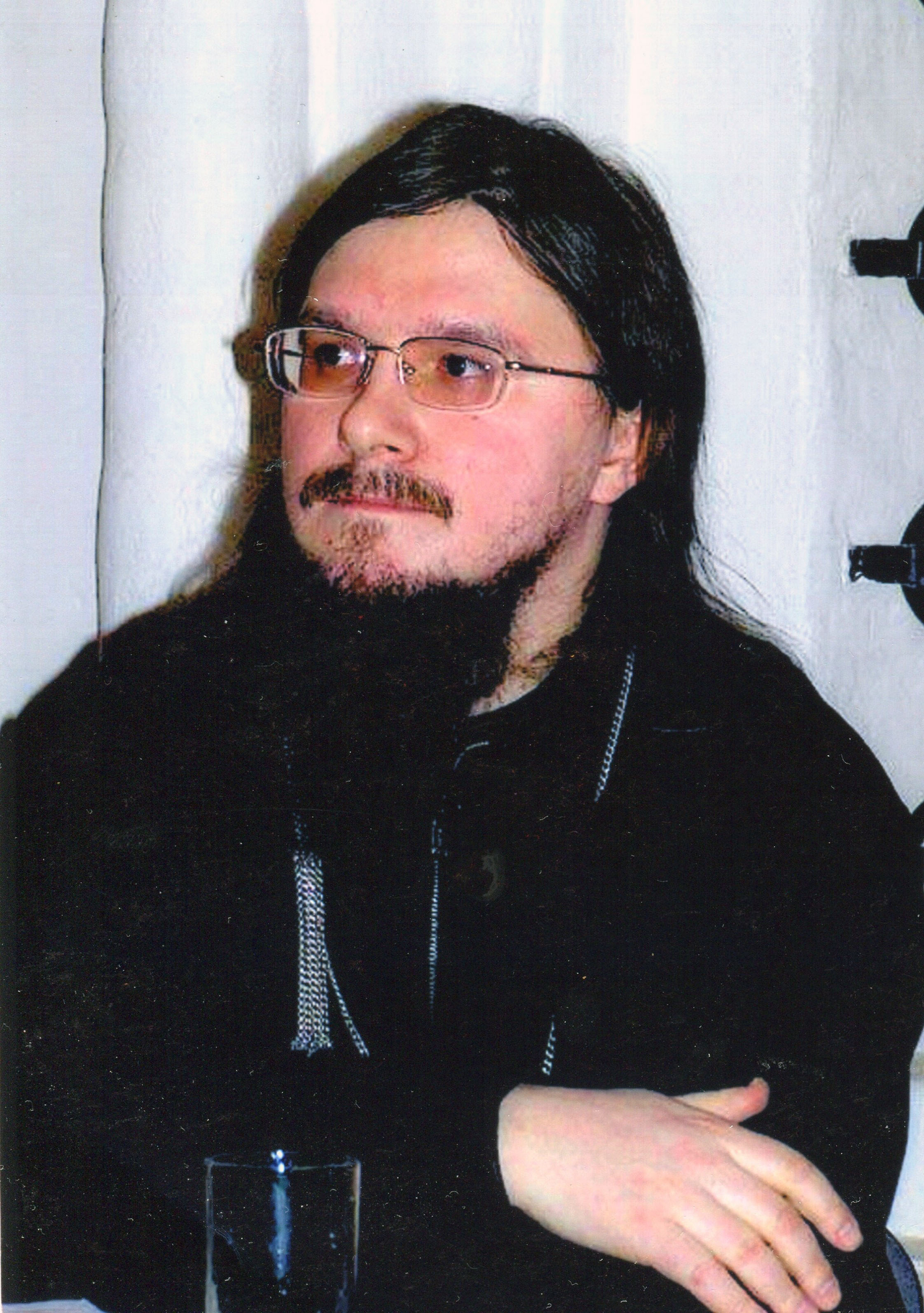
Hieromartyr Daniel Sysoev, the missionary priest martyred in Moscow in 2009, identified what these symbols represent:
The USSR stained the majority of its citizens with the sin of idolatry. Millions of Soviet citizens violated the 2nd commandment and worshipped and served the creature instead of the Creator. This includes Lenin’s corpse, and the eternal flame… and the cult of the next leader.
— Hieromartyr Daniel Sysoev, “Духовные плоды СССР” (Spiritual Fruits of the USSR), https://pr-daniil.livejournal.com/50901.html[3]
Sysoev called it plainly: the eternal flame is idolatry. And the leaders themselves? “Да, Сталин, как и Ленин и Троцкий — исчадья ада.” (“Yes, Stalin, like Lenin and Trotsky, are spawn of hell.”)[4]
Thus, the witness is established. The Synodikon separates “Eternal Memory” from “Anathema.” Canon 34 anathematizes those who honor heretical pseudo-martyrs. Canon 9 forbids attending heretical memorial sites for prayer or service. A martyred Russian priest called the eternal flame idolatry. Chapter 9 established that the 1918 All-Russian Council anathematized the Soviet regime, as Patriarch Tikhon himself confirmed.
On what basis can a patriarch perform liturgical services at the shrines of the anathematized?
B. The Pattern
On October 14, 2018, Patriarch Kirill visited the Victory Monument in Victory Square, Minsk, where he laid a wreath and offered the Holy Cross in veneration while clergy sang “Eternal Memory” for the fallen Soviet soldiers.[5]
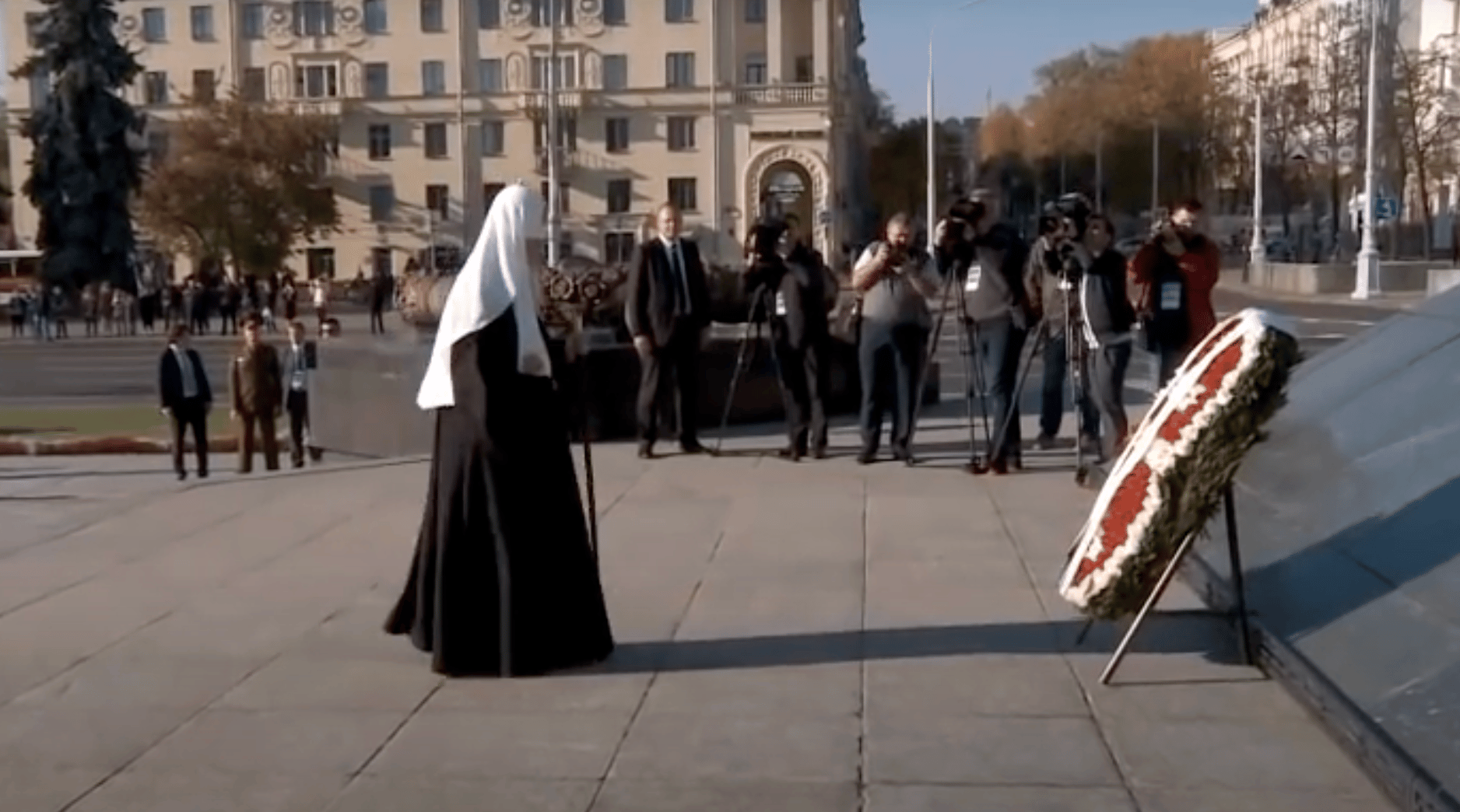
The Victory Monument is a 38-meter granite obelisk crowned with the Order of Victory, a Soviet military decoration featuring a ruby star with the Kremlin’s Spasskaya Tower at its center. The monument’s base displays bas-reliefs glorifying the Soviet Army and Belarusian Partisans, the Soviet state emblem (hammer and sickle), and an Eternal Flame.
Some may posit: “Well perhaps these are just memorials to war dead, not celebrations of Soviet ideology.” The hammer and sickle on the monument makes that objection difficult to sustain. So does the liturgical formula Kirill’s clergy repeatedly intone: “Вечная память вождям и воинам” (“Eternal Memory to leaders and warriors”). In Orthodox usage, “вождям” can mean commanders or leaders; at Soviet state memorials, however, the word sits inside a symbolic field dominated by the very regime the 1918 Council anathematized.
In other words: if these were simply memorials to the dead, there would be no Soviet state emblems, no eternal flames, and no ambiguous commemoration of “leaders” under those symbols.
Patriarch Kirill offered the Holy Cross at an eternal flame that Hieromartyr Daniel Sysoev called idolatry. He sang “Eternal Memory” for soldiers of a regime whose leaders Sysoev called “spawn of hell.”
Nor was this an isolated incident.
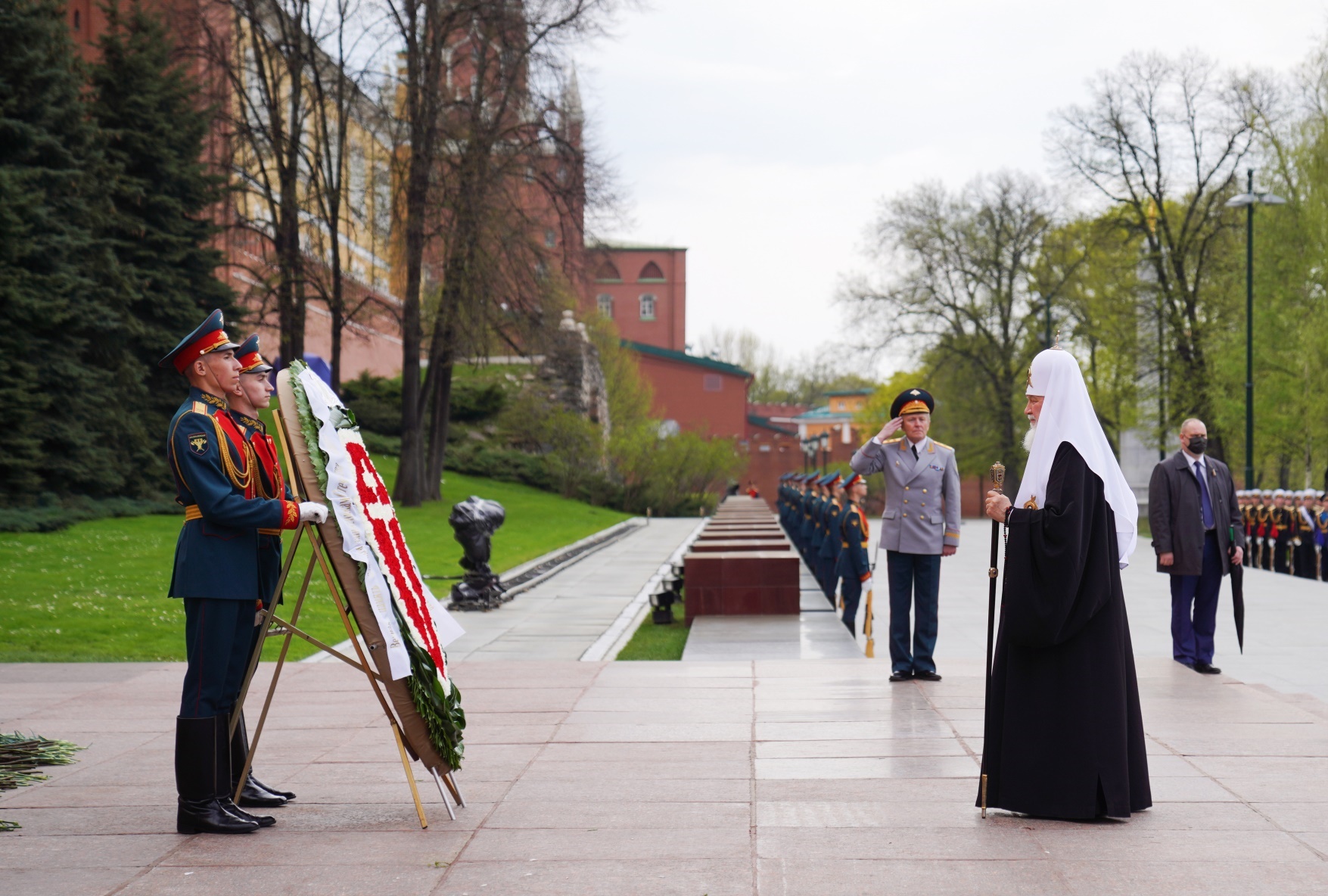
Since becoming patriarch in 2009, Kirill has laid wreaths at the Tomb of the Unknown Soldier at the Kremlin Wall in Moscow at least 36 times, performing the ceremony two to three times per year on fixed dates: May 8 (eve of Victory Day), February 23 (Defender of the Fatherland Day), and June 22 (Day of Remembrance and Sorrow).[6] At each ceremony, clergy intone “Вечная память” (“Eternal Memory”) “to leaders and warriors who laid down their lives on the field of battle for faith and Fatherland.” The Tomb features a Soviet-era Eternal Flame, lit in 1967.
The prayer formula is noteworthy: “for faith, Fatherland and people.” Kirill’s clergy insert “for faith” into what is fundamentally a state-military ceremony at an atheist-era monument. The Soviet soldiers being commemorated served a regime that destroyed faith itself.
To claim they died “for faith” at a monument built by the regime that closed churches, shot clergy, and filled concentration camps with monks is to rewrite history liturgically.
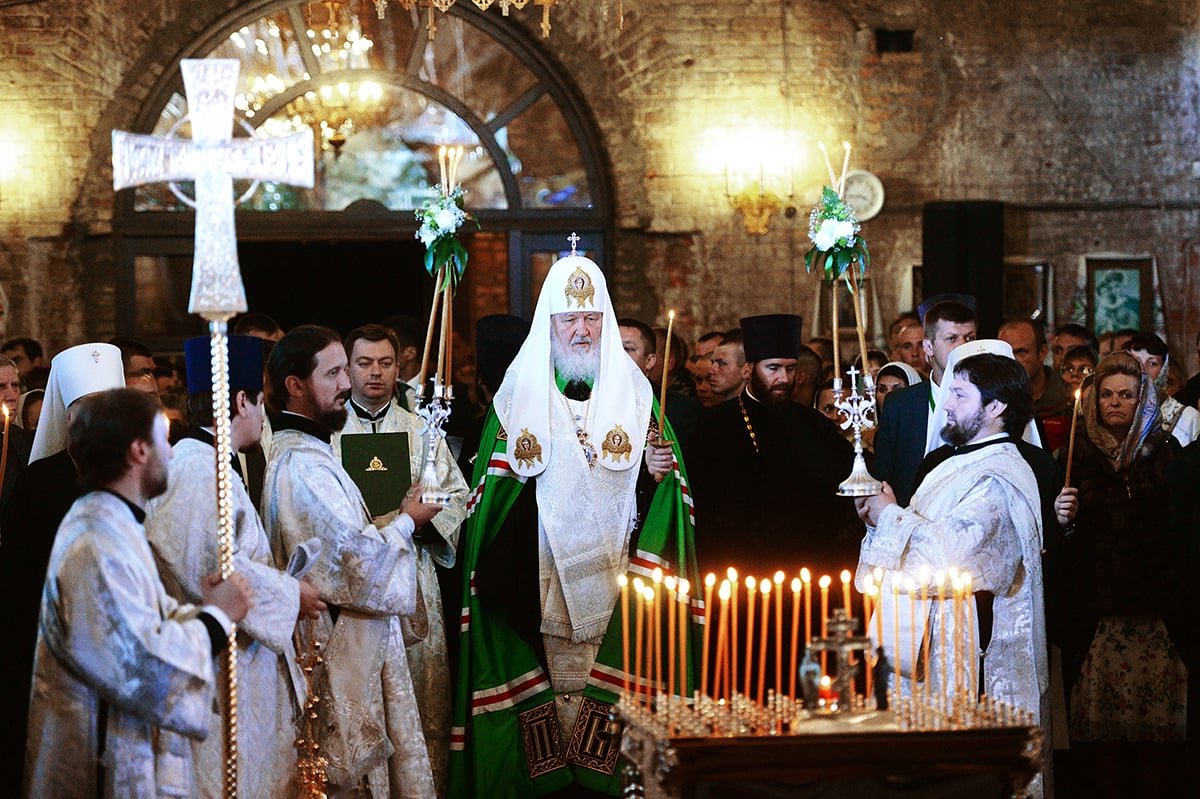
On the night of June 22, 2015, at 4:00 AM on the anniversary of the German invasion, Patriarch Kirill performed a full zaupokoinaya litiya (Orthodox memorial prayer service) inside the historical Nikolaevsky Garrison Cathedral at the Brest Fortress memorial complex, in memory of the defenders of Brest Fortress and all who fell in the Great Patriotic War.[7] A zaupokoinaya litiya is not a wreath-laying or a moment of silence. It is a formal Orthodox liturgical service for the departed.
Thus, Patriarch Kirill performed the Church’s prayer for the dead inside a Soviet war memorial complex.
He has repeated this pattern across multiple countries. At the Hall of Military Glory at Mamayev Kurgan in Volgograd (2014, 2021), “Eternal Memory” was sung for the fallen of Stalingrad.[8] At the Piskaryovskoye Memorial Cemetery in St. Petersburg (2024), clergy prayed “Grant, O Lord, eternal rest in blessed repose” for those buried at the world’s largest mass grave from World War II.[9] At the “Malaya Zemlya” memorial in Novorossiysk (2014, 2017), clergy again intoned “Eternal Memory” with naval cadets and honor guards present.[10]
Two locations are especially striking. In Warsaw, Poland (2012), he laid a wreath at a Soviet military cemetery inscribed “In memory of soldiers of the Red Army.”[11] In Chișinău, Moldova (2011), he performed the ceremony at the “Eternitate” Memorial, whose eternal flame was lit from Moscow’s own military flame: a liturgical chain linking Kirill’s prayers directly to the Soviet cult of the fallen.[12]
Thus, this is a systematic, institutionalized liturgical practice spanning Kirill’s entire patriarchate. It has been performed at monuments adorned with Soviet symbols, across at least four countries, with Orthodox clergy and memorial prayer deployed at sites dedicated to those who served an anathematized regime.
The Verdict
Chapter 9 established the patristic witness against Sergianism and documented the 1918 anathema against Soviet Power. This chapter establishes that Patriarch Kirill performs the accommodation himself, liturgically: not once, but systematically.
In the Synodikon of Orthodoxy, “Eternal Memory” is sung for defenders of the faith and “Anathema” for heresies and their defenders. Canon 34 of Laodicea anathematizes those who honor heretical pseudo-martyrs. Canon 9 forbids attending the memorial sites of heretics for prayer or service. Hieromartyr Daniel Sysoev called the eternal flame idolatry.
Kirill has performed or presided over memorial rites at Soviet memorial sites over 40 times. He has sung “Eternal Memory” for soldiers who served the anathematized regime. He has brought the Holy Cross into ceremonies at eternal flames that a martyred priest rightly called idolatrous. He has performed a full memorial prayer service inside a Soviet war memorial complex. And his clergy have inserted “for faith” into the commemoration of those who served a regime that murdered the faithful.
Before the 2007 reunification, ROCOR maintained a formal rite for receiving clergy from the Moscow Patriarchate. This reception service required them to repent specifically for “participating in the veneration of the ‘eternal flame’” (Chapter 9). ROCOR’s bishops considered eternal flame veneration serious enough to require explicit repentance. Patriarch Kirill performs this veneration as patriarch repeatedly, annually, and with full liturgical solemnity.
On what basis can a Patriarch who sings “Eternal Memory” for the anathematized, who offers the Holy Cross at sites of Soviet idolatry, who performs the Church’s prayers for the dead at monuments to a regime the Church condemned, be excused?
Original Greek: “«Ὅτι οὐ δεῖ πάντα Χριστιανὸν ἐγκαταλείπειν μάρτυρας Χριστοῦ, καὶ ἀπιέναι πρὸς τοὺς ψευδομάρτυρας, τουτέστιν αἱρετικῶν, ἢ αὐτοὺς πρὸς τοὺς προειρημένους αἱρετικοὺς γενομένους· οὗτοι γὰρ ἀλλότριοι τοῦ Θεοῦ τυγχάνουσιν. Ἔστωσαν οὖν ἀνάθεμα οἱ ἀπερχόμενοι πρὸς αὐτούς.»” ↩
Greek text from Patristica.net: «Περὶ τοῦ μὴ συγχωρεῖν εἰς τὰ κοιμητήρια, ἢ εἰς τὰ λεγόμενα μαρτύρια πάντων τῶν αἱρετικῶν ἀπιέναι τοὺς τῆς ἐκκλησίας, εὐχῆς ἢ θεραπείας ἕνεκα· ἀλλὰ τοὺς τοιούτους, ἐὰν ὦσι πιστοί, ἀκοινωνήτους γίνεσθαι μέχρι τινός. Μετανοοῦντας δέ, καὶ ἐξομολουμένους, ἐσφάλθαι, παραδέχεσθαι.» Source: http://patristica.net/laodicea#canon9. ↩
Original Russian: “СССР запятнал большинство своих граждан грехом идолопоклонства. Миллионы советских граждан нарушили 2 заповедь и поклонялись и служили твари вместо Творца. Это и труп Ленина, и вечный огонь… и культ очередного вождя.” ↩
Hieromartyr Daniel Sysoev, “Духовные плоды СССР” (Spiritual Fruits of the USSR), https://pr-daniil.livejournal.com/50901.html ↩
The Victory Monument (Монумент Победы) in Victory Square, Minsk, was erected in 1954 to commemorate the Soviet victory in World War II. Patriarch Kirill’s visit on October 14, 2018 included wreath-laying while the hierarchical choir of the Holy Spirit Cathedral intoned “Вечная память” (“Eternal Memory”) “to leaders and warriors who laid down their lives for faith, Fatherland and people.” Video: https://www.youtube.com/watch?v=iYqK8zQh-3Q. Source: https://www.patriarchia.ru/article/60703 ↩
Patriarch Kirill has laid wreaths at the Tomb of the Unknown Soldier at the Kremlin Wall on a fixed schedule since 2009. Representative instances: May 8, 2009 (https://www.patriarchia.ru/article/47352); Feb 23, 2012 (https://www.patriarchia.ru/article/19546); May 8, 2017 (https://www.patriarchia.ru/article/55181); May 8, 2022 (https://www.patriarchia.ru/article/76767); Feb 23, 2026 (https://www.patriarchia.ru/article/119908). The ceremony includes clergy intoning “Вечная память” (“Eternal Memory”). ↩
On the night of June 22, 2015, at 4:00 AM on the 74th anniversary of the German invasion, Patriarch Kirill performed a zaupokoinaya litiya (memorial prayer service) in the historical Nikolaevsky Garrison Cathedral at the Brest Fortress Hero memorial complex, in memory of the defenders of Brest Fortress and all who fell in the Great Patriotic War. This was followed by a memorial rally on the Ceremonial Square and wreath-laying at the memorial to the fortress’s heroes. Source: https://www.patriarchia.ru/article/107630 ↩
Patriarch Kirill visited the Hall of Military Glory at the Stalingrad Battle memorial on Mamayev Kurgan in Volgograd on Feb 3, 2014 (https://www.patriarchia.ru/article/45479) and Sep 19, 2021 (https://www.patriarchia.ru/article/73540). At both visits, “Вечная память” was sung for the fallen. In 2021, he wrote in the visitors’ book: «Великая битва великого народа предопределила Великую Победу над фашизмом… Земной поклон, вечная благодарность и вечная молитвенная память» (“A great battle of a great people predetermined the Great Victory over fascism… Earthly bow, eternal gratitude, and eternal prayerful memory”). ↩
On Jan 27, 2024, the 80th anniversary of the complete liberation of Leningrad from the Nazi blockade, Patriarch Kirill laid a wreath at the “Mother-Motherland” monument at Piskaryovskoye Memorial Cemetery, the world’s largest mass grave from World War II. Clergy intoned: «Во блаженном успении вечный покой подаждь Господи усопшим рабом Твоим вождем и воинам жизнь свою на поле брани положившим, в годы блокады во граде сем скончавшимся на кладбище сем погребенным и сотвори им вечную память» (“Grant, O Lord, eternal rest in blessed repose to Thy departed servants, leaders and warriors who laid down their lives on the field of battle, who perished during the blockade of this city, buried at this cemetery, and grant them eternal memory”). Source: https://www.patriarchia.ru/article/84941 ↩
Patriarch Kirill visited the “Malaya Zemlya” (Small Land) memorial in Novorossiysk on Oct 24, 2014 (https://www.patriarchia.ru/article/48107) and Sep 21, 2017 (https://www.patriarchia.ru/article/56612). At the 2017 visit, «Вечная память» was intoned «вождем и воинам, жизнь свою за веру и Отечество положившим» (“to leaders and warriors who laid down their lives for faith and Fatherland”) with honor guard and naval cadets present. ↩
On Aug 17, 2012, Patriarch Kirill visited the memorial cemetery of Soviet liberator-soldiers in Warsaw and laid a wreath at the obelisk inscribed «Памяти солдат Красной Армии, павших за освобождение Польши из-под немецкой оккупации в 1944-1945 гг.» (“In memory of soldiers of the Red Army who fell for the liberation of Poland from German occupation in 1944-1945”). He also laid a wreath at the Tomb of the Unknown Soldier on Piłsudski Square. Source: https://www.patriarchia.ru/article/12474 ↩
On Oct 9, 2011, Patriarch Kirill visited the “Eternitate” (Eternity) Memorial of Military Glory in Chișinău, Moldova. «Вечная память» was sung «вождем и воинам, жизнь свою за веру и Отечество положившим» (“to leaders and warriors who laid down their lives for faith and Fatherland”). The memorial’s Eternal Flame was lit from the eternal flame at the military cemetery in Moscow. Source: https://www.patriarchia.ru/article/27332 ↩