
Denying the Ottoman Neomartyrs
In 2016, Patriarch Kirill gave a television interview in which he described Christian experience under the Ottoman Empire. The Orthodox Church venerates thousands of Neomartyrs (saints martyred under Ottoman rule). What Patriarch Kirill said about their experience and what the Church remembers are not the same.
Some may say this is simply diplomacy: an imprecise statement made for political convenience, not a theological position. But the Church has glorified thousands of Neomartyrs precisely because their suffering was real. Denying that suffering contradicts the Church’s own liturgical witness.
The Witness of the Neomartyrs
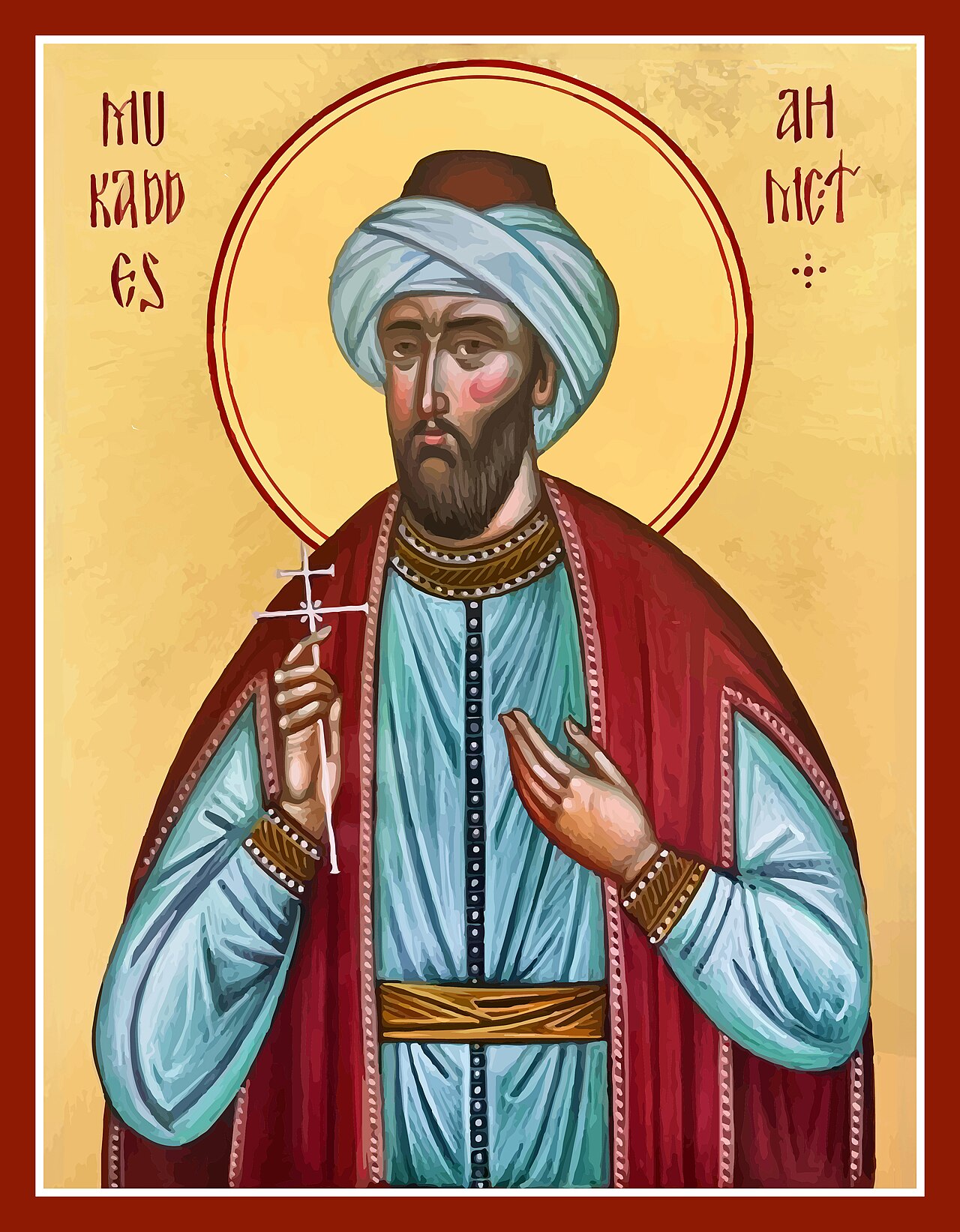
The Orthodox Church venerates many Neomartyrs who suffered under Ottoman rule. St. Nicodemus of the Holy Mountain recorded their lives in his New Martyrologion, the classic collection of lives of saints martyred under the Ottomans.[1] These are spiritual witnesses, canonized by the Church and commemorated in her services. St. George the New Martyr of Ioannina was hanged in 1838 for confessing Christ. St. Aquilina of Thessaloniki was martyred in 1764 after refusing pressure to become Muslim. St. Ahmed the Calligrapher was beheaded in 1682 after converting to Christianity. The Holy New Martyrs of the Turkish Yoke embody the Church’s memory of forced conversion, coercion, humiliation, and martyrdom under Islamic rule.
The devshirme (“blood tax”), developed under early Ottoman rule and regularized in the following centuries, forcibly took Christian boys from their families, converted them to Islam, and enrolled many in the Janissary corps. The jizya, a poll tax on non-Muslims mandated by the Quran (Sura 9:29) and enforced under Islamic rule, penalized Christians for remaining Christian. Churches could not be built or repaired without permission. Bells were restricted. Christian testimony against Muslims was legally disadvantaged or inadmissible in important settings.[2]
Their suffering is commemorated in the Church’s liturgical services. To erase it is to contradict the judgment of the Church herself.
Silence Before Error Is Hatred
St. Maximus the Confessor taught that truth cannot be subject to political calculation:
For I reckon it hatred towards man and a departure from Divine love to lend support to error, so that those previously seized by it might be even more greatly corrupted.
— St. Maximus the Confessor, PG 91:465C; OrthoChristian, “Sayings of St. Maximos the Confessor”[3]
What Patriarch Kirill Said
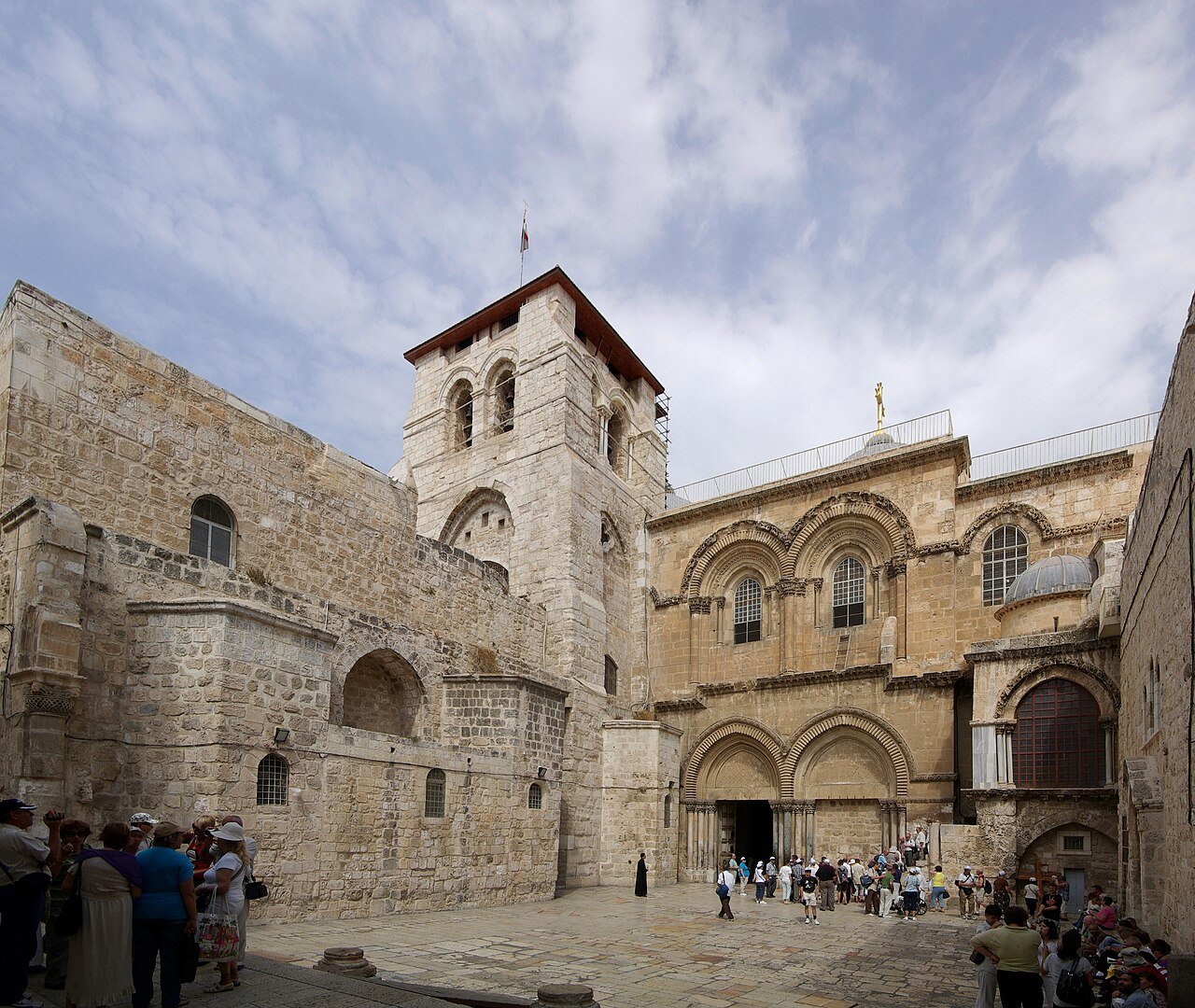
On January 7, 2016, Patriarch Kirill gave his Christmas Interview on the Russian television channel “Россия 1” (Russia-1). The interviewer, Dmitry Kiselyov, asked to what extent the conflict in Syria constituted a religious war. Kirill responded that it did not, and turned to history. He acknowledged forced conversions and the Ottoman conquest of Byzantine territories, then deliberately set that violence aside: “if we set aside the military operations themselves… then nothing comparable to what is happening now has ever existed in the Islamic world” (если оставить за скобками собственно военные действия… то никогда ничего подобного тому, что сейчас происходит, в исламском мире не было). As his proof, he offered this account of the Ottoman Empire:
Взять даже пример Османской империи. Существовал определенный порядок отношений между религиозными общинами. До сих пор в руках мусульманина-араба — ключи от Храма Гроба Господня. Это все с тех самых турецких времен, когда мусульманин был ответственен за безопасность, за хранение христианских святынь. То есть был выработан такой способ взаимодействия общин, который, конечно, нельзя назвать режимом наибольшего благоприятствования, но люди жили, исполняли свои религиозные обязанности, существовали патриархаты, Церковь существовала.
Take even the example of the Ottoman Empire. There was a certain order of relations between religious communities. To this day, the keys to the Church of the Holy Sepulchre are in the hands of a Muslim Arab. This is all from those Turkish times, when the Muslim was responsible for security, for the preservation of Christian shrines. That is, a way of interaction between communities was developed, which, of course, cannot be called a most-favored-nation regime, but people lived, fulfilled their religious duties, the Patriarchates existed, the Church existed.
— Patriarch Kirill, Christmas Interview on Russia-1, January 7, 2016, http://www.patriarchia.ru/article/97323
The Trend News Agency later headlined the resurfaced clip: “В Османской империи никто не уничтожал христианские меньшинства — Патриарх Кирилл” (“In the Ottoman Empire, no one exterminated Christian minorities: Patriarch Kirill”).[4] Journalists and readers heard Kirill’s words as a denial or minimization of Ottoman violence against Christians.
The comparative context matters: Kirill was contrasting the Ottoman era with ISIS to argue that modern terrorism is historically unprecedented. But the comparison itself is the problem. His account does not merely omit Ottoman persecution; it characterizes Ottoman Muslims as protectors: “responsible for security, for the preservation of Christian shrines.” He conceded that Ottoman rule “cannot be called a most-favored-nation regime,” then immediately presented the system as functional coexistence: “people lived, fulfilled their religious duties, the Patriarchates existed.”
The same could be said of Soviet rule: churches existed, people prayed, the Patriarchate survived. But which of the pious faithful would accept that as an honest account of the era of the New Martyrs? The same logic applies here.
The Church venerates Neomartyrs who suffered and died under Ottoman oppression amid forced conversions, executions for confessing Christ, the devshirme, and the jizya. Calling the Ottoman order one in which Muslims were “responsible for security” and “the preservation of Christian shrines” obscures this oppression for political expediency.
The interview resurfaced in April 2021, when the Biden administration formally recognized the Armenian Genocide, drawing renewed attention to Kirill’s description of Ottoman rule as functional coexistence.
Damage Control, Not Retraction
The original statement alone would warrant concern. But the Patriarchate’s response made it worse.
Rather than directly affirming the witness of the Neomartyrs in the context of the controversy, the Patriarchate later claimed the video “does not reflect the real views of Patriarch Kirill,” noting he had previously expressed respect for Armenian Genocide victims during a visit to the Yerevan memorial.[5]
This is not a correction but a public relations maneuver. A genuine correction would have named what was wrongly stated: the Patriarch presented the Ottoman Empire as functional coexistence while the Church venerates Neomartyrs who died under that very empire. Instead, the Patriarchate pointed to a past memorial visit as evidence of Kirill’s “real views,” without correcting the public record. In the responses cited here, Patriarch Kirill did not publicly reaffirm the Church’s liturgical witness to the Neomartyrs or retract the coexistence framing. The statement stood, the diplomatic relationship with Turkey was preserved, and the memory of the martyrs was sacrificed.
The failure to retract is decisive evidence. An imprecise statement on television might be forgivable. But when challenged, twice, the Patriarchate chose damage control over a direct correction (and this is a pattern). That transforms imprecision into the maintained public record of falsehood.
The Verdict
If the Church canonized the Neomartyrs because their witness to Christ under Ottoman persecution matters, then a patriarch who publicly minimizes that persecution has contradicted the Church’s own judgment. St. Maximus’s teaching, established above, that lending support to error is “hatred towards man,” applies here with full force. Presenting Ottoman rule as a model of coexistence, while saints died resisting forced conversion and Islamic coercion, is evil diplomacy, and in the words of St. Maximus the Confessor, “a departure from Divine love.”
The Neomartyrs would not compromise the truth for their own survival. Patriarch Kirill compromised their memory for a diplomatic relationship. On what basis, then, do faithful Orthodox continue to commemorate a patriarch who erases the witness of the Church’s own saints?
Nicodemus the Hagiorite, Νέον Μαρτυρολόγιον (New Martyrologion) (Venice: Nikolaos Glykys, 1799); repr. Athonite Analects 3 (Mount Athos: Agioritiki Estia, 2009). The collection records the lives of 85+ Neomartyrs from 1330 to 1796, including St. Ahmed the Calligrapher; St. Nicodemus’s work became a classic source for the Ottoman-era Neomartyr witness. Co-edited with St. Makarios of Corinth. Local synaxarion sources also verify St. George of Ioannina, St. Aquilina, and St. Ahmed as Ottoman-era Neomartyrs. ↩
On devshirme, jizya, and the legal framework governing Christian subjects under Ottoman rule, see Halil Inalcik, The Ottoman Empire: The Classical Age, 1300–1600, trans. Norman Itzkowitz and Colin Imber (London: Weidenfeld and Nicolson, 1973; repr. Phoenix, 1994). On the inadmissibility of Christian testimony against Muslims in Ottoman courts specifically, see Najwa Al-Qattan, “Dhimmis in the Muslim Court: Legal Autonomy and Religious Discrimination”, International Journal of Middle East Studies 31, no. 3 (1999): 429–444. ↩
Original Greek: “«Μισανθρωπίαν γαρ ορίζομαι έγωγε, και αγάπης θείας χωρισμόν, το τη πλάνη πειράσθαι διδόναι ισχύν εις περισσοτέραν των αυτή προκατειλημμένων φθοράν.»” ↩
Trend News Agency headlined the resurfaced 2016 clip: “В Османской империи никто не уничтожал христианские меньшинства — Патриарх Кирилл.” See https://ru.trend.az/world/turkey/3414147.html. The interview resurfaced widely in April 2021 following the U.S. recognition of the Armenian Genocide. ↩
In January 2016, Patriarchal spokesman Fr. Alexander Volkov stated that Patriarch Kirill “did not deny the 1915 Armenian genocide” and that “the position of our Church on the Armenian genocide has been repeatedly and clearly expressed in numerous statements and messages of the Patriarch,” reframing Kirill’s words as referring only to periods of “relative security and stability in the lives of religious minorities.” See RFE/RL Armenian Service, https://www.azatutyun.am/a/27481804.html. When the video resurfaced in April 2021, the Patriarchate stated it “does not reflect the real views of Patriarch Kirill,” citing his 2010 visit to the Yerevan memorial. See Helleniscope, https://www.helleniscope.com/2021/05/01/patriarch-of-moscow-the-ottoman-empire-did-not-exterminate-the-christian-minorities-video/. No formal correction or retraction was issued on either occasion. ↩