
Can War Be Called Holy?
The previous chapter demonstrated that Patriarch Kirill’s central claim contradicts the Orthodox teaching on every count. But the “sins washed away” sermon was not a single aberration. It was the foundation of a systematic war theology that escalated over three years, from “metaphysical struggle” to “Holy War” to “Sacred War that opens the gates of the Heavenly Kingdom.” This chapter examines the “holy war” claim, the katechon doctrine, and the sacralization of nuclear weapons, and measures them against the patristic witness.
”A Holy War Is Underway”
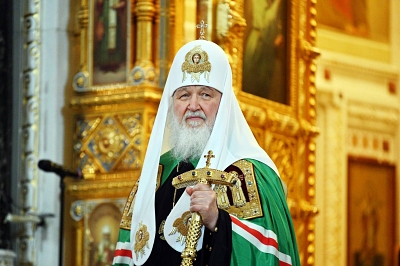
Ten days after the invasion, Patriarch Kirill declared:
Идёт борьба, которая имеет не физическое, а метафизическое значение.
What is taking place is a struggle that has not a physical, but a metaphysical significance.
— Patriarch Kirill, Forgiveness Sunday Sermon, March 6, 2022, http://www.patriarchia.ru/db/text/5906024.html
By November 2022, the framing escalated. At his birthday reception, he declared Russia the katechon (Greek: ὁ κατέχων), the eschatological “Restrainer” of 2 Thessalonians 2:6-7 that holds back the Antichrist:
Сегодня Россия — это удерживающий. А это означает, что все силы антихриста будут брошены на нашу страну.
Today Russia is the Restrainer. And this means that all the forces of the Antichrist will be thrown against our country.
— Patriarch Kirill, birthday reception address, November 20, 2022, https://www.patriarchia.ru/article/79283
(The full katechon escalation from 2015 to 2023, with St. John Chrysostom’s actual interpretation, is documented later in this chapter.)
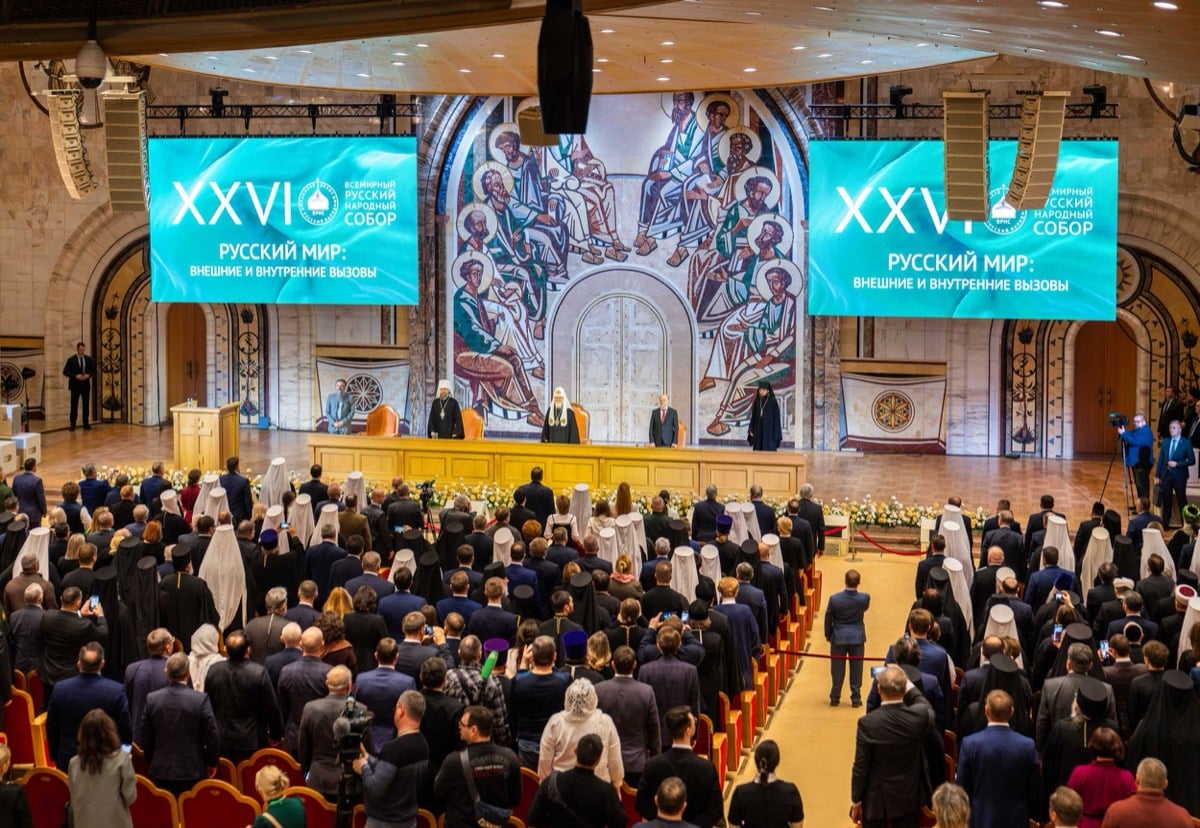
In March 2024, the World Russian People’s Council, which Patriarch Kirill chairs, formally declared:
From a spiritual and moral point of view, the Special Military Operation is a Holy War.
— World Russian People’s Council, Declaration “The Present and Future of the Russian World,” March 27, 2024, https://www.patriarchia.ru/article/105523[1]
By November 2025, three years after every criticism had been aired, after the economia objections (the argument that this was legitimate pastoral discretion), after Metropolitan Eugene’s public dissent, after the Ecumenical Patriarchate’s condemnation, Patriarch Kirill did not retract. He escalated:
Мы все понимаем, почему она священна, — потому что спасение ближних ценой собственной жизни преображает душу человека и открывает перед ней двери Царства Небесного.
We all understand why it is sacred: because saving one’s neighbors at the cost of one’s own life transforms the soul and opens before it the gates of the Heavenly Kingdom.
— Patriarch Kirill, XXVII World Russian People’s Council, November 19, 2025, https://www.patriarchia.ru/article/118370
At the same address, he called Russia the “Third Rome,” «мировым центром православного христианства» (“the world center of Orthodox Christianity”), and described the events in Ukraine as a continuation of the “unfinished” Second World War.[2]
The theology propagated through the hierarchy:
This is a sacred war. It is a war with Satanism.
— Metropolitan Kirill of Stavropol, II International Anti-Fascist Congress, August 18, 2023, https://www.patriarchia.ru/article/82601[3]
From “metaphysical struggle” to “Holy War” to “Sacred War that opens the gates of the Heavenly Kingdom,” in three years. Each escalation came after criticism, not before.
In his January 2023 Christmas sermon at the Kremlin, Patriarch Kirill turned from cosmic framing to explicit threat:
Не останется никаких следов от раскольников, потому что они выполняют злую волю дьявола, разрушая Православие на Киевской земле.
There will be no trace left of the schismatics, because they are fulfilling the devil’s evil bidding, destroying Orthodoxy on Kyivan land.
— Patriarch Kirill, Christmas Sermon, January 8, 2023, Dormition Cathedral, Moscow Kremlin, https://www.patriarchia.ru/article/104111
That is what Patriarch Kirill and his hierarchy have proclaimed. Now let us measure it against the patristic consensus.
Did the Fathers Ever Call War Holy?
The Orthodox tradition permits war only within a very narrow window of self-defense, when foreign non-Orthodox powers attack the Christian people for their faith. The next chapter defines those criteria and measures the invasion against every one of them. But even within that narrow window, when all the criteria are met, the Fathers still refused to call war holy.
Metropolitan Anthony (Khrapovitsky), the founding Metropolitan of ROCOR, was explicit:
But let them get it into their heads that I am not praising war nor justifying it, but that I consider it a lesser evil than if kings, governments, nations, and individual citizens had declined it in such a situation as that which prevailed two years ago.
— Metropolitan Anthony (Khrapovitsky), “The Christian Faith and War,” https://www.rocorstudies.org/2016/11/16/the-christian-faith-and-war/
Even when defending Russia at war against Germany and Austria-Hungary, foreign non-Orthodox powers that had declared war on Russia, a conflict that met every criterion the Fathers established, he refused to sanctify it. War remains “an evil” that can only be tolerated when refusing to fight would produce demonstrably worse consequences.
Many in ROCOR would be quite surprised to hear that they disagree with their founding Metropolitan when they echo Patriarch Kirill’s words, calling it a “Holy War.”
Fr. Spyridon Bailey of ROCOR articulates this Orthodox consensus:
No war can ever be called holy. We don’t believe like the Muslims do that war can be holy. It is not. War is not holy. We reject this idea completely. Only that it may be a necessary evil… Wars are unjust by their very nature. All war is the result of sin. And so we may say no war ever embodies righteousness.
— Fr. Spyridon Bailey, “Should Christians Go To War?”, https://www.youtube.com/watch?v=OE48zfqFm1k, January 13, 2026
St. Nikolai Velimirovich, a canonized Serbian saint, captures the patristic posture:
Pagans exterminated one another with pride and arrogance, while Christians go to battle with shame.
— St. Nikolai Velimirovichh, Prologue of Ohrid, cited in Archpriest Viktor Vasilevich, “The Theme of War in the Works of St. Nikolai of Serbia (Velimirovich),” azbyka.ru
Christians go to battle with shame. Patriarch Kirill’s escalation from “metaphysical struggle” to “Holy War” to “Sacred War” replaces shame with triumphalism. The Orthodox tradition requires grief even when war is unavoidable. What Kirill proclaims is the inversion of this.
Even the limited tolerance the Fathers showed for war cannot stretch to cover what warfare has become.
Is Modern War What the Fathers Contemplated?
It is easy for us, especially in our times, to come to a modern understanding about what war is, what a soldier is, and then read the saints and apply a modern lens to the saints in a way that misrepresents their witness.
Just because our saints served as soldiers, of course does not mean we can think of them as contemporary soldiers who killed numerous people. The understanding of what it meant to be in war, to be a soldier for these saints, is not what it means for us.
Let us examine the teaching of another great Russian luminary, the holy and fierce Archbishop Averky, the 4th abbot of Holy Trinity Monastery, Jordanville:
We have seen a transition from human to beastly behavior during this war [World War II]. I have in mind the cruel bombardment of the peaceful civilian neighborhoods of Belgrade on the very day of the Great Feast of Pascha immediately after Holy Liturgy had been served in the churches. This is in direct contrast with the previous world war, when during the great feasts both warring parties stopped their military activities, exchanged greetings and even presented gifts to one another. A mere twenty years or so, and we see such ‘progress’ in the level of human cruelty!
— Archbishop Averky of Jordanville, The Struggle for Virtue (Holy Trinity Publications, 2014), Chapter 5: “Reawakening Our Conscience,” p. 63
What war was even twenty years ago is not what war is now. What a soldier commonly did a thousand years ago is not what we can readily understand without studying history.
We cannot take small quotes from the saints in which they justify war and use them to indiscriminately justify what takes place today.
Hieromartyr Daniel Sysoev adds another dimension:
Before the 20th century, battles were between professional armies: nation did not war against nation. The grandiose wars of the 20th century would have been impossible without nationwide mobilization.
— Hieromartyr Daniel Sysoev, Questions to a Priest, Question 191
The canonized hagiographic case study of exactly this kind of limited, field-based warfare is Tsar Lazar’s army at Kosovo in 1389, where the war met every patristic criterion the Fathers ever set for permissible defense (Chapter 20).
War as the Fathers knew it was limited war between professional forces, not entire nations bombarding each other’s cities and conscripting entire populations. There was no concept of “self-defense” that meant destroying infrastructure, crushing economies, and killing thousands of civilians far from any battlefield.
The disgusting premise that self-defense stated by our fathers and saints can in any prism be equated to the barbarism and violence on citizens and cities that comprises much of modern war is absolute nonsense, unfounded, and lacking in the type of piety and conscience expected of the Orthodox Christian.
Orthodox patristics scholar Fr. John McGuckin notes that this transformation of warfare renders all ancient frameworks obsolete:
All ancient theories of war (whether those of St Basil, or the just war notions of St Thomas Aquinas) were conceived in a context where war was limited. It was limited by season, by combatants (mostly a male affair between professional warriors), and by the inherent limitations of weapons. When cannon and crossbow first made their appearance they caused moral shock waves throughout medieval Europe… The greatest of all ends to the limitation theory was the invention of humanity’s nuclear arsenal.
— Fr. John McGuckin, The Orthodox Church: An Introduction to its History, Doctrine, and Spiritual Culture (Wiley-Blackwell, 2008), p. 406
The very weapons Kirill declared were created “under the protection of St. Seraphim” are the ones that ended any possible application of the ancient limitation theory.
This is the pattern of the entire Gospel. St. John of Damascus, in the most authoritative systematic theology in Orthodox tradition, states this plainly:
The Gospel of the knowledge of God has been preached to the whole world and has put the adversaries to flight not by war and arms and camps. Rather, it was a few unarmed, poor, unlettered, persecuted, tormented, done-to-death men, who, by preaching One Who had died crucified in the flesh, prevailed over the wise and powerful, because the almighty power of the Crucified was with them.
— St. John of Damascus, Exact Exposition of the Orthodox Faith, Book IV, Chapter 1, p. 201[4]
Unarmed. Poor. Persecuted. Done to death. That is how the Church conquered the world: through the Cross, not the sword.
But Patriarch Kirill did not stop at calling the war holy. He went further, sacralizing the weapons themselves.
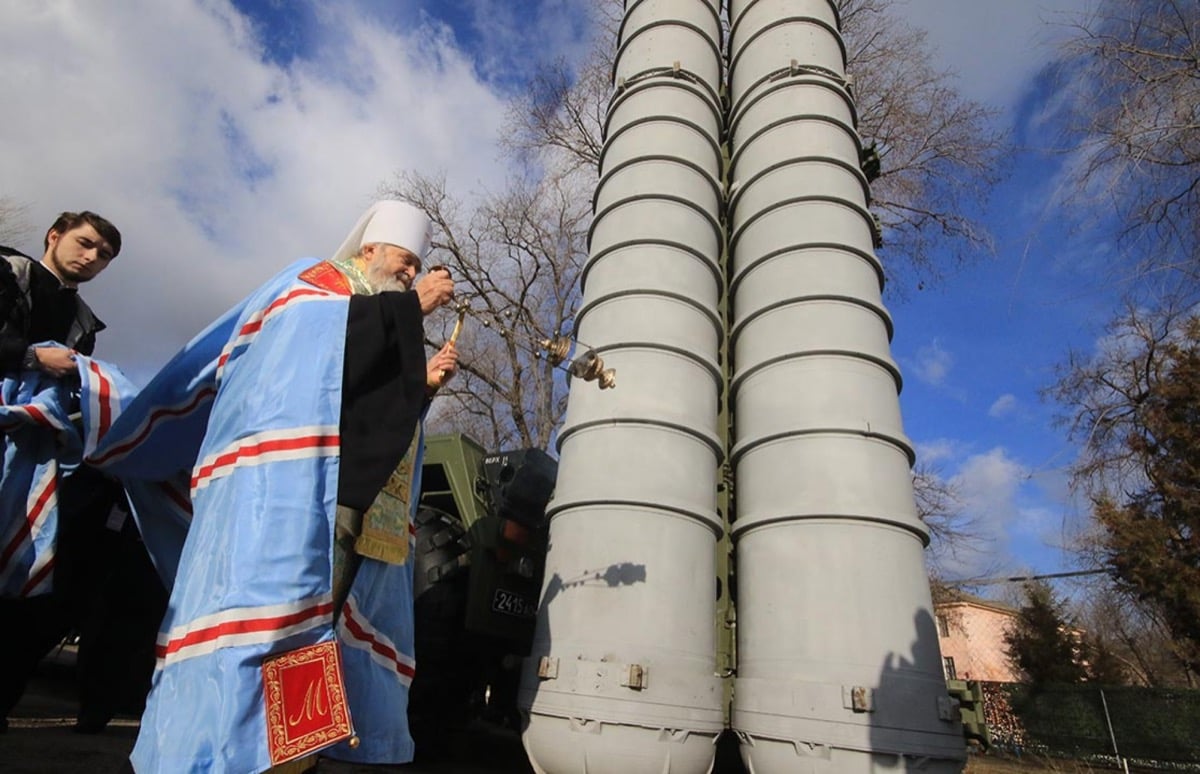
”Under the Protection of St. Seraphim”
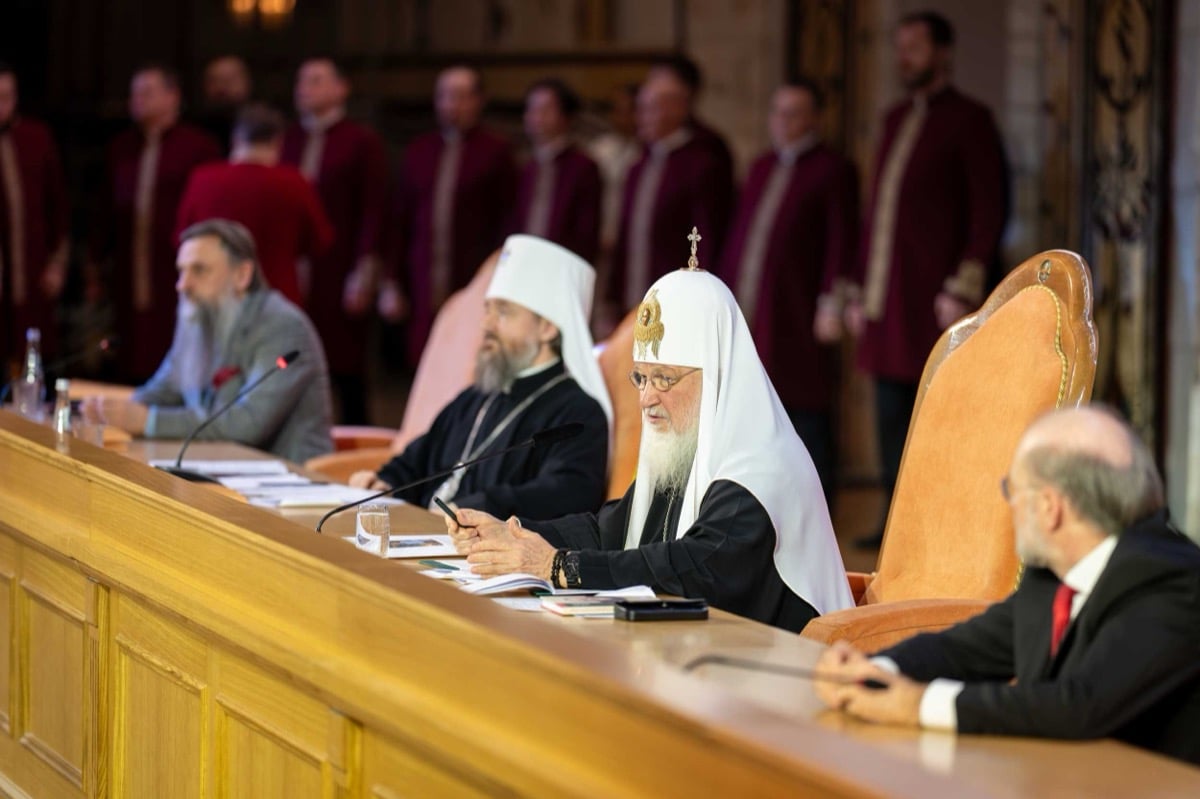
In October 2023, Patriarch Kirill declared that Russia’s nuclear arsenal was created under the protection of a saint:
Они создали оружие под покровом преподобного Серафима Саровского, потому что по неизреченному Божиему Промыслу это оружие создавалось в обители преподобного Серафима.
They created these weapons under the protection of St. Seraphim of Sarov, because by the ineffable providence of God these weapons were created in the monastery of St. Seraphim.
— Patriarch Kirill, Award ceremony for R.I. Ilkayev, October 18, 2023, https://www.patriarchia.ru/article/83443
By November 2024, just days after Russia launched the new Oreshnik hypersonic missile at Dnipro, Patriarch Kirill called the weapon a “stop-machine” (стоп-машина) and urged Russians to “thank our scientists who create incredible weapons, fantastic weapons, confounding Western strategists who think they can overcome Russia by military force.”[5] These statements were reported by TASS (Russian state news agency) and other Russian media but were omitted from the official transcript published on patriarchia.ru.
This sacralization of weapons is not new. Dmitry Adamsky’s academic study documents that the ROC has systematically provided theological legitimacy for Russia’s nuclear arsenal since the 1990s:
The church eagerly took upon itself responsibility for the spiritual-moral legitimization of the nuclear weapons, for the pastoral care of the nuclear community, and for the articulation and delivery of the message.
— Dmitry Adamsky, Russian Nuclear Orthodoxy: Religion, Politics, and Strategy (Stanford University Press, 2019), p. 43
At a 1996 conference titled “Nuclear Weapons and Russian National Security,” then-Metropolitan Kirill outlined the ROC’s position:
In the face of this multidimensional crisis, when the economy and armed forces are so weak, nuclear weapons, which have been produced by the great labor and sacrifice of the whole nation, are the sole Russian effective means of defense.” […] “We turn to the president, the government, and the Federal Assembly and demand that they consider carefully every step related to the destiny of our country’s nuclear shield in conjunction with the long-term national interests.
— Patriarch Kirill, proclamation at “Nuclear Weapons and Russian National Security” conference (1996), translated from Russian and quoted in Adamsky, Russian Nuclear Orthodoxy, pp. 43-44
The Archbishop of Nizhni Novgorod went further:
As long as these weapons defend Russia and Orthodoxy they are moral and blessed.
— Archbishop of Nizhni Novgorod, “St. Seraphim and Nuclear Weapons,” cited in Adamsky, Russian Nuclear Orthodoxy, p. 112
Russian Orthodox clergy distinguished between “satanic” American nuclear weapons and “godly” Russian ones, with one theologian claiming that the “moral nature” of the Soviet bomb was predetermined by St. Seraphim’s spiritual control.[6]
Three decades of systematic theological work in which the blessing of weapons of mass destruction has taken place.
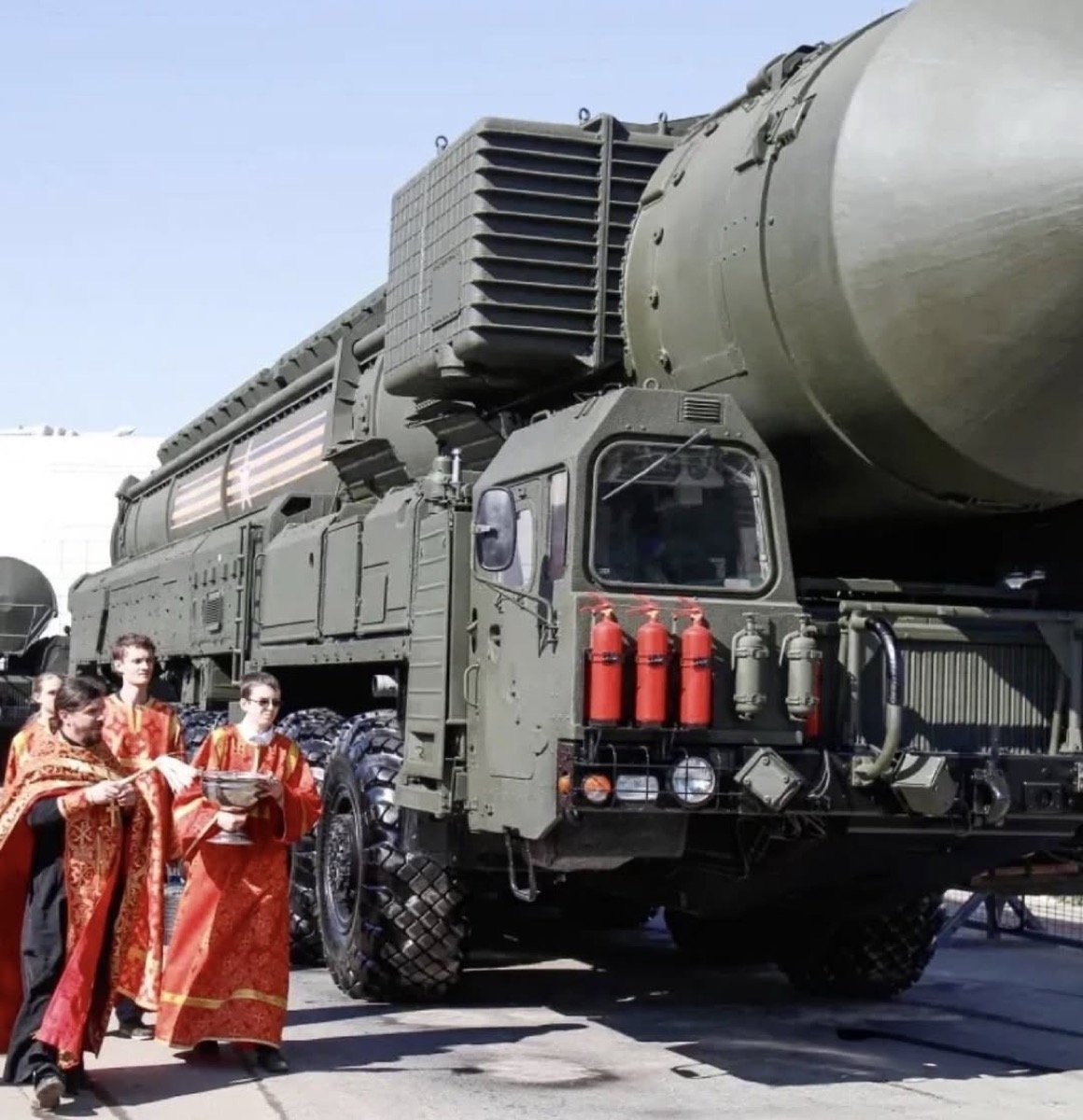
Can Weapons of Mass Destruction Be Blessed?
The saints did not permit indiscriminate killing. Patriarch Kirill declared that nuclear weapons were created “under the protection of St. Seraphim of Sarov” by “ineffable divine providence.” Are we to understand that weapons which kill indiscriminately were created under the protection of a saint?
St. Paisios himself saw this clearly:
When people reach the point of inventing bombs which kill people and spare the buildings, what can I say? Christ said, ‘One soul is worth as much as the whole world,’ and yet they value buildings more than all the people. This is horrible!
— St. Paisios the Athonite, Spiritual Counsels, Vol. 2: Spiritual Awakening, p. 370
Even the Moscow Patriarchate’s own Inter-Council Presence, its internal advisory body on theological and canonical questions, rejected this logic:
It is not reflected in the tradition of the Orthodox Church and does not correspond to the content of the Rite of blessing military arms itself, and therefore the use of this rite for the ‘sanctifying’ of any types of weapons whose use can entail the death of an indeterminate number of people, including indiscriminate weapons and weapons of mass destruction, must be excluded from pastoral practice.
— Межсоборное присутствие (Patriarchia.ru), “Проект документа „О благословении православных христиан на исполнение воинского долга"", Feb 3, 2020. https://www.patriarchia.ru/article/100952[7]
This was not a Western complaint. This comes directly from Russia.
Shall we now tell our children that St. Seraphim blessed nuclear weapons? Is it not a perversion to attach a saint’s protection and God’s providence to weapons of mass death?
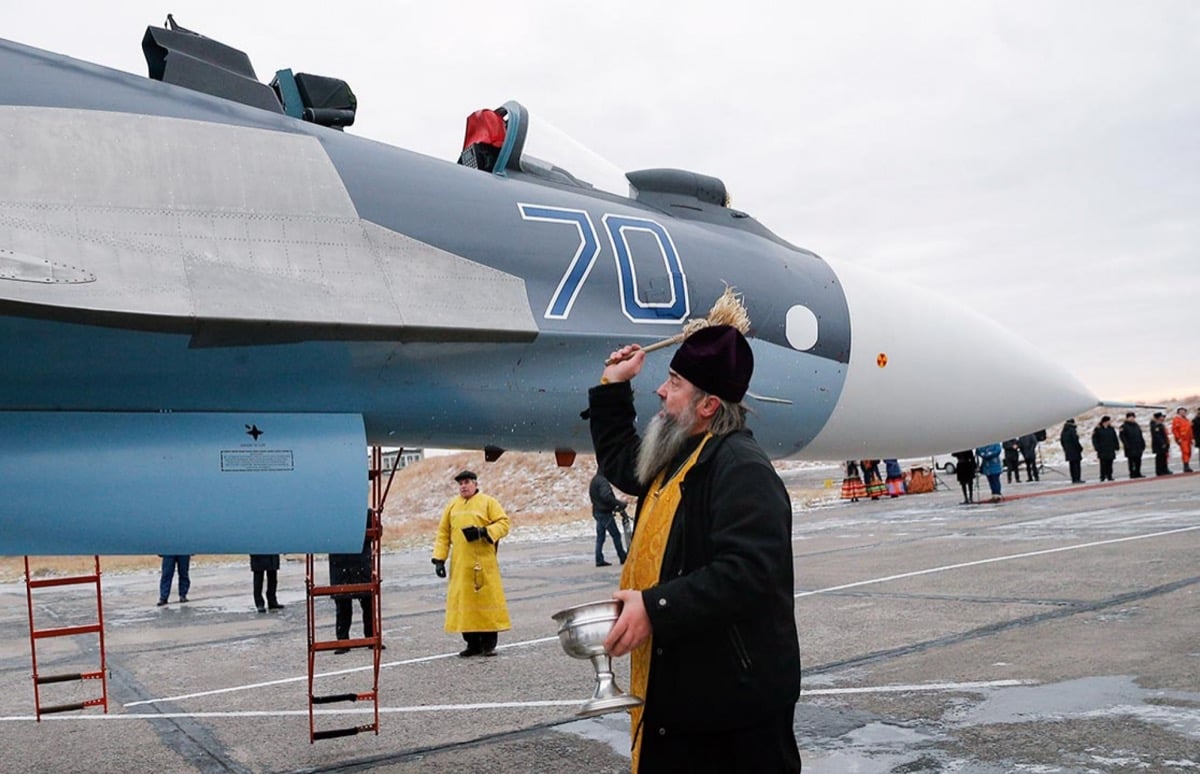
The war is not holy. The weapons cannot be blessed. But there is one more claim to examine: that Russia itself occupies a unique role in salvation history as the eschatological Restrainer of the Antichrist.
Is Russia the Restrainer?
The katechon (Greek: ὁ κατέχων, “the Restrainer,” from 2 Thessalonians 2:6-7) language makes the “Holy War” claim worse. The WRPC applies this eschatological concept to Russia, claiming the nation occupies a unique apocalyptic role in salvation history. Anyone opposing the invasion, by this logic, is siding with cosmic evil.
When Patriarch Kirill and the WRPC invoke Russia as the “katechon,” they claim a unique apocalyptic role for the Russian nation. Kirill’s claim is explicit:
Вспоминая, что слово Божие говорит применительно к пришествию в мир антихриста, мы можем сказать, что сегодня Россия — это удерживающий. А это означает, что все силы антихриста будут брошены на нашу страну. Что же в нашей стране является сердцевиной духовного сопротивления? Бесспорно, Русская Православная Церковь.
Recalling what the Word of God says regarding the coming of the antichrist into the world, we can say that today Russia is the Restrainer. And this means that all the forces of the antichrist will be thrown against our country. What is the heart of spiritual resistance in our country? Undoubtedly, the Russian Orthodox Church.
— Patriarch Kirill, birthday reception address, November 20, 2022, https://www.patriarchia.ru/article/79283
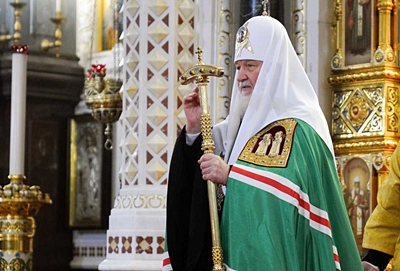
This was not a careless remark. Patriarch Kirill repeated the claim across multiple sermons, each more explicit than the last. What makes the trajectory unfortunate is that he once knew better.
In December 2015, a viewer asked Kirill on his television program whether Russia was the “Restrainer” of 2 Thessalonians. He gave the correct answer:
«Удерживающим» является, конечно, не государство с тем или иным названием, и даже не народ. Удерживающим от распространения зла является добро.
The “Restrainer” is, of course, not a state with this or that name, and not even a people. What restrains the spread of evil is goodness.
— Patriarch Kirill, “Слово пастыря” television program, December 5, 2015, https://www.patriarchia.ru/article/97257
“Of course not a state.” “Not even a people.” In 2015, he dismissed the identification explicitly. He knew the patristic reading: the katechon is the restraining function of civil order, not a permanent privilege of any nation. He said so on national television.
Then came the war.
By Easter 2023, the qualification was already straining:
В Писании сказано, что некий Удерживающий будет ограждать мир от прихода антихриста. Не хочу сказать, что это Удерживающий — это Россия, потому что неизвестно, сколько еще эпох и времен отделяют нас от пришествия в мир абсолютного зла. Но сегодня страна наша, провозглашая и отстаивая христианские ценности, действительно является силой…
Scripture says that a certain Restrainer will protect the world from the coming of the Antichrist. I don’t want to say that the Restrainer IS Russia, because it is unknown how many more epochs and times separate us from the coming into the world of absolute evil. But today our country, proclaiming and defending Christian values, is truly a force…
— Patriarch Kirill, Sermon on Bright Tuesday at Nikolо-Ugreshsky Monastery, April 18, 2023, https://www.patriarchia.ru/article/104422
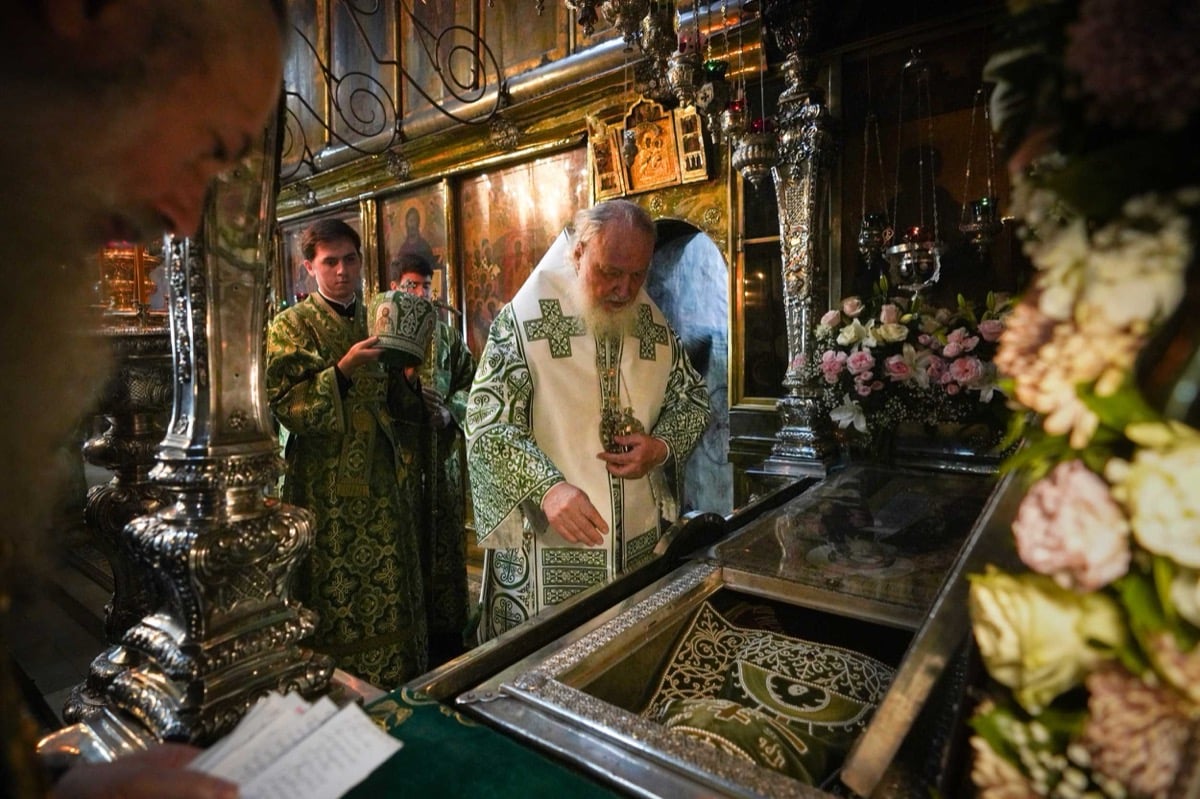
Patriarch Kirill stated that he didn’t want to state that Russia is the restrainer. But three months later, at the feast of the finding of the relics of St. Sergius, he said exactly that. He opened by acknowledging the gravity of what he was about to declare: “Я никогда не говорил этих слов, но сейчас скажу: время очень тревожное” (“I have never said these words, but I will say them now: the time is very alarming”). Then he said them:
Нужно молиться за власти наши, за президента, за воинство наше, чтобы мы не сдали своих позиций. Иначе мы не просто будем побеждены некими иноземными силами — речь пойдет о приближении метафизического конца истории, потому что Россия — удерживающий (2 Фес. 2:7).
We must pray for our authorities, for the president, for our armed forces, so that we do not surrender our positions. Otherwise we will not simply be defeated by some foreign forces: what will be at stake is the approach of the metaphysical end of history, because Russia is the Restrainer (2 Thess. 2:7).
— Patriarch Kirill, Address at Trinity-Sergius Lavra, July 18, 2023, https://www.patriarchia.ru/article/104698
He continued:
Господь избрал нашу страну и нашу Церковь — не по нашей личной святости, не по нашим добрым делам, которых нам недостает, но по молитвам наших святых… Вот за весь этот труд, за все молитвы, за все подвиги и страдания наших предшественников Господь и вручает сегодня нам с вами возможность быть таким удерживающим. И мы с вами должны твердо следовать тому, к чему предназначил нас Господь, чтобы удерживать страну нашу, народ наш, а через это, может быть, весь мир от господства диавола, от распада и разрушения.
The Lord chose our country and our Church, not for our personal holiness, not for our good deeds, which we lack, but through the prayers of our saints… For all this labor, for all the prayers, for all the podvigs (spiritual feats) and sufferings of our predecessors, the Lord today entrusts to us the possibility of being such a Restrainer. And we must firmly follow what the Lord has destined us for: to restrain our country, our people, and through this, perhaps, the whole world from the dominion of the devil, from decay and destruction.
— Patriarch Kirill, Address at Trinity-Sergius Lavra, July 18, 2023, https://www.patriarchia.ru/article/104698
He concluded by comparing himself to St. Sergius of Radonezh blessing Dmitry Donskoy’s army for the Battle of Kulikovo: “Nobody then asked: ‘Maybe we shouldn’t quarrel with the Tatars?’ The people went to Kulikovo field because the Elder of Radonezh so blessed. And so I bless all of you today for selfless service to Church and Fatherland.”
The comparison does not survive scrutiny: St. Sergius blessed a defensive war against non-Orthodox foreign oppressors as a reluctant last resort, not an aggressive war against Orthodox Christians. Chapter 19 examines the Kulikovo precedent in full and shows that it condemns rather than supports the current war.
In summary, Patriarch Kirill in 2015 stated the restrainer (katechon) was “of course not a state.” In April 2023, Patriarch Kirill said “I don’t want to say.” And then in July 2023, Patriarch Kirill, after having now gone to war, finally says “I have never said these words, but I will say them now”.
Now all of a sudden, Russia IS the Restrainer, defeat means the metaphysical end of history, and the Patriarch blesses his flock for war as St. Sergius blessed Donskoy for Kulikovo.
In November 2022 (quoted above): “All the forces of the Antichrist will be thrown against our country.” He abandoned his own correct answer, replaced it with national theology, and used it to bless a war.
Did the Fathers Assign the Katechon to Any Nation?
St. John Chrysostom, in his Fourth Homily on 2 Thessalonians, addresses the identity of the restrainer directly:
Some indeed say, the grace of the Spirit, but others the Roman empire, to whom I most of all accede. Wherefore? Because if he meant to say the Spirit, he would not have spoken obscurely, but plainly… But because he said this of the Roman empire, he naturally glanced at it, and speaks covertly and darkly. For he did not wish to bring upon himself superfluous enmities, and useless dangers.
— St. John Chrysostom, Homily 4 on 2 Thessalonians, https://www.newadvent.org/fathers/23054.htm[8]
St. John Chrysostom explains that Paul spoke obscurely about the Roman Empire to avoid persecution. The restrainer is not a permanent spiritual reality assigned to one nation, but the temporary function of lawful civil order:
For as long as the fear of this empire lasts, no one will willingly exalt himself, but when that is dissolved, he will attack the anarchy, and endeavor to seize upon the government both of man and of God.
— St. John Chrysostom, Homily 4 on 2 Thessalonians, https://www.newadvent.org/fathers/23054.htm[9]
Other early Fathers shared this interpretation. Tertullian, Lactantius, and Jerome all identified the katechon with the Roman Empire’s civil order. The point was not that Rome was uniquely holy, but that any legitimate authority maintaining social order temporarily restrains the chaos that precedes the Antichrist.
The Collected Commentaries on the Epistles demonstrate that the Fathers never agreed on a single identification of the katechon:
- St. John Chrysostom: the Roman Empire
- Others: the Holy Spirit
- Others: God’s appointed time
- Others: idolatry (when it ceases, the Antichrist arrives)
This is a contested exegetical question, not a settled doctrine that can be deployed as national ideology.
Even more devastating for Kirill’s claim, the Russian saints he implicitly invokes actually undermine it. Archbishop Averky’s commentary preserves St. Theophan the Recluse’s interpretation:
While the tsar, having in his authority the possibility to hold back popular movements, holds himself to Christian principles, he will not allow the people to turn away from them. He will hold the people back. As Antichrist will consider it his most important work to distract everyone from Christ, he will not appear while there is an Orthodox Tsar on the throne. The Tsarist power will not allow him to succeed; it will hinder his actions in its spirit. This is, in essence, “he who now restrains.” When the Tsarist power falls and every nation in the world will choose self-government (republics and democracies), then it will be easy for the Antichrist to work.
— St. Theophan the Recluse, cited in Archbishop Averky Taushev, Commentary on the Holy Scriptures of the New Testament (Holy Trinity Publications, 2021), p. 787
Even by the Russian monarchist reading of the katechon, the restraining function is tied to the Orthodox autocracy, not to the Russian nation as such. Russia has been a republic since 1917. The very Russian saints Kirill implicitly invokes would say the katechon ceased when the Tsar was overthrown. Kirill cannot claim Russia is the Restrainer when the institution that, according to his own tradition, performed the restraining function no longer exists.
St. John of Kronstadt sharpens the irony further:
The Lord cares for the good of earthly kingdoms (and especially the good of His Church) through the mediation of earthly authorities that do not allow the spread of godless or heretical teachings and schisms. The greatest villain in the history of the world, who will appear in the end times, the Antichrist, cannot appear among us yet, for we are ruled by the autocracy that holds back the disorderly conduct and ignorant teachings of the atheists.
— St. John of Kronstadt, cited in Averky, Commentary on the New Testament, p. 787
For St. John of Kronstadt, the restraining function is specifically about preventing “godless or heretical teachings.” Kirill claims Russia is the katechon while himself promoting the heresies this book documents: ecumenism, interfaith worship, war theology that contradicts the Fathers. By St. John of Kronstadt’s own standard, the katechon restrains precisely what Kirill propagates.
One prominent patristic interpretation therefore treats the katechon as the general restraining function of legitimate civil authority, not as a permanent privilege of any single nation. To claim that one modern state uniquely fulfills this apocalyptic function, and that its military campaigns are therefore cosmic battles against the Antichrist, goes far beyond anything the Fathers taught. It transforms a contested exegetical question into a national ideology. This is political mythology dressed in theological language.
What Hieromartyr Daniel Sysoev Actually Taught
Patriarch Kirill stood at Hieromartyr Daniel Sysoev’s grave in 2009 and called him “a faithful servant” who preached “the word of God.” What did this faithful servant actually teach about the katechon?
When others began discussing politics and praising “Moscow as the Third Rome,” Sysoev interrupted:
What’s all this “Third Rome, Third Rome”! The Restrainer, which was Rome, has long been the USA. They are restraining the advance of Islam. We must recognize this and understand that we are one Christian civilization.
— Hieromartyr Daniel Sysoev, as recorded by Maria Senchukova in Неизвестный Даниил (2012)[10]
The hieromartyr whom Kirill praised rejected the very claim Kirill now makes. Hieromartyr Daniel Sysoev identified the United States, not Russia, as the contemporary katechon. He dismissed the “Third Rome” mythology entirely. And he pointed to the restraint of Islam as the defining function.
Note the irony: Hieromartyr Daniel identified the katechon by its restraint of Islam. Yet Patriarch Kirill fraternizes with Muslims and states that Orthodox Christians and Muslims worship “one and the same God” (see Chapter 5). Kirill claims Russia is the katechon while undermining the very function Sysoev used to identify it.
Who Is Fighting This “Holy” War?
If this war is a “holy” struggle for Orthodoxy, who exactly is fighting it?
The war in Ukraine has drawn combatants from a wide range of backgrounds, including many who are not Orthodox Christians. Muslim Tatars, Protestants, Roman Catholics, Communists, and secular volunteers have taken part on both sides, often driven by national duty, political allegiance, or personal conviction rather than explicit confession of the Orthodox faith.
This reality exposes a crucial incoherence in Patriarch Kirill’s claim; his statement about battlefield death washing away sins makes no explicit reference to baptized Orthodox Christians; taken at face value, it simply applies to “those who die fulfilling their military duty.” By this logic, even mercenaries, convicts, or Muslims fighting against Orthodox Christians would be granted salvific status, a claim foreign to the tradition of the saints.
Russia has sent thousands of Muslim fighters from Chechnya to Ukraine in support of Russia. Left-wing foreign volunteers have joined pro-Russian units, including members of the Communist Party of Ukraine, while the Wagner Group (a Russian private military company) has deployed mercenaries, foreign recruits, and prisoners in brutal campaigns such as Bakhmut. Wagner is a secular network defined by profit, coercion, and documented atrocities, not an Orthodox religious force.
On the Ukrainian side, Crimean Tatars and other Muslims have joined Ukrainian forces, Protestants have taken up arms or served as chaplains despite pacifist traditions, Roman Catholic clergy such as Jesuit Father Andriy Zelinskyy minister to soldiers at the front, and tens of thousands of foreign volunteers have passed through Ukraine’s International Legion since 2014.
By Kirill’s logic, Tatars fighting for Ukraine, Chechen Muslims fighting for Russia, Jesuit chaplains, Communist militias, and Wagner mercenaries would all be granted salvific status through battlefield death.
The patristic tradition is clear: martyrdom requires explicit confession of Christ within the communion of the Church, not mere military service or ideological loyalty. This goes beyond even Pope Urban II’s crusading indulgence and has no precedent in the Fathers. The diverse and non-Orthodox character of the combatants reveals that this conflict is political, national, and ideological rather than a holy struggle.
If the promise applies only to Orthodox soldiers, then it is not really about the sacrifice. If it applies to everyone who dies in combat, then it is not really about Orthodoxy. Either way, the claim collapses.
To call such deaths “martyrdom” is to abandon the patristic consensus and replace it with a theology of war that glorifies killing rather than witness to Christ. For the full picture of what Patriarch Kirill specifically blessed, see Chapter 22. For the canonical Ukrainian Orthodox Church’s response to the invasion, see Chapter 28. For the refutation of the “he actually meant X” defense, see Chapter 16.
Where Are the Saints Who Waged Holy War?
If “holy war” is Orthodox, where are the saints who waged it?
The Church has canonized many military saints: St. Demetrius of Thessaloniki, St. George, St. Theodore Tiron, St. Theodore Stratelates, St. Sebastian, St. Mercurius, St. Menas, St. Polyeuktos, St. Mertios. These were not symbolic soldiers. They held real military rank and often command authority.
St. Sebastian was a general and captain of the Praetorian Guard.[11] St. Demetrius was a military commander in Thessaloniki; it was common in that era for such commanders to usurp imperial authority. St. Polyeuktos had “considerable possessions” and military rank; when persecution came, “neither his wife’s desire, nor love for his children, nor aspiration for rank and dignities” held him back from confessing Christ.[12] St. Mertios held command in the Mauritanian battalion; when detected as Christian, “they stripped him of his belt which was a symbol of his military rank.”[13]
These saints had the means to wage war against their pagan persecutors. They had troops, training, and authority. If holy war against pagans were an Orthodox concept, we would expect to find it here: soldier-saints organizing armed resistance against those who demanded apostasy, celebrated by the Church for defending the faith by force.
Where is this? Which military saint waged holy war against the pagans? Which hagiographic account praises armed resistance to persecution?
The question is not rhetorical evasion. It is a genuine challenge: produce the example. Show us the saint who took up arms against his persecutors and was glorified for it. Until that example is produced, the burden of proof remains on those who claim holy war is part of the Orthodox tradition.
Historical Precedents
Patriarch Kirill’s innovations are not without precedent. The Orthodox Church has faced similar attempts before. In every case, the Church eventually rejected them.
The Pre-Crete Attempt
This is not the first time the Moscow Patriarchate has attempted to establish theological grounds for “holy war.”
Metropolitan Chrysostomos of Messinia, speaking at the International Theological Conference in Athens organized by the National and Kapodistrian University under the auspices of the Church of Greece, gave eyewitness testimony:
I was a witness to the efforts made by the Russians, along with other Churches, during the preparatory meetings for the Council of Crete to include a provision on holy war in the text.
This happened long before the issue of Ukraine arose. We, the Greek Orthodox Churches, fought hard to ensure that this provision was not included. And we succeeded.
— Metropolitan Chrysostomos of Messinia, Orthodox Times, https://orthodoxtimes.com/revelation-from-metropolitan-of-messinia-the-russians-wanted-a-provision-on-holy-war-in-the-preparatory-text-for-crete/
Attempts to legitimize a theology of holy war predate the invasion of Ukraine by years.
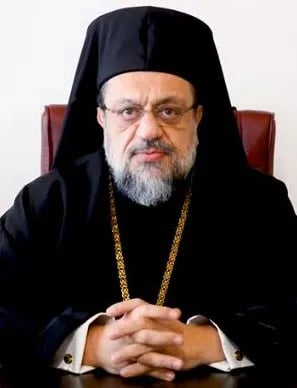
The Moscow Patriarchate under Patriarch Kirill was seeking theological justification for “holy war” well before 2022, and was thwarted by other jurisdictions.
Pope Urban II and the Crusades (1095)
But surely comparing Kirill to Western crusading popes is unfair, even offensive? Unfortunately, the comparison is not rhetorical, but structural.
In 1095, nearly half a century after the Great Schism separated Rome from the Orthodox Church, Pope Urban II proclaimed the First Crusade and offered a plenary indulgence to those who participated: remission of all sins for those who died in the holy war.
Multiple narrative accounts of his sermon at the Council of Clermont (including Fulcher of Chartres, Robert the Monk, and Guibert of Nogent) report that Urban promised remission of sins to those who “took the cross” for Jerusalem. In a letter to the faithful of Bologna in 1096, he explicitly repeated that those who went on crusade in a spirit of penance would obtain full forgiveness of sins, a formulation later canonists interpreted as a plenary indulgence. Modern historians broadly agree that this offer of spiritual reward, summarized in slogans like “Deus vult,” was decisive in mobilizing recruits and became a defining feature of crusading ideology.
The Orthodox Church rejected this innovation. The East never accepted the Western doctrine of indulgences. The East never accepted that popes could promise automatic salvation to participants in military campaigns. The East maintained the patristic framework: killing wounds the soul, penance is required, and no ecclesiastical authority can simply cancel that reality by decree.
What Kirill has proclaimed is structurally identical to what Urban proclaimed. Both promise that death in a particular war washes away sins. Both attach salvific significance to participation in military campaigns. Both bypass the patristic requirement of penance, repentance, and exclusion from communion. The only difference is that Urban was honest about calling it an indulgence. Kirill uses Orthodox language while importing the same underlying logic.
For centuries, Orthodox theologians have criticized the Latin doctrine of indulgences as a departure from patristic Christianity. We cannot now adopt the same doctrine under a different name and pretend we have remained faithful just because an Orthodox patriarch stated it. If battlefield death in Ukraine “washes away all sins,” then Urban was right and the Orthodox critique of indulgences was wrong. If the Orthodox critique was right, then Kirill is wrong. However, both of these things cannot be simultaneously true.
Even Ecumenical Patriarch Bartholomew, whom many rightly criticize for embracing heresy, speaks clearly on this point. In an April 3, 2022, homily at the Church of Holy Trinity in Constantinople, referencing his recent visit to Poland, he stated that the war in Ukraine “is not a holy and blessed war, as some claim. It is an evil war, an unholy war,” and called on the faithful to pray for its swift end and for the restoration of peace in Ukraine and throughout the world.[14] On this question, his judgment coincides with the patristic consensus that no war is “holy” (even when resistance may be tragically necessary).
In summary
Metropolitan Anthony called war a lesser evil. Patriarch Kirill calls it sacred. St. John Chrysostom identified the katechon with the general function of civil order. Kirill assigned it to Russia by name, contradicting his own 2015 answer on national television. The Moscow Patriarchate’s own Inter-Council Presence ruled that blessing weapons of mass destruction “must be excluded from pastoral practice.” Kirill declared them created under the protection of St. Seraphim. The Greek Orthodox Churches blocked his attempt to insert a holy war provision before the Council of Crete. He proclaimed one anyway. If the founding Metropolitan of ROCOR, the Inter-Council Presence, and the Greek Churches all reject what Kirill teaches, the question is not whether the teaching is Orthodox. The question is whether the man who teaches it has violated the very canons he is bound to uphold.
Original Russian: “С духовно-нравственной точки зрения специальная военная операция является Священной войной.” ↩
Same address: «мы вынуждены воспринимать события на Украине не только как тяжелейшую трагедию нашего народа, разделенного злой внешней волей, но и как продолжение той, незавершенной войны, в которой мы одержали Великую Победу весной 45-го, но не сумели до конца искоренить зло нацизма.» On Russia as Third Rome: «На наше Отечество на протяжении нескольких веков была возложена высокая и ответственная миссия: быть мировым центром православного христианства, “Третьим Римом”.» Primary source: https://www.patriarchia.ru/article/118370 ↩
Original Russian: “Это священная война. Это война с сатанизмом.” ↩
Original Greek: “«εἰς πᾶσαν τὴν γῆν τὸ Ευαγγέλιον τῆς θεογνωσίας κεκήρυκται οὐ πολέμῳ καὶ ὅπλοις καὶ στρατοπέδοις τοὺς ἐναντίους τροπούμενον ἀλλ᾿ ὀλίγοι πτωχοί, ἀγράμματοι, διωκόμενοι, αἰκιζόμενοι, θανατούμενοι, σταυρωθέντα σαρκὶ καὶ θανόντα κηρύττοντες τῶν σοφῶν καὶ δυνατῶν κατεκράτησαν· εἵπετο γὰρ αὐτοῖς τοῦ σταυρωθέντος ἡ παντοδύναμος δύναμις»” ↩
Patriarch Kirill, Address at the XXVI World Russian People’s Council, November 28, 2024. Russian text: “Но что означает появление этого ‘Орешника’? Это же ‘стоп-машина’!” and “Нужно благодарить наших ученых, которые создают невероятное оружие, фантастическое оружие, вводя в недоумение и какой-то кошмар тех западных стратегов, которые думают военной силой одолеть Россию.” These statements were reported by TASS https://tass.ru/obschestvo/22522089 and Moskva 24 https://www.m24.ru/news/politika/28112024/747478 but were omitted from the official transcript published on patriarchia.ru https://www.patriarchia.ru/article/112644. The Oreshnik missile was first used on November 21, 2024, against Dnipro, Ukraine. ↩
Adamsky, Russian Nuclear Orthodoxy, pp. 76-77. Pavel Florensky, a professor and grandson of the famous religious philosopher, “demanded an ethical differentiation between the Russian ‘defender-bomb’ and the American ‘killer-bomb.’ According to him, the ‘moral nature’ of the Soviet bomb was predetermined by St. Seraphim’s spiritual control.” ↩
Original Russian: “«Не отражено в традиции Православной Церкви и не соответствует содержанию самого Чина благословения воинских оружий, а потому должно быть исключено из пастырской практики использование данного чинопоследования для “освящения” любых разновидностей оружия, употребление которого может повлечь за собой гибель неопределенного количества людей, в том числе оружия неизбирательного действия и оружия массового поражения».” ↩
Original Greek: “«Οἱ μὲν τοῦ Πνεύματος τὴν χάριν φασίν, οἱ δὲ τὴν Ῥωμαϊκὴν ἀρχήν, οἷς ἐγὼγε μάλιστα τίθεμαι. Διὰ τί; Ὅτι εἰ τὸ Πνεῦμα ἐβούλετο εἰπεῖν, οὐκ ἂν εἶπεν ἀσαφῶς, ἀλλὰ φανερῶς…Ἐπειδὴ δὲ περὶ τῆς Ρωμαϊκῆς ἀρχῆς τοῦτό φησιν, εἰκότως ἠνίξατο, καὶ τέως φησὶ συνεσκιασμένως· οὐδὲ γὰρ ἐβούλετο περιττὰς ἔχθρας ἀναδέχεσθαι καὶ ἀνονήτους κινδύνους.»” ↩
Original Greek: “«Καὶ εἰκότως. Ἕως γὰρ ἂν ὁ ταύτης ᾖ τῆς ἀρχῆς φόβος, οὐδεὶς ταχέως ὑποταγήσεται, ὅταν δὲ αὕτη καταλυθῇ, ἐπιθήσεται τῇ ἀναρχίᾳ, καὶ τὴν τῶν ἀνθρώπων καὶ τὴν τοῦ Θεοῦ ἐπιχειρήσει ἁρπάσαι ἀρχήν.»” ↩
Original Russian: “Да что вы все “третий Рим, третий Рим”! Удерживающим, которым был Рим, уже давно являются США. Они сдерживают наступление ислама. Надо это признать и понять, что мы одна христианская цивилизация.” ↩
St. Paisios, Spiritual Counsels, Vol. 2, p. 132. ↩
Synaxaristes, January, pp. 268-273. ↩
Synaxaristes, January, pp. 342-343. ↩
Ecumenical Patriarch Bartholomew, Homily at the Church of Holy Trinity, Stavrodromi, Constantinople, April 3, 2022. Bartholomew had visited Poland March 27-29, 2022, and referenced that visit in the homily. CatholicCulture.org confirmed the quote verbatim. ↩