
Blessed Disobedience or Evil Obedience?
The most common defense of Patriarch Kirill in light of everything documented in this book is an appeal to obedience. “The bishop said it, so we must obey.” “The Patriarch issued a directive, so the matter is settled.” “Who are we to question our hierarchs?”
However, do these sentiments have anything to do with what our saints have professed?
The Church isn’t the ship of each bishop to do with as he pleases.
— St. Paisios the Athonite, The Life of Elder Paisios of Mount Athos by Hieromonk Isaac, p. 661
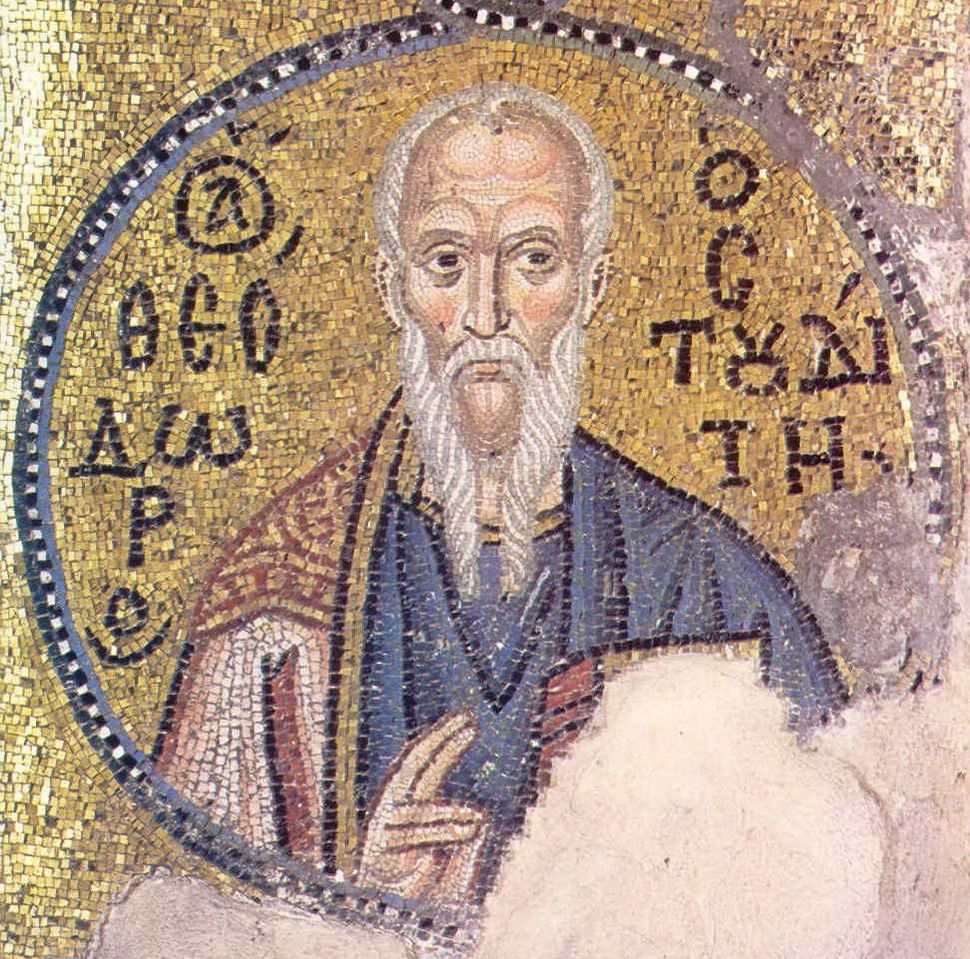
The patristic tradition speaks with one voice on this question.
The Command of the Three Holy Hierarchs
St. John Chrysostom, one of the Three Holy Hierarchs, addresses the question with a command:
What then, you say, when he is wicked should we obey? Wicked? In what sense? If indeed in regard to Faith, flee and avoid him; not only if he be a man, but even if he be an angel come down from Heaven.
— St. John Chrysostom, Homily 3 on 2 Thessalonians, PG 62:485[1]
“Flee and avoid him.” Not “maintain communion while respectfully disagreeing.” Not “obey now and let a future council sort it out.” Even if it be an angel shrouded in light that appears out of the sky: flee.
When a bishop is wicked in regard to Faith, the faithful are commanded to flee, even if he claims angelic authority. And if the faithful should flee even if it be an angel, how much more should they flee a bishop or Patriarch in matters of faith?
Let us also remember here that our Holy Canons are interpretations of scripture. Canon 15 of the First-Second Council of Constantinople is based on numerous passages in scripture such as 2 Thessalonians. Thus, if someone claims that obedience circumvents the canons, they are not only disobeying the Holy Canons (which no bishop or Patriarch has the authority to downplay or circumvent) but they are disobeying Holy Scripture as well.
St. John Climacus wrote the definitive treatise on monastic obedience. His Ladder of Divine Ascent demands total submission to one’s spiritual father. Yet even he placed one limit:
In union with humility it is impossible that there should be any appearance of hatred, or any kind of dispute, or even a sniff of disobedience, unless perhaps faith is called in question.
— St. John Climacus, The Ladder of Divine Ascent, Step 25[2]
The man who defined obedience for all subsequent monasticism allowed one critical exception: matters of faith (heresy). St. John Chrysostom commands flight; St. John Climacus permits dispute. Both agree on the principle: matters of faith override the principle of obedience. This is the unanimous witness of the saints.
St. Ignatius Brianchaninov addresses those who believe a subordinate’s faith can compensate for an erring leader:
One may say: the subordinate’s faith can replace the elder’s inadequacy. Wrong! Faith in truth saves. Faith in lies and in diabolical deceit harms!
— St. Ignatius Brianchaninov, An Offering to Contemporary Monasticism, vol. I
St. Ephraim the Syrian states the consequence:
Woe unto those who pollute the holy Faith with heresies or who subject themselves to heretics.
— St. Ephraim the Syrian, Homily on the Second Coming of Our Lord Jesus Christ
Fr. Seraphim Rose of Platina, spiritual child of St. John of Shanghai and San Francisco, applied this patristic teaching directly:
Your own conscience and heart have to speak; totally blind obedience simply isn’t possible, especially in our times.
— Fr. Seraphim Rose, Letter 270 (1979), Letters from Father Seraphim 1976-1982, St. Herman of Alaska Brotherhood, 2003
In an earlier letter, Rose described the spiritual mechanism by which obedience is corrupted:
This subject is extremely deep and is closely bound up with the whole subject of genuine vs. false Orthodoxy in the 20th century, most acutely in “Sergianism,” where obedience indeed becomes slavery to men and the human church organization. True obedience is accompanied by inward freedom, without which there is no Church life.
— Fr. Seraphim Rose, Letter 158 (July 13, 1974), Letters from Father Seraphim, St. Herman of Alaska Brotherhood
Thus, the obedience taught by many contemporary Orthodox Christians is not patristic obedience; it is captivity wearing obedience’s vestments. Rose identifies the diagnostic: true obedience produces inward freedom. When obedience produces oppression, something has gone wrong. The faithful person who feels crushed by compliance with a heretical directive is not experiencing a failure of humility. He is experiencing the natural response of a Christian conscience to spiritual coercion.
St. John Chrysostom warns that seeking only your own salvation while your brothers are destroyed is not safety but desertion:
As for us, then, let us not rest content with our salvation alone, since by so doing we destroy this, too. For in war and combat, the soldier who looks to this alone, how he might save himself by fleeing, destroys the rest along with himself, even as the courageous soldier who takes up arms in defense of the others preserves himself along with the rest.
— St. John Chrysostom, Homily LIX on St. Matthew, §5 (PG 58:580)[3]
What does the command of the Three Holy Hierarchs require in matters where our faith is spurned? St. John Chrysostom says: flee. Fr. Seraphim says: your conscience must speak, and true obedience is accompanied by freedom. The question is not whether one may resist. The question is whether one will choose to comply.
The Rudder Defines the Limit
The saints speak with one voice. But those who appeal to “obedience” will ask for canonical authority, not just patristic quotations.
The Rudder (Pedalion) provides it.
St. Nikodemos the Hagiorite, the eighteenth-century Athonite monk who compiled the Rudder (the standard canonical commentary of the Orthodox Church), in his commentary on Apostolic Canon 31, first establishes the rule: Presbyters, Deacons, and all clergy νὰ ὑποτάσσωνται εἰς τὸν ἰδικόν τους Ἐπίσκοπον (“must submit to their own Bishop”). Bishops to their Metropolitan. Metropolitans to their Patriarch. The hierarchy of obedience is explicit. Their own position is stated directly by St. Nikodemos the Hagiorite himself.
Then St. Nikodemos states the exception. The canon punishes a presbyter who separates from his bishop χωρὶς νὰ γνωρίσῃ αὐτὸν πῶς σφάλλει φανερὰ ἢ εἰς τὴν εὐσέβειαν, ἢ εἰς τὴν δικαιοσύνην: “without knowing him to err manifestly either in piety or in justice.” St. Nikodemos then restates this in plain language: χωρὶς νὰ γνωρίσῃ αὐτὸν πῶς εἶναι φανερά, ἢ αἱρετικός, ἢ ἄδικος, “without knowing him to be manifestly either a heretic or unjust.”
The word that controls the entire canon is χωρίς: “without.” The presbyter is punished for separating without knowing his bishop to be a heretic. Everything depends on this condition.
If the bishop IS manifestly a heretic, the condition is not met, and the punishment does not apply. The canon never punishes those who separate from a manifestly heretical bishop. It punishes those who separate from a faithful one.
St. Nikodemos calls such a presbyter φίλαρχος, “a lover of power.” Not “schismatic.” Not “disobedient.” A lover of power, because he separates from ambition, not from conscience. The accusation is self-serving ambition, not principled dissent.
Then comes the decisive sentence:
But those who separate from their Bishop before a synodal examination, because he publicly preaches some heterodox opinion and heresy (κηρύττει δημοσίᾳ κακοδοξίαν καὶ αἵρεσιν): such persons not only are not subject to the aforementioned penalties, but are deemed worthy of the honor befitting the Orthodox (τὴν πρέπουσαν εἰς τοὺς ὀρθοδόξους τιμὴν ἀξιόνονται), according to Canon 15 of the First-Second Council.
— St. Nikodemos the Hagiorite, The Rudder (Pedalion), Commentary on Apostolic Canon 31 [4]
The word is stronger than simply “not punished”: honored. The one who separates before synodal examination is honored.
Some will attempt to dismiss St. Nikodemos as “just one saint’s opinion.” Metropolitan Augoustinos Kantiotes anticipated this objection:
Of course he doesn’t say anything of his own. St. Nicodemus himself only made footnotes, and the examination of the holy documents which he did is admirable. Opening the Rudder, we hear the voice of the Fathers; not just one or two, but whole gatherings of the holiest of Fathers: 100, 200, 300, 400, 500, 600 Holy Fathers.
— Metropolitan Augoustinos Kantiotes, Christians of the Last Times, p. 112
To dismiss St. Nikodemos is to dismiss the Ecumenical Councils whose canons he compiled.
How unfortunate that the very canons and saints people invoke to demand obedience to bishops, very clearly, without any confusion, declare that separation from a heretical bishop is an act worthy of honor, and do not chastise anyone for obedience in this context.
Metropolitan Augoustinos Kantiotes of Florina, a holy Metropolitan revered even by St. Paisios the Athonite, understood this. At his enthronement as bishop in 1967, he declared: “I will sacrifice my throne for the sake of my principles. I will not sacrifice my principles for the sake of the throne.”[5] Three years later, in 1970, he ceased commemoration of Patriarch Athenagoras. He was forbidden to preach or officiate within the Archdiocese of Athens. He was hated by those who spurn the saints, the hierarchy included, but was honored by the faithful then, and continues to be honored by the faithful now, exactly as the Rudder and St. Nikodemos predicted.
Two details deserve attention. First, the Greek κακοδοξίαν καὶ αἵρεσιν (“heterodox opinion and heresy”) encompasses wrong teaching that may not yet have been formally condemned by a council. Second, the canon establishes two independent grounds for separation: εὐσέβεια (piety) and δικαιοσύνη (justice).
A bishop who is manifestly unjust, not only one who is heretical, forfeits the claim to obedience. Chapter 24 provides the full Greek exegesis of Canon 15.
”But My Bishop Told Me To”
Another canon in the same Rudder addresses the most common objection directly. Theophilus of Alexandria, in his Memorandum (Ὑπομνηστικόν) to Bishop Ammon, deals with Orthodox clergy who communed with Arians (followers of the heresy that Christ is a created being, not truly God). St. Nikodemos explains:
Those Orthodox whom Bishop Apollo appointed, if they communed with the Arians of their own initiative (ἀφ᾽ ἑαυτοῦ τους), let them be penalized. But if they did this by the instruction of their Bishop (μὲ γνώμην τοῦ ῥηθέντος Ἐπισκόπου τους), let them have communion with the other Bishops: because, wanting to keep obedience to their Bishop (θέλοντες νὰ φυλάξουν ὑπακοήν εἰς τὸν Ἐπίσκοπόν τους), they could not know what was reasonable to do (δὲν ἐδυνήθησαν νὰ γνωρίσουν ποῖον ἦτον εὔλογον νὰ κάμουν), namely, not to commune with those Arians (ἦτοι τὸ νὰ μὴ συγκοινωνήσουν μὲ ἐκείνους).
— St. Nikodemos the Hagiorite, The Rudder (Pedalion), Commentary on the Canon of Theophilus of Alexandria (Memorandum to Ammon)[6]
The canon does not call obedience to a heretical bishop praiseworthy. The original canon text calls it ἄλογον, “unreasonable”: ὡς μὴ ἐπεγνωκότες τὸ ἄλογον, “as not having recognized the unreasonable course.” The right action was to refuse communion with heretics. Those who obeyed their bishop were excused only because they failed to recognize this, however, they certainly were not honored for this ignorance.
The Greek word ἐπεγνωκότες (from ἐπιγινώσκω, “to recognize fully, to discern”) reveals the limit of this excuse. The participial form with μή marks an absence of discernment, not a presence of virtue. The moment a person discerns that their bishop communes with heretics, the defense of ignorance vanishes. Obedience after knowledge is what the canon calls ἄλογον: unreasonable.
The Systematic Treatment
St. Ignatius Brianchaninov states the principle that animated every saint who chose exile over compliance:
True Christians reason about this differently! Countless hosts of saints wove their martyrs’ wreath, preferred the fiercest and prolonged suffering, dungeon, exile, rather than to agree to participate in a heresy that blasphemes their God with false teaching.
— St. Ignatius Brianchaninov, Harbor for Our Hope, “From My Hand and Heart,” p. 116
Archpriest Theodore Zisis, Professor of the Theological Faculty of Thessaloniki University, synthesizes this patristic tradition in his study Blessed Disobedience or Evil Obedience?[7] Anyone who wants to understand the patristic witness on this question should read this book in its entirety, as it is quite good.
Fr. Theodore examines five saints whom the Church honors precisely for their disobedience:
- St. Athanasius, exiled five times for refusing communion with Arians when nearly every bishop had capitulated.
- St. Basil the Great, who told the emperor’s prefect that exile and death meant nothing to him.
- St. Maximus the Confessor, who lost his tongue and hand for refusing the Patriarch’s heresy.
- St. Theodore the Studite, beaten and exiled for breaking communion.
- St. Mark of Ephesus, who stood alone when every other bishop signed the false union with Rome.
Every one of these saints disobeyed patriarchs, and every one of them was vindicated and honored by the Church till this very day. It is a shame that our Orthodox Christian brethren forget exactly why we venerate these holy men.
In every age, the same deflection is deployed against those who resist: preserve the peace, do not stir up disputes, it is only a matter of words. St. Ignatius Brianchaninov describes this tactic as it was used against St. Alexander, Patriarch of Alexandria, during the Arian crisis:
One person’s response to St. Alexander (Patriarch of Alexandria, a person who is clothed in a powerful office of this world) about the Arian heresy was amusing and grievously pitiful for its consequences. This person advises the patriarch to preserve the peace, not to stir up any disputes, which are so onerous to Christianity, just because of a few words; he writes that he finds nothing condemnable in the teachings of Arius, perhaps some difference in the turn of a word only! These turns of words, remarks the historian Fieri, which “have nothing condemnable,” reject the divinity of our Lord Jesus Christ! Subvert, in other words, all Christian faith!
— St. Ignatius Brianchaninov, Harbor for Our Hope, “From My Hand and Heart,” p. 118
“Just a few words.” “Preserve the peace.” “Nothing condemnable.” Those who counseled silence during the Arian heresy spoke exactly as those who counsel silence today. And St. Ignatius’s judgment on them is unsparing.
The central thesis of Protopresbyter Theodore Zisis is that most believers identify the hierarchy with the Church itself, so that disobedience to any hierarch is wrongly perceived as disobedience to the Church. This is the root error. They confuse obedience to persons with obedience to the Church. But obedience to the Church is not obedience to individuals:
Obedience to the Church is obedience not to specific individuals (for people, as is known, are prone to error), but to the unchanging truth of the Church as revealed in the Gospel and the timeless centuries-old patristic Tradition.
— Archpriest Theodore Zisis, Blessed Disobedience or Evil Obedience?
The Saints Define Obedience
St. Maximus the Confessor was accused of disobedience for refusing the Monothelite heresy (the teaching that Christ had only one will, denying His full humanity). Patriarch Peter condemned him and threatened punishment. St. Maximus replied that the Church is defined not by its hierarchy but by its confession:
Christ the Lord called that Church the Catholic Church which maintains the true and saving confession of the Faith.
— St. Maximus the Confessor, Relatio Motionis
The one who obeys the Church is not the one who changes the truth, but the one who protects it.
He did not say, as some imagine: “I may disobey only because I am a saint.” Chapter 26: "You're Not a Saint". He said “the one who obeys the Church is the one who protects the truth.” Who? Anyone. Not just confessors. Not just monastics. Anyone who protects the truth against those who would change it.
The cost of this protection was everything the world has to offer. The emperor’s envoys promised St. Maximus:
Be assured that we shall receive thee with love at Chalke, escort thee to the Great Church with great honor and glory, and place thee beside us where royalty sits. Together we shall communicate the Mysteries. We shall then proclaim thee as our father. There shall then be joy not only throughout our Christloving city, but throughout all Christendom. It is our firm belief that shouldest thou be persuaded to enter into communion with the Church of Constantinople, then all those who, by thine example, have cut themselves off from communion with us shall be reunited.
— The Great Synaxaristes of the Orthodox Church, trans. Holy Apostles Convent, Vol. 1 (January), p. 847
Honor, glory, a seat beside royalty, the reunion of all Christendom: he was offered everything, and he refused it all… because it required communion with heresy.
By this standard, the one who refuses communion with heresy, regardless of the cost, is obedient to the Church. The one who complies with a heretical directive is obedient to a man.
St. Photius the Great, Patriarch of Constantinople, stated the framework plainly:
Is the shepherd orthodox, does he bear the seal of piety, does he have none of the heretical crew trailing after him? Then submit to him, since he presides in the likeness of Christ… Is the shepherd a heretic? Then he is a wolf, and it will be needful to flee and leap away from him, and not be deceived into approaching him, even if he appears to be fawning gently. Avoid communion and intercourse with him as snake’s poison.
— St. Photius the Great, The Homilies of Photius: Patriarch of Constantinople, trans. Cyril Mango (Harvard University Press, 1958), p. 250
Orthodox shepherd: submit. Heretical shepherd: flee as from a wolf. There is no third option.
Five hundred years later, St. Gregory Palamas stated the same principle with even greater force:
And those who are from the Church of Christ are of the truth, and those who are not of the truth, they are not from the Church of Christ, however much they may lie about themselves and call themselves holy shepherds and archpastors, even if others also call them this. After all, we remember that Christianity is determined not by appearance, but by the truth and accuracy of faith.
— St. Gregory Palamas, Refutation of the Letter of Patriarch Ignatios of Antioch, 3; in P.K. Chrestou (ed.), Γρηγορίου τοῦ Παλαμᾶ Συγγράμματα, vol. II (Thessaloniki, 1966)[8]
A bishop who is “not of the truth” is “not from the Church of Christ,” regardless of his title or the recognition others give him. Obedience to such a man is not obedience to the Church. It cannot be.
St. Symeon the New Theologian stated the limit with precision:
In everything that does not contradict the commandment of God, the apostolic ordinances and rules, you must in every way obey him and submit to him as to the Lord. But in everything that threatens with danger the Gospel and the laws of the Church, one should not obey his instructions and commands, nor even an angel, if he suddenly came down from heaven, preaching to you something other than what the eyewitnesses of the Word preached.
— St. Symeon the New Theologian, in St. Niketas Stethatos, Life of Saint Symeon the New Theologian, ch. 66
When a patriarch’s directives contradict the commandments of God and the laws of the Church, one should not obey, “nor even an angel.”
St. Meletius the Confessor addressed those who remain in communion for the sake of unity:
Follow not even after bishops who guilefully exhort you to do and say and believe things that are not profitable. What pious man will keep silence, or who will remain altogether at peace? For silence means consent… For it is better to separate ourselves from them who do not believe aright than to follow them in evil concord, and by our union with them separate ourselves from God.
— St. Meletius the Confessor of Mount Galesion (13th century), from his hagiographical account (feast day: January 19th)
“By our union with them separate ourselves from God.” The person who remains in communion with a heretical bishop to preserve unity achieves the very separation he feared: not from men, but from God.
Fr. Theodore Zisis draws the conclusion from the patristic witness:
As there is good and bad obedience, so there is bad and good disobedience. And just as St. Gregory, speaking about peace and war, says that “war is better than peace that separates us from God,” we dare to claim that disobedience is better than obedience that separates us from the Lord.
— Archpriest Theodore Zisis, Blessed Disobedience or Evil Obedience?
The question is not “Did the bishop order it?” The question is “Does obedience to this order separate us from the Lord?”
When obedience to a directive separates the faithful from the Lord, it is not blessed obedience. It is evil obedience.
The Saints Are United
The saints who taught obedience were themselves worthy of it. They were monastics who had achieved dispassion (freedom from the passions). They prayed without ceasing, knew the Psalter by heart, held unerringly to the canons, and obeyed the fathers and saints before them. To demand blind obedience from a man who knows neither the canons nor the saints, who does not struggle in prayer, who follows his own sentiments rather than the fathers: this is parody, not tradition.
Archbishop Averky of Jordanville, addressing a pastoral conference, warned that the worst corruption in a pastor is not laxity or ignorance, but the selective enforcement of authority:
There is nothing more pernicious for pastoral work than if the pastor is immeasurably condescending towards everything, even to the most serious sins of his flock, and is infinitely strict and exacting only with regard to one thing: the sin of disobedience to himself. The Pastor must be unconditionally strict and unbending in everything that concerns the age-old foundations of the Church: its doctrinal and moral teachings, its sacred canons, institutions and customs; but this strictness must flow exclusively from a genuine zeal for the glory of God and the salvation of the souls of his flock, and never from some other kind of motives, and especially never from personal interests, or self-love and wounded pride. It is totally impermissible, disregarding the Church’s canons in cases of principle, to have recourse to them only when our personal authority begins to suffer and when this pleases us personally.
— Archbishop Averky (Taushev), Pastoral Conference Address, Orthodox Life, Vol. 47, No. 3 (May-June 1997), pp. 20-21
This is Patriarch Kirill precisely. He condescends toward every ecumenical violation, every betrayal of canonical discipline, every compromise with the state. But he is infinitely strict about one thing: obedience to himself. He demands submission while abandoning the very doctrinal and moral teachings that would make submission legitimate. Archbishop Averky’s warning is a portrait of the man who now occupies the patriarchal throne.
Unfortunately, many of the laity have inherited the same incorrect understanding, contradicting the sentiments of our saints such as St. Paisios the Athonite:
If it happens that one of us Elders is a little spiritually cross-eyed, then we should not ask blind obedience of our monks, lest we all fall over the cliff together, as it is written, “And if the blind lead the blind, both shall fall into the ditch.”
— St. Paisios the Athonite, Athonite Fathers and Athonite Matters, p. 233
The same warning comes from the very heart of Moscow. Archimandrite Tikhon (Shevkunov), currently the ruling Metropolitan of Crimea and one of Patriarch Kirill’s closest deputies, wrote in his published recollections of his own spiritual father, Elder John Krestiankin of the Pskov-Caves Monastery (1910-2006), that automatic, unthinking submission is not Orthodox obedience at all:
Trust and obedience are the main rule of the relationship between a Christian and his spiritual father. Of course, one cannot manifest absolute obedience to every spiritual father. Such spiritual directors are a rarity. This is quite a delicate matter. Very serious spiritual and life tragedies often happen when unreasoning priests imagine themselves to be elders, and their unfortunate spiritual children take upon themselves a form of absolute obedience which is beyond their strength and entirely inappropriate in our times.
— Archimandrite Tikhon (Shevkunov), “Recollections of a Spiritual Son,” in May God Give You Wisdom! The Letters of Fr. John Krestiankin (Wildwood, CA: St. Xenia Skete), p. 505
Shevkunov then describes an incident in which his own elder, Elder John Krestiankin, a man universally revered across the Moscow Patriarchate for his holiness and discernment, refused to give his blessing to a decision jointly pressed upon him by “one of the monastery’s abbots and the ruling hierarch”:
Yes, Fr. John certainly did revere and submit to the Church hierarchy, but this did not mean automatic, unthinking submission. I witnessed an occasion when one of the monastery’s abbots and the ruling hierarch tried to persuade Batiushka to give his blessing on their decision, with which Fr. John did not agree. They needed the elder’s authority to support their decision. They approached Batiushka seriously, as they say, “with a knife to the throat.” Monks and priests can imagine what it means to stand up to pressure from their ruling hierarch or abbot. But Fr. John withstood this prolonged pressure quite calmly. He respectfully, patiently, and meekly explained that he could not say “I bless” to something that did not agree with his soul, but should his superiors consider it necessary to take this action, then he would unmurmuringly accept their decision — they would answer for it before God and the brothers.
— Archimandrite Tikhon (Shevkunov), “Recollections of a Spiritual Son,” in May God Give You Wisdom!, p. 517
Two things deserve notice. First, the witness is hostile to this book’s thesis in every other respect: Shevkunov is currently a ruling hierarch of the Moscow Patriarchate, a close associate of Patriarch Kirill, and a public defender of the war theology examined in Chapter 16. He has no motive to understate the obedience owed to Moscow hierarchs. Yet he acknowledges in print, in a volume published with Patriarchate blessing, that the most beloved MP elder of the Soviet and post-Soviet era refused to bless a decision that his own abbot and his own ruling bishop jointly demanded, “with a knife to the throat.” Second, Krestiankin’s practice was exactly what this chapter advances against the apologists: submit to the hierarchy in what is lawful, refuse to say “I bless” when the action contradicts your soul, and let those who proceed answer for it before God. He modeled precisely the distinction the apologists say does not exist.[9]
Those who miss this critical point will find themselves following the wisdom of men rather than the wisdom of God.
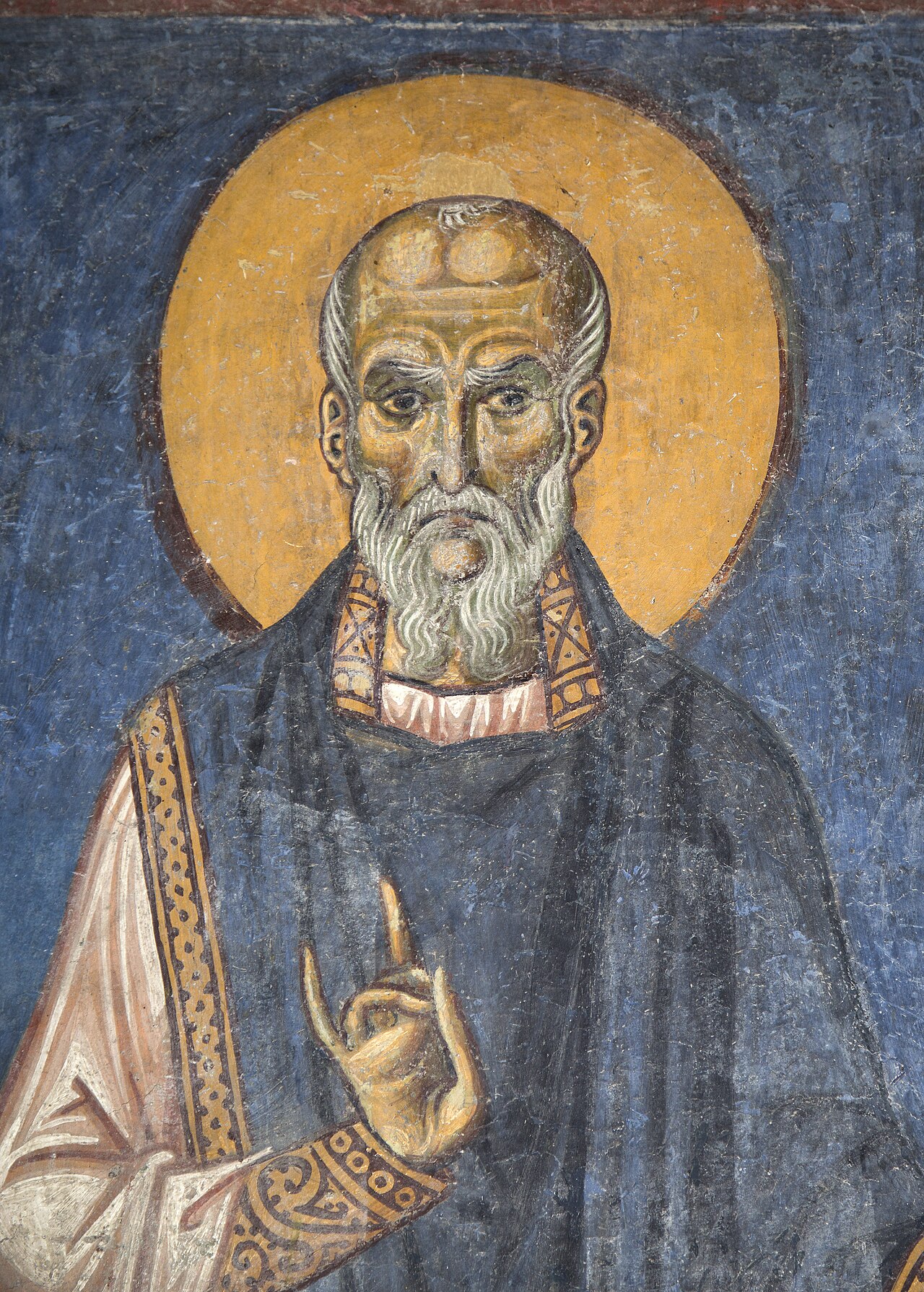
St. Theodore the Studite, who spent years in prison for his refusal to obey heretical hierarchs, stated the principle plainly:
Bishops are not given any authority to transgress any canon. They are simply to follow what has been decreed, and to adhere to those who have gone before.
— St. Theodore the Studite, Epistle I.24 (to Theoctistus the Magister), PG 99:1017
St. John Cassian defined what deserves obedience:
[W]e ought in every respect to bestow an unshakable faith and an unquestioning obedience not on those institutes and rules that were introduced at the wish of a few but on those that were long ago passed on to later ages by innumerable holy fathers acting in accord.
— St. John Cassian, The Institutes, Preface to Castor, §7
The innovations of any patriarch, introduced at the wish of a few, cannot override what was passed on by innumerable holy fathers acting in accord.
If St. Maximus refused the Patriarch and was vindicated by the Church; if St. Symeon teaches that we should not obey “nor even an angel” when the Gospel is threatened; if St. Theodore the Studite declares that bishops have no authority to transgress any canon; if St. Paisios warns that the Church is not the ship of each bishop to do with as he pleases: on what possible basis can compliance with a patriarch’s heresies be called obedience to the Church?
Those who appeal to “obedience” as a defense of continued communion with a heretical patriarch have confused submission to a man with faithfulness to Christ. The saints would not recognize this as obedience. They would call it what it is: captivity.
The Saints They Cite
The patristic witness is unanimous. But notice which saints the apologists choose to cite in defense of their understanding of obedience, and how selectively they embrace these saints’ concerns.
Our saints memorized the canons and enforced them. The apologists who cite these saints actively ignore and shun our Holy Canons. Our saints cut off communion with erring bishops. The apologists who cite these saints defend erring bishops. Our saints accepted exile, torture, and mutilation rather than comply with heterodox directives. The apologists who cite these saints go out of their way to accept heterodox directives. St. Maximus refused the Patriarch and lost his tongue. St. Theodore broke communion repeatedly and spent years in prison. St. Mark of Ephesus stood alone against a council.
The apologists of course light candles to these very courageous and inflexible saints, and then immediately insist no one may follow their example (see Chapter 26: "You're Not a Saint"). They celebrate the feast days of men who acted before any council was called, then demand we wait for a council (see Chapter 24: On Heresy, Synods, and Right Belief). They honor saints who were accused of schism by the hierarchs of their time, then hurl the same accusation at anyone who would dare resist today.
Thus, many contemporary Orthodox Christians rip one word, obedience, completely out of the patristic witness, completely strip it bare of its context, and place it within their own narrow self-willed interpretation, all while shunning the very fathers whose teaching they shamelessly and selectively plagiarize.
In other words, they quote the strictest saints to defend the most lukewarm response, and this shows how deeply people shun the saints, while still leaning on their authority when it suits them.
Fr. Seraphim Rose, spiritual child of St. John of Shanghai, noted that every saint honored for resisting heresy was a minority in his own time. In his letter to Fr. David Black (Chapter 23: The Saints Who Ceased Commemoration), he placed those who resist heresy today alongside St. Athanasius, who stood against nearly every bishop; St. Maximus, who stood against the Monothelite patriarchs; and St. Mark of Ephesus, who stood alone against the false council of Florence. Every one of them was accused of pride, divisiveness, or sectarianism. Every one was vindicated by history. The accusation of “disobedience” hurled at those who resist heresy today is the same accusation that was hurled at every saint who resisted heresy in the past.
Rose stated the canonical principle plainly:
If every Orthodox Christian is commanded by the canons to depart from a heretical bishop even before he is officially condemned, or be guilty also of his heresy, how much more must we depart from those who are worse (and more unfortunate) than heretics, because they openly serve the cause of Antichrist?
— Fr. Seraphim Rose, Letter #40 to Fr. David Black, 1970, Letters from Father Seraphim (St. Herman of Alaska Brotherhood)
The canons do not require waiting for a council or deferring to obedience in matters of heresy. They command departure. Fr. Seraphim Rose’s question is rhetorical, but its logic is inescapable.
Insensibility
Recall St. John Climacus’s exception in Step 25: “unless perhaps [Orthodox] faith is called in question.” The man who defined obedience for all subsequent monasticism also diagnosed the spiritual condition that causes men to overlook this exception.
In Step 18 of his Ladder, St. John Climacus describes insensibility: “the deadening of the soul and the death of the mind before the death of the body.” Insensibility goes deeper than ignorance. It is “negligence that has become habit; benumbed thought; the birth of presumption.” The insensible man knows the truth. He reads it, quotes it, teaches it. But he cannot feel what he knows:
He who has lost sensibility is a brainless philosopher, a self-condemned commentator, a self-contradictory windbag, a blind man who teaches others to see. He talks about healing a wound, and does not stop irritating it. He prays against it, and immediately goes and does it. He philosophises about death, but he behaves as if he were immortal. He blesses obedience, but he is the first to disobey. All the time he is his own accuser, and he does not want to come to his senses — I will not say cannot.
— St. John Climacus, The Ladder of Divine Ascent, Step 18
Saint John then personifies this passion and lets it confess: “When they see the holy altar they feel nothing; when they partake of the Gift, it is as if they had eaten ordinary bread.” And: “I go hand in hand with sham piety.”
This is exactly the devotional life described in the previous section: lighting candles to saints one refuses to follow, celebrating the feast days of confessors one would never imitate. Piety emptied of its substance.
St. Ignatius Brianchaninov, expanding on Saint John, describes insensibility as “an invisible death of the human spirit in relation to spiritual things, while life in relation to material things remains in full development.”
This is why such apologists can handle the saints’ words without flinching at their meaning and intention. The material apparatus of the faith remains fully functional: they cite the canons, quote the fathers, observe the feast days, light the candles. What has died is their perception of what those words spiritually require of them. They are completely indifferent to the demands of the very teachings they cite. The teachings stand before them, but as Brianchaninov writes: “Though they exist, they cease to exist for the spirit, because its life toward them has ended.”
The failure to discern hardens into the refusal to discern. What begins as ignorance becomes habit, and what becomes habit becomes a spiritual condition with a patristic name.
The Truncated Definition
The insensibility runs even deeper than the contradictions catalogued above. The apologists have not only selectively cited the saints; they have truncated the very concept of obedience itself.
In the Orthodox tradition, obedience is not obedience to a bishop alone. Metropolitan Hierotheos Vlachos, citing St. Nicholas Cabasilas, identifies three axes of the spiritual life: bishop, altar, and saints:
Someone expresses that he has the mind of the Church not only by his obedience to the bishop, but also by his obedience to the whole tradition of the Church. As St Nicholas Cabasilas has analysed it, the bishop is closely connected with the altar and the saints… Anyone who accepts the tradition of the Church and denies the canonical bishops, or anyone else who accepts the bishops and denies the whole tradition of the Church does not have the mind of the Church.
— Metropolitan Hierotheos Vlachos, The Mind of the Orthodox Church, p. 101-102
The apologists have collapsed three axes into one. They obey the bishop. They dismiss the saints. They ignore the canons. And they set aside Scripture itself, which commands: “We ought to obey God rather than men” (Acts 5:29).
When confronted with the witness of St. Nikodemos, of Theodore Balsamon, of the Ecumenical Councils, of Holy Scripture, the response is always the same: “My bishop says otherwise.”
St. Nikodemos’s interpretation is dismissed as “not binding.” The consensus of the Fathers is dismissed as “quote-mining.” The canons are acknowledged in the abstract and ignored in practice. The only authority that remains standing is the bishop, the one authority the tradition itself subordinates to the truth.
St. Ignatius Brianchaninov warned that those who substitute individual reasoning for the consensus of the Fathers, however intelligent they may be, lead both themselves and their followers into spiritual ruin:
A distinguishing feature of all the Holy Fathers was their unswerving allegiance to the moral teachings of the Church, and they taught that only that was a true guide, which followed all teachings of the Eastern Fathers of the Church that only their writings are a witness to. Those who think to lead their fellow men according to their own worldly reasoning, from reason that has fallen, no matter how brilliant, then he himself is in a state of self-delusion and brings his followers into the same state of self-delusion.
— St. Ignatius Brianchaninov, Harbor for Our Hope, “From My Hand and Heart,” pp. 151–152
Thus, “My bishop says otherwise” is worldly reasoning substituted for the Fathers. The bishop who contradicts the consensus of the saints is not a guide; he is, in St. Ignatius Brianchaninov’s words, one who “brings his followers into the same state of self-delusion.”
St. Paisios diagnosed the root cause with characteristic precision:
I have noticed that some people, while smart and capable of knowing what is right, nevertheless favour what is wrong only because it is convenient for them, and thus, they can then justify their passions.
— St. Paisios the Athonite, Spiritual Counsels V: Passions and Virtues, p. 25
The problem is not ignorance. Those who defend communion with a patriarch who blesses war as salvific sacrifice and prays with heretics are not, for the most part, incapable of reading the canons or the Fathers. They choose not to, because the conclusions would be inconvenient.
St. Nikodemos the Hagiorite addressed this directly:
When you perform one of God’s commandments or observe the Divine and sacred Canons of the Holy Apostles or of the Ecumenical and local Synods, or the Traditions of the Church, and, quite simply, when you strive to do the will of God, and another person is scandalized on this account, then you should disregard that “scandal” and carry out the commandment of God and observe the Divine and sacred Canons, saying to those who are scandalized and would hinder you what the Apostles said to the Jews: “We ought to obey God rather than men.”
— St. Nikodemos the Hagiorite, Christian Morality, p. 483
The irony is complete: the very importance these apologists assign to obedience comes from the tradition they are disobeying. They did not invent the concept of obedience. They received it from the saints, the canons, and the Apostolic Tradition. These are the sources that taught them obedience matters. And these same sources, in the same breath, command them not to follow false shepherds. They invoke “obedience” while disobeying the sources from which they and their superiors learned the word.
As Fr. Zosimas of Svir Desert wrote during the Sergianist crisis, when the same obedience argument was deployed to defend Metropolitan Sergius:
Obedience itself we must not offer in an arbitrary way, but in such a way as the rules, traditions and canons of the Church teach, as it is taught by the Holy Scriptures… Christian obedience is not a blind following after the first-hierarch, wherever he goes.
— Fr. Zosimas, 1928, The Holy New Martyrs of Northern and Western Russia, p. 449
And the distinction from Protestantism is not, as they imagine, that the Orthodox must show blind obedience to men vested with hierarchical privilege. Fr. Zosimas again:
The difference is not in that we must show blind obedience to men, even if they are vested with hierarchical privileges, but in the fact that we believe in the Church and in Her tradition, and we check and illumine our conscience and reasoning by the conscience and reasoning that is conciliar and ecclesiastical, but we do not abolish our conscience and reasoning.
— Fr. Zosimas, 1928, The Holy New Martyrs of Northern and Western Russia, p. 452
Those who reduce obedience to “listen to your bishop” and dismiss the consensus of the Fathers as non-binding have not embraced Orthodox obedience. They have invented a new form of papalism, one in which every bishop is a pope within his own diocese, answerable to no tradition, no canon, and no saint.
The canons themselves forbid this. Canon 19 of the Quinisext Council commands that bishops and clergy must teach “not deviating from the definitions already laid down, or the teaching derived from the God-bearing Fathers,” and must “not interpret it otherwise than as the luminaries and teachers of the Church in their own written works have presented it; and let them rather content themselves with these discourses than attempt to produce discourses of their own” (The Rudder, p. 700). The bishop is bound by the Fathers, not the other way around.
The scriptural foundation for this is explicit: “Every prophecy of Scripture cometh not out of private explanation, for prophecy was not brought about at any time by the will of man, but holy men of God spoke while borne along by the Holy Spirit” (2 Peter 1:20-21). Private interpretation is excluded because the Spirit, not the individual, is the author. A bishop’s personal reading of the canons does not override the consensus of the Fathers any more than a private citizen’s reading of Scripture overrides the Church. For a full treatment of the consensus patrum and the canonical framework that governs its application, see Appendix A: On Consensus Patrum.
The very tradition they claim to defend does not recognize this as obedience. It recognizes it as the insensibility of men who handle the words of the faith without perceiving what those words require.
The COVID Protocols
Everything documented above applies directly to Patriarch Kirill’s COVID protocols (Chapter 31: The COVID Orders). When Kirill told the faithful to stay home from Pascha out of fear of death, on the very night when the Church proclaims “Let no one fear death, for the Savior’s death has set us free,” he was not transmitting the unchanging truth of the Church. He was contradicting it. Saint John’s description of insensibility fits precisely: “He philosophises about death, but he behaves as if he were immortal.” The apologists sang of Christ’s victory over death and then obeyed a directive rooted in fear of it.
The protocols treated the incorruptible Body of Christ as a potential source of disease. St. John Climacus’s personification of insensibility described this condition centuries before it manifested: “when they partake of the Gift, it is as if they had eaten ordinary bread” (The Ladder of Divine Ascent, Step 18). Those who refused to disinfect communion spoons were obedient to the Church. Those who complied were obedient to a man.
The COVID protocols were introduced at the wish of a few. The teaching that Holy Communion cannot transmit disease was passed on by innumerable holy fathers acting in accord. When a patriarch orders the treatment of the Holy Mysteries as potential disease vectors, obedience to that order separates the faithful from the Lord. It is evil obedience.
The Verdict
The patristic witness is unanimous. Fr. Theodore Zisis synthesizes the tradition: obedience to the Church is obedience to her unchanging truth, not to individuals who depart from it.
The Fathers distinguish between obedience to the Church and obedience to men who have departed from her teaching. St. Maximus demonstrated this plainly: he held “no dogmas of his own,” only “those common to the catholic Church” (The Great Synaxaristes of the Orthodox Church, trans. Holy Apostles Convent, Vol. 1 (January), p. 857). For him, obedience to the Church meant protecting her unchanging truth, not complying with those who changed it.
By this standard, those who comply with a heretical patriarch’s directives are not obedient to the Church. They are obedient to a man. And those who refuse, who maintain the faith handed down from the Fathers: they are faithful.
Original Greek: “«Τί οὖν, φησίν, ὅταν πονηρὸς ᾖ, καὶ μὴ πειθώμεθα; Πονηρός, πῶς λέγεις; Εἰ μὲν πίστεως ἕνεκεν, φεῦγε αὐτὸν καὶ παραίτησαι, μὴ μόνον ἐὰν ἄνθρωπος ᾖ, ἀλλὰ κἂν ἄγγελος ἐξ οὐρανοῦ κατιών.»” ↩
Original Greek: “Δὲν συναντᾶς σὲ ὅποιον συνδέεται μὲ αὐτὴν (την ταπείνωση) μίσος….ἐκτὸς ἂν τυχὸν πρόκειται γιὰ θέματα πίστεως.” ↩
Original Greek: “Καὶ ἡμεῖς τοίνυν μὴ τῇ σωτηρίᾳ μόνον ἀρκώμεθα τῇ ἡμετέρᾳ, ἐπεὶ καὶ ταύτην λυμαινόμεθα. Καὶ γὰρ ἐν πολέμῳ καὶ παρατάξει ὁ πρὸς τοῦτο μόνον ὁρῶν στρατιώτης, ὅπως ἑαυτὸν διασώσειε φεύγων, καὶ τοὺς ἄλλους μεθ’ ἑαυτοῦ προσαπόλλυσιν· ὥσπερ οὖν ὁ γενναῖος καὶ ὑπὲρ τῶν ἄλλων τὰ ὅπλα τιθέμενος, μετὰ τῶν ἄλλων καὶ ἑαυτὸν διασώζει.” ↩
Greek original of St. Nikodemos’s commentary on Apostolic Canon 31 (Ἱερὸν Πηδάλιον, Athens, 1841): «Ὅποιος Πρεσβύτερος ἤθελε καταφρονήσῃ τὸν ἐδικόν του Ἐπίσκοπον, καὶ χωρὶς νὰ γνωρίσῃ αὐτὸν πῶς σφάλλει φανερὰ ἢ εἰς τὴν εὐσέβειαν, ἢ εἰς τὴν δικαιοσύνην· ταὐτὸν εἰπεῖν, χωρὶς νὰ γνωρίσῃ αὐτὸν πῶς εἶναι φανερά, ἢ αἱρετικός, ἢ ἄδικος… Ὅσοι δὲ χωρίζονται ἀπὸ τὸν Ἐπίσκοπόν τους πρὸ συνοδικῆς ἐξετάσεως, διότι αὐτὸς κηρύττει δημοσίᾳ κακοδοξίαν καὶ αἵρεσιν, οἱ τοιοῦτοι, ὄχι μόνον εἰς τὰ ἀνωτέρω ἐπιτίμια δὲν ὑπόκεινται, ἀλλὰ καὶ τὴν πρέπουσαν εἰς τοὺς ὀρθοδόξους τιμὴν ἀξιόνονται κατὰ τὸν ιε’ τῆς α’ καὶ β’.» ↩
Fr. Augoustinos N. Kantiotes, Metropolitan of Florina: Preacher of the Word of God (Athens, 2015), pp. 80-82, 127. English translation, ISBN 978-618-81910-0-6. ↩
Greek original of St. Nikodemos’s commentary on the Canon of Theophilus of Alexandria from the Memorandum to Ammon (Ἱερὸν Πηδάλιον, Athens, 1841). Canon text: «Οἱ καταστάντες παρ᾽ Ἀπόλλωνος τοῦ Ἐπισκόπου, καὶ κοινωνήσαντες τοῖς ἔχουσι τὰς Ἐκκλησίας Ἀρειανοῖς, ἐπιτιμάσθωσαν, εἴγε γνώμῃ ἑαυτῶν πεποιήκασι τοῦτο· εἰ δὲ ὑπήκοοι γεγόνασι τῷ οἰκείῳ Ἐπισκόπῳ, αὐλιζέσθωσαν, ὡς μὴ ἐπεγνωκότες τὸ ἄλογον.» Commentary: «Ἐκεῖνοι δὲ οἱ ὀρθόδοξοι, τοὺς ὁποίους κατέστησεν ὁ Ἐπίσκοπος Ἀπόλλων, εἰ μὲν καὶ ἐσυγκοινώνησαν ἀφ᾽ ἑαυτοῦ τους μὲ τοὺς Ἀρειανούς, νὰ ἐπιτιμῶνται· εἰ δὲ μὲ γνώμην τοῦ ῥηθέντος Ἐπισκόπου τους τοῦτο ἔκαμαν, νὰ ἔχουν τὴν κοινωνίαν μὲ τοὺς ἄλλους Ἐπισκόπους, διατὶ, θέλοντες νὰ φυλάξουν ὑπακοήν εἰς τὸν Ἐπίσκοπόν τους, δὲν ἐδυνήθησαν νὰ γνωρίσουν ποῖον ἦτον εὔλογον νὰ κάμουν, ἦτοι τὸ νὰ μὴ συγκοινωνήσουν μὲ ἐκείνους.» ↩
Archpriest Theodore Zisis, Blessed Disobedience or Evil Obedience? (Greek: Κακή υπακοή και αγία ανυπακοή), Palimpseston Publishing, 2006. Professor of the Theological Faculty of Thessaloniki University. Russian translation (2009): https://azbyka.ru/otechnik/Feodor_Zisis/blagoe-neposlushanie-ili-hudoe-poslushanie/ ↩
Original Greek: “Οἱ τῆς Χριστοῦ ἐκκλησίας, ὅλοι τῆς ἀληθείας εἰσί· καὶ οἱ τῆς ἀληθείας ὄντες καθάπαξ, οὐδέ τῆς τοῦ Χριστοῦ Ἐκκλησίας εἰσίν” ↩
Archimandrite (now Metropolitan) Tikhon (Shevkunov), “Recollections of a Spiritual Son,” in May God Give You Wisdom! The Letters of Fr. John Krestiankin (Wildwood, CA: St. Xenia Skete, first English edition), pp. 505, 517. Shevkunov adds, of the same incident: “He said, however, that he considered that this decision was being taken out of passion, and he could not give his ‘good word’ on it.” The concession that Krestiankin would “unmurmuringly accept their decision” and let his superiors “answer for it before God and the brothers” describes the distinction between acquiescing to lawful authority and actively endorsing a particular action — the very distinction the apologists collapse when they reduce obedience to “do whatever your patriarch says.” Krestiankin’s overall institutional defense of the Moscow Patriarchate against the Catacomb Church is treated in Chapter 30. ↩